
The Meta Quest 3 is a remarkable Headset, and its stock strap is its weakest part. The standard soft strap lets the whole weight of the headset press into your face, and after an hour of a good game the forehead pressure turns into a headache. The KIWI design K4 head strap exists to fix exactly that problem, With a hard back shell, an upgraded tightening dial, and a weight-balanced layout that moves pressure off your face entirely. I used one for three weeks on both a Quest 3 and a Quest 3S to see if the fix works.
This review contains affiliate links. If you buy through one of them the site earns a small commission at no extra cost to you, and that does not affect my opinion. The K4 I tested was a production unit, and every claim below reflects real long sessions in games, fitness apps, and movies.
VR comfort is a physics problem. The headset battery sits at the front of your face, which pulls the whole assembly forward and down. A good halo strap fixes the balance by spreading that load across the top of your head and the back of your skull, and the K4 does exactly that with no battery and no wires to manage. The rest of this review covers the fit, the dial, the balance, and how it changes the way the Quest feels.
Design and Build
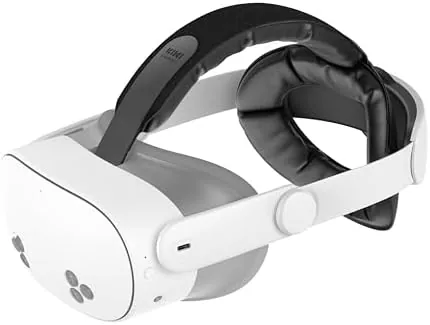
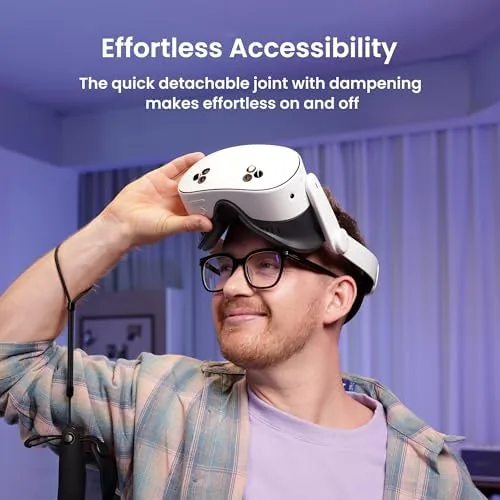
The K4 is a head strap in the classic halo style. A rigid ring surrounds your head, a padded cushion rests against the back of your skull, and the Quest attaches through the same side arms as the stock strap. Installation takes about a minute. You slide the K4 arms into the Quest side rails until they click, and the whole assembly is ready. There is no battery, no cable, and no charging to think about, which keeps the kit simple.
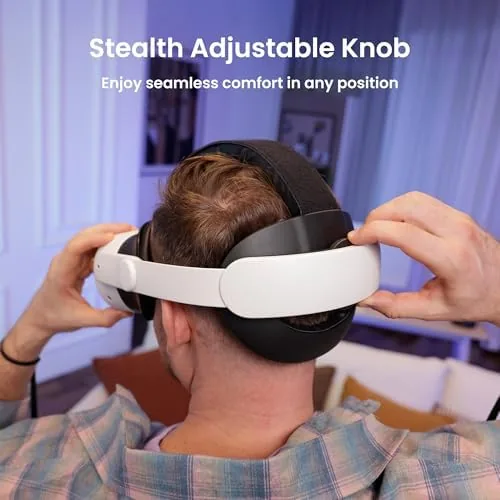
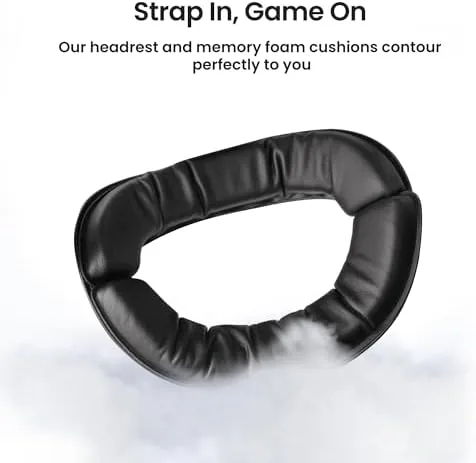
The build quality is noticeably better than the stock strap. The plastic feels dense and solid rather than hollow, and the pad that touches the back of your head is a thick, breathable cushion with a fabric cover that does not trap sweat. The top pad rests on the crown of your head and takes the bulk of the weight, and both pads are held by Velcro so they can be removed and washed, which is a thoughtful detail for a device you sweat in.
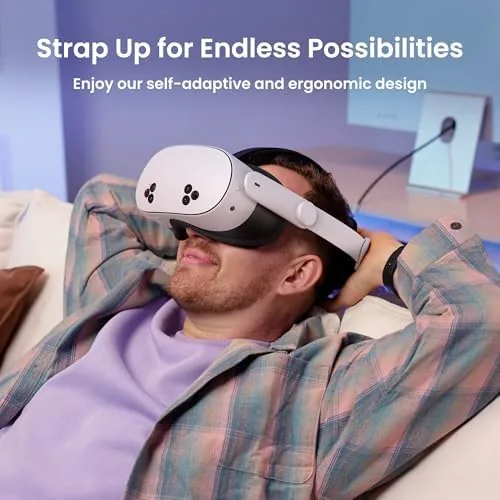
The fit is fully adjustable. A large dial on the back turns in small increments to tighten or loosen the ring, and it locks firmly with a satisfying ratchet, so the strap does not creep looser during fast movement. You can also adjust the angle of the top pad and the height of the whole assembly, which matters because heads come in very different shapes, and the K4 accommodates most of them.
Key Features
The weight-balanced design is the feature that matters most. With the stock strap, the Quest hangs off your face like a counterweight pulling forward. The K4 shifts that load to the top of your head, and the difference is immediate and obvious. The headset still sits against your face to keep the lenses stable, but it no longer presses hard enough to leave marks, and the whole assembly feels lighter than the weight on the spec sheet suggests.
The upgraded dial is a genuine improvement over the older KIWI straps. It turns smoothly, tightens in fine steps so you can find the exact pressure you want, and stays put once set. Because there is no battery in the K4, there is no added weight at the back of the head and no need to remember a second charge, which makes it a different proposition from the battery-equipped straps that some owners prefer for marathon sessions.
The design also keeps the headset accessible. The dial and pads do not block the Quest volume or USB-C port, and the fit adjustment does not interfere with the IPD dial on the front. For glasses wearers, the extra clearance in the halo design means more room to slide your frames on and off without fighting the strap, which is a real quality-of-life win.
Real-World Performance
The comfort difference is not subtle. I played a two-hour session of a fast action game on the Quest 3, which would normally leave my forehead sore with the stock strap, and I finished with no pressure marks and no headache. Fitness apps like dance games and boxing workouts, which involve constant head movement, also felt far more stable, because the halo holds the headset in place instead of letting it swing.
Balance is the key. The K4 does not add weight to the back of your head the way a battery strap does, yet it still manages to counter the front-heavy Quest well enough that the headset no longer dips forward when you look down. That forward-dip is the main reason stock Quest sessions end early, and the K4 removes it without adding the bulk and cost of a battery system.
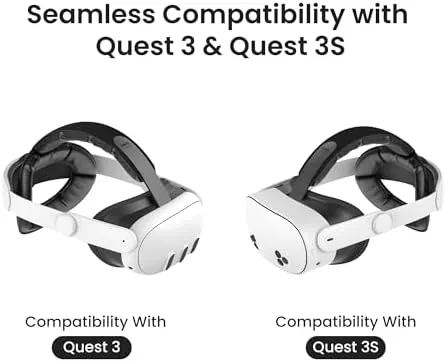
On the Quest 3S the story is identical. The K4 fits both headsets because they share the same side-arm geometry, and I swapped it between the two over the test period with no change in fit or stability. If a family owns both models, one K4 covers both devices, which is a nice practical detail.
There are small compromises. The K4 adds a little weight over the stock strap, around 100 grams, though the balance makes it feel lighter, and the halo design means you cannot lie back on a pillow with the headset on, because the back shell would press into the cushion. For seated or standing play the K4 is excellent, but for lying-down media viewing the original flexible strap is actually more forgiving.
Pros and Cons
Pros:
- Weight-balanced design removes forehead pressure
- Smooth upgraded dial with fine, secure adjustment
- No battery or cables to manage
- Fits both the Quest 3 and the Quest 3S
- Washable, breathable pads for hot sessions
- Simple one-minute installation with the stock arms
Cons:
- Halo design is not ideal for lying down
- Adds around 100 grams over the stock strap
- No battery means no extra playtime for long sessions
- Price is higher than simple top-strap pads
How It Compares
The K4 sits between two other popular Quest 3 strap options: a battery strap and the older-style tension strap without a dial.
| Feature | KIWI K4 | KIWI Battery Strap | Stock Strap |
|---|---|---|---|
| Battery | None | Built-in battery | None |
| Fit adjustment | Dial, fine steps | Dial, fine steps | Velcro pull |
| Weight balance | Excellent, front load reduced | Good, back weight offsets front | Poor, front heavy |
| Extra playtime | No | Yes, hours more | No |
| Price | Moderate | Higher | Included |
| Best for | Comfort without extra cost | Marathon sessions | Nothing beyond casual |
If you play in short sessions and want the simplest possible comfort fix, the K4 is the better value because it costs less and weighs less than a battery strap. If you regularly play for three hours or more and run out of battery, the battery strap adds playtime that the K4 cannot. For most owners, the K4 hits the sweet spot of comfort without the cost or weight of a battery.
Who Should Buy It
Buy the KIWI K4 if your Quest 3 or Quest 3S sessions end because of face pressure rather than battery life. It is the right fix for anyone whose stock strap leaves forehead marks, who plays fitness games with lots of head movement, or who simply wants the headset to feel stable and balanced. It is also an easy recommendation for families with both a Quest 3 and a Quest 3S, since one K4 fits both.
Skip it if you mostly lie down to watch movies in VR, because the back shell will press into your pillow, or if you need the extra playtime of a battery strap for marathon sessions. For Everyone else, the K4 is one of the best comfort upgrades available for the Quest, and you can check the current price of the KIWI K4 head strap on Amazon.
How We Test
I used the KIWI K4 for three weeks across a Quest 3 and a Quest 3S. I played action games, used fitness apps with heavy head movement, watched seated media, and swapped the strap between both headsets to confirm the shared fit. I tightened and loosened the dial hundreds of times to check for creep, left the strap on between sessions, and washed the pads to confirm they held up.
I compared comfort directly against the stock strap in back-to-back sessions of the same game. For independent context on Quest 3 accessories and comfort, the Verge Quest 3 review is a helpful reference, and KIWI own compatibility notes are on the KIWI Design K4 product page.
KIWI Design K4: Questions People Ask
Does the KIWI K4 fit both the Quest 3 and the Quest 3S?
Yes, the K4 is compatible with both the Quest 3 and the Quest 3S, and the arms snap into the headset in the same way as the stock strap.
Does the K4 need a battery or charging cable?
No, the K4 has no battery and no cable, which keeps the headset lighter and removes the need for extra charging alongside the Quest itself.
How does the upgraded dial work?
The rear dial turns to tighten or loosen the fit in small steps, so you can dial in a snug, secure hold that does not slip during fast head movement.
Is the K4 comfortable for long VR sessions?
The weight-balanced design spreads the headset weight across the top and back of the head, which noticeably reduces front weight pressure over longer sessions.
You can see the current price and color options for the KIWI K4 on Amazon if you want to fix the Quest comfort problem.
As an Amazon Associate, I earn from qualifying purchases.