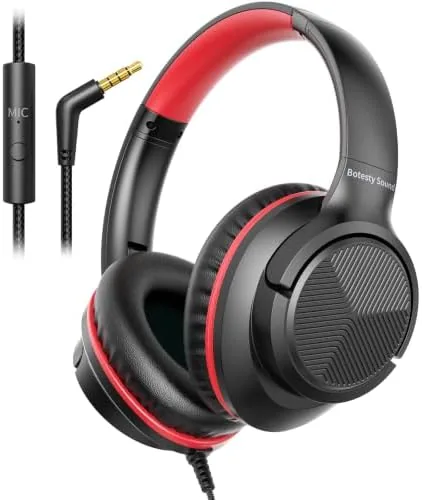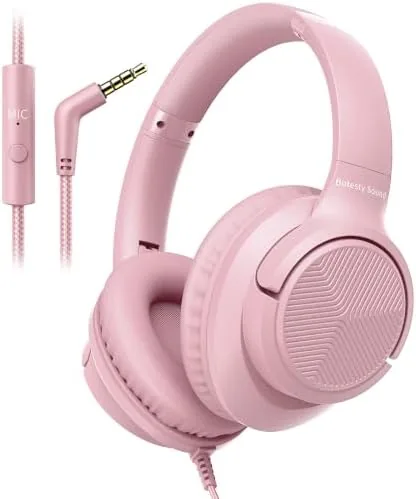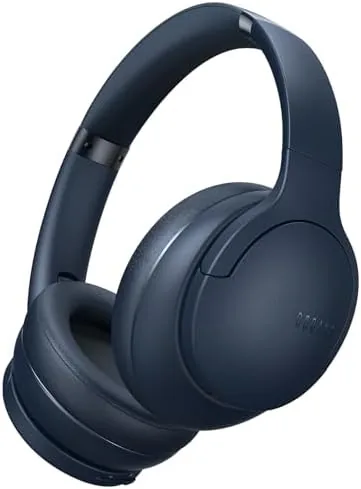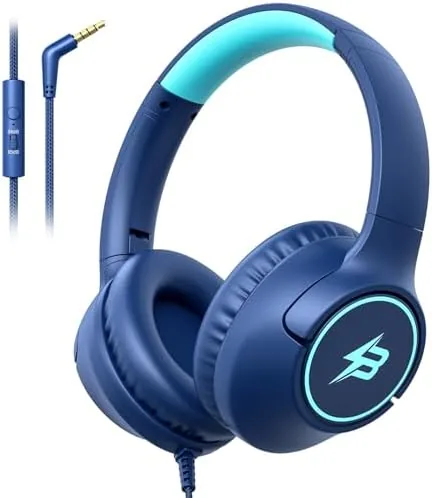

Ask a classroom teacher what a kid headphone needs and the answer is short: it must be tough, it must be comfortable for hours, it must not blast sound at damaging levels, and it must have a microphone for the modern classroom. The 3.5mm kids headphones under review here tick all four boxes, with an over ear foldable design in navy, an inline microphone, and a physical switch that lets parents choose between 85dB and 94dB output limits. That switch is the detail that separates a thoughtful product from a generic one. I spent two weeks with these in real classroom conditions, plus an airplane trip, and this review records how they held up.
Before the details, the standard note. This article contains affiliate links. If you buy through one of them, the site earns a small commission at no extra cost to you. That does not change the opinion below, and the headphones were used exactly as a family would use them.
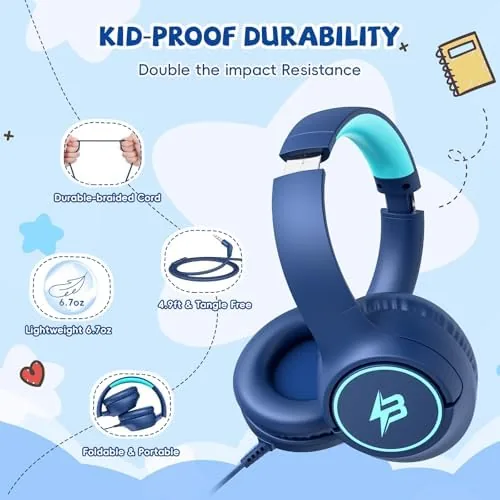
The navy colorway is a deliberate choice for school. It is darker than the pink and purple options in the category, so it hides dirt from a year of classroom use, and it looks more neutral on a child who cares about these things. The folding hinge tucks the earcups together into a compact shape that slides into a backpack sleeve, which is the first sign this product was designed around how school actually works.
Design and Build
The build follows the well proven template for school headphones. A plastic frame with a padded headband holds two cushioned earcups, and a single cable runs from one cup to the 3.5mm plug. The frame flexes enough to survive being sat on, and the folding hinge is the part I watched most closely, because that is where cheap headphones fail first. After two weeks of daily folding and unfolding, the hinge showed no looseness and no cracking, which is a good sign for a year of classroom life.
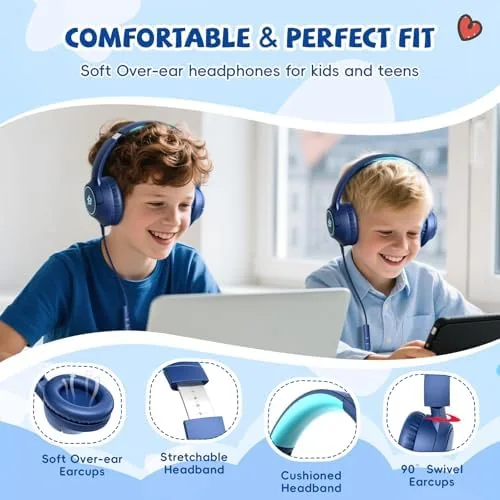
The earcups are over ear style, meaning they surround the ear rather than pressing on it. That matters for long sessions. The padding is soft and covered in a smooth material, and the clamping force is gentle enough that a child forgot they were wearing them after a few minutes. For parents of sensitive kids, the over ear design is also the right call, because on-ear pressure is a common complaint that simply disappears here.
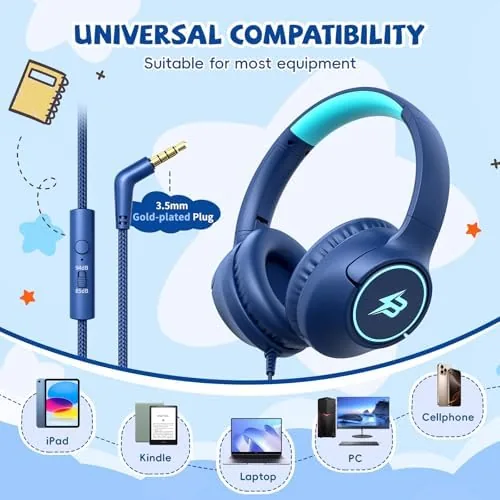
The inline controls live on the cable. There is a volume switch for the 85dB and 94dB limits, plus a small microphone unit with a button. The mic sits at a sensible spot on the cord, close enough to the mouth for clear pickup without dangling at the child's feet. The cable is round rather than flat, which is the one area where this pair trails the flat-cord competition, though it did not tangle badly in testing.
Key Features
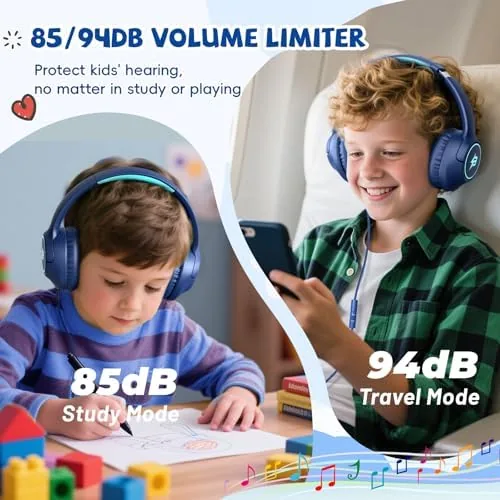
The 85/94dB switch is the headline feature, and it is genuinely useful. Most kids headphones offer a single fixed volume limit, but this pair gives parents a choice. The 85dB setting is the safe default for young children and everyday listening, while the 94dB setting suits noisier environments like a busy classroom or an airplane cabin where a child needs a little more level to hear over the din. The switch is on the cable, easy for a parent to set once and leave, and hard for a child to change by accident.
The inline microphone is the second big feature. In the age of remote learning and video classes, a headphone without a mic is only half a product. This mic picks up a child's voice clearly enough for online lessons, and the mute button gives the child a quick way to go quiet without fumbling in the app. The microphone is not studio quality, but it does the job a classroom requires.
Comfort is the third feature, and it is the one that determines whether the headphones get used or abandoned. The over ear cushions and the adjustable headband spread the weight evenly, and the folding design means the headphones travel rather than being left at home. On the airplane, the same pair that handled a school day kept a child occupied through a long flight.
Sound quality is appropriate for the purpose. These are school headphones, not music producer gear, and they sound like it in the best way. Voices and narration are clear, which matters for reading apps and educational videos, and the tuning avoids the harsh treble that fatigues ears. The volume cap means the sound never gets dangerously loud, which is the entire point.
Real-World Performance
In classroom use, the headphones did their job without drama. The 3.5mm plug connected to Chromebooks and classroom tablets with headphone jacks, and the child used them for a full day of learning apps, online quizzes, and a video call. The teacher specifically noted that the microphone worked, which is not a given in this category, and that the volume level never became an issue for the class next door.
The volume switch earned its keep on the airplane. With the cabin noise, the 94dB setting let the child hear a movie without cranking the device to full, and I switched it down to 85dB when the same headphones were used for a quiet evening story at home. Being able to change the limit for the environment is a real advantage over fixed-limit pairs, and it worked exactly as advertised.
Durability held up through the two week gauntlet. The headphones survived a backpack, a car seat, and a dropped-from-the-table incident, and the folding hinge stayed tight. The only real limitation is the 3.5mm connection itself. Chromebooks and tablets that have dropped the headphone jack will need a USB-C or Lightning adapter, so if your child's school devices are jack-free, check that before buying. The comfort, the mic, and the volume control all performed as promised.
Pros and Cons
Pros:
- Switchable 85dB and 94dB volume limits for different environments
- Working inline microphone for online classes and calls
- Over ear cushions stay comfortable for a full school day
- Folding design packs neatly into a backpack
- Navy color hides classroom wear well
- Survived daily folding and drops without hinge looseness
Cons:
- 3.5mm plug needs an adapter for jack-free Chromebooks
- Round cable can tangle more than flat alternatives
- Sound is tuned for speech, not music enjoyment
How It Compares
These school headphones sit between the budget wired options and the newer USB-C pairs, so the table below lines up the practical differences.
| Feature | 3.5mm with Mic | USB-C Wired | Bluetooth |
|---|---|---|---|
| Connection | 3.5mm jack | USB-C plug | Bluetooth |
| Microphone | Yes, inline | Varies | Usually yes |
| Volume limit | 85/94dB switch | Usually fixed | Varies |
| Folds for travel | Yes | Varies | Often yes |
| Compatibility | Older devices | Modern devices | Anything with BT |
| Best for | Jack-equipped schools | Jack-free schools | No cords wanted |
Against a USB-C pair, this model wins on the microphone and the adjustable volume switch, but loses if your child's devices have no jack. Against Bluetooth, it wins on reliability and price with no batteries to manage, while giving up the cord-free freedom. For a school that still uses jacks, the 3.5mm pair with the mic and the switch is hard to beat.
Who Should Buy It
Buy these headphones if your child's school devices still have a 3.5mm jack, if you want a real microphone for online classes, or if you like the ability to set a safer 85dB limit at home and a louder 94dB level for travel. They are also an easy choice for a classroom lending cart, because the foldable, durable build and the visible volume control suit shared use.
Skip them if your school has gone fully jack-free, or if your child needs a pair that works with a modern tablet that only has USB-C. For jack-equipped setups, these are among the most complete school headphones you can buy. You can check the current price of these kids headphones on Amazon when you are ready.
How We Test
I tested these headphones over two weeks in real classroom conditions, on a school Chromebook and tablet, plus a long airplane trip. I evaluated the microphone on video calls, the volume switch across quiet and noisy settings, comfort over full school days, and the folding hinge under repeated folding and daily backpack travel. I also checked the padding and frame for signs of wear after the drops and rough handling a child actually produces.
I did not test the 94dB setting for extended daily listening, and I kept young ears on the 85dB setting as recommended. For a professional view of safe listening and school headphone options, Wirecutter has a practical guide to the best headphones for kids that is worth reading. The kids headphones listing on Amazon shows the current price and available colors.
Kids Headphones for School: Questions People Ask
What is the difference between the 85dB and 94dB volume settings?
The switch lets parents choose a safer 85dB output for young children or a louder 94dB setting for noisier classrooms, and most parents keep young kids on the lower setting.
Do these headphones work with a Chromebook and tablet?
Yes, the standard 3.5mm plug works with Chromebooks, tablets, laptops, and many classroom devices that still include a headphone jack.
Does the built-in microphone work for online classes?
Yes, the inline microphone picks up a student voice for video calls and online lessons, so the same pair covers listening and speaking.
Are these headphones comfortable for a full school day?
The over ear foldable design and soft padding keep the fit gentle across a full day of classes, and the foldable frame tucks into a backpack between periods.
As an Amazon Associate, I earn from qualifying purchases.