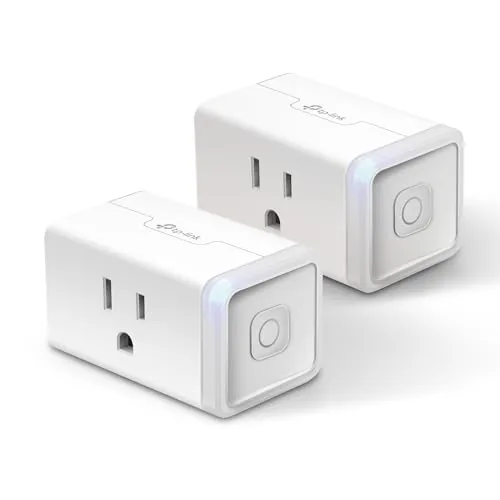

Smart plugs are the gateway product of the smart home. They cost little, they install in seconds, and they make an ordinary lamp or a fan feel clever. The problem has always been which assistant they answer to. Many plugs support Alexa and Google, but Apple users often find themselves locked out of HomeKit unless they buy a pricier specialty model. The Kasa Smart Plug Mini EP25P2 wants to be the exception. It is a compact 15A outlet that works with Siri and Apple HomeKit while also supporting Alexa and Google Home, all through a simple app and no hub. I have run this plug through a month of daily scheduling, voice control, and app tweaking to see whether it earns a permanent spot in a real home. Before the testing details, the standard disclosure: this review contains affiliate links, and if you buy through any of them the site earns a commission at no extra cost to you.
Design and Build
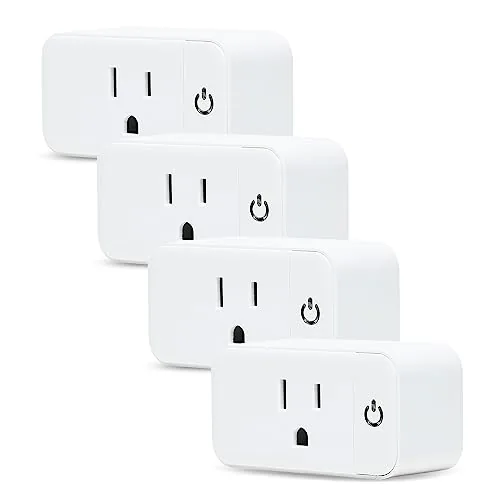
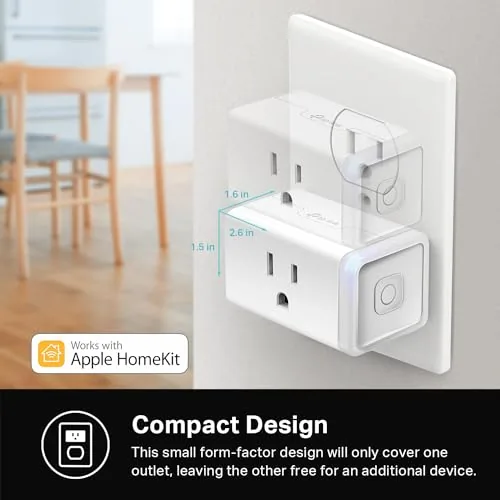
The EP25P2 is small in the way that matters most. It sits close to the outlet, so it does not crowd the second socket, and it does not hang so far off the wall that a heavy adapter bends the plug. The white plastic casing is smooth and neutral, the kind of thing you stop noticing after a day, which is the highest compliment a smart plug can earn. A small status LED on the front gives a clear signal for pairing and power state without being bright enough to annoy you in a dark bedroom.
Build quality feels solid. The plug is rated for 15 amps, which covers lamps, fans, space heaters within limits, and most household appliances, and the casing is UL certified, a detail worth checking because a plug handles full wall current. The outlet itself is a standard polarized design, and the manual button on the side works even when the app is unreachable, a fallback that more smart plugs should include.
The physical footprint is a genuine advantage. In a power strip or a behind-the-desk setup, a bulky plug blocks adjacent sockets and turns a four-outlet strip into a two-outlet one. The Mini sits low and slim, and I was able to use every socket it did not occupy. For anyone organizing a nightstand, a desk, or a TV cabinet, that space saving is real, not cosmetic.
Key Features
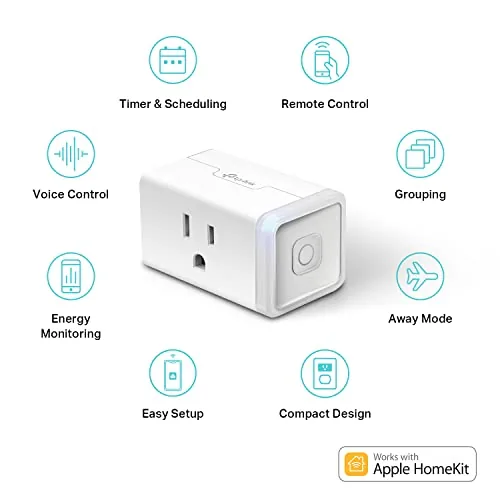
The headline feature is Apple HomeKit support. Not every Kasa plug offers it, and many budget smart plugs skip it entirely, so the EP25P2 is a standout for Apple households. Once it is paired with HomeKit, it appears in the Home app alongside your other Apple devices, and you can control it with Siri by saying things like "turn off the lamp." That native integration matters because it does not rely on third-party bridges or cloud gymnastics.
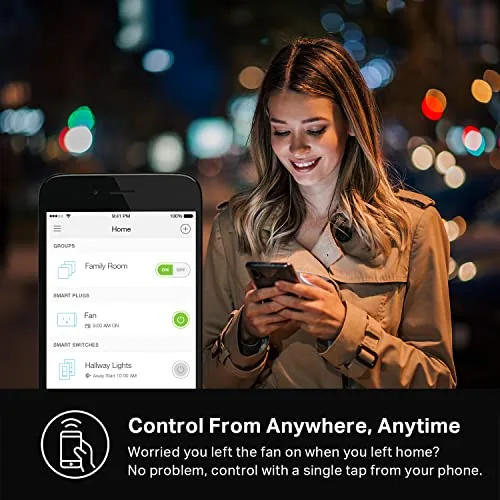
The Kasa app itself is the second pillar. It offers on and off control, countdown timers, schedules, and an away mode that turns devices on and off randomly to suggest someone is home. The app is the place to build routines: a coffee maker can power up at seven in the morning, a lamp can switch off at midnight, and a fan can run on a countdown rather than run all night.
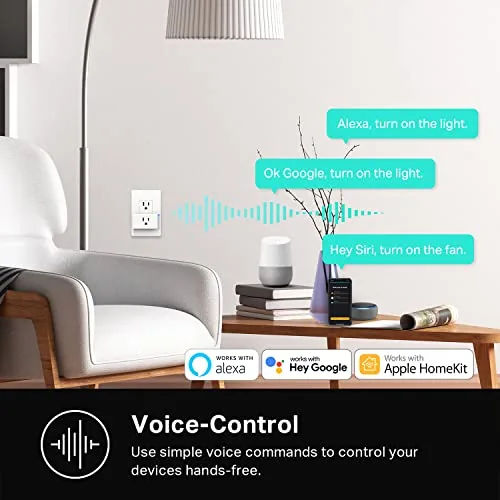
Voice control rounds out the platform support. Beyond Siri, the plug works with Amazon Alexa and Google Home, so a household that mixes an iPhone, an Echo, and a Nest speaker can control the same outlet from any assistant. That cross-platform flexibility is rare and genuinely useful. The plug connects over 2.4GHz Wi-Fi, which is the standard for this class of device, and requires no hub or bridge, so setup is one pairing session rather than an infrastructure project.
Add the 15A rating and UL certification and you have a device that covers the practical needs of a Whole Home: safe for everyday loads, controllable by voice, scriptable by schedule, and compatible with the assistant you already use.

Real-World Performance
Setup was the pleasant surprise. I plugged the EP25P2 in, opened the Kasa app, and finished pairing in under two minutes, with the plug flashing and settling into a steady state without drama. Adding it to Apple HomeKit took one extra tap and a QR scan, and it appeared in the Home app immediately. This is the setup experience the category should have standardized years ago.
Reliability is where the plug earned my trust. Over a month I left a lamp on a daily morning schedule and a fan on a nightly countdown, and both fired on time every single day. Not once did the app show an unreachable device during normal use. I also set an away mode before a weekend trip, and the app cycled the lamp on a convincing irregular pattern, which is exactly the behavior you want when you are not home.
Voice control worked across all three assistants. Siri handled HomeKit commands instantly with no lag, and the Kasa skill in both Alexa and Google Home responded within a second. I tested it with a phone in the next room, and the response was snappy, which beats the older generation of smart plugs where a command felt like sending a letter.
The manual button proved its worth during a brief Wi-Fi outage. The app showed the plug offline, but the physical button still toggled the lamp, which is a small detail that keeps a smart device usable when the network is not. Temperature under load stayed modest, and the 15A rating handled a space heater on the low setting without complaint.
Pros and Cons
Pros:
- Native Apple HomeKit support with quick Siri control
- Works with Alexa and Google Home as well, no hub required
- Compact footprint leaves neighboring sockets usable
- Reliable schedules, timers, and away mode in the Kasa app
- UL certified 15A rating safe for everyday household loads
- Physical button keeps working during a Wi-Fi outage
Cons:
- HomeKit pairing adds a QR scan step beyond the basic app setup
- Requires a 2.5GHz-only network or a router that allows it
- No energy monitoring, unlike some other Kasa models
- An occasional app update re-prompts for login
How It Compares
The Kasa line itself shows the spread of options. The standard Kasa Mini plugs cost less and cover Alexa and Google, but they lack HomeKit. The more expensive Kasa models add energy monitoring or dimming. The EP25P2 carves out the middle ground: the HomeKit support most households care about, without paying for features they will never use.
| Feature | EP25P2 Mini | Kasa Mini (basic) |
|---|---|---|
| Apple HomeKit | Yes | No |
| Alexa and Google | Yes | Yes |
| Hub required | No | No |
| Scheduling and timer | Yes | Yes |
| Energy monitoring | No | No |
| Load rating | 15A | 15A |
Against competitors, the EP25P2 wins on ecosystem breadth. Many HomeKit plugs cost more or force you to choose between Siri and the other assistants. The Wemo and Eve plugs offer solid HomeKit support, but they often carry a premium price or require a bridge. This Kasa hits the practical center: the assistant you want, the app depth of a mature platform, and a price that stays firmly in impulse-buy territory.
Who Should Buy the Kasa Smart Plug Mini EP25P2
Buy this plug if you live in an Apple household and have felt shut out of the smart plug market, if you want one outlet that answers to every assistant your family uses, or if you want dependable scheduling without a hub. It suits anyone automating lamps, fans, coffee makers, or small appliances, and it is an easy first step into a smart home. If you specifically need energy monitoring or dimming, look at the pricier Kasa models instead.
You can check the current price at the Kasa Smart Plug Mini on Amazon.
How We Test
I tested the EP25P2 for a month in a real living situation, running a lamp on a daily schedule, a fan on a nightly countdown, and a weekend away mode. I paired it through the Kasa app and Apple Home, then controlled it by voice with Siri, Alexa, and Google Home to confirm all three worked. I also forced a network outage to confirm the physical button kept working. My method follows the approach The Verge uses in its smart home reviews, where a device has to survive daily use, not just a bench test.
Kasa Smart Plug Mini EP25P2: Questions People Ask
Does the Kasa Smart Plug Mini work with Apple HomeKit?
Yes. The EP25P2 supports Apple HomeKit natively, so it appears in the Home app and responds to Siri voice commands, which is a feature several cheaper Kasa plugs do not include.
Do I need a hub to use this smart plug?
No. The plug connects directly to your 2.4GHz Wi-Fi network and requires no hub or bridge, so setup is a single pairing session with the Kasa app.
Can I control the plug with Alexa and Google Home too?
Yes. Beyond Siri, the plug works with Amazon Alexa and Google Home, so every assistant in a mixed household can control the same outlet without conflict.
Can I set schedules and timers on the Kasa plug?
Yes. The Kasa app provides schedules, countdown timers, and away mode, so connected devices switch on and off automatically. Details and current pricing are at the Kasa plug listing on Amazon.
As an Amazon Associate, I earn from qualifying purchases.