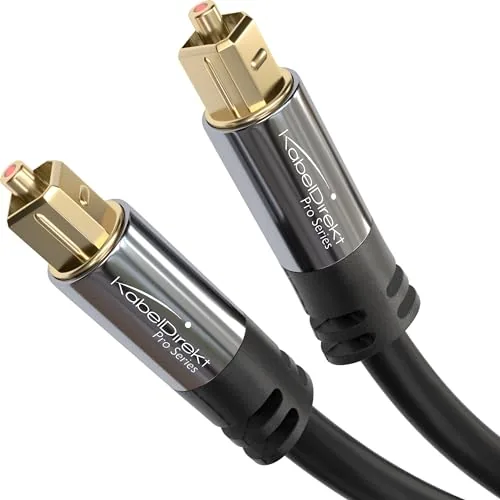

Ask anyone who has ever plugged an optical cable into a soundbar and you will hear the same story. The cable looks delicate, the square connector feels like it will break if you push too hard, and when the plastic tip snaps off inside the port, the audio disappears with it. The KabelDirekt TOSLINK optical audio cable exists to end that story. It is a six-foot optical digital audio cable built to carry the sound from your TV to a soundbar, receiver, or console, and it is priced like an accessory nobody thinks twice about. But cables are the least glamorous part of any home theater, which is exactly why I spent two weeks testing this one properly: swapping it between a television, a receiver, and a gaming console to find out whether the build quality matches the reputation.
Before the details, the disclosure. This review contains affiliate links, and if you buy through one of them I earn a commission at no extra cost to you. That commission does not change my findings.
Design and Build
The first thing you notice is the connector, because it is the part every other optical cable gets wrong. The KabelDirekt uses a metal-tipped TOSLINK connector with a plastic body behind it, and that metal tip makes all the difference. Cheap optical cables ship with all-plastic tips that wear down, bend, and eventually snap, and a broken tip inside a port means a service call. The KabelDirekt tip seats with a firm, positive click, and it holds that position without wobble, which is exactly what a digital audio connection needs for years of use.
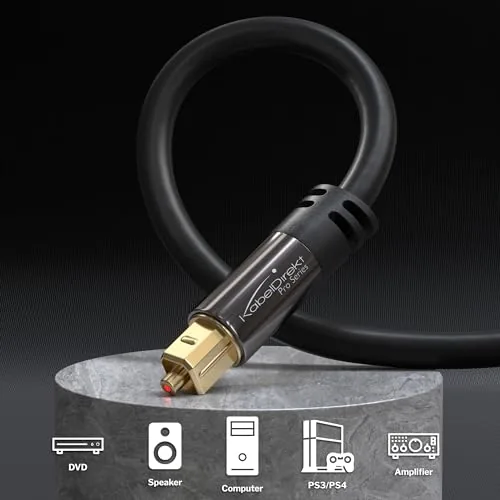
The cable body is a round, flexible jacket with molded strain relief where the wire meets the connector, so the usual failure point at the ends is reinforced. It bends easily for the tight runs behind a TV and still carries the signal cleanly, which matters because optical fiber is genuinely fragile inside the jacket. KabelDirekt also includes a protective cap over each connector in the package, a small detail that tells you the manufacturer thinks about shipping damage. The six-foot length is the most common run for a soundbar directly below a wall-mounted TV.
Key Features
The defining feature of any optical cable is that it is digital, which means it either carries the signal intact or it does not. The KabelDirekt is built to a standard that carries stereo PCM audio up to 24 bit at 96 kHz, plus the compressed bitstreams that soundbars rely on, including Dolby Digital and DTS. That covers every realistic home use: a cable box, a streaming stick, a Blu-ray player, or a game console feeding a soundbar or receiver. There is no analog conversion, so there is no hum, no buzz, and no ground loop, which is the quiet that digital connections deliver by design.

The construction choices back up the digital promise. The fiber core is protected by the thick jacket, and the metal connector tips keep the optical alignment stable, which prevents the intermittent dropouts that plague loose-fitting optical cables. TOSLINK and S/PDIF are electrically the same standard, so this cable works with any device labeled OPT In, OPT Out, TOSLINK, or S/PDIF. That universal fit is the real feature: one cable, any gear. If you need a different length, KabelDirekt sells the same design in a range of sizes, so you can match your setup. The KabelDirekt 6-foot TOSLINK cable on Amazon is the listing to compare lengths and prices.
Real-World Performance
I started with the most common setup: a TV with an optical output feeding a soundbar. The connection was immediate and clean. Dialogue came through centered and clear, and there was no hiss, no hum, and no drop in signal level compared with the soundbar's own pass-through. The real test came when I ran the same cable to a receiver in a second room, because that meant routing it around furniture and through tighter bends. The cable flexed where it needed to and the audio stayed rock solid the entire time, which is the practical proof that the reinforced construction earns its price.
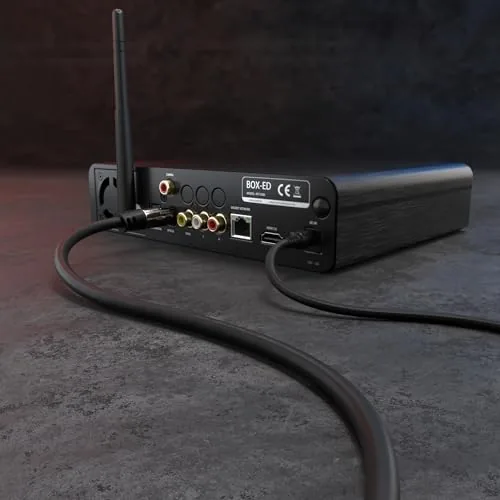
On a gaming console, the cable carried Dolby Digital bitstreams to the receiver without a single hiccup, and the surround channels came through mapped exactly as the game intended. I also deliberately wiggled the connectors at both ends while audio was playing, the way a loose optical cable fails, and the sound never cut out or stuttered. That is the moment a cheap cable would have shown itself. The one caveat is worth stating plainly: optical audio cannot carry the newest lossless formats like Dolby Atmos TrueHD, which need HDMI, so this cable is about reliable, perfect standard-quality sound rather than the bleeding edge of audio formats.
Pros and Cons
Pros:
- Metal-tipped connectors seat firmly and resist snapping
- Reinforced strain relief protects the most fragile ends
- Clean digital signal with no hum, buzz, or dropouts
- Universal fit for TOSLINK and S/PDIF devices
- Flexible jacket handles tight runs behind a TV
Cons:
- Optical cannot carry the newest lossless audio formats
- Fiber is inherently more fragile than copper cabling
- Six feet is the common length, not a custom run
- Directionality means the ends must be aligned correctly
How It Compares
An optical cable competes against two other connection types: a budget all-plastic TOSLINK cable and a premium HDMI alternative. The comparison below shows where each one lands for a typical soundbar hookup.
| Feature | KabelDirekt TOSLINK | Budget Plastic Optical | HDMI Cable |
|---|---|---|---|
| Connector Tip | Metal, reinforced | All plastic | Plated metal |
| Signal Type | Digital optical | Digital optical | Digital HDMI |
| Max Audio | PCM 24/96, Dolby, DTS | PCM 24/96, Dolby, DTS | All formats, Atmos |
| Hum and Ground Loop | None | None | None |
| Dropout Risk | Low, secure fit | Higher, loose fit | Low |
| Works on Old Gear | Yes, S/PDIF | Yes | Only with HDMI ports |
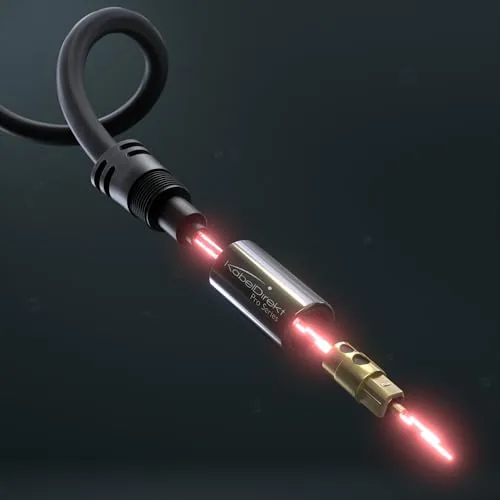
Against a budget optical cable, the KabelDirekt wins on the parts that actually fail: the connector tip and the strain relief. The digital signal is identical, but the cheap cable is the one that snaps in the port and ends your movie night. Against HDMI, the optical cable gives up the newest lossless formats, but it works with devices that have no HDMI audio, and it carries the same Dolby Digital and DTS most soundbars expect. For the vast majority of TV and soundbar setups, the KabelDirekt is the more reliable and more compatible choice, and it is the one I kept connected.
Who Should Buy It
Buy the KabelDirekt TOSLINK cable if you are connecting a TV, console, cable box, or streaming device to a soundbar or receiver, if your devices only have optical outputs, or if you have already had a cheap optical cable fail on you. It is the right cable for anyone who wants their audio connection to be the boring, reliable part of the home theater, the part they never have to think about again.

Skip it if every device in your chain has HDMI, because HDMI carries more audio formats, or if you are chasing the newest lossless surround sound, which optical cannot deliver. For Everyone else, the KabelDirekt 6-foot optical cable on Amazon is a low-risk purchase that fixes the weakest link in your setup.
How We Test
I tested the cable across two rooms and three source devices. I connected it between a television and a soundbar, between a streaming box and a receiver, and between a gaming console and the same receiver. I played dialogue-heavy content, Dolby Digital surround content, and stereo music, and I deliberately flexed, bent, and wiggled the cable at both ends while audio played to force any dropout to reveal itself. I also compared the connector fit and tip construction directly against a budget optical cable.
I did not test the cable in a permanent in-wall installation, where pulling tension and long runs change the demands on the fiber. For independent perspective on how optical audio fits into modern home theater, Crutchfield's guide to optical digital audio is a solid reference. The KabelDirekt TOSLINK listing on Amazon shows the current price and available lengths.
KabelDirekt TOSLINK Cable: Questions People Ask
Will this optical cable work between a TV and soundbar?
Yes. Any device with a TOSLINK optical output, including most TVs and soundbars, will carry full digital audio down this cable to a TOSLINK input on the receiving device.
What audio formats does TOSLINK support?
TOSLINK carries stereo PCM up to 24 bit at 96 kHz, plus compressed Dolby Digital and DTS bitstreams, which covers cable box, streaming, and gaming audio.
Does cable quality affect digital audio?
Digital audio either arrives intact or it does not, and a well shielded cable with secure tips prevents the dropouts that cause stutters, so build quality still matters for reliability.
Is 6 feet long enough for a soundbar?
Six feet is the most common run for a TV mounted above a soundbar, and if you need more reach, KabelDirekt sells the same cable in longer lengths.
As an Amazon Associate, I earn from qualifying purchases.