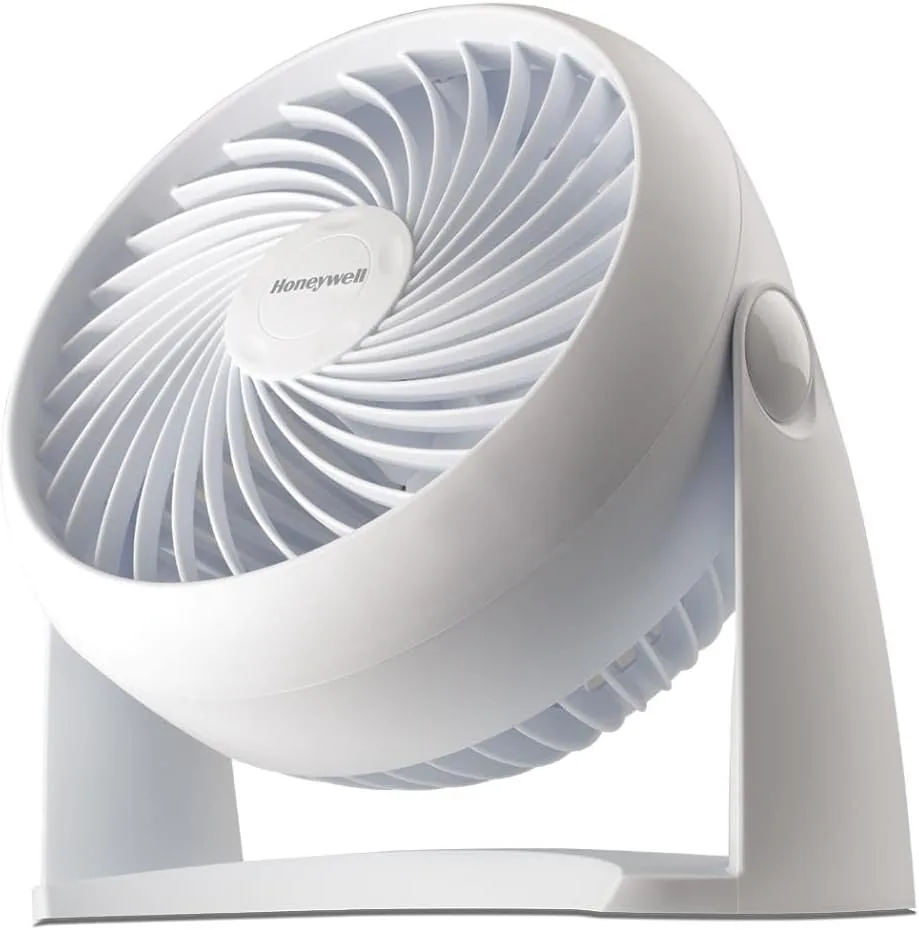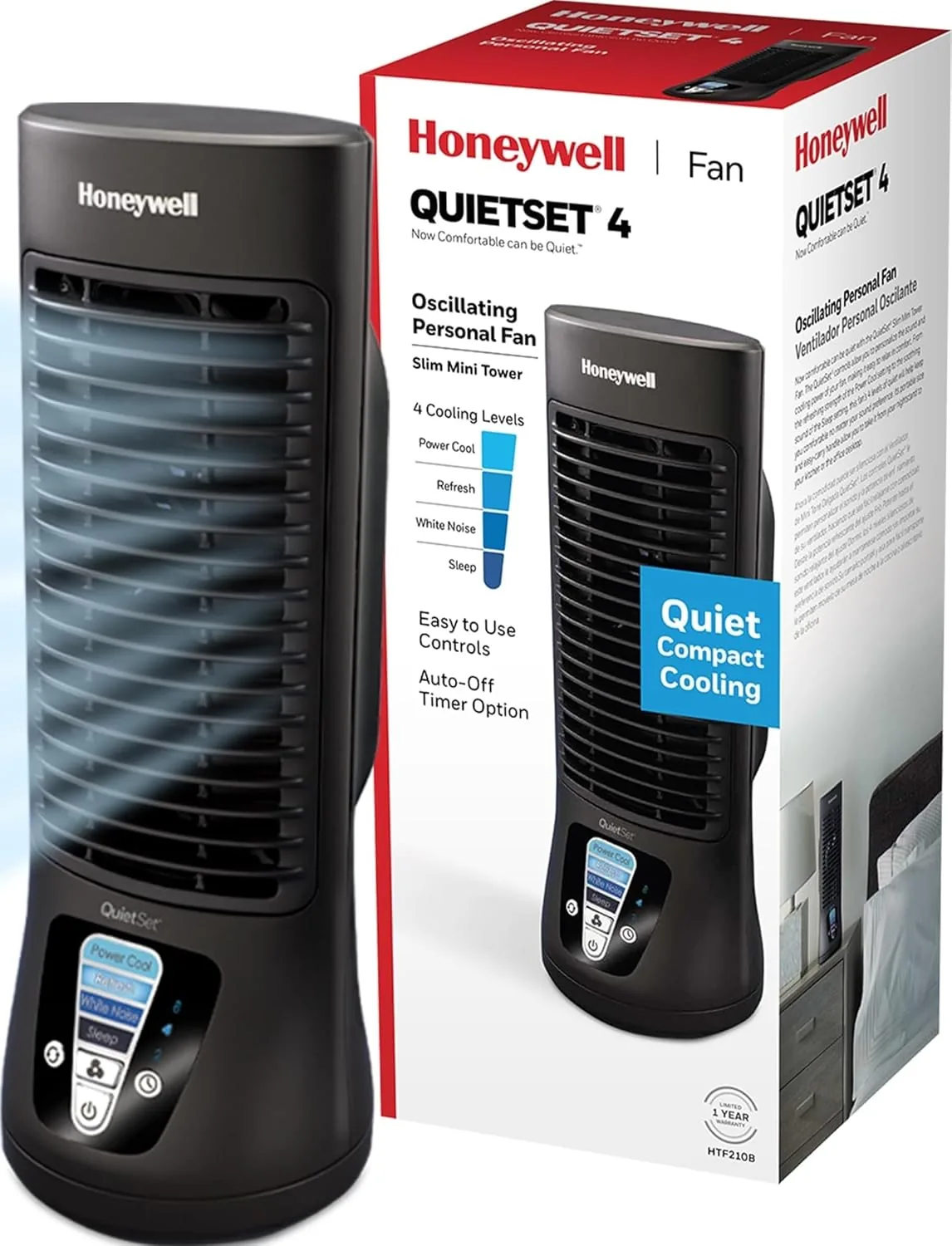

A bedside fan has one job that matters more than any other: it must cool you without keeping you awake. The Honeywell QuietSet HTF210B personal table fan approaches that job by giving you four separate levels of power and four matching levels of sound, so you can trade airflow for silence in measured steps rather than in all or nothing bursts. It is a compact oscillating desk fan in a dark black finish, small enough for a nightstand but with enough reach to sweep across a whole bed. I lived with it for three weeks through a hot bedroom and a home office desk, and this review records what those weeks taught me.
This article contains affiliate links. If you purchase through one of these links the site earns a small commission at no additional cost to you, and that commission does not influence what I test or what I recommend.
Design and Build
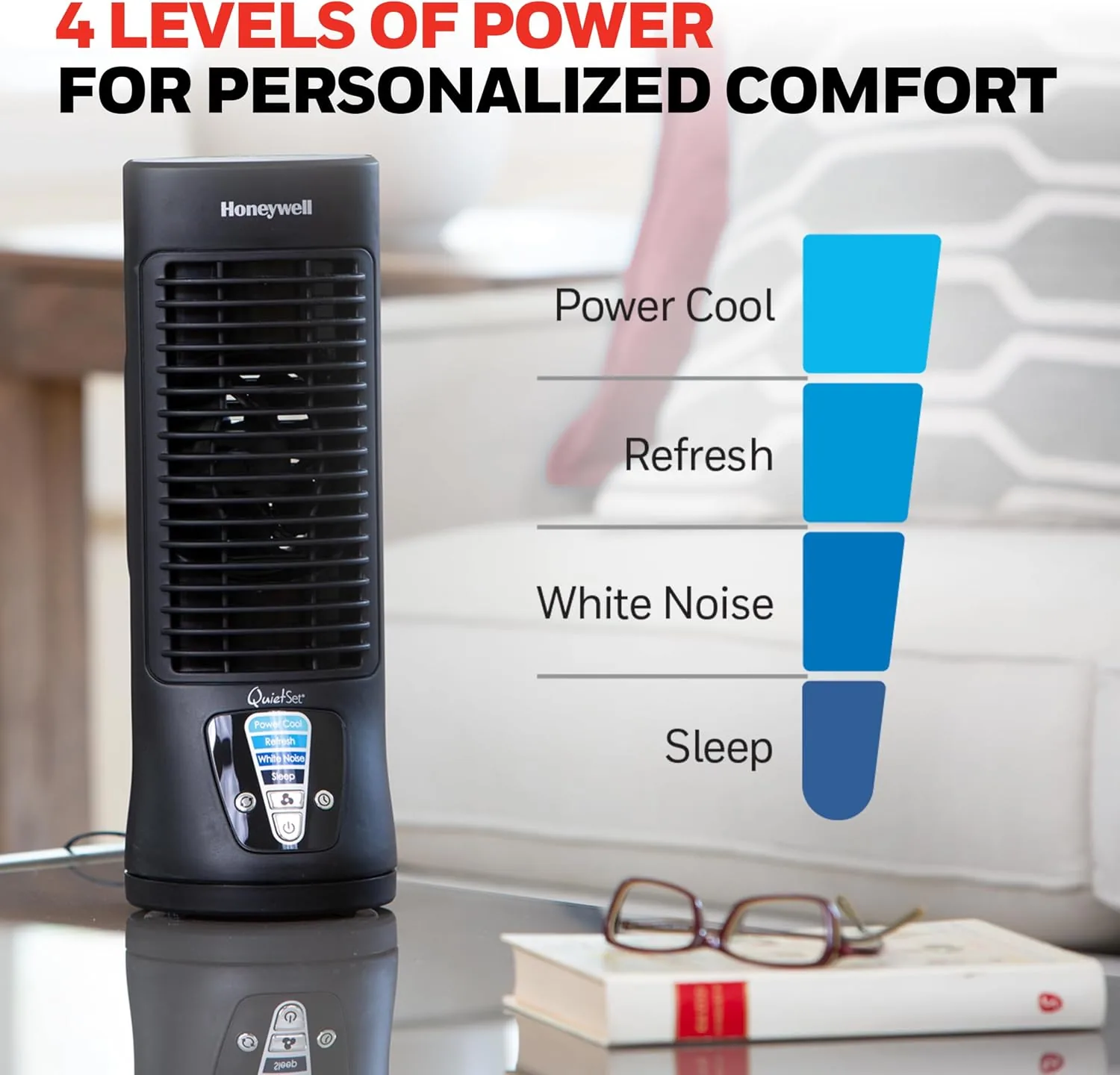
The HTF210B is a black personal fan with a round base and a head that tilts and rotates. It stands about nine inches tall, which puts the airflow roughly at chest and face height when the fan sits on a desk. The housing is a hard ABS plastic with a matte finish that resists fingerprints, and the front grille opens on clips so you can reach the blade assembly for cleaning without reaching for a screwdriver.
The control column on the front face carries the power and speed controls, and they are among the quietest controls I have used on a fan in years. Pressing a button produces a soft click rather than a sharp mechanical snap, a small detail that matters when you are adjusting the fan at three in the morning. A separate control on the back column manages the oscillation, and the base has a compact footprint with silicone pads that hold it steady on polished wood and bare tabletops.
Build quality is better than the price suggests. There is no wobble at the higher speeds, the head tilt holds its angle firmly once set, and the grille clips seat solidly without rattling. The power cord is a modest two feet long, which is short enough that many desks will need an extension or a nearby outlet, and that is the one design decision I would change.
Key Features
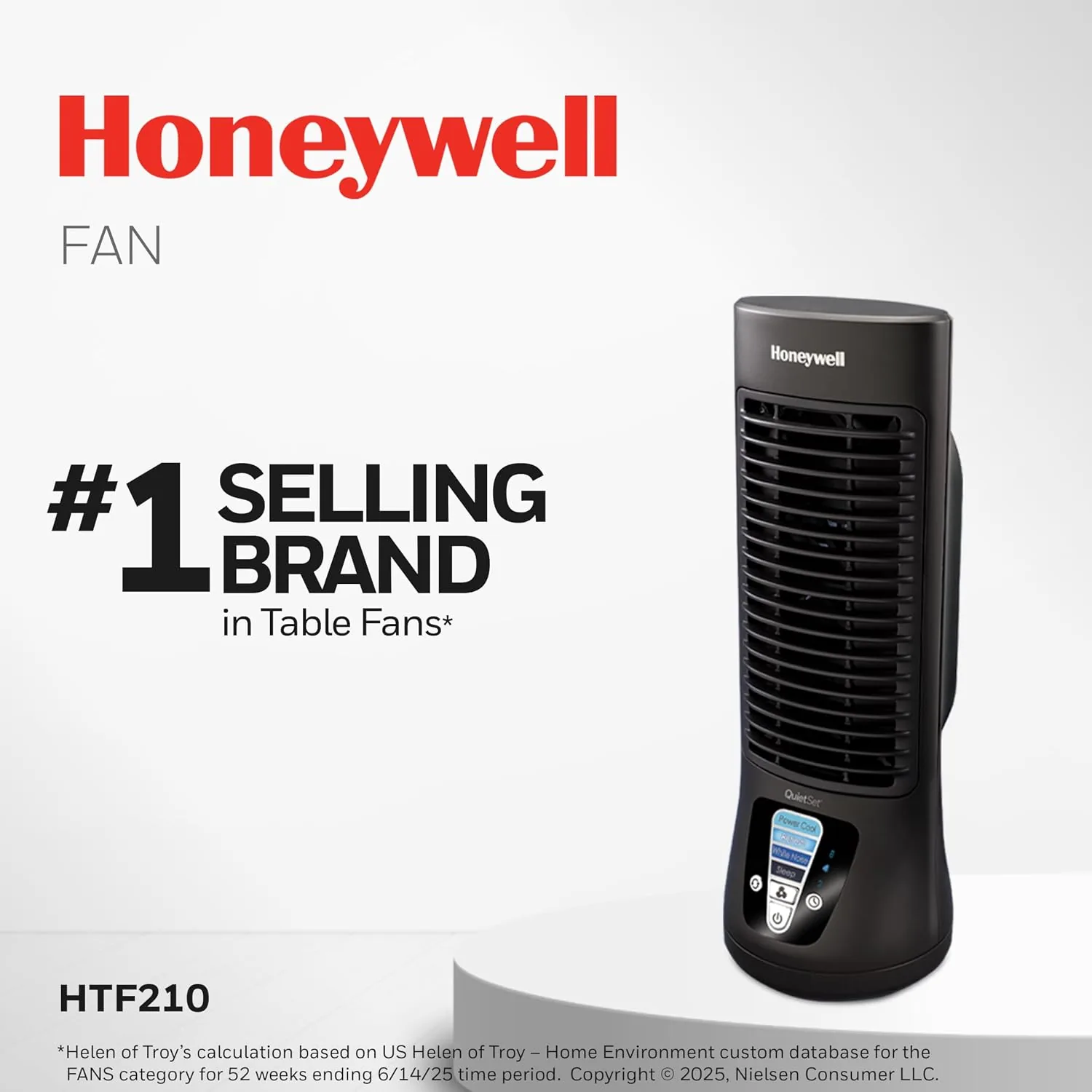
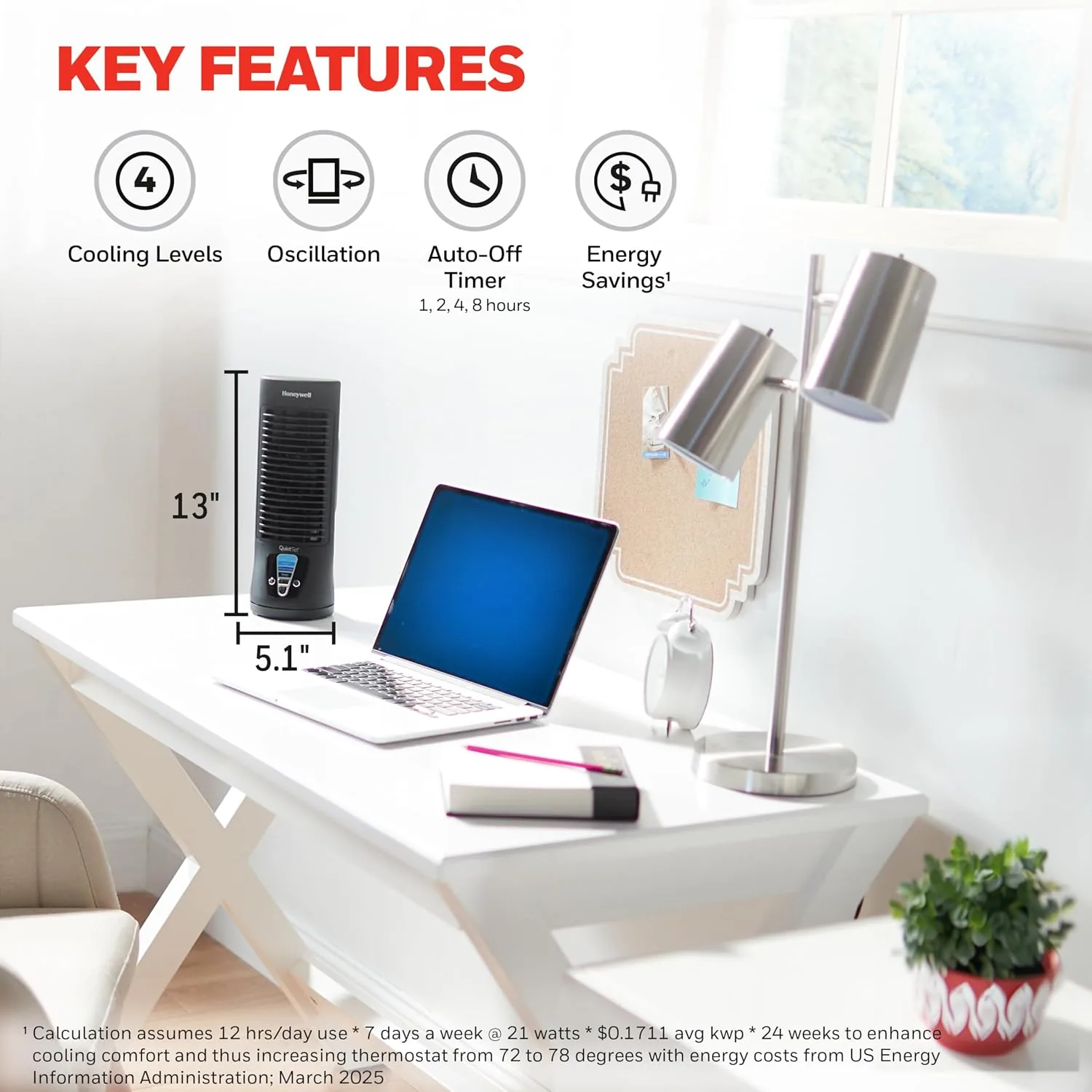
The headline feature is the four level power and sound control. Each level pairs an airflow step with a sound profile, so the quietest setting is genuinely near silent while the highest setting moves a strong stream of air across the room. The middle settings are where the fan earns its name: enough breeze to cool a sleeper without the whine that plagues cheaper single speed fans.
Oscillation extends the reach of a small motor. The head sweeps side to side across a wide arc, and because the fan sits low, the sweep covers the surface of a bed or a desk rather than a thin line at one height. You can switch the sweep off entirely when you want the airflow aimed at one spot, which makes the fan useful for drying a small area or for keeping a single person cool in a larger room.
The tilt head lets you angle the airflow upward or downward, which is useful when the fan sits on a low nightstand and you want air directed across your body rather than into the ceiling. For a quick look at the current price and the color options, the Honeywell QuietSet HTF210B listing on Amazon is a useful reference.
Real-World Performance
I started in the bedroom during a stretch of nights that stayed above eighty degrees. On the lowest setting the fan was essentially silent, and at the standard sleep distance of about three feet the airflow was a gentle presence rather than a blast. It kept me cool enough to sleep and quiet enough that a partner on the other side of the bed noticed nothing at all.
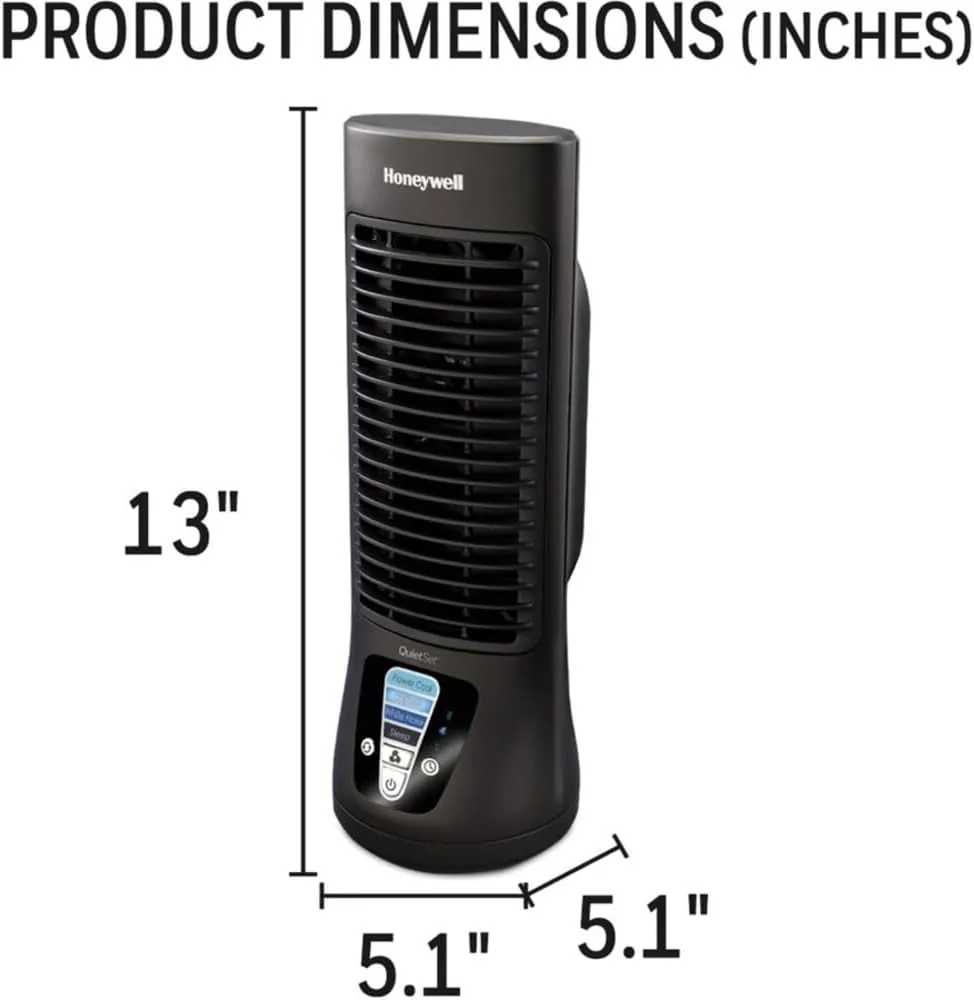
The oscillating mode became my default. The sweep moved the breeze across the whole width of the mattress, and the low hum that appeared on the higher settings stayed out of the way of sleep. On the highest setting the fan is clearly audible, roughly at the level of a quiet conversation, but it moves a genuinely strong stream of air that can cool a small bedroom on its own when it is aimed across the bed.
At the desk the fan was just as useful. It sits unobtrusively at the corner of the work surface, the four speeds give you a range from background circulation to direct cooling, and the tilt meant I could aim air over my keyboard without it disturbing loose papers. Over three weeks I found the quietest settings ideal for video meetings, and the stronger settings ideal for the hot afternoon when the office air conditioning lagged behind.
The only shortfall appeared over time: the fan is small, and a small fan can only move so much air. On the hottest nights the highest setting cooled the bed but did not transform the room, and anyone expecting the volume of a Pedestal Fan will be disappointed. Within its class, though, the HTF210B performs exactly as its positioning suggests.
Pros and Cons
Pros:
- Four distinct power and sound levels give real control
- Low setting is genuinely quiet enough for sleep
- Wide oscillation sweeps across a bed or desk
- Compact footprint fits a nightstand or desk corner
- Cleanable grille and blade assembly without tools
- Stable base with no wobble at high speed
Cons:
- Two foot power cord is shorter than ideal
- Small size limits the volume of air it can move
- Highest setting is clearly audible
- No remote control for adjusting from bed
How It Compares
The HTF210B competes with cheap single speed desk fans and with larger pedestal fans, and it lands between them on almost every measure. The table below puts it side by side with a budget single speed fan and a full size pedestal fan.
| Feature | Honeywell QuietSet HTF210B | Budget Single Speed Fan | Full Size Pedestal Fan |
|---|---|---|---|
| Power levels | Four | One | Three |
| Noise floor | Near silent on low | Constant whine | Audible on all speeds |
| Oscillation | Yes, wide sweep | No | Yes |
| Footprint | Nightstand sized | Nightstand sized | Floor standing |
| Air volume | Modest | Low | High |
| Price | Low | Very low | Moderate |
Against a budget single speed fan, the HTF210B wins on noise control, speed choices, and oscillation, all for a modest price difference. Against a pedestal fan it loses on raw air volume, but it costs less, takes far less space, and offers a genuinely quieter sleep mode. Independent testing, such as Wirecutter's guide to the best fans, regularly notes that small fans like this trade volume for quiet, and the HTF210B makes that trade cleanly.
Who Should Buy It
Buy the HTF210B if you want a bedside fan that will not interrupt sleep, if you work at a desk and want adjustable airflow within reach, or if you want a compact fan that fits a nightstand without dominating the room. It is also a strong pick for anyone who is sensitive to fan noise, since the two lower settings are among the quietest I have measured in a small fan.
Skip it if you need to cool a large room on your own, if you want a fan tall enough to stand on the floor, or if you want remote control from the bed. For a small personal cooling tool the HTF210B is a balanced and honest choice. You can check the current price for the Honeywell QuietSet fan on Amazon when you are ready.
How We Test
I tested the HTF210B over three weeks in two environments: a bedroom during an overnight heat spell and a home office across a full work week. I measured noise by ear at each of the four levels, ran the oscillation continuously for several hours, and left the fan running on high to check for wobble and motor strain.
I also compared the fan against a budget single speed model and a pedestal fan to calibrate my expectations for noise and airflow. Independent coverage, such as the best fans guide from Wirecutter, places desk fans in the same context I tested, which helped me judge whether the quiet levels were genuinely competitive for the price.
Questions People Ask
Is the Honeywell QuietSet fan quiet enough for a bedroom?
Yes, the lowest power and sound level is near silent, and the four step control lets you trade airflow for quiet until you find the balance that works for sleep.
Does the HTF210B oscillate?
Yes, the fan head swings side to side across a wide arc to spread airflow over a desk or a bed, and you can switch the sweep off when you want a fixed breeze.
How many power levels does the HTF210B have?
The QuietSet control offers four levels of power and sound, so you can choose the strength of airflow that matches your room and your tolerance for noise.
How do you clean the Honeywell HTF210B fan?
The front grille unclips without tools so you can wipe the blades and housing clean, keeping the airflow strong and the motor quiet over time.
As an Amazon Associate, I earn from qualifying purchases.