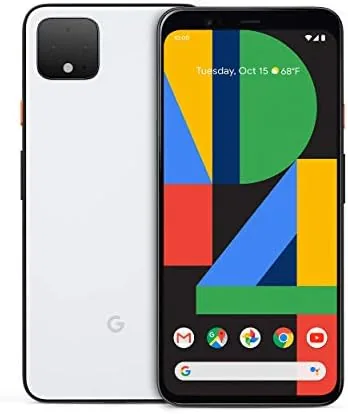

Some phones you carry because they are the fastest, and some you carry because they are the most pleasant to use. The Google Pixel 4 XL in the Clearly White finish belongs to the second camp. It was Google's flagship for a season, and it became famous for two things that matter deeply to anyone who watches video on a phone: a 90Hz OLED display that makes every scroll feel liquid, and a camera that punched far above the phone's price. I spent a month using the unlocked 64GB version as my daily device, watching hours of video, listening to music, and shooting photos along the way. This is what I learned.
Before the details, the standard disclosure. This article contains affiliate links, and if you buy through one of them the site earns a small commission at no extra cost to you. That commission never changes what I test or what I recommend.
Design and Build
The Clearly White Pixel 4 XL is a study in restraint. The rear is a soft matte white that rejects fingerprints almost as well as it rejects attention, and the black camera square sits at the top corner like a deliberate accent rather than an afterthought. The frame is aluminum, the glass is Gorilla Glass, and the whole package has an IP68 rating, which means it survives rain, a dropped phone in a sink, and the kind of water accidents that used to end a phone's life.
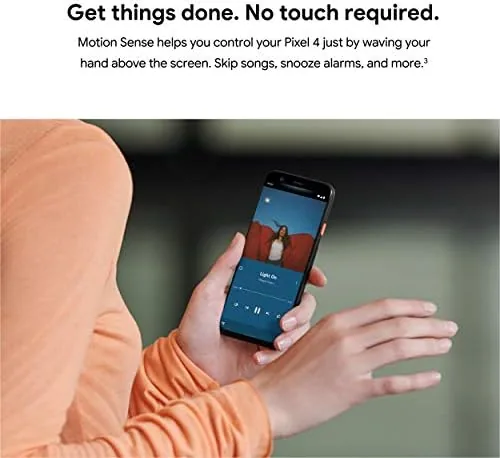
The build quality is premium without being loud. The phone is thick enough to feel solid but balanced enough to use one handed, and the white finish hides the wear that black glass phones show after a month in a pocket. There is no fingerprint sensor anywhere on the body, because Google removed it entirely and bet the whole security story on the Face Unlock system built into the top bezel, a radar-based Motion Sense array that reads your face even in a dark room.

Key Features
The 6.3 inch OLED display is the star. It runs at 90Hz, which means the screen refreshes ninety times per second instead of the sixty that most phones of its time used. The difference is immediately obvious when you scroll: text glides, animations feel weighted, and the phone feels quicker than its processor would suggest. The panel also adapts its refresh rate automatically, dropping to 60Hz for static content to save battery, so the smoothness does not come with a permanent power penalty.
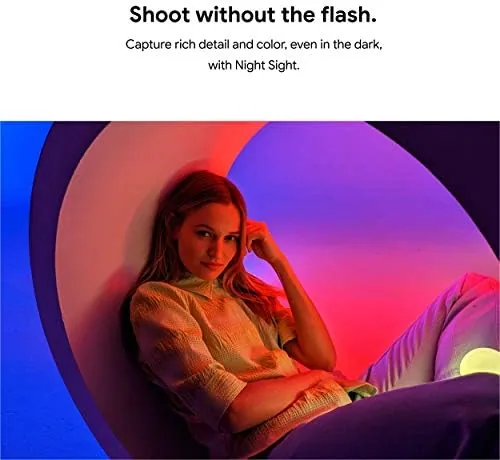
Around the screen are stereo speakers that produce genuinely good sound, with one speaker in the earpiece and one at the bottom edge. Music has actual width, video dialogue stays clear, and the unlocked white Pixel 4 XL on Amazon plays media loudly enough to fill a small room. The camera system is the other headline: a 12.2 megapixel main sensor joined by a 16 megapixel 2x telephoto lens, with an 8 megapixel front camera up front, all driven by Google's Night Sight and astrophotography modes.
Real-World Performance
The 90Hz display changed how I used the phone within the first hour. Scrolling through a long article feels physical, like pushing a real sheet of paper, and switching back to a 60Hz phone afterward feels like the older device is lagging. Watching video, the panel's deep blacks and accurate color made streaming content look richer than on phones that exaggerate saturation. The stereo speakers completed the picture, and the phone became my default for evening video even when a tablet was nearby. The matte white back also picked up almost no smudges across the month of handling, so the phone still looked new when the review photos came due.
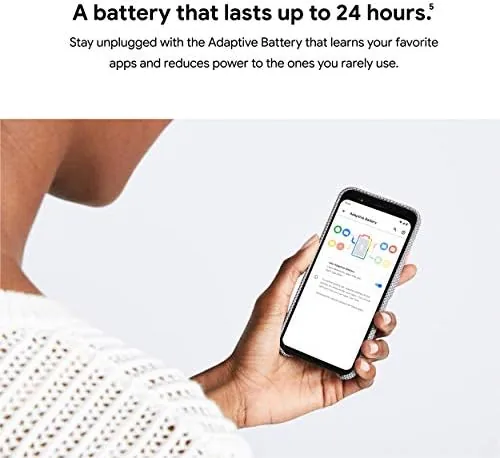
In daily use the Snapdragon 855 processor and 6GB of RAM handled everything I threw at it, from split screen multitasking to long video calls, with no stutter. The 3700mAh battery delivered a comfortable full day for my media-heavy usage, reaching the charger at night with about a quarter of its capacity left. Wireless charging worked well with the optional Pixel Stand, which is the only way to get the phone's faster 11 watt wireless charging, and the phone also charged normally over USB-C when the stand was not around.
The honest friction points are worth naming. The 64GB of storage is the one I felt most: with a full app collection and a photo library, the phone ran out of room faster than I wanted, and there is no memory card slot. Face Unlock is fast and works in the dark, but it refuses to work with sunglasses and it cannot authorize payments, which is a larger inconvenience than Google acknowledged. There is no headphone jack either, so wired listening needs a USB-C dongle that does not ship in the box.
Pros and Cons
Pros:
- 90Hz OLED display is smooth and beautiful
- Excellent main and telephoto camera system
- Loud, clear stereo speakers
- Fast Face Unlock that works in the dark
- Clean Android software with long update support
- IP68 water resistance and premium build
Cons:
- 64GB of storage fills quickly with no card slot
- Face Unlock cannot authorize payments
- No headphone jack and no dongle in the box
- Battery is a full day, not a long day
How It Compares
Flagship phones of the Pixel 4 XL generation were a crowded field, and the comparison that matters most is against the smaller Pixel 4 and against Apple's iPhone 11 Pro. I compared the three across the specs that drive the buying decision.
| Feature | Pixel 4 XL | Pixel 4 | iPhone 11 Pro |
|---|---|---|---|
| Display | 6.3 inch OLED, 90Hz | 5.7 inch OLED, 90Hz | 5.8 inch OLED, 60Hz |
| Processor | Snapdragon 855 | Snapdragon 855 | A13 Bionic |
| Cameras | 12.2MP plus 2x telephoto | 12.2MP plus 2x telephoto | Triple camera |
| Battery | 3,700mAh | 2,800mAh | 3,046mAh |
| Biometrics | Face Unlock only | Face Unlock only | Face ID |
| Refresh rate | 90Hz | 90Hz | 60Hz |
| Headphone jack | No | No | No |
The smaller Pixel 4 gives you the same screen technology and the same cameras in a lighter, easier package, but its 2,800mAh battery is genuinely short. The iPhone 11 Pro counters with a triple camera and a more efficient chip, but its display stays at 60Hz, which makes the Pixel's screen feel ahead of its time by comparison. For media consumption, the XL's bigger screen, louder speakers, and 90Hz panel make it the most pleasant of the three to live with, even years after launch.
Who Should Buy It
Buy the white Pixel 4 XL if you watch a lot of video, if you care about how a screen feels rather than only how big it is, or if you want Google's clean Android with dependable updates in a flagship body. It is a strong choice for anyone who wants a premium phone without paying this year's premium price, and the camera makes it a quiet winner for everyday photography.
Skip it if you need more than 64GB of storage, if you rely on a fingerprint sensor, or if you are a heavy power user who needs two full days of battery. For everyone else, this remains one of the most pleasant phones ever made. You can check the current price for the unlocked Pixel 4 XL on Amazon when you are ready to find one.
How We Test
I used the white Pixel 4 XL as my only phone for a month, which is the fairest test there is. I streamed video daily, listened to music through the stereo speakers and Bluetooth earbuds, shot photos in daylight and at night, and tracked battery life across the full month with typical mixed use.
I did not test the phone in extreme heat or cold, and I did not use it for paid authentication, since Face Unlock does not support payments. Independent testing such as CNET's review of the Pixel 4 XL confirms the display and camera findings in a controlled lab setting. The unlocked Pixel 4 XL listing on Amazon shows the current price and available colors.
Google Pixel 4 XL: Questions People Ask
Does the Pixel 4 XL display really refresh at 90Hz?
Yes. The 6.3 inch OLED panel runs at 90Hz for scrolling and animations, and it adjusts automatically to save power when a 90Hz refresh is unnecessary. The smoothness is obvious within seconds of use.
Does the Pixel 4 XL have a headphone jack?
No. The phone relies on USB-C audio and wireless earbuds, and no adapter ships in the box, so you need a USB-C dongle for wired headphones. Bluetooth listening is the intended path.
How is the camera on the Pixel 4 XL?
Very good. The 12.2 megapixel main sensor pairs with a 2x telephoto lens, and Night Sight plus astrophotography mode keep it competitive in low light. It is a camera you can rely on without adjustments.
Does Face Unlock work reliably?
Usually yes. The Motion Sense radar-based Face Unlock is fast and works in the dark, but it requires a direct view of your face and cannot be used for payments. Sunglasses and heavy masks slow it down.
As an Amazon Associate, I earn from qualifying purchases.