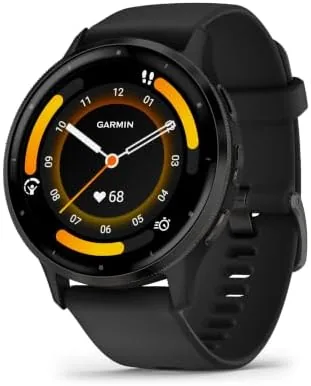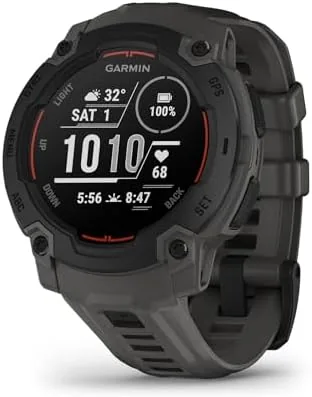

The smartwatch market is a battle of glowing screens, app stores, and daily charging habits. The Garmin Instinct E takes the opposite road. It is a 45mm rugged GPS watch in charcoal that looks like a survival tool more than a smartphone accessory, and it is built for people who want their wrist device to track, navigate, and survive, not to play games or mirror notifications. After three weeks wearing it through office days, trail runs, and a camping weekend, this is the honest verdict: the Instinct E trades polish for purpose, and for the right person that trade is exactly right.
Before the detail, the standard note. This article contains affiliate links, and if you buy through one of them the site earns a small commission at no extra cost to you. That commission never changes what I test or what I recommend.
Design and Build
The first thing you notice is how tough the Instinct E feels. The case is fiber reinforced polymer with a recessed bezel that protects the display from drops, and the charcoal finish is matte and subdued rather than flashy. The buttons on each side are physical and chunky, designed to be pressed with gloves or wet fingers, and they give a solid click that leaves no doubt you have hit them. There is no touchscreen at all, which sounds like a downgrade and turns out to be a feature when you are sweating or in the rain.
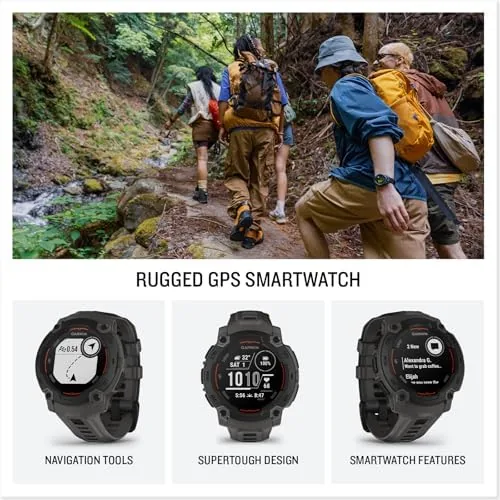
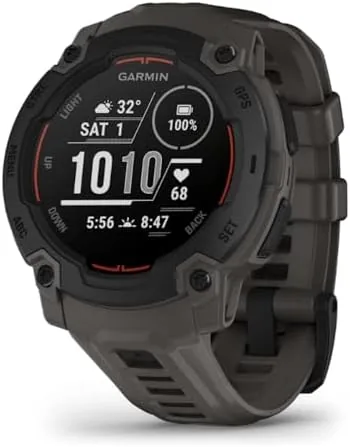
The display is a monochrome memory in pixel panel rather than a bright color screen. It is always on, readable in direct sunlight, and consumes almost no power, but it is not a screen you will watch videos on. That is the Instinct E's whole philosophy: the display exists to show you data, not to entertain you. The silicone band is comfortable for all day wear, secures firmly during activity, and the whole package carries a rugged military standard rating and is rated for swimming, so it shrugs off the drops and splashes of normal outdoor life.
Key Features
GPS navigation is the heart of this watch. The built in GPS tracks your route without needing a phone, which makes the Instinct E genuinely useful in the backcountry where cell service does not exist. The watch can record your track, show a breadcrumb of where you have been, and point you back along the path you came. That kind of navigation is a real safety tool on a trail, not a gimmick.
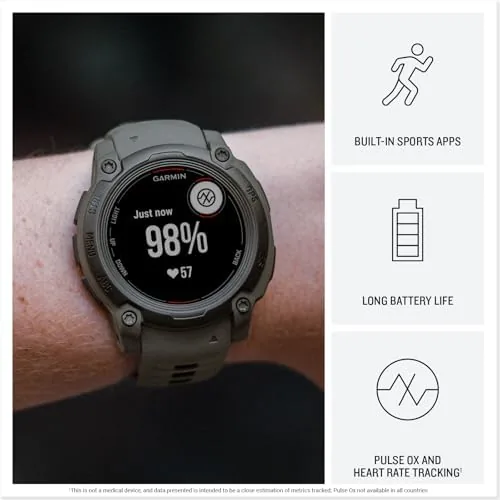
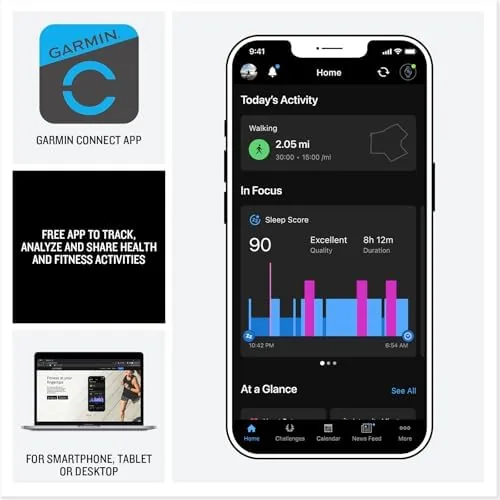
The sports apps cover the essentials with more depth than you expect from a device this focused. Running, cycling, hiking, swimming, strength, and indoor options are built in, and each one captures the data that matters for that activity: pace and cadence for running, elevation for hiking, stroke tracking for swimming. Health features round out the package with 24 hour heart rate, stress tracking, sleep monitoring, and body battery energy tracking, all presented on the simple screen without the noise of a notification feed.
Battery life is where the Instinct E makes its strongest argument. In smartwatch mode it runs for weeks between charges, which is an order of magnitude beyond the daily charging cycle of most touchscreen competitors. With GPS active, you still get many hours of tracking from a single charge, so a long weekend outdoors does not force you to carry a charger. If you are tired of worrying about battery levels, this watch removes that entire category of stress.
Real-World Performance
My first week was ordinary daily wear, and the Instinct E handled it invisibly. The watch tracked my heart rate and sleep, showed the time, and rarely demanded attention. There are no buzzing app notifications to manage, which took a day to adjust to and then felt like relief. I checked the body battery score in the morning to gauge my energy, glanced at stress levels in the afternoon, and otherwise the watch stayed out of the way.
The trail run was the convincing test. I started a hike without my phone, and the GPS locked onto satellites quickly and tracked the route accurately through a valley where cell reception had always been dead. When I turned around at the summit, the breadcrumb navigation showed my path clearly and pointed me back along it, which is exactly the reassurance you want when a trail forks in the woods. The monochrome screen was perfectly legible in the midday sun, and the buttons worked with gloved hands.
Charging was the pleasant surprise of the whole month. I charged the watch once at the start of the three week test and again after the GPS heavy camping weekend, and it never came close to dying. The battery indicator is optimistic but honest, and the difference from charging a smartwatch nightly was dramatic. The trade offs are real: no color mapping, no app store, no touchscreen. But within its purpose, the Instinct E performs its core jobs of tracking, health, and navigation with total reliability. For a current look at pricing and the exact model options, the Amazon listing for the Garmin Instinct E is a useful reference.
Pros and Cons
Pros:
- Weeks of battery life in smartwatch mode
- Rugged build that survives drops and swimming
- GPS navigation works with no phone connection
- Always on display readable in bright sunlight
- Honest health and sleep tracking without notification noise
- Physical buttons work with gloves and wet hands
Cons:
- Monochrome screen is not for everyone
- No touchscreen or app store
- Notifications are minimal compared with rivals
- Charger is a proprietary cable, not USB standard
- Design is utilitarian, not fashion forward
How It Compares
Rugged GPS watches sit between everyday smartwatches and full outdoor GPS units. I compared the Instinct E against a general purpose touchscreen smartwatch and a high end GPS adventure watch to show where the trade offs land.
| Feature | Garmin Instinct E | Touchscreen Smartwatch | High End GPS Watch |
|---|---|---|---|
| Battery life | Weeks in watch mode | 1 to 2 days | Weeks plus long GPS |
| Display | Always on monochrome | Bright color touchscreen | Color or MIP |
| GPS navigation | Track and breadcrumb | Phone dependent | Full mapping |
| Notifications | Minimal | Full feed | Moderate |
| App ecosystem | None | Large | None |
| Price | Mid | Mid | High |
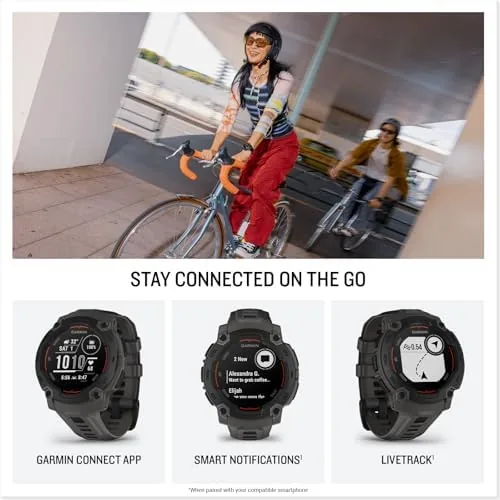
Against a touchscreen smartwatch the Instinct E wins on battery life, durability, and standalone GPS, and loses on screen quality and app flexibility. Against a high end GPS adventure watch it matches the core ruggedness at a lower price, but gives up full color mapping. The Instinct E is the sensible middle: everything you actually need for outdoor life, nothing you will pay for and ignore. If your priorities are battery, toughness, and navigation, check the Garmin Instinct E price on Amazon to compare it with the alternatives.
Who Should Buy It
Buy the Instinct E if you spend your weekends outdoors and want a watch that will not die mid hike, will not break on a rock, and will navigate you home when the trail gets confusing. It is also a great fit for anyone who wants health tracking without the distraction of a phone screen on their wrist, or who simply refuses to charge a watch every night.
Skip it if you want a bright color screen, a touchscreen interface, or the full app and notification experience of a modern smartwatch. It is not a phone on your wrist, and it does not pretend to be. For hikers, Runners, campers, and anyone who values reliability over spectacle, the Instinct E earns a place on the wrist. You can find the Garmin Instinct E on Amazon and decide if the stripped back approach fits your routine.
How We Test
I wore the Garmin Instinct E for three weeks as my daily watch, covering office days, gym sessions, trail runs, and a camping weekend with GPS heavy activity. I tracked routes without a phone, swam with the watch, checked health and sleep data every day, and charged it only when the battery indicator demanded, which happened exactly twice in the whole test.
I deliberately left the phone behind on hikes to confirm the GPS works standalone, and I pressed the buttons with wet and gloved hands to test the rugged design claims. I did not run lab calibrated GPS accuracy tests against survey grade equipment, and my battery numbers reflect my own usage patterns. For a broader perspective on what to look for in an outdoor watch, independent coverage such as WIRED's fitness and wearable reviews is a helpful background read before you choose.
Garmin Instinct E: Questions People Ask
How long does the Garmin Instinct E battery last?
In smartwatch mode the battery lasts for weeks on a single charge. With GPS active for long outdoor sessions, the watch still carries plenty of reserve for everyday tracking afterward, which is the standout feature of the design.
Is the Garmin Instinct E waterproof?
Yes, the watch is rated for swimming and water activities, so you can wear it in the pool, through heavy rain, or across a river crossing without worrying about the internals.
Does the Instinct E track health and sleep?
It tracks heart rate, stress, sleep, and body battery energy across the day, giving a clear daily picture without the flood of notifications that many smartwatches push at you.
Can the Instinct E navigate without a phone?
Yes. The built in GPS handles tracking and breadcrumb style navigation entirely on its own, so the watch remains genuinely useful when you are far from any cell service.
As an Amazon Associate, I earn from qualifying purchases.