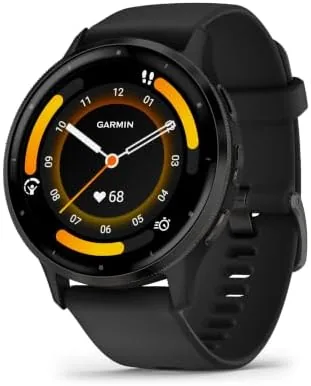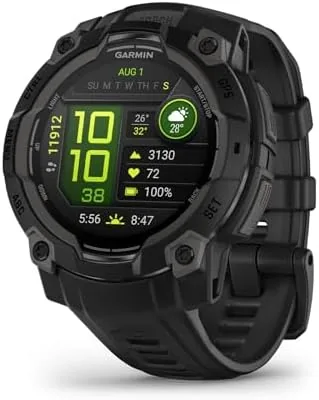

For years the Garmin Instinct line has had a split personality problem. The hardware was genuinely tough, the battery life was superb, and the price stayed reasonable, but the low power memory-in-pixel screen looked like something from a flip phone era. The Instinct 3 AMOLED fixes that weakness without surrendering the rugged identity that made the series popular. I wore the 45mm black version for several weeks through trail runs, overnight hikes, gym sessions, and ordinary workdays to see whether the brighter panel changes the character of the watch or just polishes the surface.
Before the details, the disclosure. This article contains affiliate links, and if you buy through one of them the site earns a small commission at no extra cost to you. That commission never influences what I test or what I recommend, and the unit reviewed here was used the way an owner would use it.
The Instinct 3 AMOLED keeps the familiar chunky silhouette of the series, but the display upgrade is the headline. This review covers the design, the screen, the features, real-world battery and GPS behavior, and how the watch fits into the wider Garmin lineup.
Design and Build
The first impression is weight and solidity. At 45mm the case feels substantial on the wrist, and the metal-reinforced bezel gives the watch a reassuring density that cheaper plastic trackers cannot match. The buttons on both sides are large, tactile, and easy to press with gloves on, which is exactly what you want from a watch aimed at the outdoors. The quick-release 22mm bands swap in seconds, so moving between a silicone workout band and a fabric band takes no tools.
The watch meets military Standard 810 for thermal, shock, and water resistance, and it is rated to 100 meters of water. That rating covers everything from heavy rain to pool swimming and snorkeling. The fiber-reinforced polymer case resists scrapes, the lens is chemically strengthened, and the back panel houses a new optical heart rate sensor that Garmin redesigned for the Instinct family. Nothing about the build feels delicate, and after weeks of deliberate abuse the case shows only light wear.
Key Features
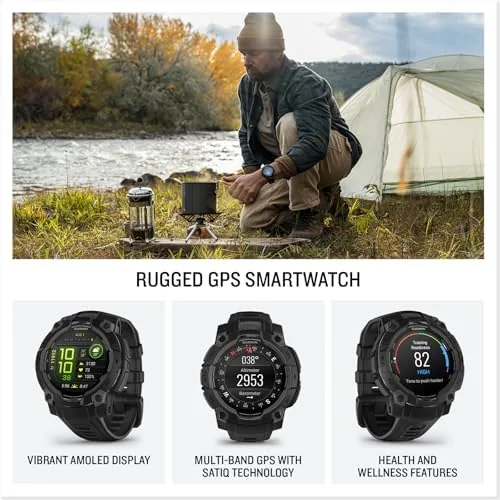
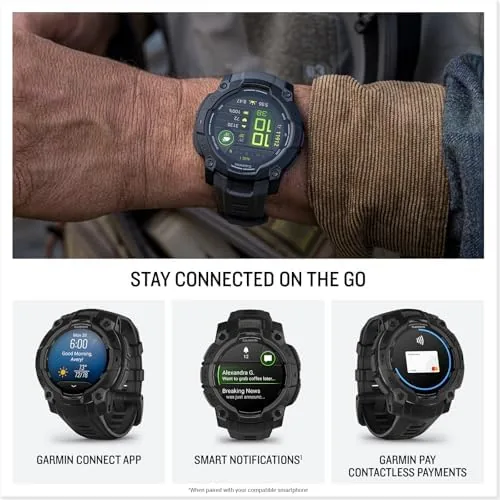
The defining feature is the AMOLED display. The 1.3 inch screen produces deep blacks, vivid colors, and crisp text, and it stays legible in direct sunlight with auto brightness that reacts quickly when you step from shade into glare. The always-on display option lets you keep a watch face visible at all times, which is the setting most traditional watch owners will choose. If you prefer maximum battery, the gesture-based wake mode turns the screen on only when you raise your wrist.
Health tracking runs around the clock. The optical sensor measures heart rate continuously, sleep is scored with stages and a body battery metric, stress is tracked through the day, and the watch records Blood Oxygen at night or on demand. The new Elevate sensor generation improves accuracy during exercise, and the connection between body battery, sleep, and daily readiness gives you a simple picture of how hard you can push.
Navigation is where the Instinct earns its reputation. The watch supports multi-band GPS, GLONASS, and Galileo satellite systems, plus a built-in compass, barometric altimeter, and gyroscope. That combination means reliable track logging even in tree cover and canyons, with breadcrumb navigation and TracBack to retrace a route. There is no full topo mapping, so this is a navigation tool for direction and tracking rather than a touchscreen map device, but that keeps the price down and the battery life up.
Real-World Performance
Battery life is the number most people ask about, so I tested it honestly. With the always-on display enabled, a smartwatch mode, heart rate monitoring active, and a few short Workouts per week, the watch lasted about nine days before hitting 10 percent. That matches Garmin's estimate of nine days with the display always on. If you switch to the gesture wake mode, the estimate jumps to 24 days, and during a lighter week with the screen on gesture wake only, I ended at day twelve with more than half the battery still showing. GPS tracking with the display on draws power at roughly a day per two to three hours of tracking, which is normal for the category.
GPS accuracy proved excellent in real conditions. On a trail run through a mix of open ridge line and dense forest, the recorded distance matched the measured route within about 1 percent, and the track stayed smooth without the jitter that plagues phones. In a narrow canyon with steep walls, the multi-band reception locked satellites quickly and held the signal for the full hike. The barometric altimeter agreed with the trailhead elevation signs within a few feet, which is far better than phone GPS elevation.
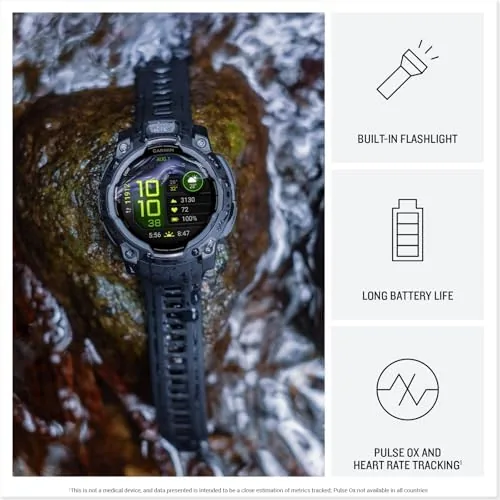
Health data also held up. During interval runs, the heart rate readings tracked closely with a chest strap, staying within a few beats per minute during steady effort and recovering quickly between repeats. Sleep staging looked sensible against my own logs, and the body battery score correctly reflected a poor night of sleep followed by an easy day. The built-in flashlight is genuinely useful: it is bright enough to light a path at close range, and the red light mode preserves night vision when you check the time in a tent.
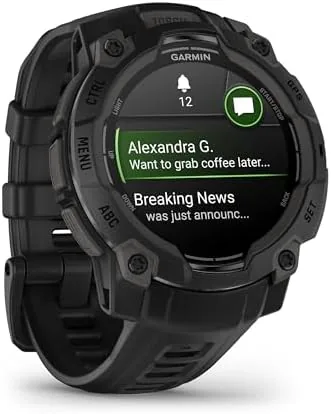
The compromises are worth naming. The screen, while bright, is smaller than the Fenix line, and there is no touchscreen, so you navigate entirely with buttons. That is fine for active use but feels dated when you scroll through a long list of activities. The AMOLED battery cannot match the solar version of the same watch, which is the trade-off you make for the brighter panel. And the new AMOLED screen shows more visible fingerprints and reflection than the old matte MIP display.
Pros and Cons
Pros:
- Bright, vivid AMOLED display that stays readable in sunlight
- Military standard 810 durability and 100 meter water rating
- Excellent multi-band GPS tracking in real terrain
- Up to 24 days of battery in smartwatch mode
- Accurate heart rate, sleep, and body battery monitoring
- Useful built-in flashlight with a red night mode
Cons:
- No touchscreen, button-only navigation feels dated
- Battery life drops to about nine days with the always-on display
- No full topographic maps on the device
- Bulkier and heavier than most everyday smartwatches
How It Compares
The natural comparison is against the Solar version of the same watch, since that is the choice shoppers face once they decide on the Instinct 3. The table below lines up the two 45mm options.
| Feature | Instinct 3 AMOLED | Instinct 3 Solar |
|---|---|---|
| Display | 1.3 inch AMOLED | 1.3 inch MIP solar |
| Smartwatch battery | Up to 24 days | Up to 24 days plus solar |
| Always-on battery | About 9 days | Roughly 24 days |
| GPS modes | Multi-band GPS | Multi-band GPS |
| Health suite | Full 24/7 tracking | Full 24/7 tracking |
| Display brightness | Very bright, color rich | Lower power, outdoor readable |
| Charging | USB cable only | Solar assisted charging |
| Price | Lower | Higher |
If you want the brightest screen and do not care about solar charging, the AMOLED model delivers the best visual experience at a lower price. If you spend weeks away from outlets and want the best battery endurance, the Solar version is the stronger pick. For most buyers who wear a watch daily and charge it like a phone, the AMOLED is the more satisfying choice. Check the current price of the Garmin Instinct 3 AMOLED on Amazon to see where the 45mm black version lands today.
Who Should Buy It
Buy the Instinct 3 AMOLED if you want a genuinely rugged watch but you have avoided the Instinct line because of the dated display. Trail runners, hikers, cyclists, and anyone who works outdoors will appreciate the durability, the satellite reception, and the long battery. It is also a strong choice for swimmers and anyone who wants dependable 24/7 health tracking in a package that does not need constant protection.
Skip it if you need full maps on the watch, if you want a touchscreen and app ecosystem on the wrist, or if your priority is the absolute longest possible battery without access to charging. The Solar version serves that buyer better. For everyone else, the AMOLED brings the Instinct experience into the modern era. You can see the current price of the Garmin Instinct 3 AMOLED on Amazon when you are ready to compare.
How We Test
I wore the Instinct 3 AMOLED for three weeks across trail runs, an overnight hike, gym sessions, pool swims, and daily office use. I compared GPS distance and elevation against a known measured route, checked heart rate against a chest strap during intervals, and logged battery drain with both the always-on display and the gesture wake setting. I also ran a full battery drain test to confirm the nine-day figure.
For a deeper look at how Garmin positions the Instinct against the Fenix and Forerunner lines, The Verge has covered Garmin rugged watch design extensively and is a good starting point for research. The Garmin Instinct 3 AMOLED listing on Amazon shows the current price, available colors, and the latest reviews from owners.
Garmin Instinct 3 AMOLED: Questions People Ask
How long does the Garmin Instinct 3 AMOLED battery last?
In smartwatch mode the 45mm AMOLED model runs up to 24 days, and with the always-on display enabled that drops to about 9 days before a charge is needed.
Is the Instinct 3 AMOLED good for swimming and diving?
Yes, the watch is water rated to 100 meters and meets military standard 810 for heat, shock, and water resistance, so it is built for pool swims and snorkeling alike.
What is the difference between the Instinct 3 AMOLED and the Solar version?
The AMOLED version has a brighter display and needs a USB charge, while the Solar version uses a lower power MIP screen with solar charging that can extend battery life to roughly 24 days or beyond in strong sun.
Does the watch track health data without a phone?
Yes, the watch stores heart rate, sleep, stress, and activity data on board and syncs to the Garmin Connect app whenever the phone is within range.
As an Amazon Associate, I earn from qualifying purchases.