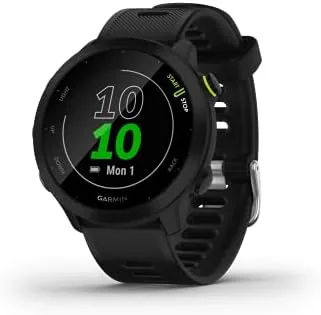

Running watches divide the market into two camps. On one side sit Fitness Trackers that count steps and call it training, and on the other sit thousand-dollar multisport computers with maps, music, and every metric a data scientist could want. The Garmin Forerunner 55 lands between them, offering real training tools at a price that does not scare off a first-time runner. Its headline feature is Daily Suggested Workouts, a system that reads your recovery, your fitness level, and your race goals to tell you exactly what to run today. I wore the Forerunner 55 for three weeks through easy runs, intervals, a tempo session, and a long Sunday effort, and I paid close attention to how well the watch's advice matched how I actually felt. This review covers the design, the training features, the battery life, and who should buy it.
Before the details, the standard note. This article contains affiliate links, and if you buy through one of them the site earns a small commission at no extra cost to you. That commission never changes what I test or what I recommend.
Design and Build
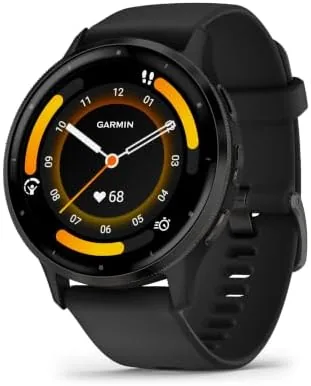
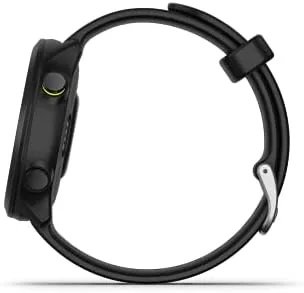
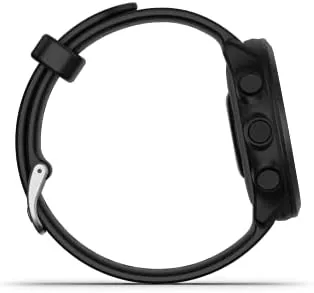
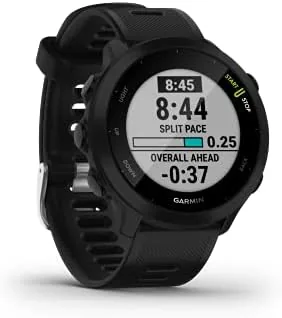
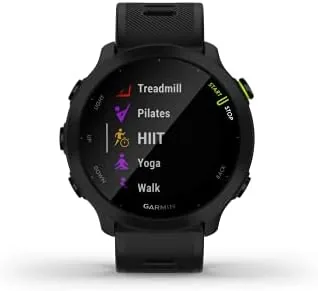
The Forerunner 55 keeps the classic Garmin running watch silhouette: a round 43 millimeter case, five physical buttons around the bezel, and a color display that stays readable in bright sunlight. The buttons are the standout design decision, because they let you start a run, lap, and stop with a gloved finger or while wet, something touchscreens cannot manage. The case is lightweight at just over 37 grams, light enough to forget you are wearing it.
The display is a 1.04 inch color screen with a resolution that favors readability over pixels. It shows time, heart rate, and pace clearly, and the backlight handles night runs without glare. The watch face is a single pane of glass with a 22 millimeter quick-release band, so swapping colors or sizes takes seconds with no tools.
Build quality meets the Garmin standard of durability. The case is fiber-reinforced polymer, the lens is scratch-resistant glass, and the watch is water rated to 5 ATM, which means it survives rain, sweat, and swimming without complaint. There is no touchscreen and no rotating bezel, which keeps the operation simple and the price low.
Key Features
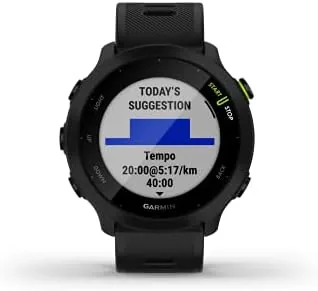
Daily Suggested Workouts are the feature that defines this watch. Each morning the Forerunner 55 analyzes your overnight recovery, your recent training load, and your current fitness, then recommends a run with a specific pace and duration, or tells you to rest. The suggestions adapt automatically, so a hard interval day is followed by an easy recovery run without you doing any planning. It is a personalized coach on your wrist, and it works without a subscription.
Built-in GPS is the second pillar. The watch uses GPS, GLONASS, and Galileo satellites to track your pace and distance accurately without a phone, and it locks onto a signal quickly at the start of a run. This is the feature that separates A Running Watch from a step counter, and the Forerunner 55 delivers it with no pairing required.
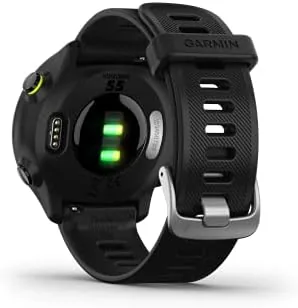
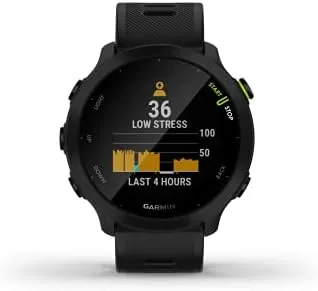
Heart Rate and health tracking round out the sensor suite. The wrist-based optical sensor tracks heart rate continuously, feeds your training status, and powers metrics such as VO2 max, training load, and recovery time. The watch also monitors sleep, stress, and Body Battery, which measures your energy reserves, giving you the recovery picture a good coach would want.
The battery is the practical headline. Garmin rates the Forerunner 55 for up to two weeks of smartwatch mode and about 20 hours with GPS enabled. That two-week figure held up in my testing, and it means the watch does not become another nightly charging habit.
Real-World Performance
GPS accuracy was solid across every session. On a known three mile loop with marked mile markers, the watch reported distance within about one hundred feet of the actual route, which is right in line with expectations for a wrist GPS receiver. Pace readings settled quickly at the start of each run, and the pace alerts buzzed reliably whenever I drifted outside my target window.
Daily Suggested Workouts proved genuinely useful. On a day when my Body Battery sat low after a poor night of sleep, the watch suggested an easy twenty minute jog instead of the hard workout I had half-planned, and it was right. On fresh legs it suggested intervals with specific paces, and I noticed my interval paces improving across the three weeks as the watch pushed me progressively. The suggestions are conservative at first, which suits beginners, and they scale up as your fitness improves.
Heart rate tracking was accurate during steady running, matching a chest strap within a few beats per minute at moderate effort. Wrist optical sensors always lag slightly during fast intervals, and the Forerunner 55 showed the same behavior, briefly under-reporting heart rate at the top end of a sprint before catching up. For interval training at high intensity, a chest strap remains more precise, but for daily running the wrist sensor is more than good enough.
Battery life matched the claims. I ran the watch for a full fourteen days with daily activity tracking, sleep tracking, and three GPS runs, and it still had charge remaining at the end. That kind of longevity is the quiet feature that makes the Forerunner 55 feel like a running tool rather than another gadget to keep charged.
Pros and Cons
Pros:
- Daily Suggested Workouts build a personalized plan automatically
- Built-in GPS tracks pace and distance without a phone
- Up to two weeks of battery life in smartwatch mode
- Lightweight 43mm case comfortable for all-day wear
- Water rated to 5 ATM for rain, sweat, and swimming
Cons:
- Wrist heart rate lags slightly during intense intervals
- No music storage, so runs need a phone for tunes
- Lacks touchscreen, maps, and built-in payments
How It Compares
The Forerunner 55 is most often compared against its bigger sibling, the Forerunner 255, and against a cheap fitness tracker. Each fills a different need.
| Feature | Forerunner 55 | Forerunner 255 | Budget Fitness Tracker |
|---|---|---|---|
| GPS | Yes, built in | Yes, multi-band option | Usually no, phone only |
| Daily Suggested Workouts | Yes | Yes | No |
| Battery life | Up to 2 weeks | Up to 2 weeks | Several days |
| Music storage | No | Optional on some models | No |
| Price | Lower | Moderate | Lowest |
Against the Forerunner 255, the 55 gives up a dual-band GPS option, more advanced training metrics, and features like music and payments, but it keeps the core training tools at a lower price. Against a budget fitness tracker, it wins on built-in GPS and the adaptive workout engine, which are the two features that make a real difference to a runner. If you want to compare current pricing, the Garmin Forerunner 55 is listed on Amazon.
Who Should Buy It
Buy the Garmin Forerunner 55 if you are a runner, whether you are starting your first training block or grinding toward a personal best. The Daily Suggested Workouts give you structure without a coaching subscription, the built-in GPS frees you from carrying a phone, and the two-week battery removes the charging chore from your routine.
Skip it if you want to run with music from your watch, if you need turn-by-turn maps for trail running, or if you want payment and contactless features on your wrist. For those needs the Forerunner 255 or a higher-tier model fits better. For everyone else, the Forerunner 55 is the best entry point into serious running tech. The Garmin Forerunner 55 is available on Amazon.
How We Test
I wore the Garmin Forerunner 55 for three weeks across a full range of running sessions, including easy runs, interval work, a tempo effort, and a long run. I compared GPS distance against known route markers, checked heart rate against a chest strap during steady and interval efforts, and used the Daily Suggested Workouts as my primary training guide to see how well the recommendations matched my effort and recovery.
I tracked battery drain across the full two week window, tested the sleep and Body Battery features, and verified the water rating with a sweaty long run and a post-run rinse. For independent context on how the Forerunner 55 fits the broader running watch market, The Verge review of the Garmin Forerunner 55 offers a solid comparison of its strengths and limits. The Forerunner 55 listing on Amazon shows the current price and available colors.
Garmin Forerunner 55: Questions People Ask
How long does the Garmin Forerunner 55 battery last?
In smartwatch mode the Forerunner 55 runs for up to two weeks, and with GPS enabled it lasts about 20 hours, which covers long runs and most ultramarathons.
Does the Forerunner 55 have built in GPS?
Yes. The watch includes GPS, GLONASS, and Galileo satellite support, so you can record pace and distance without carrying a phone.
What are daily suggested workouts on the Forerunner 55?
The watch builds an adaptive training plan from your fitness history and recovery, suggesting runs or rest days that adjust automatically as your data changes.
Can the Forerunner 55 track heart rate?
Yes. Wrist-based heart rate monitoring is built in, along with pulse ox, stress, sleep, and Body Battery metrics for a full recovery picture.
As an Amazon Associate, I earn from qualifying purchases.