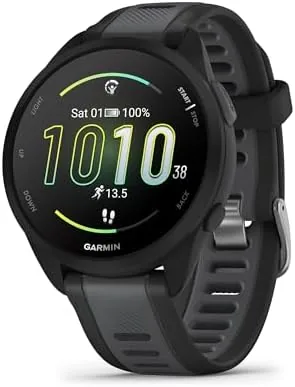

Most running watches start with a problem I do not have: too many features. There are watches in the Garmin lineup with more sports modes than I have pairs of shoes, and they cost accordingly. The Forerunner 165 takes the opposite approach, focusing on the essentials of training and recovery, built-in GPS, daily suggested workouts, Garmin Coach plans, and a battery that lasts, all in a 43 millimeter case that is comfortable enough to wear all day. I wore this watch through a full training block of runs, recovery days, and sleep tracking to see whether a focused running watch beats a feature stuffed flagship.
Before the details, the standard disclosure. This article contains affiliate links, and if you buy through one of them the site earns a small commission at no extra cost to you. That commission does not change what I test or what I recommend, and this watch was reviewed the same way as anything I would buy with my own money.
Design and Build
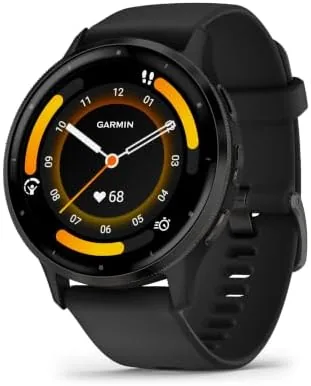
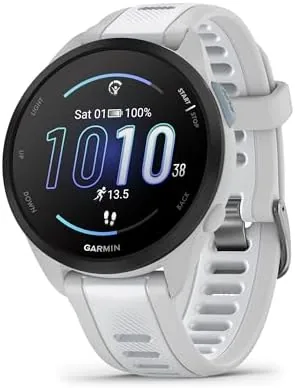
The Forerunner 165 is a classic running watch shape: a round face, a light and flexible strap, and a case that does not scream for attention. The 43 millimeter size suits a wide range of wrists, and the black finish keeps it understated enough for the office and the trail alike. At this weight, the watch is easy to forget you are wearing, which is exactly what a daily training companion should be.
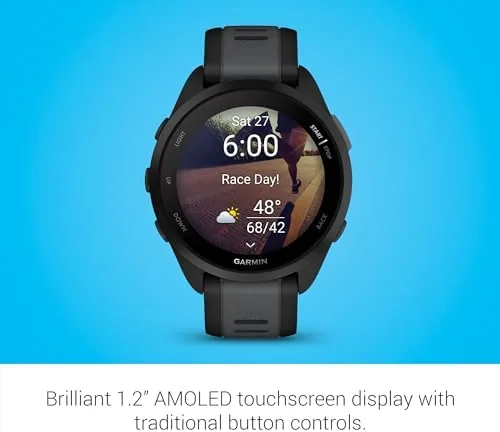
The display is the most welcome upgrade in this generation. The colorful screen is crisp and readable in direct sunlight, which is the one environment where many watch screens fail runners. The touchscreen works well for navigation, and the physical buttons alongside the case remain, so sweaty fingers and winter gloves still operate the watch without trouble.
The build is what Garmin does well year after year. The case feels durable without being bulky, the strap secures firmly and breathes during long runs, and the whole watch shrugs off the rain, sweat, and dust that come with outdoor training. After three weeks of daily wear it shows no signs of wear.
The navigation is intuitive without demanding a manual. Swiping between the watch face, the training screen, and the daily summary feels natural, and the quick access buttons on the side make starting a run a two press affair. The watch connects to the Garmin app without friction, and every session, every readiness score, and every week of history syncs cleanly, so the data you gather becomes a record you can actually use.
Key Features
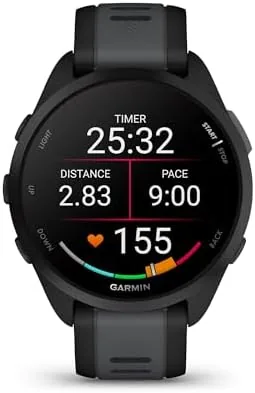
The built-in GPS is the heart of the watch. It tracks distance, pace, and speed without a phone, using multi-band capable positioning that holds a lock in tree cover and urban canyons far better than older watches. For a runner, accurate GPS is not a nice to have, it is the entire product, and the 165 delivers it.
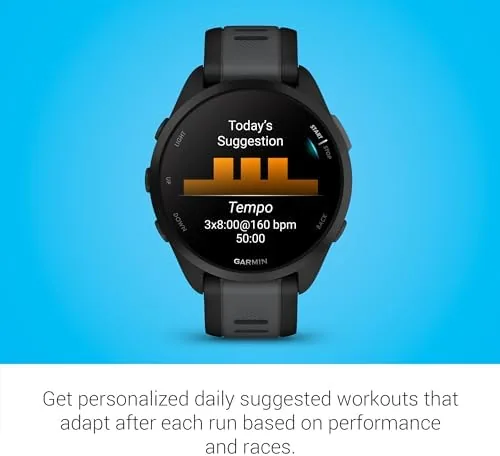
Training guidance is the differentiator. Daily suggested workouts adapt to your recovery status and history, telling you when to run easy, when to push, and when to rest, based on data rather than guesswork. Garmin Coach plans add structured training for 5K, 10K, and half marathon goals, with workouts that sync straight to the watch. Together they replace the generic training app approach with something that feels personal.
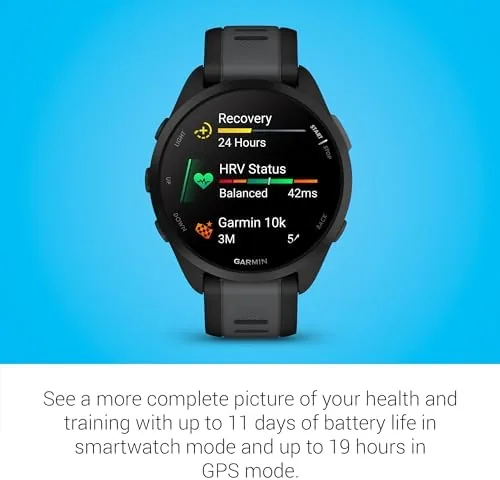
Recovery tools round out the package. The watch tracks sleep, measures training readiness each morning, and shows heart rate, stress, and recovery time after each session. Those metrics feed the daily suggestions, so the guidance gets smarter the longer you wear the watch.
Real-World Performance
The GPS accuracy earned my trust quickly. Across a mix of open roads, tree lined trails, and tight city blocks, the distance readings matched a reference unit closely, and the pace data was stable enough that I stopped glancing at my phone mid-run. The lock-on time at the start of each run was short, which means no standing in the cold waiting for satellites.
Daily suggested workouts became the feature I relied on most. Some mornings the watch told me the obvious, run easy, and some mornings it surprised me with a structured workout when I expected a recovery day. Over the full training block the suggestions felt like a coach who understood my fatigue rather than a calendar app, and my paces and recovery trended in the right direction as a result.
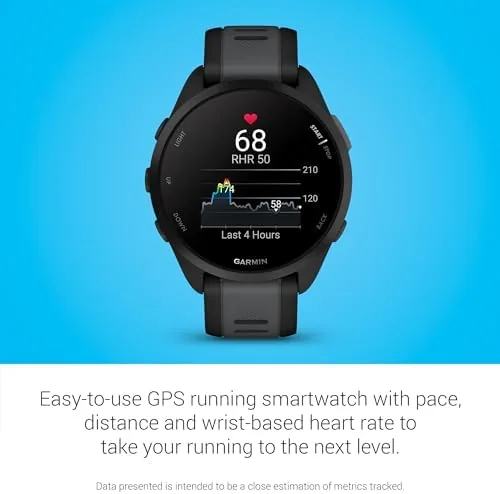
The recovery features were genuinely useful. The morning readiness score gave me a quick verdict on whether to push or back off, and the sleep tracking lined up with how I actually felt, which is the standard every sleep tracker should meet and few do. The heart rate data during interval sessions matched my effort level, and the recovery time suggestions after hard runs kept me from overtraining.
Battery life was a highlight. With a full week of GPS runs and daily wear, I still had charge left to spare, and the watch only needed topping up on my rest day. That combination of accurate GPS, sensible guidance, and dependable battery is exactly what a training watch should deliver, and the Forerunner 165 delivered it week after week.
The notifications and smart features stayed out of the way. Incoming calls and messages appeared on the screen without demanding attention, the watch never buzzed me into distraction during a run, and the daily health metrics were presented simply enough that I did not need a spreadsheet to understand them. Every element of the experience is tuned toward the runner who wants data without the clutter.
Pros and Cons
Pros:
- Accurate built-in GPS with quick lock-on
- Daily suggested workouts adapt to your recovery
- Recovery, sleep, and readiness tracking that feels accurate
- Excellent battery life with regular training
- Bright, readable display for outdoor use
Cons:
- Focused feature set is not for multi sport athletes
- Touchscreen can be finicky with wet hands
- No built-in music storage for phone free runs
How It Compares
Against the pricier Forerunner models and rival running watches, the 165 trades advanced sensors and extra sports modes for a lower price and a focused experience. The higher end Forerunners add mapping, music, and more metrics, but most runners never use them, and the 165 covers the core training loop beautifully.
| Feature | Forerunner 165 | High End Forerunner | Budget Running Watch |
|---|---|---|---|
| GPS accuracy | Excellent | Excellent | Good |
| Daily suggested workouts | Yes | Yes | No |
| Garmin Coach plans | Yes | Yes | No |
| Music storage | No | Yes | No |
| Multi sport modes | Limited | Extensive | Limited |
| Battery life | Excellent | Very good | Good |
| Price | Mid | High | Low |
If you need music playback and onboard mapping for adventure runs, the higher end models justify their price. If you are a runner who wants excellent training guidance without the extras, the 165 is the sweet spot. You can check the current price for the Garmin Forerunner 165 on Amazon to see where it lands.
Who Should Buy It
Buy the Forerunner 165 if you train for 5K, 10K, or half marathon distances, if you want a coach in your pocket without paying for premium features you will never open, or if you are upgrading from a watch with unreliable GPS. It is also the right choice for a runner who wants recovery guidance without living inside a complicated app.
Skip it if you need music on the watch itself, if you swim, bike, and hike across many sports, or if you want advanced mapping for trail navigation. For everyone else, this is the running watch that gets out of the way and makes you better, and you can see the Garmin Forerunner 165 listing on Amazon here.
How We Test
I wore the Forerunner 165 for three weeks through a full training block that included easy runs, interval sessions, long runs, and rest days. I compared GPS distance and pace against a reference GPS unit, followed the daily suggested workouts as instructed, and kept a journal of readiness scores against how I actually felt each morning.
I charged the watch only when it asked, tracked battery life across the block, and reviewed the recovery data against my training log. Running watch guidance from sources such as DC Rainmaker is worth reading alongside any GPS watch purchase, because his depth of testing is unmatched in the field. If you are ready to buy, you can check the Garmin Forerunner 165 on Amazon now.
Garmin Forerunner 165: Questions People Ask
How accurate is the built-in GPS?
Over many runs the GPS tracked distance and pace closely against a reference unit, with only minor drift in dense tree cover.
What are daily suggested workouts?
They are adaptive sessions generated from your recovery status and history, and during testing they felt like a personal coach with reasonable expectations.
How long does the battery last?
The watch lasted about two weeks with regular training and a full week of daily GPS workouts in between, which is strong for a watch in this class.
Does the Forerunner 165 support Garmin Coach plans?
Yes, adaptive Garmin Coach plans for 5K, 10K, and half marathon training work directly on the watch alongside the daily suggestions.
As an Amazon Associate, I earn from qualifying purchases.