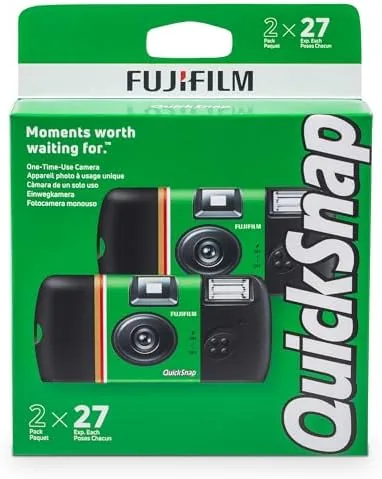

There is something quietly appealing about a camera that offers no settings, no screens, and no way to review a shot until the film is developed weeks later. That is the entire premise of the Fujifilm QuickSnap Flash 400, a 35mm one-time-use camera loaded with ISO 400 film and a built in flash. This listing bundles two of them, each good for 27 exposures, which is enough film for a wedding, a road trip, or a long weekend with friends. I shot both cameras across several weeks to see whether a disposable film camera still earns a place in a phone-obsessed world, and this review is the honest result.
Before the details, the standard note. This article contains affiliate links. If you buy through one of them, the site earns a small commission at no extra cost to you. That commission never influences what I test or what I recommend.
Design and Build
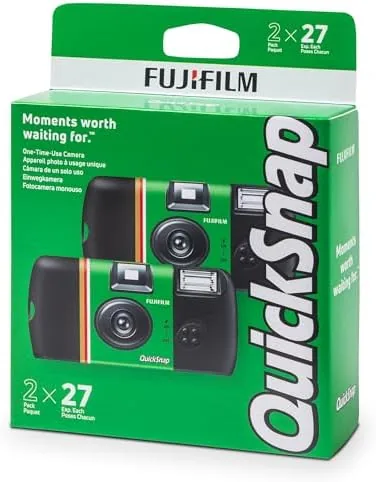
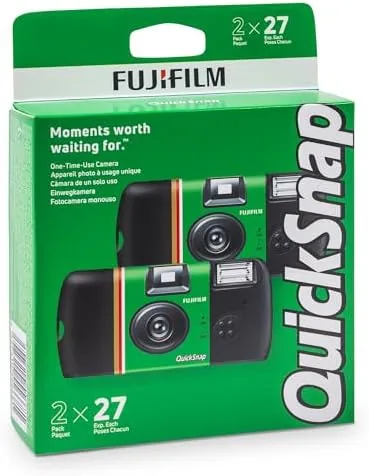
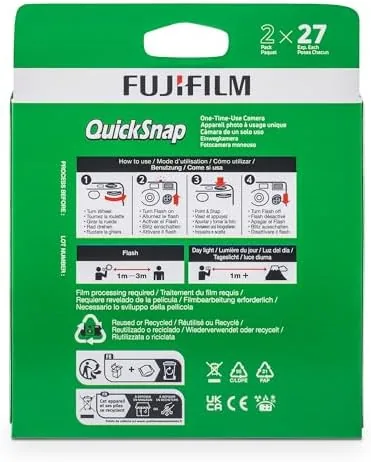
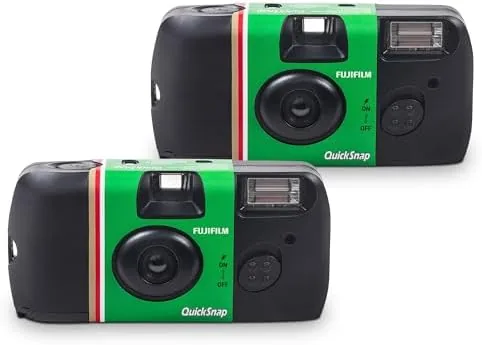
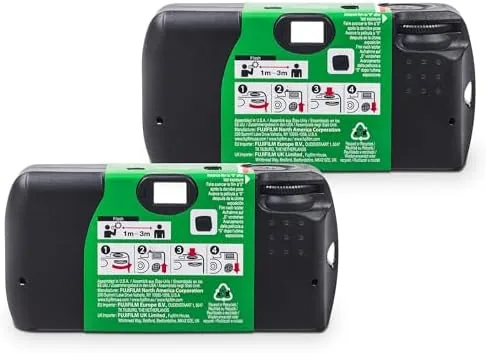
The QuickSnap is a familiar cardboard and plastic shell with a fixed focus lens, a shutter button, a flash ready indicator, and a thumb wheel that advances the film. There is nothing to learn, which is the whole point. A child, a grandparent, or a guest at a wedding can pick it up and take a correctly exposed photo without a single instruction.
The build is rugged in a functional way. The cardboard outer sleeve protects the internal plastic body, the film stays sealed until you develop it, and the camera survives being passed around, dropped in a bag, and handled by eager hands at an event. The lens sits behind a small opening with a protective cover, and the flash unit is fixed at the top corner, always ready and always on unless you deliberately slide the cover over it to force the flash off.
Key Features
The film is the feature that matters. Fujifilm loads the QuickSnap with its 400 speed color negative film, a daylight balanced stock known for warm, pleasing color and fine grain for its speed. At ISO 400, the camera can handle overcast days, shade, and reasonably well lit interiors, and the fixed focus lens keeps everything from about three feet to infinity acceptably sharp.
The built in flash extends that versatility. It fires automatically for indoor and low light shots, and its effective range reaches roughly ten feet, which is plenty for party snapshots and evening gatherings. A small indicator glows when the flash is charged, and the camera draws power from a tiny battery sealed inside, so there are no batteries to buy and no settings to manage.
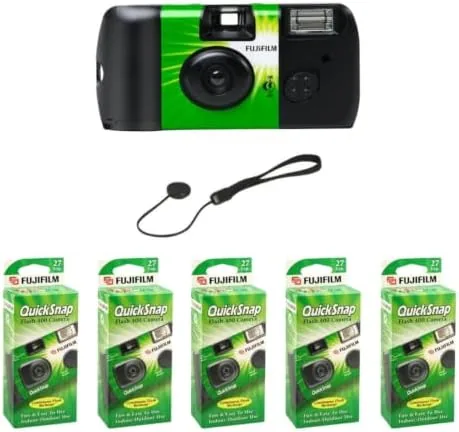
The two pack format is the practical advantage of this listing. One camera can be shared at a birthday party while the other waits for a family trip, or you can simply double your shooting for a longer event without buying a second package. For a look at current pricing on the two pack, the Amazon listing for the Fujifilm QuickSnap Flash 400 2 pack is a useful reference.
Real-World Performance
I shot the first camera at an afternoon outdoor gathering with mixed sun and shade. The photos came back with the warm, slightly nostalgic color Fujifilm film is known for, and the fixed focus lens kept faces sharp from a few feet away. Overcast light produced balanced exposures, and the ISO 400 speed handled the shade under trees without the muddy shadows you get from slower film.
The second camera went to an indoor evening event with the flash in play. At close range, the flash produced clean, well lit faces with that classic flash look that has become fashionable again. Subjects beyond the roughly ten foot flash range came out dim, which is expected and worth remembering: the flash is a close range tool, not a room illuminator. I also brought the second camera along for a few daytime errands, and the covered flash produced crisp outdoor shots with the ISO 400 stock handling the daylight with ease.
The deliberate limitations are part of the appeal, but they are limitations. There is no zoom, no exposure control, and no way to know if a shot worked until development. Some photos in my rolls were slightly overexposed in harsh noon light, and a few flash shots suffered from mild red eye. None of that spoils the experience, because the camera is sold as a simple, social object, and it delivers exactly that.
The price is easy to justify when you think about the alternative. Two cameras for the price of a modest dinner cover an entire event with genuine film results, and because the cameras are cheap enough to hand over freely, they end up capturing candid moments that a careful photographer with an expensive body would never get. That trade, the willingness to trade control for spontaneity, is what keeps disposables alive.
Pros and Cons
Pros:
- Warm, attractive color from Fujifilm ISO 400 film
- Completely self contained, no batteries or settings to manage
- Built in flash works well for indoor and evening shots
- Two pack covers 54 total exposures for events
- Simple enough for anyone to use without instructions
- Developed prints carry a nostalgic film look
Cons:
- No zoom, exposure control, or way to review shots
- Flash range is limited to roughly ten feet
- Harsh noon light can cause mild overexposure
- Developing the film costs extra on top of the camera
How It Compares
Disposable camera shoppers typically weigh a single-use film camera like this against a cheap reusable film camera and a phone with a retro filter app. I compared all three to show what the QuickSnap actually offers.
| Feature | QuickSnap 2 Pack | Reusable Film Camera | Phone with Filter App |
|---|---|---|---|
| Price | Two cameras included | Camera plus film rolls | Free with phone |
| Ease of use | Point and shoot | Learn controls | Familiar |
| Flash | Built in | Varies | Built in |
| Film look | Authentic | Authentic | Simulated |
| Risk of losing camera | Low cost | Higher cost | Phone is costly |
| Sharing at events | Excellent | Good | Risky |
| Exposures | 54 total | Unlimited rolls | Unlimited |
Against a reusable film camera, the QuickSnap wins on simplicity and cost per camera, while the reusable camera wins on long term economy if you shoot often. Against a phone with a retro filter, the QuickSnap wins on authentic film character and on social practicality, because handing a disposable to a guest at a wedding costs a few dollars instead of risking an expensive phone. For events and travel where you want a genuine film record, the two pack is the simplest path to that result.
Who Should Buy It
Buy the QuickSnap Flash 400 two pack if you are attending a wedding, throwing a party, going on a trip, or simply want to try film photography without buying a camera. It is also a wonderful gift for a young photographer, because there is no gear to maintain and the delayed reveal of developed prints is genuinely exciting.
Skip it if you want full control over exposure, if you plan to shoot more than a few rolls a year, or if the per shot cost plus developing feels wasteful to you. For everyone else, this is a delightful and affordable way to make memories on film. You can check the current price for the Fujifilm QuickSnap 2 pack on Amazon when you are ready to buy.
How We Test
I shot both cameras over several weeks in a range of conditions: an outdoor gathering in mixed sun and shade, an indoor evening event with the flash, close range portraits, and casual travel scenes. I developed the film at a commercial lab and evaluated color, sharpness, exposure accuracy, and flash range on the printed and scanned results.
I did not test the cameras underwater or in extreme cold, and results will vary with the lab that develops your film, so my findings reflect standard processing. For independent background on film photography and disposable cameras, the film photography coverage from CNET explains why the format still appeals. The Fujifilm QuickSnap Flash 400 2 pack listing on Amazon shows the current price.
Fujifilm QuickSnap Flash 400 2 Pack: Questions People Ask
How many photos can each QuickSnap camera take?
Each camera is loaded with a 27 exposure roll of Fujifilm ISO 400 color film, so a two pack gives you 54 total shots across both cameras.
Do I need to wind the film or use batteries?
No. The camera is completely self contained. You advance the film with a thumb wheel after each shot, and the built in flash is powered by the small battery sealed inside the camera.
When should I use the flash on a QuickSnap?
The flash is best for indoor shots and low light scenes within a few feet, and it also helps fill harsh shadows in some daylight situations. Its useful range is roughly ten feet.
How do I get the photos developed?
Take the whole camera to a photo lab or a participating pharmacy, and the lab develops the film and returns prints or digital scans. The camera shell is opened during the process.
As an Amazon Associate, I earn from qualifying purchases.