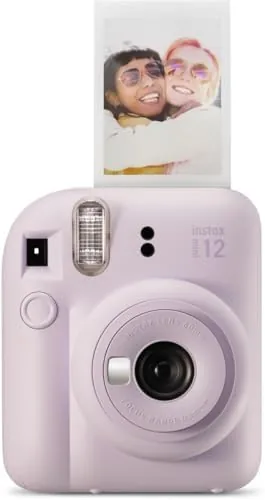

Instant cameras have always been judged on one thing: whether the shot comes out looking like anything. The older Instax models gave you two kinds of disappointment, a frame bleached white by the flash or a frame so dark it looked like a mistake, and you never knew which one you had until the film developed. The Fujifilm Instax Mini 12 is the model that claims to fix that, with automatic exposure that reads the light before every shot, a proper selfie mode with a mirror, and parallax correction for close-up framing. I carried the lilac purple model through a month of parties, weekend trips, and kitchen-table experiments to find out whether the most popular instant camera in the world has finally learned to shoot.
Before the details, the disclosure. This article contains affiliate links, and if you buy through one of them the site earns a small commission at no extra cost to you. That commission never changes what I test or what I recommend.
Design and Build
The Mini 12 is a chunky, rounded camera with a soft pastel finish, and it is designed to be passed around a room without instruction. The lens sits on a rotating barrel at the front, the shutter button sits under your index finger, and the film ejects from a slot on top after every shot. The lilac purple color is a gentle, light lavender that photographs well and stays clean against fingerprints.
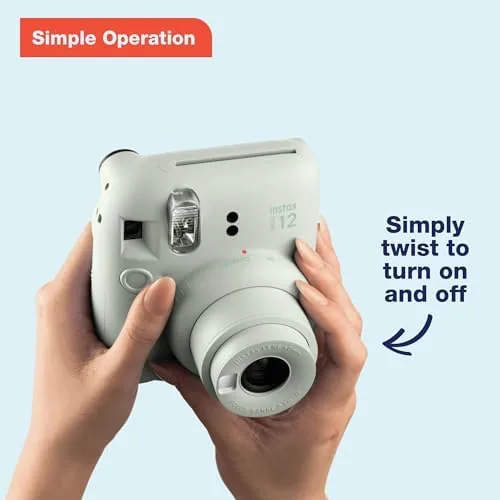
The build is simple and honest. The body is a two-tone plastic that feels solid enough for a camera that will spend its life at parties, the shutter press is light and reliable, and the film door on the back latches cleanly. The battery compartment takes two AA batteries, and the camera runs on them for a very long time, which keeps the running cost focused on film rather than power. The viewfinder is small but bright, and the whole design makes clear that this is a camera meant to be used, not admired.
Key Features
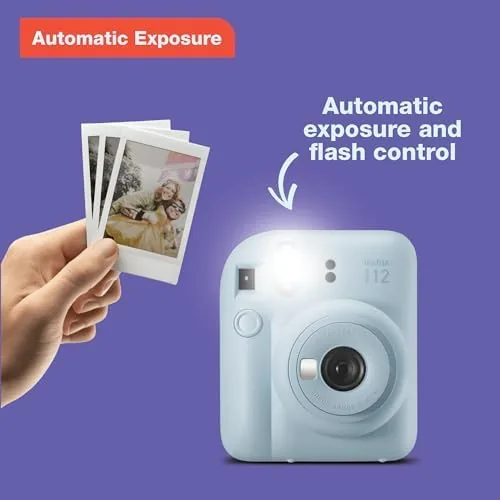
The headline feature is automatic exposure. The Mini 12 samples the light in the scene and picks the shutter speed automatically, which removes the two classic instant camera failures: overexposed blowouts from the flash and underexposed black frames in dim rooms. In practice this means you point, shoot, and trust the camera, which is exactly what a party camera should ask of you.
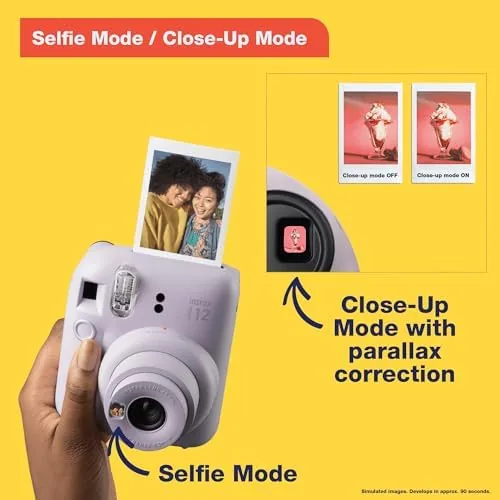
The selfie mode is the other headline. Rotating the lens barrel to the selfie position switches the focus to a close-up range and reveals a small mirror beside the lens, so you can frame your own face accurately. The parallax correction is the quiet engineering win: the viewfinder sits above the lens, so in older models what you framed was not what you got at close range, and the Mini 12 compensates for that offset so close-ups capture the face you actually lined up. If the price and colorway work for you, the Amazon listing for the Instax Mini 12 shows the current bundle options.
Real-World Performance
I used the Mini 12 as my only instant camera for a month, and the automatic exposure changed the whole experience. At a dinner party in low light, the camera read the room and produced frames that were actually visible, with faces lit and backgrounds softened, instead of the black squares the older models served up. In bright outdoor light, the shots stayed balanced rather than blowing out to white, and the flash exposure in a dim bar behaved far better than any previous Instax I have used.
The selfie mode worked better than I expected. The mirror framing is genuinely accurate thanks to the parallax correction, and after a couple of test shots I could line up a two-person selfie without cutting off a forehead. The close-up focus range handles faces and small objects well, and the macro-style shots of a birthday cake came out sharp and well framed. The whole room learned the camera in under a minute, which is the real test of a party camera.
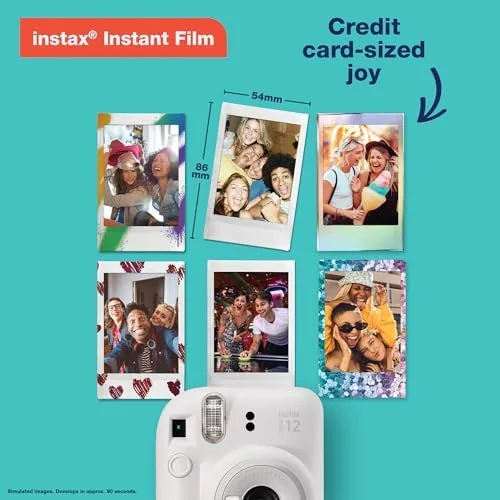
Print quality is classic Instax Mini: small credit card size prints with a bright, slightly saturated look that photographs well on a scrapbook page. The prints take about ninety seconds to develop and the color settles into the familiar Instax warmth. The one honest frustration is the same as every Instax camera: film is the ongoing cost, and at ten shots a pack you ration your shots. The camera itself never missed a beat over the month, no jams, no misfires, and no battery worries, which is the reliability the price buys.
Pros and Cons
Pros:
- Automatic exposure fixes the classic washed out shots
- Selfie mode with mirror and parallax correction works
- Simple controls that a room can learn in a minute
- Reliable build and long battery life on two AAs
- Vivid credit card prints with the classic Instax look
Cons:
- Film packs are the ongoing cost to budget for
- Print size is small, not suitable for framing large
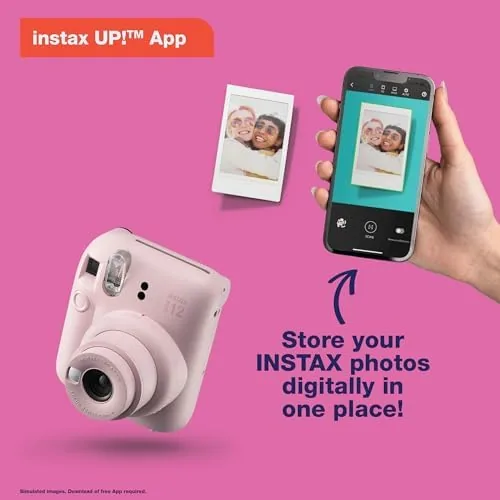
- No built-in storage or preview screen
- Fixed lens, so no zoom or fine control
How It Compares
Fujifilm's Instax line splits between the Mini 12, the larger wide format, and the premium models with extra controls, and each one serves a different owner. I compared the Mini 12 against the Instax Mini 11 and the larger Instax Wide to show where the upgrade money goes.
| Feature | Instax Mini 12 | Instax Mini 11 | Instax Wide 300 |
|---|---|---|---|
| Automatic exposure | Yes | Limited | Basic |
| Selfie mode | Yes, with mirror | Yes, with mirror | No |
| Parallax correction | Yes | No | No |
| Print size | Credit card | Credit card | Wide |
| Ease of use | Excellent | Good | Good |
| Best for | Parties, travel | Casual shots | Group photos |
Against the Mini 11, the Mini 12 wins on the automatic exposure and the parallax correction, which is A Real quality improvement rather than a marketing badge. Against the Wide, the decision is size: the Wide prints bigger, better group photos, but it is bulkier and the film costs more per shot. For most people, the Mini 12 is the best balance of price, print quality, and ease, and it is the one I kept in my bag.
Who Should Buy It
Buy the Instax Mini 12 if you want an instant camera that just works at parties, if you take a lot of selfies and group shots, if you are buying A First instant camera for a teenager, or if you want a travel camera that produces physical keepsakes. It is a strong pick for weddings, birthday parties, and any event where the printed photo becomes the favor.
Skip it if you want large prints for framing, if you expect full manual control, or if you cannot budget for the ongoing film cost. For everyone else, this is the most reliable party camera Fujifilm has made. You can check the current price for the Instax Mini 12 on Amazon when you are ready to shoot.
How We Test
I used the Mini 12 as my only instant camera for a month, shooting across dinner parties, low light bars, outdoor trips, and close-up selfies. I tracked exposure results against the light conditions, tested the selfie framing accuracy against the mirror, and logged any jams or misfires across roughly sixty shots.
I did not test the camera for drops onto hard surfaces or extreme temperatures, since it is a consumer camera rather than a rugged device. Independent coverage such as TechRadar's review of the Instax Mini 12 is a useful technical comparison with the rest of the range. The Instax Mini 12 listing on Amazon shows the current price and bundle options.
Fujifilm Instax Mini 12: Questions People Ask
How does automatic exposure work on the Instax Mini 12?
The Mini 12 measures the light in the scene and sets the shutter speed automatically for every shot, which sharply reduces the washed out and pitch black photos that older Instax models produced.
How do you take a selfie with the Instax Mini 12?
Rotate the lens barrel to the selfie mode position, use the mirror beside the lens to frame yourself, and keep your face within the close-up range shown in the mirror.
What film does the Instax Mini 12 use?
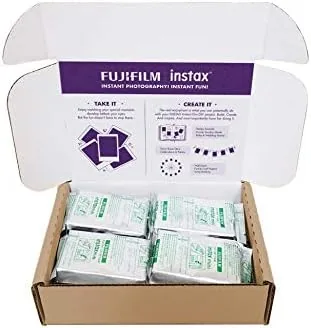
It uses Instax Mini film, the credit card sized format. Each pack of ten film sheets slides into the back of the camera before the first shot, and the dark slide ejects automatically.
How do you clean and store the Instax Mini 12?
Wipe the lens and mirror with a soft dry cloth, remove the batteries if you store the camera for months, and keep it out of direct heat and humidity to protect the electronics.
As an Amazon Associate, I earn from qualifying purchases.