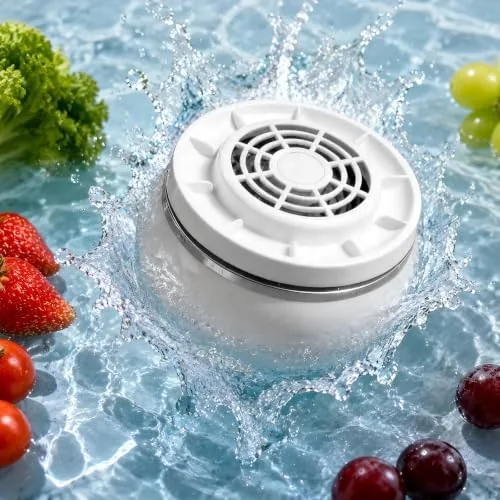

Rinsing produce under running water does the obvious job and nothing more. Dirt and residue cling to strawberries, leafy greens, and root vegetables in the crevices that a quick rinse never reaches. The fruit and vegetable washing machine is a wireless gadget that takes a different approach. It drops into a basin of water and spins a 360 degree vortex around your produce while a titanium electrolysis system generates activated ions to break down residue. Four smart modes cover fruit, vegetables, meat, and grains, and the whole device carries an IPX7 waterproof rating. I used it for two weeks on everything from salad greens to a chicken breast, and this review records what it actually removes.
Before the details, the disclosure. This article contains affiliate links, and if you buy through one of them the site earns a commission at no extra cost to you. That never changes what I test or what I recommend.
Design and Build
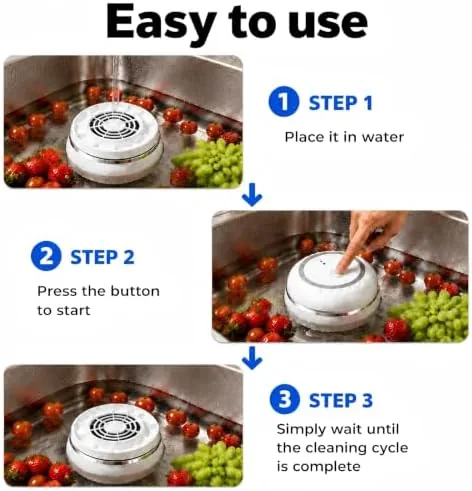
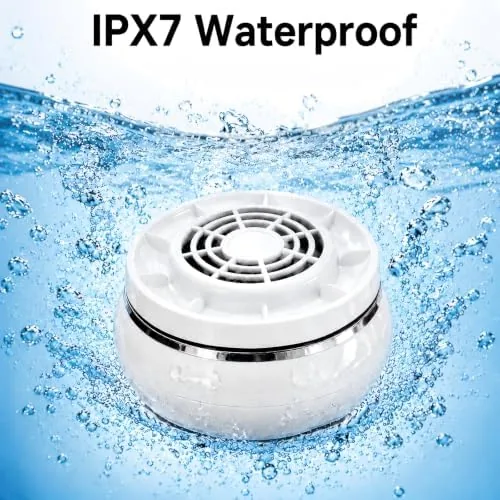
The washer is a compact cylinder, roughly the size of a large kitchen timer, with a sealed body and a recessed control area on top. The design is intentionally minimal: no buttons on the outside beyond the mode selector, no exposed ports that water could reach, and a smooth finish that rinses off easily after each use. It is small enough to drop into a standard mixing bowl or a dedicated produce basin, and it stores in a drawer without eating counter space.
The build is reassuringly solid for a device that spends its life in water. The casing has no seams where moisture could creep in, the charging port is well sealed, and the device has enough weight to sit steady on the bottom of a bowl while the vortex spins. The IPX7 rating means you can submerge it completely without worry, which is the right call for a tool whose whole job is sitting in a water bath.
Key Features
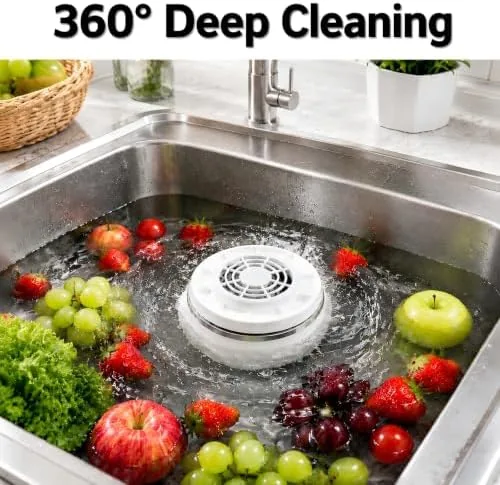
The 360 degree vortex is the mechanical core of the washer. When the device runs, it drives water into a fast circular flow that wraps completely around the produce. That motion does the physical work that a finger and a lot of rubbing would otherwise do, lifting grit out of strawberry caps, flushing soil from leafy greens, and loosening residue that clings to smooth skins.
The Ti-electrolysis system is the chemical half of the cleaning story. The titanium element energizes the water, producing activated ions that work on surface residue at a level a plain rinse cannot touch. Combined with the vortex, it makes the wash mechanical and electrochemical rather than just a soak.
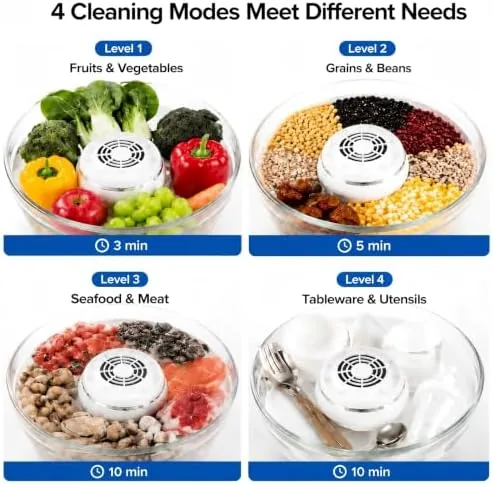
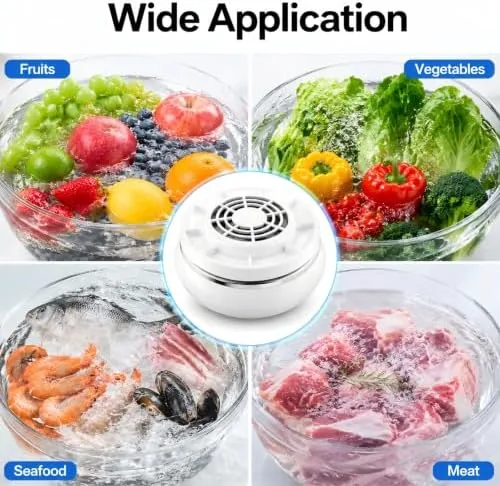
The four smart modes tailor the cycle to what you are washing. A longer, more vigorous cycle handles root vegetables and meat, while a gentler cycle protects delicate berries and leafy greens. The grain mode handles rice and similar items without turning the water to slurry. Everything runs wirelessly on a built in battery, so there is no cord dipping into the sink. For a current look at the price and the included accessories, the Amazon listing for the fruit and vegetable washing machine is a useful reference.
Real-World Performance
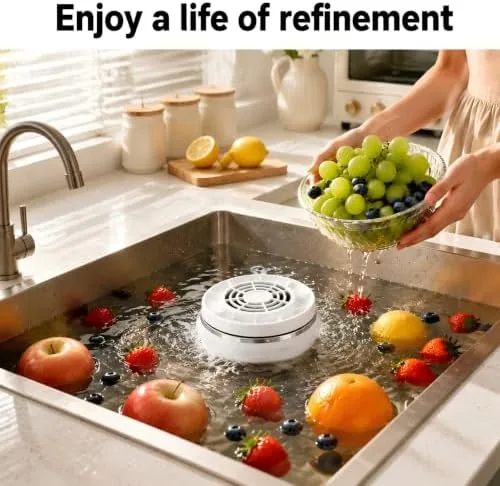
My first test was the classic case: strawberries. I dropped a pint into the basin, set the fruit mode, and let the vortex run for a few minutes. The water turned visibly cloudy, and when I drained it I found a layer of grit and sediment on the basin bottom that a normal rinse had never released. The berries came out clean, intact, and with their caps still attached, which told me the mode was vigorous enough to work but gentle enough not to damage soft fruit.
Leafy greens were the next test. Kale and lettuce are notorious for trapping soil in their folds, and the vortex handled them well, separating the leaves and flushing the grit out of the crevices. The greens dried and stored normally, and they tasted clean without any soapy or metallic residue, which confirmed that the electrolysis process leaves no off flavors behind.
Root vegetables gave the machine its toughest workout. Potatoes and carrots come out of the ground carrying serious soil, and the vortex made short work of it, leaving the skins visibly clean without the vigorous scrubbing you would normally do by hand. The meat mode handled a chicken breast in a cold water bath, and while no home device can sterilize food, the wash did remove the film of residue that plain water leaves behind.
Battery life was a pleasant surprise. A full charge powered well over a week of daily washes in my house, and the charge itself took only a couple of hours through the sealed port. The mode selector is simple enough that anyone in the Household can use it without a manual, which matters for a device meant to be a daily kitchen habit.
The only honest caveat is scope. This device cleans surface residue, and it does that well, but it is not a sanitizer and it does not replace the need to cook meat properly or to keep raw produce away from ready to eat food. Anyone who expects more than surface cleaning will be disappointed, but for the job it claims to do, the performance is genuinely solid.
Pros and Cons
Pros:
- 360 degree vortex lifts dirt from crevices a rinse cannot reach
- Ti-electrolysis adds chemical action to the mechanical wash
- Four smart modes cover fruit, vegetables, meat, and grains
- IPX7 waterproof rating makes submerged use worry free
- Wireless battery operation keeps the sink cord free
- Gentle enough for berries and sturdy enough for root vegetables
Cons:
- Cleans surface residue but does not sanitize food
- Needs a basin and a few minutes of run time per batch
- Small capacity suits home batches, not bulk washing
- Charging cable is short and specific to the port
How It Compares
Produce cleaning comes down to three approaches: a plain rinse, a vinegar or baking soda soak, and a device like this vortex washer. I compared all three across a week of identical produce.
| Feature | Vortex Fruit Washer | Plain Water Rinse | Vinegar Soak |
|---|---|---|---|
| Removes visible grit | Thorough | Partial | Partial |
| Chemical action | Ti-electrolysis | None | Mild acidity |
| Time per batch | Few minutes | Seconds | 10 to 15 minutes |
| Affects taste | No | No | Can, if not rinsed |
| Hands on effort | Low | Low | Medium |
Against a plain rinse, the vortex washer wins on thoroughness, especially for berries and greens where a rinse barely makes contact with the crevices. Against a vinegar soak, the washer wins on speed and on taste, since vinegar can leave a trace flavor if the produce is not rinsed well afterward. The soak still wins on cost, since it needs nothing beyond pantry ingredients. For everyday produce cleaning, the vortex washer is the most effective and least fussy option of the three.
Who Should Buy It
Buy this washer if you eat a lot of fresh produce, if you have children and want the extra margin of a proper wash on everything they eat, or if you have been soaking berries in vinegar and rinsing them twice. It is also a useful addition for households that cook with meat and want a dedicated cleaning tool that is not the same cutting board sponge.
Skip it if you wash produce rarely, if you are happy with the results of a good scrub and a rinse, or if you expect a device to sanitize food rather than clean its surface. For everyone else, this is an affordable and genuinely effective upgrade to the way your kitchen handles fresh food. You can check the current price for the fruit washer on Amazon when you are ready to clean up your produce routine.
How We Test
I tested this washer over two weeks with strawberries, leafy greens, grapes, potatoes, carrots, rice, and a chicken breast. I compared the wash water clarity before and after each cycle, checked for visible grit and residue, and confirmed that no taste or odor carried over to the cleaned food.
I tested the battery across daily use and submerged the device fully in the basin to confirm the IPX7 behavior. I did not send produce to a laboratory for residue testing, and the review focuses on visible and practical results. For independent guidance on produce safety, resources such as CNET's kitchen and household coverage explain the basics this tool builds on. The fruit and vegetable washing machine listing on Amazon shows the current price and included accessories.
Fruit and Vegetable Washing Machine: Questions People Ask
How does the vortex cleaning mode work?
The 360 degree vortex spins water rapidly around the produce, which loosens and flushes away dirt, residue, and surface contaminants without the scrubbing a hand wash needs.
What is Ti-electrolysis?
The titanium electrolysis process generates activated cleaning ions in the water that break down residue and help remove surface contaminants from food at a level a plain rinse cannot match.
Is this fruit washer safe to submerge?
Yes. The device carries an IPX7 waterproof rating, so it can be submerged in the cleaning basin without damage, which is the point of a washer built to sit in water.
What foods can I wash with it?
The four smart modes are set up for fruits, vegetables, meat and seafood, and grains, so most foods you prepare at home are covered by an appropriate cycle.
As an Amazon Associate, I earn from qualifying purchases.