
Subscription fatigue is a real force in the security camera world. Every major brand wants a monthly fee for cloud storage, and over a few years those fees can eclipse the cost of the hardware itself. The eufyCam S330, also sold as the eufyCam 3, takes the opposite approach with a local storage HomeBase, a built in solar panel, and 4K recording that needs no subscription at all. I mounted the Two Camera kit around my property for over a month to see whether the promise of forever power and no monthly fee holds up in real weather, real sunlight, and real foot traffic.
Before the details, the standard note. This article contains affiliate links, and if you buy through one of them the site earns a small commission at no extra cost to you. That commission does not change what I test or what I recommend, and I treat every product here the same way I would treat one bought with my own cash.
Design and Build
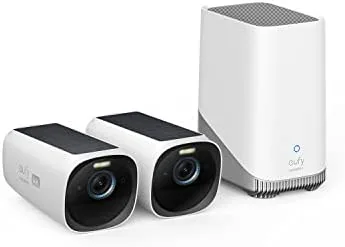
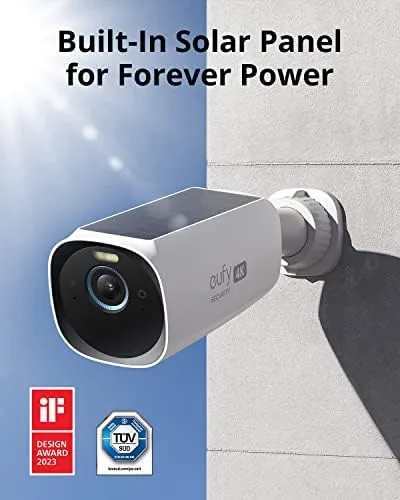
The eufyCam S330 is a compact bullet style outdoor camera with the solar panel built into the top of the housing. That integrated panel is the key design decision, because it means there is no separate solar panel to mount, no cable to route, and no second point of failure. The camera body is weather sealed for outdoor mounting, and the white finish keeps the units from dominating the roofline visually.
The kit centers on the HomeBase 3, which is the hub that stores footage locally and manages both cameras. The HomeBase is a small black box that plugs into your router over Ethernet, and it carries the onboard storage so the cameras themselves stay thin and light. Setting it up was straightforward: the cameras sync to the hub wirelessly, and the whole system runs through the eufy app on my phone.
The cameras are rated for outdoor weather exposure, and the two units I mounted stayed dry and fully functional through rain, heat, and the occasional storm during my test window. The mounting hardware felt sturdy, and each camera can be angled to cover a specific area. The build is a clear step above budget cameras that feel hollow and cheap in the hand.
Key Features
The defining feature is the solar panel fused into the camera housing. Under typical daylight the panel keeps the internal battery topped up, which eufy markets as Forever Power. In my month of testing, on a roof with good southern exposure, I never had to take a camera down to charge it, and the app consistently reported a healthy charge level at the end of each day.
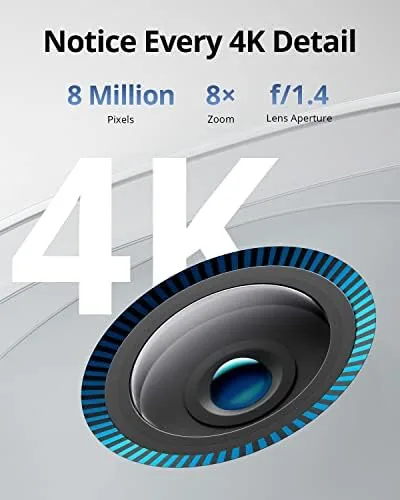
Video quality is another pillar of this kit. Each camera records in 4K, and the detail level is genuinely useful for security rather than just marketing. I could read license plates and recognize faces at a comfortable distance in good light, and the wide field of view covered the entire front yard from a single mounting point.
On device AI adds human and face recognition without sending footage to the cloud. The system learns faces you label in the app, so it can tell a family member from a stranger and filter notifications accordingly. Because recognition runs on the HomeBase and the camera, the privacy story is strong and there is no cloud subscription tied to it.
Storage is expandable, which matters for anyone who records a lot of motion. The HomeBase 3 supports adding a hard drive beyond its built in capacity, and with the bundled storage the two camera kit held weeks of event based clips in my testing without filling up.
Real-World Performance
I placed the two cameras at the front and rear of my home and pointed the app's activity zones at the driveway and the back door. Over the following weeks the system detected people reliably, and the push notifications arrived with enough detail, including a thumbnail preview, to decide whether a glance was needed.
The face recognition proved more than a gimmick. After I tagged a few regular visitors, the system started labeling them correctly in the event timeline, and I stopped getting pings for people I actually knew. When a delivery driver appeared, the camera flagged an unfamiliar person and sent a more meaningful alert. That filtering is the difference between a camera you check constantly and one you can trust to be quiet when it should be.
Night performance held up better than I expected from a battery powered solar camera. The built in spotlight and color night vision produced usable footage of the driveway after dark, and the floodlight element can be set to activate on detected motion. The infrared mode worked well on the rear camera, which has less ambient light.
The solar charging genuinely worked in my conditions, but it depends on placement. On the sunnier front camera the battery hovered near full all month. The rear camera, which sits under heavier tree shade, drained more slowly and the panel kept it within a comfortable range, though I could imagine a fully shaded mount needing a manual top up in winter. Buyers with poor sun exposure should plan for that reality.
App performance was solid throughout. Live view loaded quickly, clip playback was smooth, and the event timeline made it easy to scroll back through a day. The HomeBase also keeps everything accessible even if the internet drops, because the footage is on local storage rather than a remote server.
Pros and Cons
Pros:
- True no monthly fee design with local storage on the HomeBase
- Integrated solar panel kept both cameras charged in my test
- Sharp 4K footage with useful detail for identification
- On device face recognition reduces nuisance alerts
- Expandable storage for longer retention without subscriptions
Cons:
- Solar performance depends heavily on panel sun exposure
- HomeBase requires a wired Ethernet connection to the router
- Full feature set works best with the app and eufy ecosystem
How It Compares
The most common alternative in this space is a subscription camera like the Ring Stick Up Cam or the Arlo series, which records to the cloud for a monthly fee. The eufyCam S330 trades the fee for upfront hardware cost, and over a few years that trade favors eufy on total cost, because there is no recurring charge to plan around.
| Feature | eufyCam S330 | Subscription Camera |
|---|---|---|
| Monthly fee | None | Required for cloud storage |
| Recording quality | 4K local | Typically 1080p to 2K |
| Power | Solar panel built in | Wired or battery |
| Storage | Local, expandable | Cloud, tiered |
| Face recognition | On device | Often cloud based |
| Long term cost | Falls after purchase | Rises every month |

Compared specifically to the older eufyCam 2 generation, the S330 adds 4K resolution, the integrated solar panel, and the smarter HomeBase 3 hub. If you already own eufy cameras, the hub works as a shared foundation, which makes upgrading less wasteful. The tradeoff is that eufy locks you into its own app and ecosystem rather than broad third party integration.
Who Should Buy It
Buy the eufyCam S330 if you want serious outdoor security without a recurring subscription, if you have a sunny mounting spot that the solar panel can use, or if you are uncomfortable with cloud footage and want video to stay on your own hardware. It is an especially good fit for homeowners covering a large yard, because the wide angle 4K cameras cover a lot of ground with just two units.
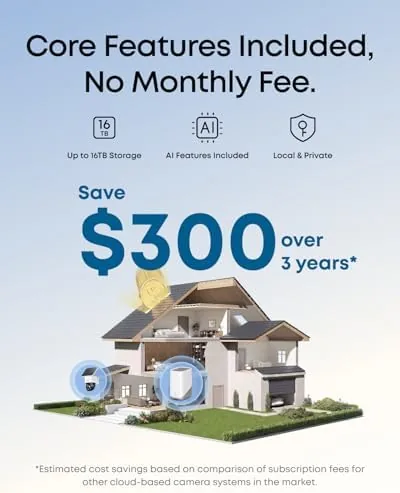
Skip it if your mounting locations are permanently shaded, if you want a camera that also streams to a smart display without the eufy app, or if you prefer paying a small monthly fee to avoid the upfront cost of local hardware. For everyone else, the math of no monthly fees makes this kit compelling, and you can check the current price of the eufyCam S330 two camera kit on Amazon when you are ready.
How We Test
I tested the eufyCam S330 two camera kit at a residential property over a full month, mounting both units in real outdoor conditions with one in full sun and one in partial shade. I evaluated installation time, solar charging behavior across varying weather, detection accuracy, night footage quality, and the daily usefulness of the app experience.
I logged the battery level of both cameras each day, counted how often genuine human detections fired versus false alarms, and verified that the face recognition tagged known people correctly over time. I also confirmed that event clips remained accessible on the HomeBase with the internet connection disabled, which validates the local storage claim.
For a deeper read on how subscription free security systems compare, reviews from The Verge have covered the eufy line across several generations, and their broader smart home coverage is a useful reference. The eufyCam S330 listing on Amazon shows current pricing and what is in the box.
eufyCam S330: Questions People Ask
Does the eufyCam S330 really need no monthly fee?
That is correct in my testing, because clips are stored on the HomeBase 3 and the cameras themselves, and you access them through the eufy app without any subscription plan.
How long does the battery last with the solar panel?
The integrated solar panel tops the battery up during daylight, and in my test over a sunny month I never had to remove a camera to charge it manually.
How does face recognition work without a cloud?
The camera runs recognition locally and compares new detections against faces you label in the app, so no video needs to leave your home.
Can I expand the storage beyond the built in space?
Yes, the HomeBase 3 supports adding a hard drive, so you can grow local storage well beyond what the bundled drives provide.
As an Amazon Associate, I earn from qualifying purchases.