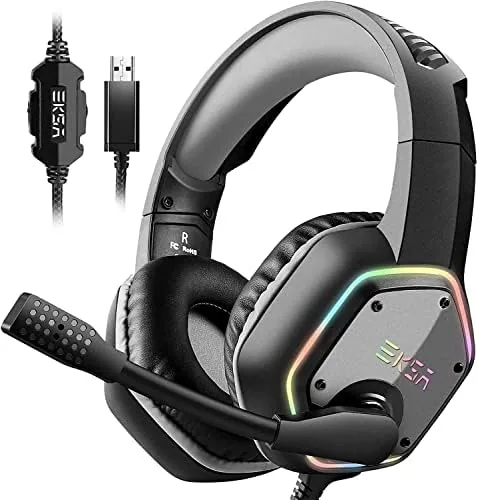

Good gaming audio does not have to empty a wallet. The EKSA E1000 makes that case by packing virtual 7.1 surround sound, a noise cancelling microphone, and RGB lighting into a wired USB headset that sits far below the price of flagship gaming headsets. The question is whether the budget price shows up in the sound, the mic, or the build. After a week of shooters, team calls, and console sessions, I have a complete picture of what the E1000 does well and where it cuts corners.
Before the details, the standard note. This article contains affiliate links, and if you buy through one of them the site earns a small commission at no extra cost to you. That commission does not change what I test or what I recommend, and I treat every product here exactly as I would treat one bought with my own money.
Design and Build
The E1000 has the Classic gamer silhouette: a wide headband, large over ear cups, and a splash of RGB color around the outside of each cup. The finish is glossy black plastic with a matte inner band, and while the material is firmly budget grade, it is assembled cleanly with no sharp seams or wobbling joints.
The headband adjusts through a metal slider, which is a reassuring choice at this price, and the padding under the band is soft foam wrapped in a breathable fabric. The ear cups are generously padded with leatherette, and they rotate slightly to hug the head. The result is a headset that looks more expensive than it is and weighs in light enough to wear for hours.
The clamping force is gentle rather than vice like, which is the right call for a headset built for long sessions. The cups seal around the ears well enough to block a good share of room noise, so a desk fan or a roommate's music fades into the background while you play. Nothing about the frame creaks or flexes worryingly, and the swivel joints on the cups feel sturdy through repeated adjustments.
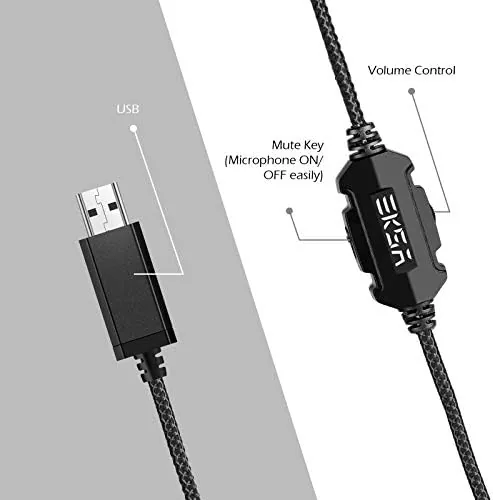
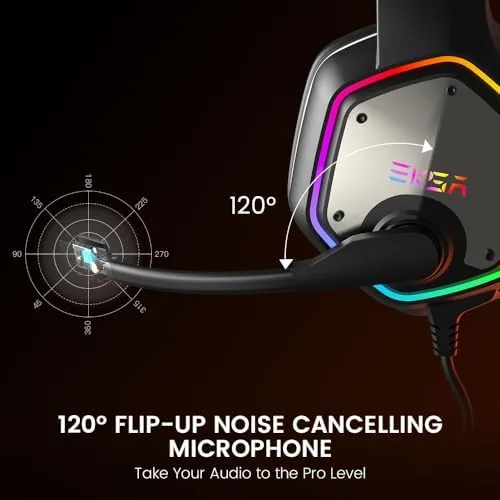
The microphone is a flexible boom arm on the left cup that rotates up out of the way when you do not need it. The USB connection is a single braided cable with an inline volume wheel and a mute button, which keeps controls within reach without hunting on the desktop.
Key Features
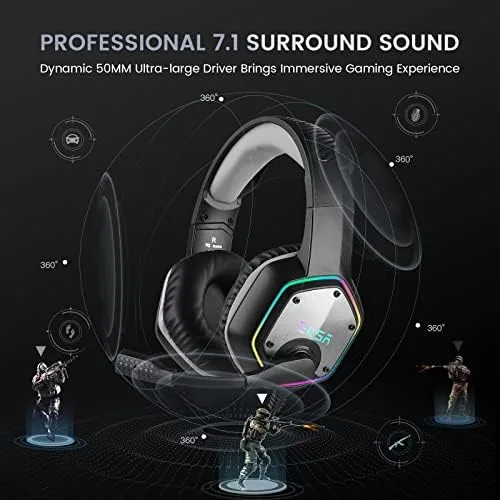
The headline feature is virtual 7.1 surround sound. Unlike physical multi driver surround, this headset processes the audio in software on your PC, positioning sound around a virtual sphere so footsteps and gunfire come from the correct direction. For a shooter player, that positional accuracy is often the difference between knowing where an enemy is and being ambushed.
The noise cancelling microphone is the second pillar. It is not active digital noise cancellation, which is rare in headsets, but rather a mic with a tight pickup pattern that rejects background sound and focuses on your voice. In practice this keeps the sound of a mechanical keyboard or a room fan from flooding your team chat.
The RGB lighting completes the feature set. The ring around each ear cup glows through several color patterns controlled by the EKSA software, and while lighting is a purely cosmetic feature, it does match the aesthetic of most gaming setups. The 50 millimeter drivers deliver the audio, tuned for the punchy, bass forward sound that games and music expect at this level.
Real-World Performance
I tested the E1000 across a week of competitive shooters, cooperative games, and voice calls. In a battle royale session, the virtual surround let me track footsteps as they moved around me, and the directionality was genuinely useful rather than a marketing gimmick. A shotgun blast to the left read clearly from the left, and an enemy approaching from behind was audible before they rounded a corner.
The same positional awareness translated to cooperative games where callouts matter. Being able to tell a teammate that the noise they heard came from the upper floor behind us, because the audio placed it there, is exactly what the surround mode is supposed to deliver. It does not replace a full multichannel speaker rig, and anyone expecting a literal cinema experience will be disappointed, but for directional audio in a game it gets the job done at a fraction of the price.
The sound signature is warm and bass heavy, which suits explosions and soundtracks but can muddy complex orchestral scores. Midrange voices come through clearly enough for dialogue and team callouts, and the overall balance is better than I expected from a headset at this price. Pushing the volume high reveals some compression, but at normal listening levels it stays clean.
The microphone held up well in team voice chat. Teammates confirmed my voice came through clearly, and the noise rejection did an honest job of cutting the hum of my desk fan. The inline volume wheel worked smoothly, and the mute button toggled with a satisfying click. Comfort held across a three hour session with only mild warmth building under the leatherette cups.
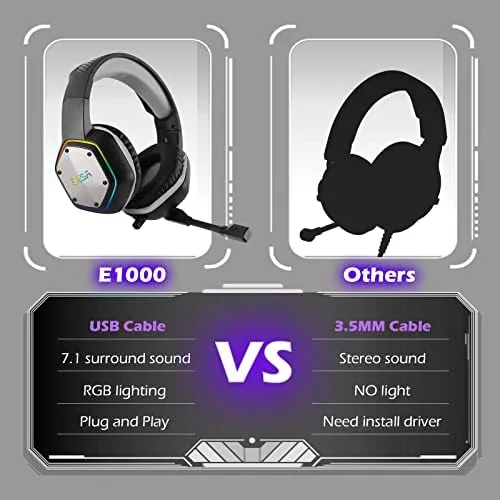
The one adjustment to make is in the software. The surround sound, the RGB patterns, and the equalizer settings all live in the EKSA control panel on Windows, so a little time spent on the first setup goes a long way. Once the profile is saved it persists across reboots, and after that initial visit the headset behaves exactly like a plug and Play device.
Pros and Cons
Pros:
- Virtual 7.1 surround genuinely helps positional audio in games
- Noise cancelling mic keeps voice chat clean
- Lightweight and comfortable for long sessions
- Works with PC, PS4, and PS5 over USB
- RGB lighting adds visual flair without extra cost
Cons:
- Bass heavy tuning can muddy complex music
- Virtual surround requires PC software, console audio is stereo
- Build material feels budget grade
- No wireless option
How It Compares
Against the HyperX Cloud Stinger, a popular budget headset, the E1000 offers a software-driven 7.1 surround mode that the Stinger lacks, while the Stinger counters with a lighter frame and a simpler plug in experience. Against a premium headset like the Logitech G533, the E1000 trades away wireless convenience and tuning refinement for a much lower price.
| Feature | EKSA E1000 | HyperX Cloud Stinger | Logitech G533 |
|---|---|---|---|
| Connection | USB wired | 3.5mm wired | Wireless USB |
| Surround sound | Virtual 7.1 via software | None | Surround via software |
| Microphone | Noise cancelling boom | Fixed flexible mic | Retractable boom |
| Console support | PS4, PS5 over USB | Wide via 3.5mm | PC focused |
| RGB lighting | Yes | No | No |
| Price | Budget | Budget | Mid range |
For a first gaming headset on a tight budget, the E1000 delivers the most feature set for the money, particularly the surround sound and the RGB. For a purist who wants a lighter, simpler wired headset, the Stinger remains a strong rival. The E1000 wins on features per dollar.
Who Should Buy It
Buy the E1000 if you are buying your first gaming headset, if you play shooters where positional audio matters, or if you want one wired headset that works across a PC and a PlayStation console. The low price also makes it an easy spare for a second room or a family member.
Skip it if you need wireless freedom, if you prefer a flat and neutral Sound for music production, or if you only game on consoles where the surround processing does not reach. For everyone else, this is an easy recommendation at the price. You can check the current EKSA E1000 price on Amazon whenever you are ready.
How We Test
I tested the E1000 as my daily gaming headset for a week, running it through competitive shooters on PC with the 7.1 surround software enabled, then switching to a PlayStation 5 for a console session to confirm the USB connection works outside Windows.

I used the headset for team voice chat to judge the microphone quality, played music across several genres to evaluate the tuning, and wore it through a long session to measure comfort. For a broader view of the best gaming headsets at every price, the Tom's Hardware gaming headset guide is a reliable independent reference.
The EKSA E1000 listing on Amazon shows the current price and available options.
EKSA E1000: Questions People Ask
Does the E1000 work on a PlayStation 5?
Yes, the USB connection works on the PS4 and PS5, though 7.1 surround audio requires the PC software to be enabled.
Is the microphone detachable or built in?
The noise cancelling microphone is flexible and rotates out of the way, and the headset relies on the USB connection to carry both audio and voice.
Can I use the 7.1 surround on consoles?
The virtual 7.1 processing runs through the PC software, so console use delivers stereo audio while surround sound is available on Windows.
How comfortable is the headset over long gaming sessions?
The padded ear cups and adjustable headband spread the weight well, and I wore them for hours without real discomfort.
As an Amazon Associate, I earn from qualifying purchases.