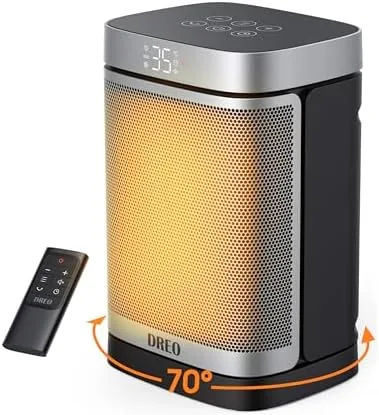

Bedrooms present a strange heating problem. The central thermostat is usually set for the whole house, which means a cold bedroom gets ignored all winter, and the solution people reach for is a cheap space heater that screams like a hair dryer and cycles wildly between freezing and furnace. The DREO 1500W PTC ceramic heater is an answer to both complaints. It pairs a ceramic heating element with a thermostat that is supposed to hold a set temperature, it oscillates through 70 degrees to spread that warmth, and it claims to do all of it quietly enough to sleep next to. I ran one in a cold bedroom for weeks to find out whether those promises survive real use, and this review is the record of that test.
The standard disclosure comes first. This article contains affiliate links, and if you buy through one of them the site earns a small commission at no extra cost to you. That commission does not influence what I test or recommend, and the heater reviewed here was used exactly as a homeowner would use it.
Design and Build
The heater follows the modern tower design that has become the standard for this category. The body is a tall, slim column with a rounded front and a control panel on top, and it takes up very little floor space, which matters in a crowded bedroom. The exterior stays cool to the touch during operation, a feature that earns its keep around curious pets and sleepy adults who brush against it in the dark.
The controls sit on the top of the unit, which is a small but thoughtful choice, because you never have to crouch down to change the settings. A clear display shows the set temperature, and the buttons for power, mode, timer, oscillation, and the thermostat are laid out logically. There is a remote control in the box too, which lets you adjust the heat from under a blanket, and that is the kind of detail that makes daily use feel easier than it has any right to be.
Key Features
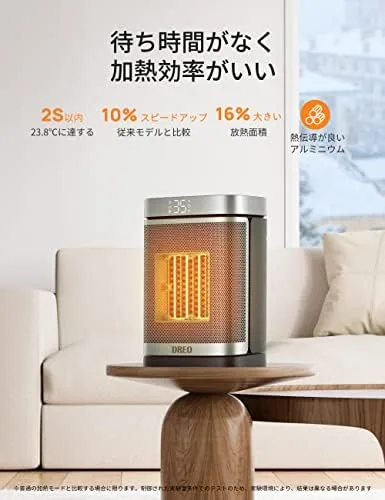
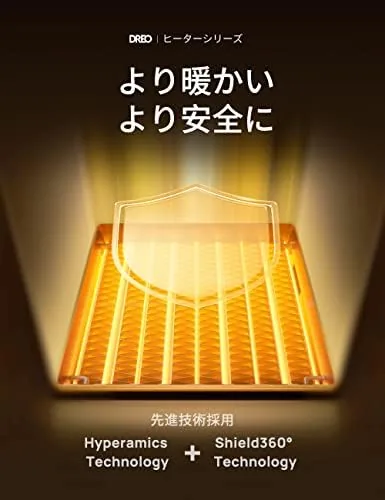
The heating technology deserves a moment of its own. The DREO uses a PTC ceramic element, which stands for positive temperature coefficient, a material that heats fast but self-regulates as it gets hotter instead of running away. The practical result is a heater that throws out heat within seconds of switching on and does it more safely than an old wire coil unit. In my testing the airflow felt warm almost immediately, and the room began to change within a few minutes rather than after half an hour.
The 1500W rating is the standard maximum for a plug-in heater in the United States, and it draws roughly 1.5 kilowatt hours when running flat out. The reason that matters is the thermostat, covered below, because a heater that cycles on and off to hold a temperature uses far less energy than one that runs at full power forever. The ceramic element also produces no glowing metal and no burning dust smell, which is a quiet relief compared with older heaters I have tested.
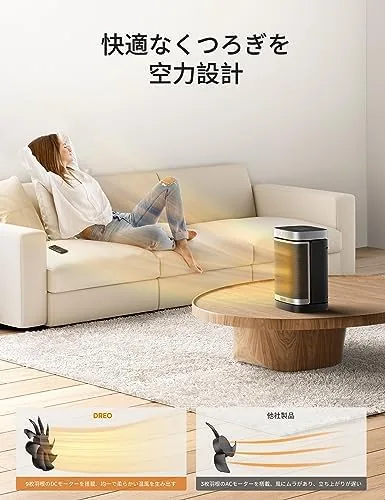
Most small heaters point all their warmth in one direction and leave the rest of the room cold. The DREO solves that with a motor that swings the front through 70 degrees of oscillation, so the warm air sweeps across the room instead of hitting one chair. In a bedroom that sweeping motion was the difference between a warm corner and a genuinely warm room, and it spread the heat more evenly around the space during my testing.
Coverage is where the honest limits show. The DREO comfortably heated a standard size bedroom and a modest office, but it is not going to warm an open plan living area or a drafty large room. That is a fair expectation for a 1500W portable heater, and within its intended footprint the oscillation made the warmth feel more even and more natural than a stationary unit.
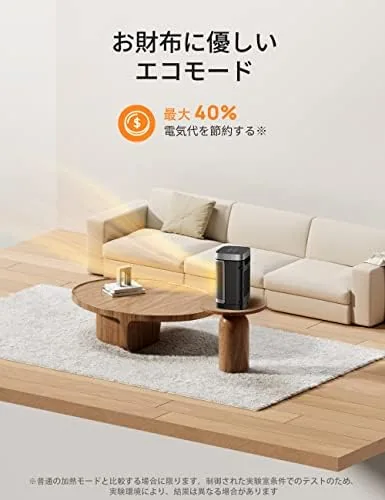
The four modes give the heater a genuinely useful range. There is a high power mode for a quick warm up, a low power mode for maintaining heat with less energy, an eco mode that manages power draw around the thermostat, and a comfort mode designed for steady, room-wide warmth. In practice I reached for eco and comfort most nights, and the high mode only for the first fifteen minutes when the room was properly cold.
The smart thermostat is the feature that separates this heater from cheap competition. You set a target temperature, and the heater monitors the room and cycles the ceramic element on and off to hold it, rather than running flat out until you turn it off. The 12 hour timer adds sleep scheduling, so you can set the heater to run for an hour or two and shut itself down after the room is warm. Together they make the DREO feel less like a blast furnace and more like a sensible climate control device.
Safety and Quiet Operation
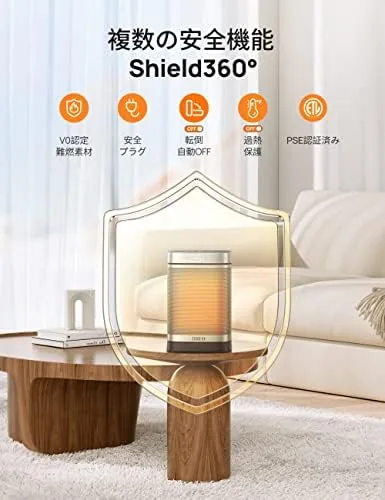
For a device that runs while people sleep, safety is the priority, and the DREO covers the important bases. It has tip-over protection that shuts the heater off the moment it tilts, overheat protection that cuts power if the element gets too hot, and the cool touch exterior mentioned earlier. There is even a lock mode to disable the control panel, which stops a curious toddler or a wandering cat from changing the settings at 3 a.m. These are not marketing flourishes; they are the features that let you leave a heater running with peace of mind.
The noise level is where the DREO genuinely surprised me. On the low and comfort modes the heater is quiet enough to sleep beside, with only a soft air moving hum that fades into the background. Even on high power it is far calmer than the rattling budget heaters I have tested over the years. The only audible moment is the click when the thermostat cycles the element, which is subtle and easy to ignore.
Pros and Cons
Pros:
- Instant heat from the PTC ceramic element
- Smart thermostat holds a set temperature instead of blasting full power
- 70 degree oscillation spreads warmth across the room
- Genuinely quiet on the lower modes, easy to sleep beside
- Tip-over, overheat, and lock protections for safe overnight use
- 12 hour timer and a remote control included
- Compact tower footprint and cool touch exterior
Cons:
- 1500W output is limited to spot and small room heating
- Fan noise becomes noticeable on high power mode
- Display stays lit at night and can be bright in a dark room
- Electric heat at full power draws a noticeable amount of energy
How It Compares
Most buyers choose between a fan-forced ceramic heater like this one and a smaller Radiant heater that heats a person rather than a room. The table below lays out the practical difference.
| Feature | DREO 1500W Ceramic | Radiant / Infrared Heater |
|---|---|---|
| Heats a whole room | Yes, with oscillation | Mainly a spot of warmth |
| Warm up speed | Fast, fan assisted | Slower, steady |
| Thermostat control | Smart thermostat holds temperature | Often simple on and off |
| Safety features | Tip-over, overheat, lock mode | Varies by model |
| Noise | Quiet on low modes | Silent |
| Best room | Bedroom, office, den | Desk, small nook |

If you want a warm room rather than a warm patch of floor, the ceramic tower with its fan and oscillation is the better tool. If you only need to keep one desk or one chair comfortable and silence is everything, a radiant heater can win. For a bedroom, the DREO is the more complete answer.
Who Should Buy It
Buy the DREO space heater if you have a cold bedroom, a home office, or a den that the central heating does not reach, and you want warmth that arrives quickly and stays steady. It is also a strong pick for anyone who wants to heat one room instead of the whole house, which is the classic way to trim winter energy bills, and for households that need a heater safe enough to run near children and pets. The quiet operation and the timer make it a natural fit for sleepers.
Skip it if you need to heat a large open plan space or a drafty basement, because no 1500W portable heater will manage that job. For the rooms it is built for, this is one of the most complete portable heaters I have tested. You can check the current price of the DREO space heater on Amazon when you are ready.
How We Test
I ran the DREO heater in a cold bedroom over several weeks of winter nights, using the thermostat, the timer, and every mode. I measured how quickly the room warmed, how often the unit cycled to hold a set temperature, how loud it was at each power level, and whether the safety features behaved under real conditions, including a deliberate tilt test. I also used the remote from across the room and set the sleep timer nightly.
This is a hands-on test rather than a lab measurement, and I did not use a calibrated watt meter for long term energy totals. For a thorough look at how space heaters compare across models, Wirecutter maintains a detailed guide to the best space heaters that is worth reading before you buy. The DREO space heater listing on Amazon shows the full specifications and current pricing.
DREO Space Heater: Questions People Ask
Is the DREO space heater safe to leave on overnight?
Yes, the heater includes tip-over and overheat protection plus a cool touch exterior, and the programmable timer lets you set a sleep schedule rather than running it all night.
How much does the DREO 1500W heater cost to run?
At its 1500W maximum output the heater draws about 1.5 kilowatt hours per hour, so the cost depends on your local electricity rate and how often the thermostat cycles the unit.
How quiet is the DREO space heater in a bedroom?
The fan is noticeably quiet on the low and comfort modes, and even at full power it stays low enough to fall asleep to, which makes it a strong fit for bedside use.
Does the heater keep a room at one temperature automatically?
Yes, the built-in smart thermostat reads the room temperature and cycles the ceramic element on and off to hold your chosen setting instead of blasting heat endlessly.
As an Amazon Associate, I earn from qualifying purchases.