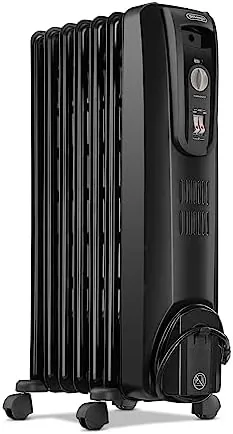

Space heaters divide into two camps. Fan heaters blast hot air instantly and noisily, then leave the room cold the moment they switch off. Radiant oil-filled radiators do the opposite: they warm slowly, stay quiet, and hold onto the heat long after the Thermostat cycles. The De'Longhi ComfortTemp belongs firmly to the second camp, and it makes a specific promise, that it can heat a full room rather than a patch of floor, while running silent enough to live in a bedroom.
I ran the ComfortTemp for several weeks in a living space, measuring how it warmed the air, how long the heat lingered, and how much attention it demanded. This review is the record of that time. Before the details, the standard note: this article contains affiliate links, and if you buy through one of them the site earns a small commission at no extra cost to you. That commission does not change what I test or what I recommend.
Design and Build
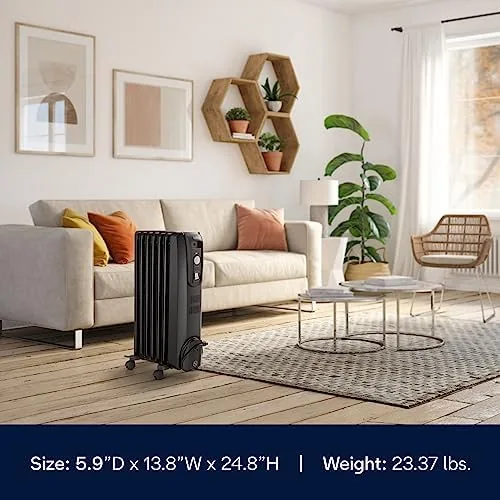
The ComfortTemp is a classic oil-filled radiator in black, with the familiar columned fins, a set of castors, and a carry handle. The design has not changed much in decades, and that is a compliment, because the format works. Oil inside the sealed fins is heated by an element, and the heat radiates outward into the room with no fan, no moving parts beyond the thermostat, and therefore no noise.
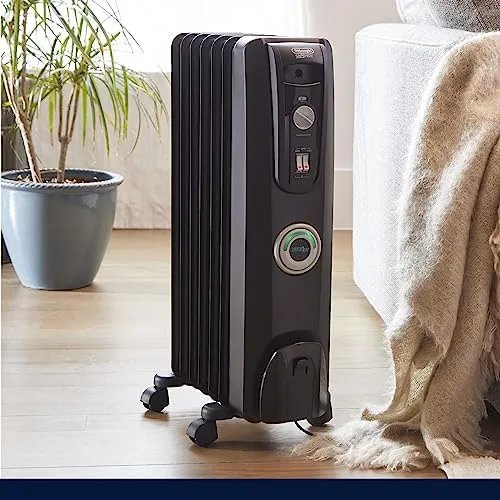
Build quality is solid. The castors attach simply and roll smoothly over carpet and wood, the carry handle makes the unit easy to move between rooms despite the weight, and the control panel sits in a recessed tray on top where it is easy to reach without crouching. There is nothing fragile about the design, and the unit feels like it is built to survive years of winters.
Key Features
The core feature is radiant heat itself. Because there is no fan, the heater never circulates dust or dries out the air the way forced-air units do, and it runs at a whisper. The only sound is the occasional soft click of the thermostat cycling, which disappears into the background of any room. For people who sleep with a heater on, that silence is not a luxury, it is the whole point.
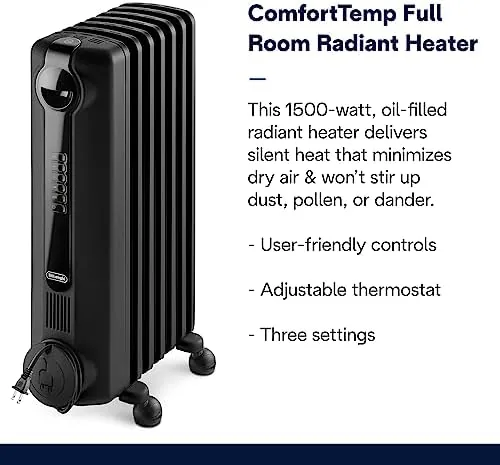
The controls are deliberately simple. You get three heat settings, an adjustable thermostat, and the ComfortTemp mode, which is the feature that gives the heater its name. In this mode the heater manages its own heating cycles to hold a comfortable temperature while reducing the energy used to maintain it, rather than simply pumping out maximum heat until the room is too warm. The thermostat lets you set a target temperature, and the heater turns itself on and off to hold that target automatically.
Real-World Performance
I tested the ComfortTemp in a living room of roughly 150 square feet with the thermostat set to a moderate target and the heater running in ComfortTemp mode. The most important finding is that the heat is even. A fan heater blasts the person nearest to it while leaving the far corner cold, but the radiant warmth from the oil-filled fins fills the room at the same gentle rate, and every part of the space eventually reaches the same comfortable temperature.
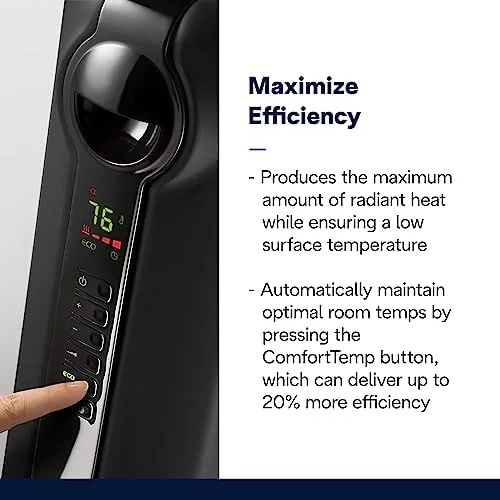
The trade-off is patience. From a cold start the room warmed noticeably within about fifteen minutes, and it reached a stable, comfortable level around the half-hour mark. That is not instant, and if you want to feel heat on your skin within seconds, this is the wrong heater. What you gain in return is heat that persists, because once the fins and the oil are up to temperature, the heater continues radiating warmth even when the element is not actively heating, so the room does not fall cold the moment the thermostat clicks off.
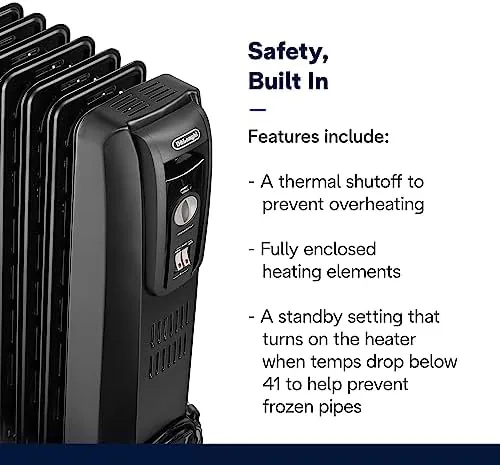
In daily use the heater was almost invisible. It made no noise, demanded no attention, and simply maintained the room at the set temperature. The fins do get warm to the touch, as any radiator does, but the unit has thermal protection that cuts power if the internal temperature climbs too high, and the control panel offers the usual safety features you expect from a De'Longhi product. Running it overnight in a bedroom is entirely plausible, which is more than you can say for most fan heaters. The lower heat setting proved genuinely useful overnight, because it produces enough warmth to take the chill off a room without making it stuffy, and the silent operation meant there was nothing to disturb sleep except the faint rhythm of the thermostat clicking. Over several nights the room stayed at a comfortable, even temperature from the same setting, which suggests the ComfortTemp mode is doing real work rather than simply cycling at full power.
Pros and Cons
Pros:
- Completely silent in operation
- Even, full-room warmth instead of a hot spot
- Heat lingers after the thermostat cycles off
- ComfortTemp mode manages energy use automatically
- Simple controls with a real adjustable thermostat
- Portable on castors with a carry handle
Cons:
- Slow to warm a cold room from scratch
- Heavier than a fan heater of similar output
- Fins get warm to the touch and need supervision near pets
How It Compares
The natural comparison is between the radiant oil-filled approach and a convection or fan heater of similar power, and the choice comes down to what you value. Both will warm a room, but they do it in fundamentally different ways.
| Feature | ComfortTemp Radiant | Fan Heater | Convection Heater |
|---|---|---|---|
| Warm-up speed | Slow, 15 to 30 minutes | Seconds | Moderate |
| Noise | Silent | Fan noise | Near silent |
| Heat after switch-off | Lingers | Fades quickly | Fades quickly |
| Heat distribution | Even across the room | Hot spot near the unit | Even at floor level |
| Energy management | ComfortTemp auto mode | Simple thermostat | Thermostat only |
If you need instant warmth in a drafty office, a fan heater wins without argument. If you are heating a bedroom, a living room, or any room where you will stay for hours, the radiant approach is more comfortable and quieter, and the lingering heat means the ComfortTemp spends less energy re-warming a room that a fan heater would have let fall cold. For whole-room comfort over quick bursts, the radiant heater is the better long-term choice.
Who Should Buy It
Buy the De'Longhi ComfortTemp if you want a silent heater for a bedroom or living room, if you find forced-air heat drying, or if you want to supplement central heating in One room without running it all day. The ComfortTemp mode makes it a sensible pick for people who will leave a heater running for hours, because the automatic cycling keeps the room comfortable without constantly burning maximum power.
Skip it if you need heat on demand within seconds, if you are warming a small drafty space and want the cheapest possible fix, or if you need a heater small enough to tuck away. For steady, silent, whole-room comfort, the ComfortTemp is the kind of appliance you notice only by how much better the room feels. You can check the current De'Longhi ComfortTemp price on Amazon when you are ready.
How We Test
I tested the ComfortTemp over several weeks in a living room of about 150 square feet, monitoring room temperature at floor level and at head height with a separate thermometer. I timed the warm-up from a cold start, checked how long the heat held after the unit switched off, and ran the heater in ComfortTemp mode across a full day to observe the cycling behavior. I also used it overnight in a bedroom to confirm the noise level and the heat output at the lower settings.
I did not measure electricity consumption on a metered circuit, so I cannot quote an exact running cost, and actual energy use will depend on your room size and insulation. Independent coverage such as Wirecutter's guide to the best space heaters is a useful place to see how radiant heaters compare across the category before you buy.
The De'Longhi ComfortTemp listing on Amazon shows the current price and available configurations.
Questions People Ask
Is the De'Longhi ComfortTemp silent?
Yes. It is an oil-filled radiator with no fan, so the only sound is an occasional soft click from the thermostat as it cycles on and off.
How long does the ComfortTemp take to warm a room?
It warms gradually over fifteen to thirty minutes, which is slower than a fan heater but more even and comfortable once the room reaches temperature.
Is the heater expensive to run?
Running costs depend on your electricity rate and the heat setting, but the ComfortTemp mode cycles the heating elements smartly to hold a steady temperature without constant full power.
Does the heater overheat or feel hot to the touch?
The outer fins do get warm to the touch, as any radiator does, but thermal protection cuts the power if the heater gets too hot, so it is safe to leave running in a supervised room.
As an Amazon Associate, I earn from qualifying purchases.