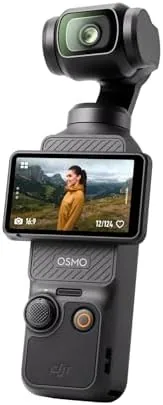

Most vlogging cameras make a promise you have to disassemble a bag of equipment to believe. The DJI Osmo Pocket 3 makes one you can test in the parking lot. It is a pocket sized Camera with a 1 inch CMOS sensor, a three axis gimbal, 4K video at up to 120 frames per second, and a 2 inch touchscreen that rotates around to face you. I carried it for two weeks as my only camera, through morning walks, a farmer's market, and an evening street shoot, and this is the honest record of a camera that is small enough to forget you are holding and good enough that you should not.
Before the details, the standard note. This article contains affiliate links, and if you buy through one of them the site earns a small commission at no extra cost to you. That commission never changes what I shoot or what I recommend.
Design and Build
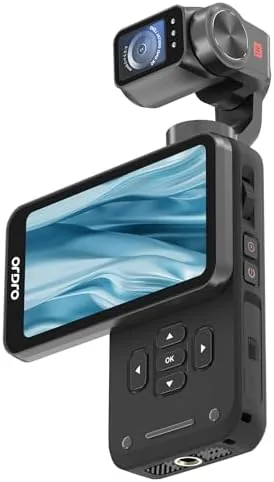
The Pocket 3 is a cylinder of glass and metal about the size of a roll of tape, capped by the gimbal and camera head. When it is off, the gimbal rests flat and the whole thing slips into a front pocket, which is the entire premise. The metal body has a confident weight, the buttons fall where your thumb expects them, and the USB C port on the side charges the camera and offloads footage without a fuss.
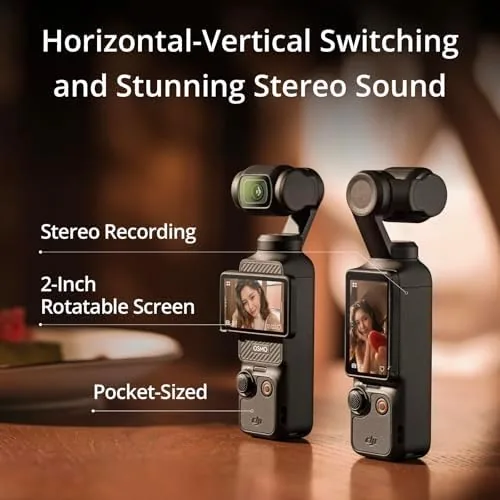
The 2 inch touchscreen deserves its own paragraph. It is the only display, and DJI made it count. It rotates around the gimbal axis, so you can swing it to face you for a selfie or tuck it away to protect the glass in a bag. The screen is bright enough to frame shots outdoors, the touch response is snappy, and the menu system, once you learn it, puts the settings you actually use a tap away. The whole device feels like a precision tool rather than a toy.
Key Features
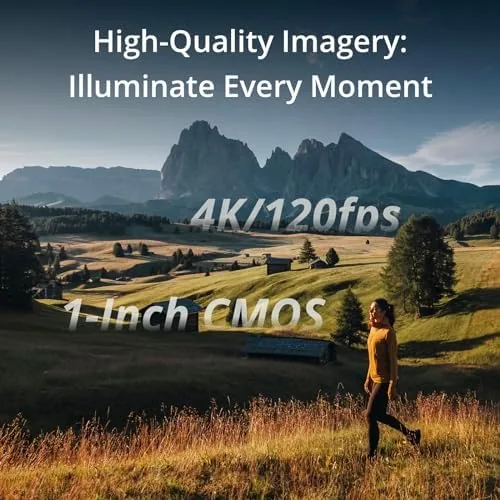
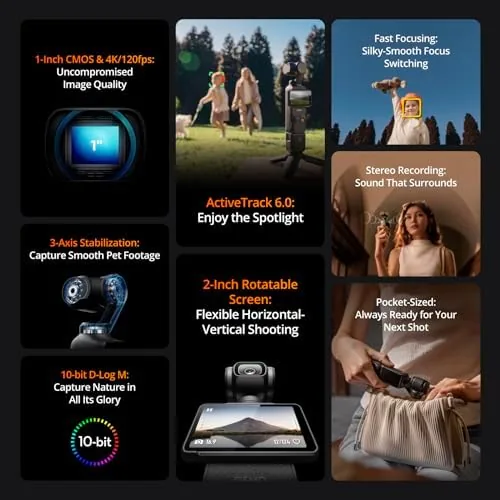
The 1 inch sensor is the reason this camera punches above its size. It captures significantly more light than the sensors in action cameras and most phones, which shows up as clean low light footage, natural depth of field, and 4K detail that holds up on a big screen. The f/2.0 lens is sharp edge to edge, and the three axis gimbal removes the handheld shake that phones try to fix with a digital crop.
Video capabilities are the real headline. 4K at up to 120 frames per second delivers slow motion with genuine quality, and the 10 bit D-Log M profile gives colorists room to grade. Fast focusing keeps subjects sharp as they move toward the lens, and Spotlight Follow locks onto a person and keeps them framed while the gimbal works to follow. For a camera this small, the feature list reads like a camera twice its size.

The rotating screen makes solo shooting feel natural. You flip it toward yourself, tap a subject, and the gimbal does the rest of the framing work while you talk. For a closer look at the exact specifications and the current price, the Amazon listing for the DJI Osmo Pocket 3 is a useful reference.
Real-World Performance
Walking footage is the everyday test, and the Pocket 3 passes with ease. I recorded a morning walk while holding the camera at chest level, and the gimbal smoothed out steps, direction changes, and the awkward shuffle around a puddle. The footage looks like it was shot on a rig, not a pocket device, and there was none of the warpy edge distortion that digital stabilization adds when you pan quickly.
Low light is where the 1 inch sensor separates the Pocket 3 from action cameras. At dusk on a street with modest lighting, the footage stayed clean with usable detail in the shadows, and the gimbal kept the shot steady even at slower effective shutter. Slow motion at 120fps of the market crowd had the smooth, weighty feel that makes a simple clip look deliberate. The standard color profile was pleasant out of camera, and a D-Log M test clip graded cleanly in a few minutes.
The camera became a default companion, which is the strongest review I can write. It lived in my bag and came out for moments a phone would have missed because pulling a phone out felt like a project. Battery life covered a full day of on and off shooting, the USB C charging topped it up from a power bank, and the screen stayed readable in direct morning sun. The only friction was the occasional tiny tap target in the menu and the fact that the fixed lens means no zoom beyond what the sensor crop gives you.
Pros and Cons
Pros:
- 1 inch sensor delivers clean low light and real depth
- Three axis gimbal makes handheld footage look professional
- 4K at up to 120fps for smooth slow motion
- Rotating touchscreen makes solo framing effortless
- Fast focusing and Spotlight Follow for moving subjects
- Small enough to carry every day without a bag
Cons:
- Fixed lens offers no optical zoom
- Small screen is cramped for detailed checks
- Base model has no bundled wireless microphone
- Menu system takes a day to learn
How It Compares
The Pocket 3 competes with action cameras and phone gimbals for the same pocket of the market. I compared it against a flagship action camera and a smartphone gimbal to see which approach wins for everyday vlogging.
| Feature | Osmo Pocket 3 | Flagship Action Cam | Phone Gimbal |
|---|---|---|---|
| Sensor size | 1 inch | Around 1/1.3 inch | Phone sensor |
| Stabilization | Three axis gimbal | Digital crop | Mechanical, no camera |
| Low light | Strong | Moderate | Depends on phone |
| Screen | Rotating touchscreen | Front and rear | Uses phone screen |
| Portability | Pocket, no phone needed | Needs phone attached | |
| Price | Mid range | Mid range | Low to mid |
Against an action camera, the Pocket 3 wins on sensor quality, low light, and the selfie screen, while the action cam wins on waterproofing and rugged mounting for sports. Against a phone gimbal, the Pocket 3 wins on image quality and the fact that it does not need your phone, while the gimbal wins on using hardware you already own. For talking head vlogs and travel content, the Pocket 3 is the best image per ounce.
Who Should Buy It
Buy the DJI Osmo Pocket 3 if you want a camera that is always with you, if you vlog or document daily life and want footage that looks better than a phone without a learning curve, or if you are upgrading from an action camera and want better low light and a selfie screen. It is the right camera for someone who will actually carry it, which is the hardest feature to spec.
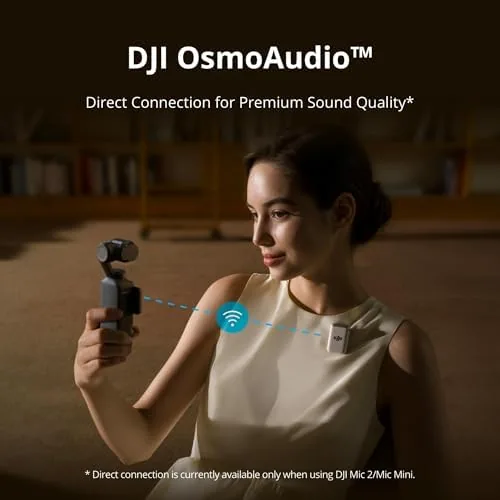
Skip it if you need to take the camera underwater, if you need optical zoom for wildlife, or if you plan to buy the Creator Combo anyway and want the wireless mic bundled in. For the base user, this is the pocket camera that finally made daily vlogging feel easy. You can check the current price for the DJI Osmo Pocket 3 on Amazon when you are ready to shoot.
How We Test
I used the Osmo Pocket 3 as my only camera for two weeks. I shot morning walks at chest height to test stabilization, a farmer's market for slow motion at 120fps, and an evening street shoot to stress low light. I used Spotlight Follow while walking, flipped the screen for selfie framing, and shot a D-Log M clip that I graded in post to check the color space.
I did not take the camera underwater or into extreme temperatures, and I did not test it with the optional DJI Mic accessory. For broader context on pocket and vlogging cameras, independent coverage from TechRadar's video camera section places this camera in the wider market. The DJI Osmo Pocket 3 listing on Amazon shows the current price and available bundles.
DJI Osmo Pocket 3: Questions People Ask
How does the rotating touchscreen help with vlogging?
It swivels the 2 inch screen around to face you for selfie shots and framing, so you can flip between front facing and subject facing framing without moving the camera or guessing at your framing.
Is the stabilization effective while walking?
Yes. The three axis mechanical gimbal holds the camera level and smooth even while walking fast, removing the shake that handheld phone footage shows without the digital warping that software stabilization introduces.
Does the Pocket 3 have a 1 inch sensor?
Yes. It uses a 1 inch CMOS sensor that is significantly larger than the sensors in most action cameras and vlogging phones, which is what makes its low light performance stand out.
Can it shoot slow motion video?
Yes. It records 4K at up to 120fps and supports slower frame rates for smooth slow motion clips, plus 10 bit D-Log M color for grading when you want to push the footage further.
As an Amazon Associate, I earn from qualifying purchases.