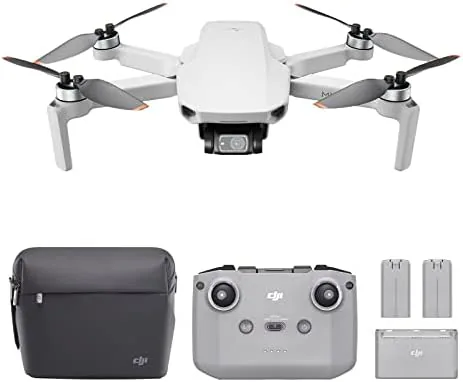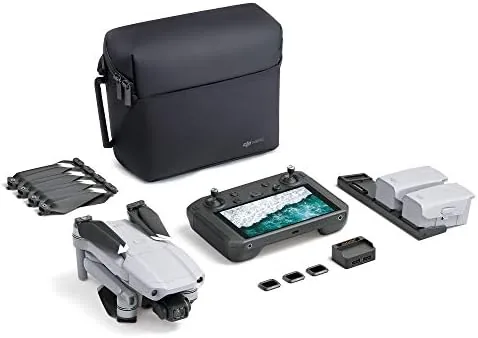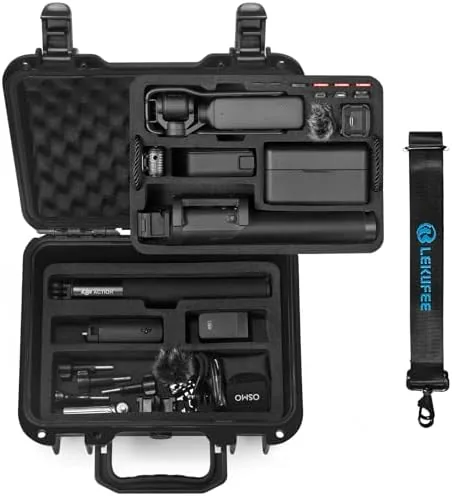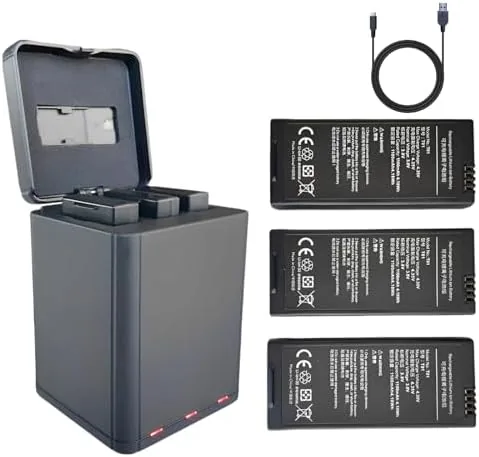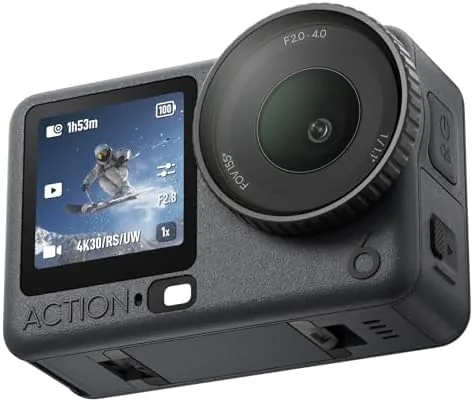

Action Cameras used to be a compromise: you traded real image quality for a tough little box that survived the splash. The DJI Osmo Action 6 flips that equation. It packs an 8K capable sensor into a body that works underwater without a housing, adds a variable aperture that no previous Action camera offered, and throws in enough battery life to survive a cold day of filming. I spent two weeks with the Essential Combo riding a bike along a coastline, snorkeling in a swimming hole, and skiing in sub-freezing temperatures to find out whether the spec sheet survives the field.
Before the results, the standard note: this article contains affiliate links, and a purchase made through one of them supports this site at no added cost to you. That does not change how I test an action camera or what I recommend, and every verdict below comes from actual footage I shot and reviewed.
Design and Build
The Action 6 keeps the familiar blocky shape that makes the lineup easy to grip, but the details have tightened. The front screen is a bright square that stays visible in direct sun, and the rear touchscreen is crisp enough to check focus on the fly. The body is sealed against water without an extra housing, rated to 20 meters, and the lens glass sits behind a removable protective cover that swivels open for cleaning, a welcome change after a day of salt spray.

Build quality is where DJI rarely misses. The buttons have a firm click that works through gloves, the mounts click into the included quick release with zero wobble, and the whole unit shrugs off the knocks that come with being strapped to a bike or a board. The cold resistance is a real design choice rather than a marketing line: the battery chemistry holds output in freezing air, and the touchscreen stayed responsive with gloves on. The trade is a slightly larger footprint than the previous generation, but the extra grip and the bigger sensor justify it.
Key Features
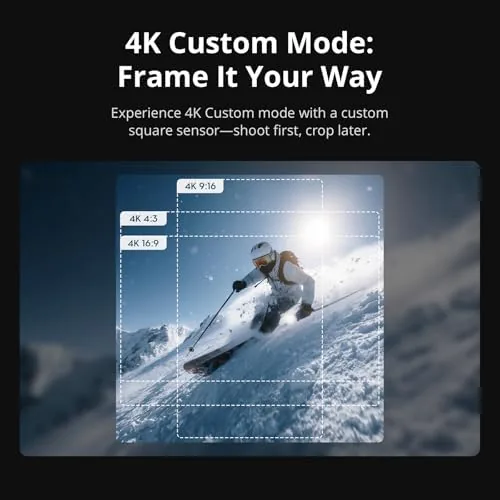
The headline is the 1/1.1 inch square sensor, the largest DJI has put in an Action camera. A square sensor lets the camera capture the full image for its 8K output while still using the same area for the stabilized 4K modes, which means the digital stabilization does not crop into a smaller portion of the chip. That translates to wider effective fields of view and better low light performance than the smaller sensors in rival cameras.

The variable aperture of f/2.0 to f/4.0 is the other breakthrough. Previous action cameras locked the lens wide open and controlled exposure with digital gain and shutter speed, which hurt in bright scenes. The Action 6 can stop the aperture down on a snowfield or a beach, keeping the shutter and ISO in a healthy range, and open it up in dusk light. Rocksteady 3.0 is the third pillar, DJI's most aggressive stabilization yet, and the combo includes the 50GB internal storage plus the cold resistant four hour battery. If you want to compare current pricing against other flagship action cameras, the Amazon listing for the DJI Osmo Action 6 is a useful reference.
Real-World Performance
My first shoot was a dawn bike ride along a coast road. I mounted the camera on the handlebar with Rocksteady 3.0 on the widest field of view, and the resulting footage was the most stable I have ever shot from bars: no horizon roll, no handlebar shake, just smooth motion even over cracked asphalt. The variable aperture made the difference immediately, keeping the bright morning sky from blowing out while the shaded road stayed detailed, which is exactly the exposure problem a fixed-aperture camera would have lost.

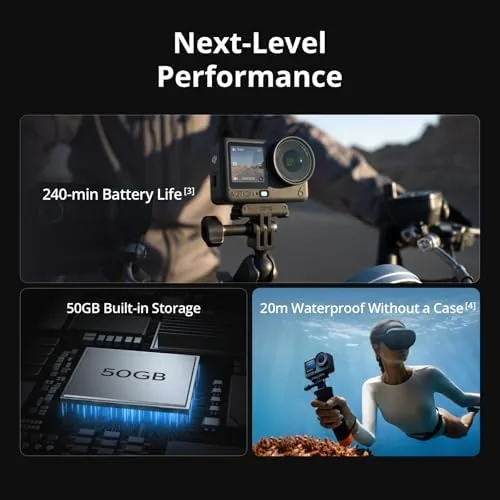
Underwater was the second test. I snorkeled a cold swimming hole with the camera bare, no housing, and the footage came out crisp and color balanced without a red filter, thanks to the sensor's dynamic range. The 20 meter rating means real confidence in the water, and the touchscreen controls worked under a dive glove. The front screen earned its keep too, giving me a live view while I framed shots above and below the surface line.
The cold test was the stress test everyone asks about. I shot a full ski afternoon in temperatures around 18 degrees Fahrenheit, and the four hour battery never blinked. The camera recorded continuously in 4K, ran Rocksteady at full strength, and the battery still held charge when I got back to the car. That combination, reliable cold operation plus a battery that outlasts a full day of filming, is rare in this category and genuinely changes how you plan a shoot. My only real complaint was the small rear screen for reviewing footage on the mountain, and the price premium that the Essential Combo carries over the base configuration.
Pros and Cons
Pros:
- 8K recording from the large 1/1.1 inch square sensor
- Variable f/2.0 to f/4.0 aperture handles bright and dark scenes
- Waterproof to 20 meters without any housing
- Rocksteady 3.0 delivers exceptionally stable footage
- Cold resistant battery runs up to four hours
Cons:
- Premium price, especially for the Essential Combo
- Rear screen is small for reviewing footage in the field
- Larger body than the previous generation
- Internal 50GB fills quickly at 8K settings
How It Compares
The flagship action camera market has three serious contenders: the Osmo Action 6, a leading rival with a smaller sensor and fixed aperture, and the older Action model that this one replaces. I compared them across the specs that matter when the footage actually has to look good.
| Feature | DJI Osmo Action 6 | Fixed Aperture Rival | Previous Action Model |
|---|---|---|---|
| Recording | 8K | 5.3K | 5.3K |
| Sensor | 1/1.1 inch square | Smaller | Smaller |
| Aperture | Variable f/2.0 to f/4.0 | Fixed | Fixed |
| Waterproof depth | 20 meters | Varies | 18 meters |
| Battery life | 4 hours | Shorter | 2.5 hours |
| Internal storage | 50GB | None | None |
Against the fixed aperture rival, the Action 6 wins on exposure control and low light, which are the two areas action cameras have struggled with for years. The rival counters with a slightly smaller body and its own strong stabilization, but the variable aperture is a genuine leap that shows up in every bright outdoor shot. The previous Action model is now clearly outclassed, and the upgrade is worth it for anyone who films in variable light or cold weather. For an all-rounder that has to handle sea, snow, and dusk in one trip, the Action 6 is the best tool I have used.
Who Should Buy It
Buy the Osmo Action 6 if you want the best-looking footage an action camera can produce, if you shoot in mixed lighting where a fixed aperture struggles, if you film in the cold and need a battery that survives the day, or if you snorkel and dive without wanting to buy separate housings. It suits serious vloggers, adventure filmmakers, skiers, cyclists, and anyone who has outgrown a smaller sensor.
Skip it if you only record casual clips and the premium price hurts, or if you already own the previous flagship and mostly shoot in steady daylight, where the gains are smaller. For everyone else, this is the benchmark of the category right now. You can check the current price of the DJI Osmo Action 6 on Amazon when you are ready to shop.
How We Test
I ran the Action 6 for two weeks across a coastal bike ride, a cold swimming hole snorkel, and a full ski afternoon in freezing temperatures. I recorded in 8K and 4K with Rocksteady 3.0 at every stabilization level, tested the variable aperture against a fixed-aperture rival in the same bright scenes, and verified the waterproof rating by filming underwater without a housing. I tracked battery life across a continuous cold filming session and reviewed every clip for stability, exposure, and color.
I did not pressure test the 20 meter rating beyond snorkeling depth, and I did not run laboratory measurement of dynamic range or low light noise. Independent coverage such as The Verge's DJI action camera coverage is a useful reference for how this category evolves. The DJI Osmo Action 6 listing on Amazon shows the current price, combo contents, and delivery details.
DJI Osmo Action 6: Questions People Ask
How deep can the Osmo Action 6 be taken underwater without a housing?
The camera is waterproof to a depth of 20 meters on its own, so snorkeling, surfing, and pool sessions need no extra housing at all.
What does the variable aperture of f/2.0 to f/4.0 actually do?
It lets the camera control light intake for the exposure, which improves low light shooting and gives better control over bright scenes like snow or desert sand.
How long does the battery last in cold conditions?
The cold resistant battery runs up to four hours of recording in mild conditions, and it held a full hour of skiing footage in freezing temperatures without dying early.
How much storage does the 50GB internal memory provide?
The built-in 50GB holds roughly two hours of 8K footage or many hours of lower resolutions, and the combo also supports microSD cards for extra capacity.
As an Amazon Associate, I earn from qualifying purchases.