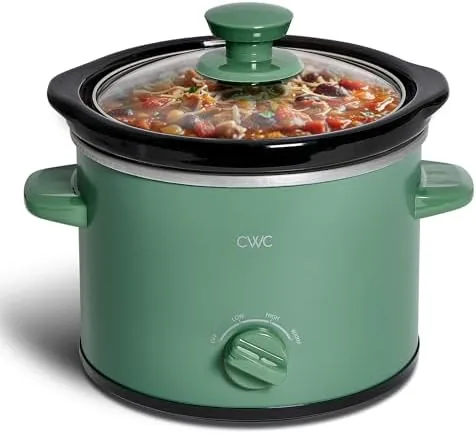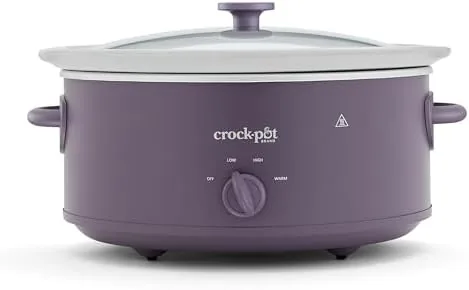

Slow cooking has a split personality. On one side there are the heavy programmable machines covered in buttons, and on the other there is the classic manual slow cooker that does exactly one thing and does it well. The Crock-Pot Design Series 7 quart manual model belongs firmly to the second camp. It is a large slow cooker with a simple dial, low and high heat settings, and a removable stoneware insert, finished in a color the brand calls Purple Potato. I spent three weeks braising, stewing, and batch cooking with it to find out whether a machine this straightforward still earns its place on a modern countertop.
The disclosure, as always: this article contains affiliate links, and if you buy through one of them the site earns a small commission at no extra cost to you. That never changes what I test or what I recommend.
Design and Build
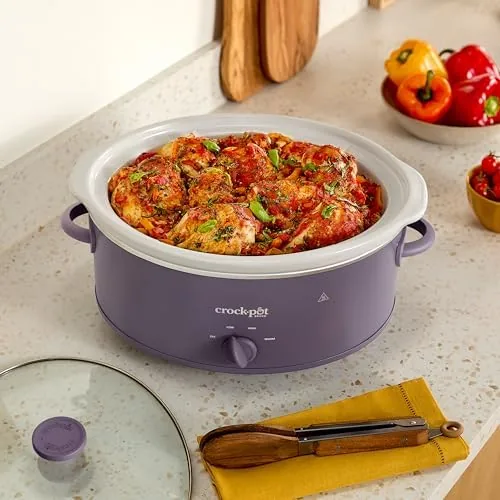
The first thing you notice is the color. Purple Potato is a soft, muted violet that reads more like a ceramic glaze than a kitchen appliance finish, and it makes the slow cooker look like it belongs on a styled counter rather than tucked away in a cabinet. The exterior is a durable finish that resists fingerprints, and the round stoneware insert sits inside a heating base with a secure fit.
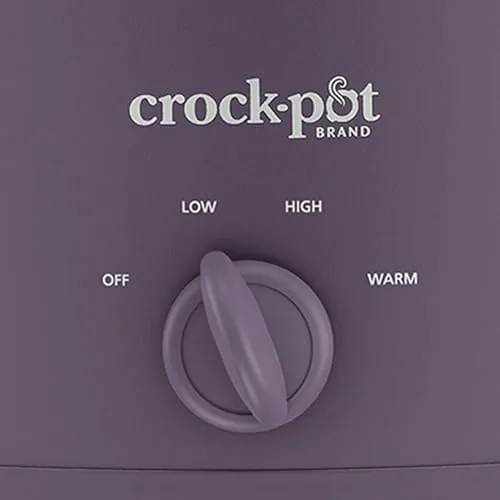
The manual controls are a single dial with three positions: Off, Low, and High. There are no timers, no displays, and no digital menus, and that simplicity is the entire design philosophy. You select the heat, you leave, and you decide when the food is done. For cooks who grew up on slow cookers, this is the familiar, unfussy experience, and for new users it removes any risk of pressing the wrong button.
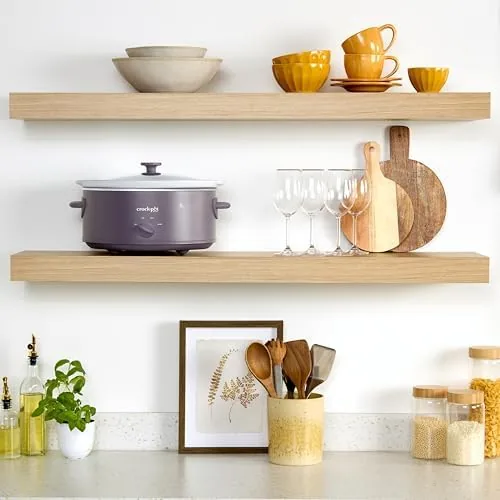
The 7 quart capacity is generous. The insert fits a whole chicken, a large chuck roast, or roughly eight to ten servings, which makes this a serious tool for family meals and meal prep rather than a two person appliance. The glass lid is tight fitting, lets you see the food as it cooks, and keeps the condensation inside the pot where it belongs.
Key Features
The feature list is short on purpose: low heat, high heat, and a warm up of the stoneware through the heating base. The low setting cooks gently over roughly eight hours, which suits tougher cuts that need time for collagen to break down into tenderness. The high setting moves the same recipes along in about four hours, and the difference between the two gives you real scheduling flexibility for a single machine.
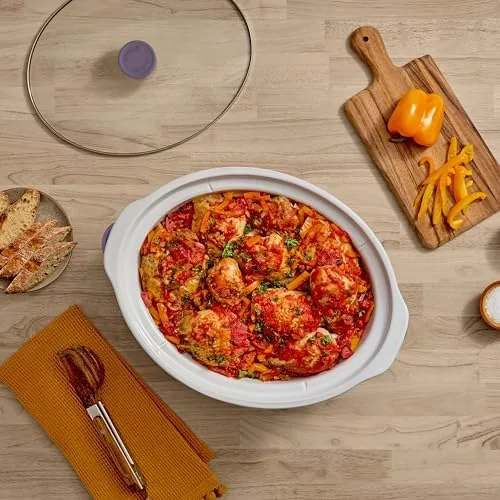
The removable stoneware insert is the heart of the design. It lifts straight out of the heating base, which means you can sear meat on the stovetop in the same vessel before slow cooking, serve straight from the insert to the table, and then carry it to the sink or the dishwasher for cleanup. The insert has a wide rim with sturdy handles that stay cool enough to grip after cooking, which makes moving a full pot safe and easy.
Heat distribution is the quiet strength of the design. The heating element wraps around the base, so the stoneware heats evenly rather than scorching along one side. In my testing, a pot of chili cooked at low for eight hours had no caramelized crust on the bottom, and a whole chicken came out uniformly tender instead of dry on one side.
Real-World Performance
My first cook was a classic test of the low setting: a beef and vegetable stew with chuck, carrots, and potatoes. I seared the beef in the stoneware insert on the stovetop, added the vegetables and stock, and set the dial to Low for eight hours. The result was the ideal slow cooked stew, with meat that pulled apart and vegetables that held their shape without turning to mush. The stoneware distributed the heat evenly enough that nothing stuck to the bottom.
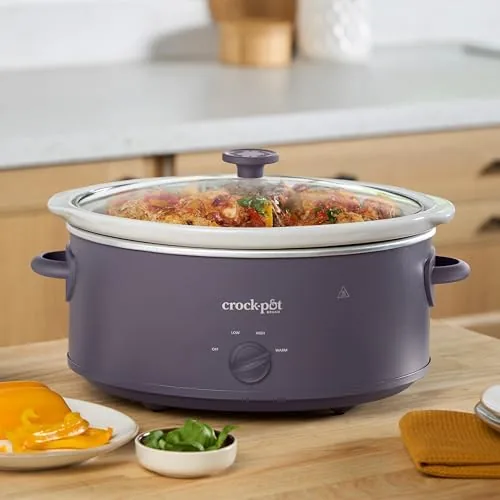
Next I used the High setting for a faster batch of pulled chicken. Four and a half hours on High turned a pile of chicken breasts into shreddable, juicy meat that carried the barbecue sauce perfectly. The high setting does not overshoot into boiling the food dry, which is the risk with cheap slow cookers, and the cooking liquid stayed at a gentle simmer rather than a rolling boil.
A whole chicken with root vegetables was the toughest assignment. The 7 quart insert held a five pound bird with room around it, and after seven hours on Low the chicken was tender enough to lift apart with a fork while the potatoes and parsnips beneath it absorbed the juices. The glass lid let me check the progress without losing heat, and the condensation dripped back into the pot instead of pooling on the counter.
The manual nature of the machine is either a strength or a limitation depending on your schedule. For me it was a strength: I started stews in the morning, left for the day, and came back to dinner that was exactly as done as I had planned. The trade is that there is no timer to stop the cook automatically, so a recipe left on Low for ten hours instead of eight will be softer than intended, and that is simply the manual slow cooker bargain.
Pros and Cons
Pros:
- Manual dial is simple, dependable, and impossible to misread
- 7 quart insert fits whole chickens and large roasts
- Removable stoneware sears, serves, and cleans in one piece
- Even heat distribution with no scorched edges
- Distinctive Purple Potato finish looks great on display
- Low and high settings cover eight and four hour cooks
Cons:
- No timer means cooks must manage their own schedule
- No automatic warm mode after cooking
- Large footprint suits a dedicated counter spot
- Manual control offers no digital presets
How It Compares
Slow cookers divide into manual models like this one, programmable models with timers, and multi cookers that also pressure cook. I compared the manual Design Series against a Programmable Slow Cooker and a multi cooker to map out the real differences for a family deciding between them.
| Feature | Manual Design Series | Programmable Slow Cooker | Multi Cooker |
|---|---|---|---|
| Controls | Single dial, low and high | Timer and digital display | Programs and pressure mode |
| Automatic warm | No | Yes | Yes |
| Schedule freedom | Choose heat, manage time | Set and walk away | Set and walk away |
| Versatility | Slow cooking only | Slow cooking only | Slow cook, sear, pressure |
| Price | Budget friendly | Mid | Higher |
| Simplicity | Highest | Moderate | Lower |
Against a programmable slow cooker, the manual model loses the set and walk away convenience, but it wins on price, simplicity, and durability, because there is almost nothing inside to fail. Against a multi cooker, the manual model offers a narrower range of cooking but a far more approachable daily experience for the majority of slow cooking meals. For cooks who know their recipes and schedules, the manual model delivers everything a slow cooker needs and nothing more.
Who Should Buy It
Buy this slow cooker if you want a large, beautiful, dependable machine for family meals and batch cooking, if you already know your slow cooking recipes and schedules, or if you want the simplicity of a machine with a single dial and nothing to program. It is the right choice for cooks who value the classic slow cooker experience and want a finish that stays on display.
Skip it if you need to leave a meal unattended on a strict timeline, if you want automatic warming after the cook ends, or if you want one appliance that also pressure cooks and sears. For everyone else, this is a beautifully simple workhorse. You can check the current price for the Crock-Pot Design Series on Amazon before you decide.
How We Test
I tested the slow cooker over three weeks with four cooks: an eight hour beef stew on Low, a four and a half hour pulled chicken on High, a seven hour whole chicken with root vegetables, and a batch of bean chili left overnight as a durability check. I monitored the internal temperature of each dish, checked for scorching along the bottom, and timed how long the stoneware held heat after cooking.
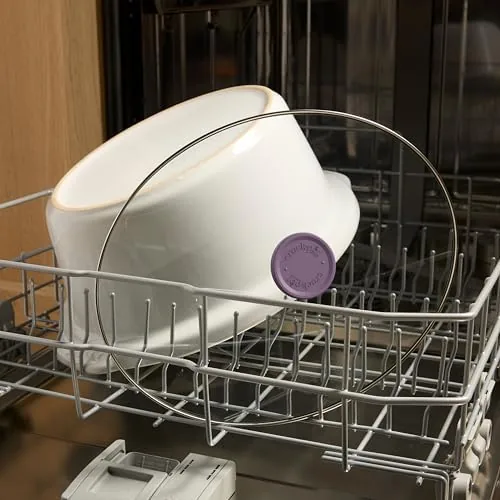
I also used the insert on the stovetop to sear meat before slow cooking, ran the insert through the dishwasher, and left a pot of food on Low well past its intended time to see how the manual design handles inattention. For balanced context on choosing a slow cooker, independent guidance such as Wirecutter's guide to slow cookers explains the differences between manual and programmable models. The Crock-Pot Design Series listing on Amazon shows the current price and available colors.
Crock-Pot Design Series 7 Quart Manual: Questions People Ask
How do the manual settings work on this slow cooker?
A single dial selects Off, Low, or High, and you choose the setting yourself for the whole cook. There is no timer, so you decide when the meal starts and when it is done.
Is the stoneware insert safe for the oven and dishwasher?
The removable stoneware insert is dishwasher safe for cleanup and can handle gentle oven use, though the glass lid and the heating base are not designed for oven heat and should only be used as intended.
How much food does the 7 quart capacity hold?
It fits a whole chicken, a large roast, or roughly eight to ten servings, which makes it a strong fit for family dinners, entertaining, and batch cooking for the week.
Does the low and high heat cook the same food differently?
Low cooks gently over roughly eight hours and suits tougher cuts that need long, slow breakdown, while high cooks faster over about four hours. Both deliver tender results; the choice is about your schedule.
As an Amazon Associate, I earn from qualifying purchases.