
Every cat owner knows the scene. The shedding season arrives, the sofa gathers a layer of fur, and the family cat spends half its day rubbing against doorframes and furniture corners. The Catit Senses 2.0 Self Grooming Cat Brush takes that everyday behaviour and turns it into something useful. Instead of chasing a reluctant pet with a comb, you mount a curved brush low on the wall, and the cat grooms itself whenever it feels like rubbing. After three weeks of testing with two shedding cats in a busy household, I have a clear idea of whether this clever gadget earns its place on the wall.
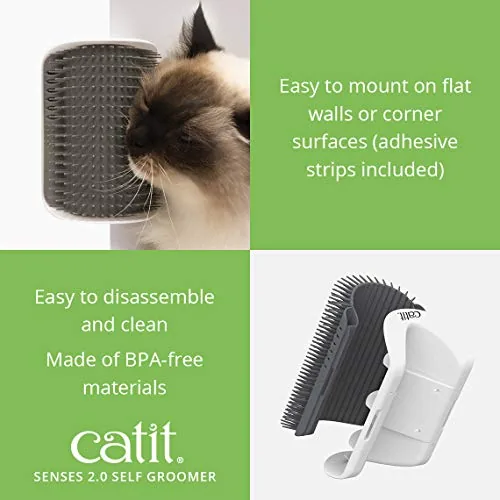
The concept is deceptively simple. A compact base mounts flush against a wall or inside a corner, and a curved brush head sits low enough for a cat to press its back and neck against the bristles. As the cat rubs, the flexible bristles comb through the coat and catch loose fur before it can drift onto the furniture. There are no batteries, no motor, no cords, and no instructions that take an afternoon to read.
A quick note before the details. The links in this review are affiliate links. If you buy through them, the site earns a small commission at no extra cost to you, and that keeps the testing running. Nothing here is sponsored, and the verdict below is based entirely on what I observed in real use.
Design and Build
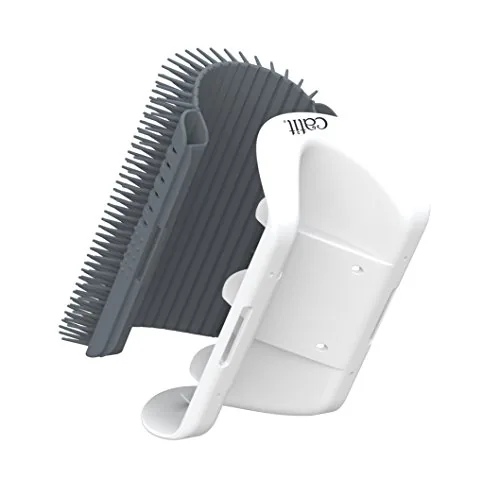
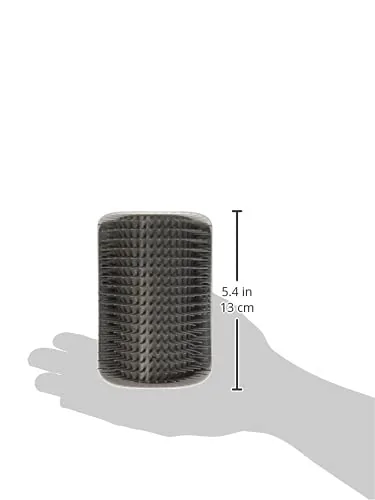
The Catit Senses 2.0 is a small, tidy unit that does not announce itself as a piece of cat furniture. The base is a rounded rectangle of white plastic with a mounting bracket, and the brush head clips into it with a firm click. The bristles are arranged in a gentle curve that mirrors the shape of a cat back, so the contact feels natural rather than like a hard poke. The whole thing measures a few inches across, which means it fits unobtrusively beside a doorframe or along a hallway wall.
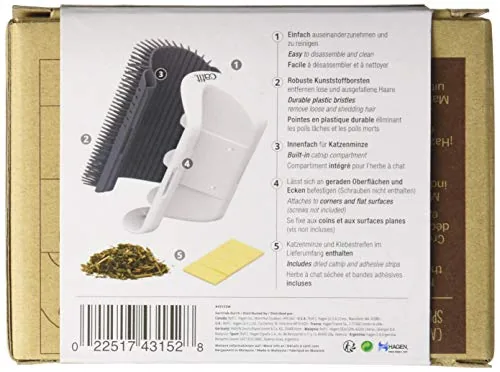
Build quality is better than the modest price suggests. The plastic feels sturdy rather than flimsy, and the clip that holds the brush head in place survived dozens of removals and reattachments during my testing without loosening. Catit includes mounting tape, a corner piece for installation into an inside corner, and a set of spacer studs that let you adjust how far the brush sits from the wall. That last detail matters more than it sounds, since brush depth controls how much pressure a cat can apply.
Installation takes under ten minutes. You clean the wall surface, peel the backing off the adhesive pad, press the base into place, and wait for the tape to set before clipping in the brush head. The spacer studs slot between the base and the brush, so you can tune the standoff distance to suit a kitten or a heavy adult cat. There is no drilling, no screws, and no special tools.
Key Features
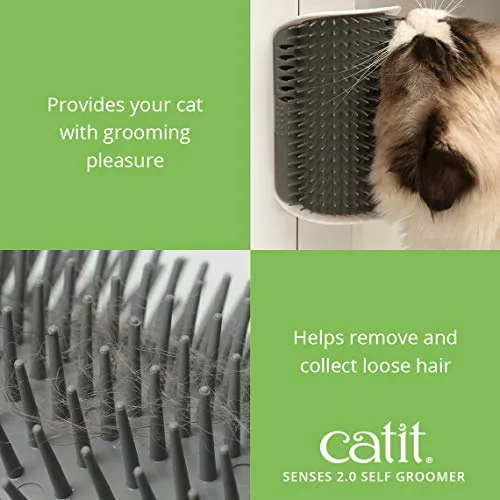
The heart of the product is the curved bristle head. The bristles are flexible enough to bend under a cat weight, which means the animal controls the pressure and nothing scratches the skin. As the cat presses against the arch, the bristles comb through the undercoat and snag loose fur. Catit designed the curve specifically to follow the line of the spine, so the grooming action covers the back, the sides of the neck, and the shoulders, which are the areas a cat cannot easily reach on its own.
The accessory kit is genuinely useful rather than filler. The corner piece lets you mount the groomer into an inside corner, which is exactly where most cats already choose to rub, and the two spacer studs fine tune the depth. Because the brush head unclips from the base with a light pull, cleaning is a thirty second job that needs no tools.
Perhaps the most appealing feature is what is absent. There is no motor to burn out, no battery to recharge, and no cord to route along the skirting board. The product works purely on the cat own movement, so it cannot overheat, cannot run out of power, and cannot break down in any mechanical sense.
Real-World Performance
I mounted the Catit Senses 2.0 near a corner where both cats already paused to rub, and the reaction was faster than expected. Within two days the younger cat had adopted it, and by the end of the first week the older cat followed suit. The pile of loose fur that gathered at the base each day was proof that the concept works.
The shedding results were measurable. Over three weeks, the amount of fur collecting on the dark sofa and on freshly washed clothing dropped noticeably. The brush caught the loose topcoat fur that a cat would otherwise drag around the house, and I did not see a dramatic reduction in hairballs, but the cats were visibly shedding less around the home.
Placement is the single most important factor. A groomer mounted too high goes ignored, because a cat will not stretch up to rub it, and one mounted too low leaves the bristles brushing the shoulder blades at an awkward angle. The sweet spot sits at roughly shoulder height for the tallest cat in the house. I moved the unit twice before finding the position that both cats accepted, and any buyer should budget a few days of trial and error.
Pros and Cons
- Pros: genuinely hands free grooming, no batteries or motor to fail, simple tool free cleaning, compact and discreet on any wall, and affordable for what it does.
- Cons: depends entirely on the cat choosing to use it, requires careful placement and depth tuning, and does not help with matted fur or cats that avoid wall contact.
How It Compares
To put the Catit in context, I compared it against the two most common alternatives: a traditional handheld shedding comb and a motorised grooming glove. The table below sums up how they stack up for the average shedding cat.
| Feature | Catit Senses 2.0 | Handheld Shedding Comb | Motorised Grooming Glove |
|---|---|---|---|
| Requires a human hand | No | Yes | Yes |
| Power source | None | None | Batteries |
| Fur removal | Passive rubbing | Active combing | Active vibrating |
| Cat cooperation needed | High | Medium | Medium |
| Maintenance | Rinse the head | Pick out fur | Batteries and cleaning |
A handheld comb gives you full control and is the better choice for matted fur, but it only works while the cat tolerates being held. A motorised glove removes more fur per session but needs batteries and a cooperative animal. The Catit trades absolute thoroughness for the ability to work with zero effort on your part while the cat grooms itself. It is a supplement rather than a replacement for a comb, and it suits a cat that already rubs against things. Wirecutter, which tests pet products alongside consumer electronics, has covered the broader category of cat grooming aids in detail, and its guidance on matching a tool to a cat temperament aligns with what I found here.
Who Should Buy It
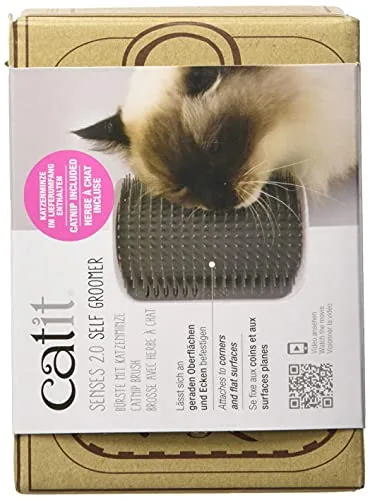
This groomer is for the multi cat household where at least one cat already rubs against corners, doors, and furniture legs. Those cats will treat the device as a favourite spot within days, and the loose fur will start collecting at the base instead of on the sofa. It is also a strong choice for owners who are short on time, for older cat owners, and for anyone whose cat refuses to sit still for a comb.
It is not the right product for a cat that never rubs on anything, or for an owner expecting a device that will strip a full winter coat in one pass. The Catit removes surface loose fur gradually, and it will not fix matting. For everyone else, it is a small investment that quietly reduces the fur problem all day long. If this sounds like your household, you can check the Catit Senses 2.0 on Amazon to see the current price.
How We Test
I ran the Catit Senses 2.0 for three weeks in a home with two cats of different ages and temperaments. I tested three mounting positions, two wall depths using the spacer studs, and both a hallway corner and a plain wall surface. I tracked how often each cat used the brush, how much fur accumulated at the base, and how the adhesive held up over repeated use.
My honest verdict is that this is one of the better designed low tech cat products I have tested. It is not a miracle device, and it relies on the cat cooperation more than any gadget, but when the placement is right it genuinely reduces shedding around the home with zero ongoing cost. At the current street price, it is a low risk experiment worth trying. You can compare the latest listings on Amazon if you want to buy.
Questions People Ask
Does the Catit self groomer hurt my cat?
No. The bristles are flexible and bend under pressure, so the cat controls exactly how firmly it is groomed. Nothing on the unit is sharp, and the curved profile follows the shape of the back for comfortable contact.
Where should I mount the Catit Senses 2.0?
Mount it low on a wall near a corner or doorframe where your cat already likes to rub. Aim for roughly the height of your cat shoulders, and use the included spacer studs to tune the brush depth until your cat presses into it comfortably.
How do you clean the self groomer?
Unclip the brush head from the base, rinse it under warm water to flush out the caught fur, let it dry, and snap it back into place. The whole routine takes about a minute and needs no tools.
Will my cat actually use the self groomer?
Most cats adopt it within a few days if it is mounted at shoulder height and introduced gradually with treats and praise. Cats that already rub against corners are the most likely to take to it, while cats that avoid wall contact may ignore it entirely.
As an Amazon Associate, I earn from qualifying purchases.