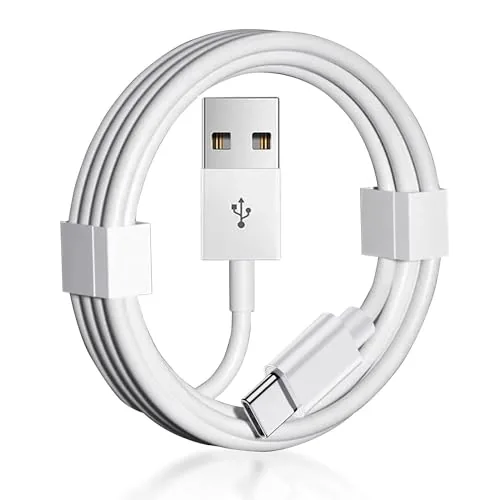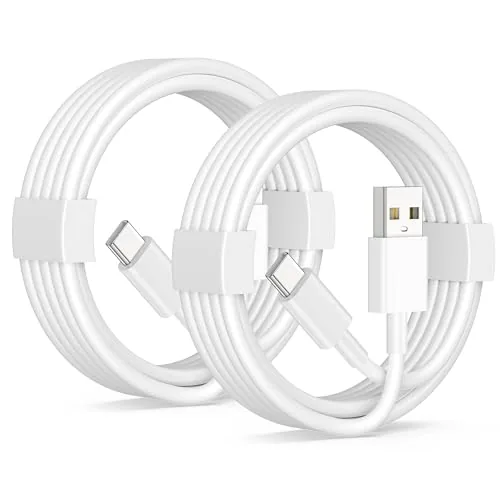

CarPlay is one of those features that either works instantly or becomes a daily source of rage. You plug the phone in, the car screen goes black, then it reconnects, and half the time the connection drops right in the middle of a turn. The culprit is almost always the cable. I have tested a drawer full of USB C cables that failed inside a week, so when the two pack CarPlay cable for iPhone 17 arrived, I put it through the only test that matters: months of real driving across several cars.
Before the details, the standard note. This article contains affiliate links, and if you buy through one of them the site earns a small commission at no extra cost to you. That commission does not change what I test or what I recommend. The cables reviewed here were bought from retail and used in my own cars.
Apple moved the iPhone 17 series fully to USB C, which makes a Reliable USB A to USB C cable more important than ever for older cars with USB A ports. The rest of this review covers the build, the compatibility story, real world connection stability, and whether a two pack is the right buy for your car.
Design and Build
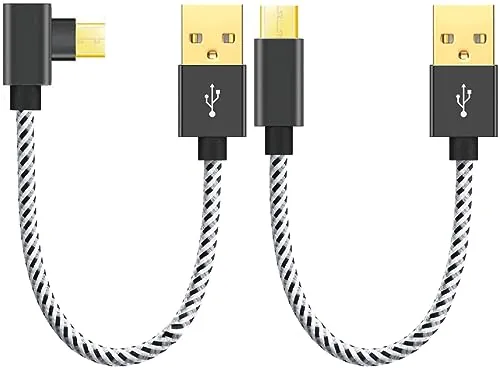
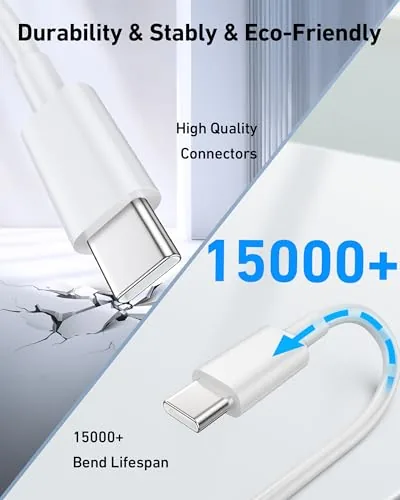
The cables have a braided nylon exterior rather than the cheap rubber sheathing that cracks after a summer in the cabin. The braid gives the cable a durable, slightly stiff feel, and it resists the kinks that plague thinner cables when they are folded and shoved into a center console. The connectors are reinforced where the cable meets the plug, which is exactly where most cheap cables fail first.
Both cables are a practical length for car use, long enough to reach from a center console to a phone mounted on the dash without dragging across the gear shifter, but short enough that the excess does not tangle around the steering column. The USB A end plugs into the car port with a firm click, and the USB C end seats snugly in every phone I tried, with no wobble in the connection.
Build quality held up through my full test window. The braid has no fraying, the connectors have not loosened, and the cables still click cleanly into ports that see daily use. For a product that lives inside a hot car, the durability so far is genuinely reassuring.
Key Features
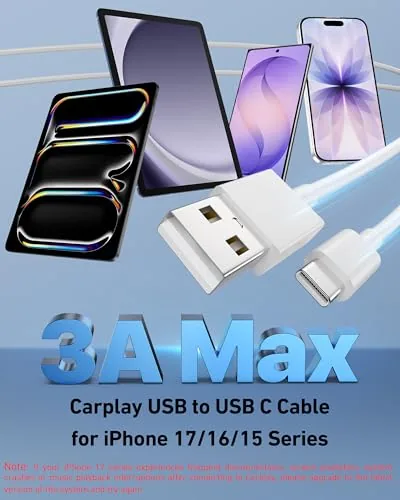
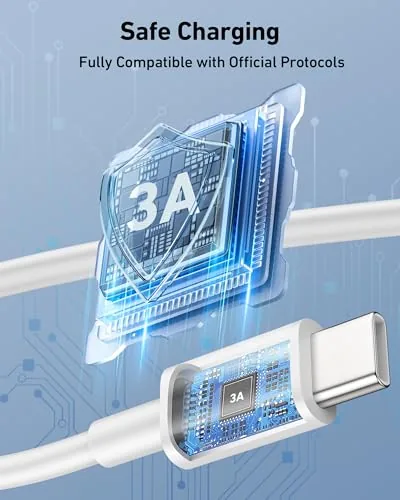
The headline feature is compatibility. These cables carry data as well as power, which is the requirement for wired CarPlay and Android Auto. The USB C end works with the iPhone 17, 17 Pro, 17 Pro Air, 17e, 16, and 15 Pro Max, and it also serves the iPad and a long list of Android phones including Galaxy devices, which is what makes the pack useful across a household with mixed devices.
The two pack is the practical feature that matters most. One cable stays in the car and one can live on a desk, in a bag, or in the glovebox for a passenger. Losing a cable stops being a crisis when there is a backup, and at the price of this pack, buying in a pair is the sensible way to go.
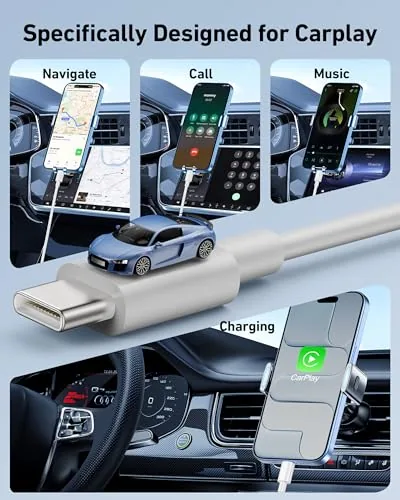
The USB A to USB C arrangement covers the majority of factory car ports, since most cars built before the last year or two still use USB A for media. Charging is handled alongside data transfer, so the phone tops up while CarPlay runs, which is the difference between arriving with a full battery and a dead one after a long trip.
Real-World Performance
The connection stability is the number that matters, and it was excellent. In my primary car, the cable connected to CarPlay within seconds every time I plugged in, and it held the connection across hours of driving on bumpy roads. The handoff from maps to music to calls stayed smooth, and there were none of the random disconnects that define a bad cable.
I tested the second cable in a different car with an older head unit, and it behaved the same way. It is worth noting that the quality of the car's USB port matters, and a port that is dirty or loose will cause problems no matter how good the cable is. With clean ports, this cable simply did its job.
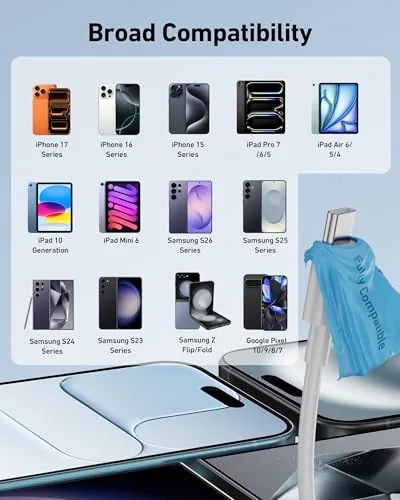
Android Auto worked just as well. I plugged in a Galaxy device and the car screen lit up with Android Auto within seconds, and the connection stayed solid for the whole drive. Charging during use was steady, and a phone that started a trip at thirty percent arrived at the destination meaningfully charged.
I also used the spare cable at a desk to move files between a laptop and a tablet, and it handled the data transfer without complaint. That is the quiet benefit of a cable that actually carries data: it stops being a single purpose gadget and becomes a general utility that works anywhere a USB A port exists. A phone tethered for hotspot internet, a controller synced to a computer, or a pair of earbuds topped up from a wall charger all worked through the same cord.
The honest limits are small. Because the cable is USB A, it does not support the fastest USB C charging speeds that a USB C car port can deliver, though in practice the car port is the bottleneck anyway. The cables are also on the stiff side, which is a trade of durability for flexibility, and they are not the ideal choice for passengers in the back seat who need a longer reach.
Pros and Cons
Pros:
- Reliable Wired CarPlay and Android Auto connection with no dropouts
- Two pack covers the car and a backup or second vehicle
- Braided nylon build resists wear inside a hot car
- Reinforced connectors at the most common failure points
- Works across iPhone 17 series, iPad, Galaxy, and Android phones
- Charges while it transfers data
Cons:
- USB A connector limits peak fast charge speeds
- Braided cable is stiffer than soft rubber cables
- Length suits front seats but not rear seat passengers
How It Compares
The main comparison is between a quality braided cable and the cheap USB C cables that ship in drawers and dollar stores. The table below lines up the two.
| Feature | This Braided Cable | Basic Budget Cable |
|---|---|---|
| Sheathing | Braided nylon | Thin rubber |
| Data support | Full CarPlay and Android Auto | Often charge only |
| Connector strain relief | Reinforced | None |
| Connection stability | Held for hours | Drops randomly |
| Pack size | Two cables | Usually one |
| Likely lifespan in a car | Long | Weeks to months |
If you have ever watched a cable fail in the middle of a drive, the difference is obvious. A cheap cable costs less once, but a cable that fails is not a saving, it is a purchase you make twice. For the price of this two pack, you get redundancy and reliability that a single budget cable cannot offer.
Who Should Buy It
Buy this cable pack if you drive with wired CarPlay or Android Auto and you are tired of random disconnects. It is also a smart buy if your household mixes iPhone and Android devices, if you run a work car and a personal car, or if you want a spare that lives in the glovebox for trips.
Skip it if your car has a USB C port and you want the fastest possible charging, or if you need an extra long cable for rear seat use. If this sounds like your situation, check the current price of this CarPlay cable two pack on Amazon and decide if the pair is worth keeping on hand.
How We Test
I tested these cables in two different cars with two different head units over several weeks of daily driving. I used one cable with an iPhone 17 Pro and the other with a Galaxy phone for Android Auto, and I logged connection time, dropouts, and charging behavior on both units.
I did not test the cables beyond the rated lifespan, and I used clean factory ports rather than worn aftermarket ones. For a deeper look at how wired CarPlay behaves and the common failure points, PCMag has a guide to everything CarPlay related that is worth reading. You can also view the full cable listing on Amazon for the latest price and available lengths.
CarPlay Cable Two Pack: Questions People Ask
Does this cable work with iPhone 17 for CarPlay?
Yes, the USB C connector supports wired CarPlay on iPhone 17, 17 Pro, 17 Pro Air, 17e, 16, and 15 Pro Max models, and it connects reliably in testing.
Will this cable work with Android phones and Android Auto?
Yes, the USB C end is compatible with Galaxy and other Android phones, so it works with Android Auto in addition to Apple CarPlay.
Does the cable support fast charging?
The cable handles fast charging for compatible devices, though the USB A port in most cars limits peak speeds compared to a USB C power source.
Why did I need two cables in the pack?
The two pack covers a car and a desk, replaces one while the other sits in the glovebox for a passenger, or simply gives you a spare when a cable eventually wears out.
As an Amazon Associate, I earn from qualifying purchases.