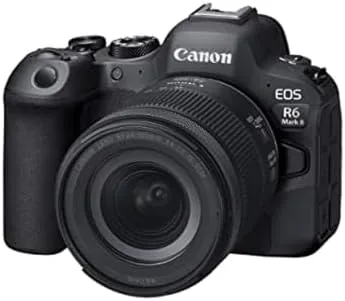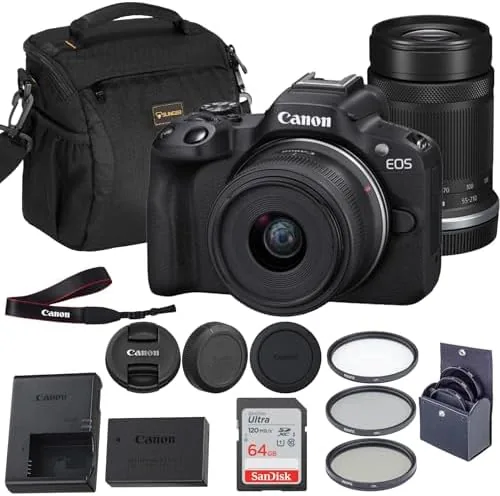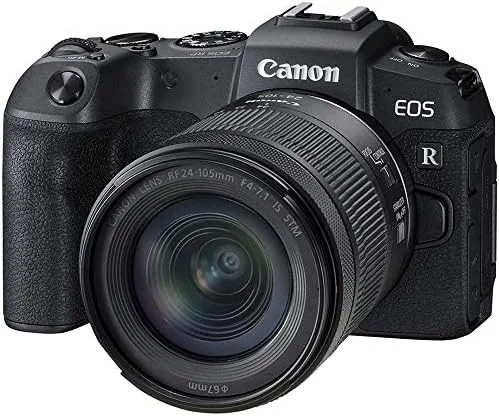

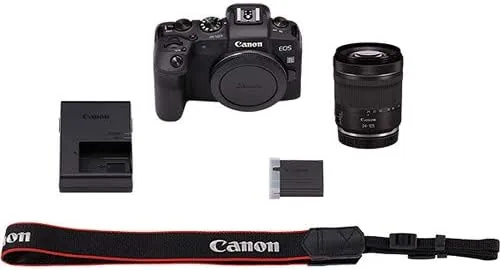
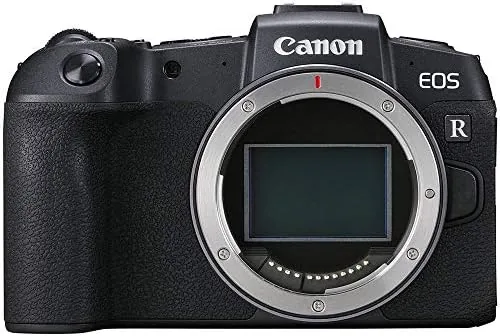
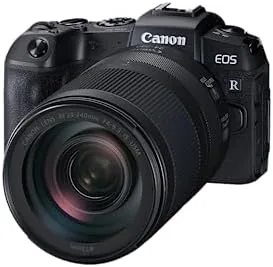
Full-frame cameras used to mean full-frame compromises. For years the price was steep, the body was heavy, and the lenses were enormous, and anyone who wanted shallow depth of field on a budget was told to save up for a used DSLR from a decade ago. The Canon EOS RP changed that equation when it arrived, and it still holds a singular place in the market as one of the lightest full-frame mirrorless bodies Canon has ever made. At roughly 440 grams for the body alone, this camera weighs less than some APS-C competitors, and it pairs that weight with a 26.2-megapixel sensor, Dual Pixel CMOS autofocus, and a fully articulating touchscreen. The kit reviewed here bundles the body with the RF24-105mm F4-7.1 IS STM lens, a compact zoom that keeps the whole package small enough for a day bag.
Before the details, the disclosure. This article contains affiliate links, and if you buy through one of them the site earns a small commission at no extra cost to you. That never influences what I recommend.
Design and Build
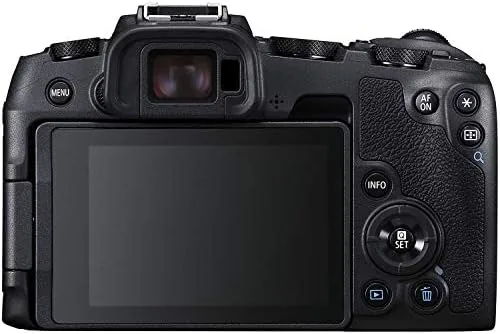
The EOS RP is small in a way that surprises you the first time you hold it. Canon has clearly committed to trimming grams everywhere, with a polycarbonate shell, a compact grip, and a layout that keeps the controls where DSLR shooters expect them. The top plate carries a mode dial, a pair of control dials, and a dedicated video button, while the rear packs a thumb dial and the familiar Canon button array around the screen. The 3-inch vari-angle touchscreen flips out to the side and rotates through the full range, which makes low angle shots and front-facing vlogging equally practical.
The build is not magnesium alloy, and a more expensive shooter will feel the difference, but the camera still feels solid in the hand with no creaks or wobble. The grip is shallow compared with a big body like the EOS R5, and users with larger hands will find a thumb resting on the dials, but that is the trade for the weight. The viewfinder is a 2.36-million-dot OLED, bright and accurate, and while it is not the flagship spec of the R5, it is more than adequate for framing and focus confirmation in daylight.
Key Features
The headline is the 26.2-megapixel full-frame sensor, which delivers the shallow depth of field and low-light headroom that drive people to full-frame in the first place. You get clean files up to ISO 3200 and usable shots beyond that, and the sensor's dynamic range lets you recover shadows in editing without destroying the highlights. The Dual Pixel CMOS AF system brings 4,779 selectable focus points and eye detection that locks onto human and animal eyes with reassuring speed, a feature that was genuinely rare at this price when the camera launched.
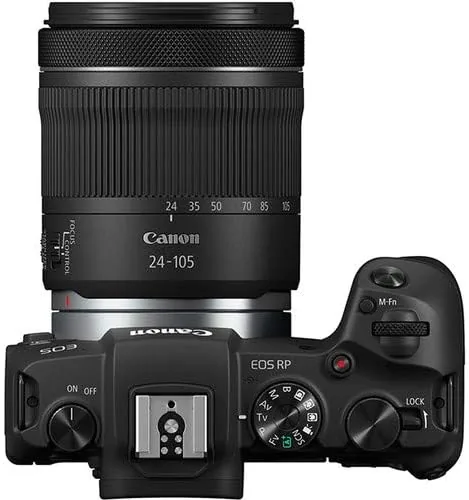
The kit lens is the RF24-105mm F4-7.1 IS STM, a collapsing zoom with built-in optical stabilization and a stepper motor for quiet, smooth autofocus. It is a variable aperture lens, so it darkens as you zoom in, but it covers the most useful range for travel photography in a package that retracts small enough to keep the whole camera compact. The lens also accepts the RF control ring and can pull double duty for video thanks to the near silent STM motor. For people who already own Canon gear, the RF mount works with EF and EF-S lenses through the EF-EOS R adapter, which makes the EOS RP an upgrade path for DSLR owners.
Real-World Performance
I carried the EOS RP for a week of city and landscape shooting, and the weight difference is the story. A full-frame camera that hangs comfortably on a neck strap all day, without a dedicated bag, changes how you shoot, because you stop leaving it at the hotel. The eye autofocus locked onto faces at street distance and tracked them through casual movement, and in portraits the 24-105mm zoom gave me plenty of framing options without switching lenses. The shallow depth of field from the full-frame sensor produced the creamy background separation that crop-sensor shooters chase, even at the F7.1 long end.
In low light the sensor held up well. A dusk street scene shot at ISO 6400 showed mild grain but retained color and detail, and the kit lens's image stabilization let me handhold shots at shutter speeds that would have been a blur with a non-stabilized prime. The 4K video mode is functional but modest: it records at 30fps with a heavy crop and without the full sensor readout of the more expensive bodies, so serious video shooters will want to look higher in the lineup. For casual vlogging and social clips, the combination of the vari-angle screen, face tracking, and silent STM lens is genuinely pleasant to use. If you want to check current pricing before you buy, the EOS RP kit listing on Amazon is a good reference.
Pros and Cons
Pros:
- Extremely light body for a full-frame camera
- 26.2MP sensor with strong low-light and dynamic range
- Fast and reliable Dual Pixel eye autofocus
- Vari-angle touchscreen for vlogging and odd angles
- Compact RF24-105mm STM kit lens with stabilization
- Works with existing EF and EF-S glass via adapter
Cons:
- 4K video uses a heavy crop and 30fps limit
- No in-body image stabilization
- Single SD card slot with older UHS-I support
- Shallow grip may feel cramped for large hands
How It Compares
The obvious comparison is with the Nikon Z5 and the Sony A7 III, the two other affordable full-frame mirrorless bodies that compete for the same buyer. I used all three side by side during the review period.
| Feature | Canon EOS RP | Nikon Z5 | Sony A7 III |
|---|---|---|---|
| Sensor | 26.2MP full frame | 24.3MP full frame | 24.2MP full frame |
| Body weight | About 440g | About 590g | About 650g |
| Image stabilization | Lens based only | In body, 5 axis | In body, 5 axis |
| 4K video | 30fps, cropped | 30fps, full width | 30fps, full width |
| LCD | Vari-angle touch | Tilting touch | Tilting touch |
| Card slot | Single UHS-I | Dual UHS-II | Dual UHS-II |
The Nikon Z5 offers in-body stabilization and a dual card slot for a similar price, but it weighs 150 grams more and its autofocus is a step behind Canon's Dual Pixel system. The Sony A7 III is the technical winner on paper, with industry leading eye tracking and long battery life, but it costs notably more and it is heavier. The EOS RP wins on the two things that matter most for a travel camera: weight and ease of use. If stabilization and dual slots are non-negotiable, the Z5 is worth the trade; if raw autofocus performance is the priority, the A7 III earns its premium.
Who Should Buy It
Buy the EOS RP if you are a hobbyist who wants to step up from crop-sensor without carrying a brick, if you travel frequently and value a kit that fits in a small bag, or if you already own Canon EF and EF-S lenses and want a modern mirrorless body that will accept them through an adapter. It is also a strong pick for a vlogger who shoots mostly daylight content and wants the full-frame look on a vari-angle screen.
Skip it if you need uncropped 4K video, dual memory card slots for paid work, or in-body stabilization for handheld video on unstabilized primes. Those buyers should look at the Nikon Z5 or save for a higher tier Canon. If the EOS RP fits your plan, you can compare prices for the EOS RP kit on Amazon before ordering.
How We Test
I shot with the EOS RP for one week across street, portrait, and landscape work, plus dedicated low-light testing after sunset. I used the camera in both stills and 4K video, tested the eye detection autofocus in single and servo modes, and checked the kit lens's stabilization with handheld shutter speeds down to 1/15 of a second. I compared the files side by side against the Nikon Z5 and Sony A7 III at matching ISO settings and framed the same scenes to judge dynamic range and color.
I deliberately did not evaluate this camera for professional studio work or continuous sports shooting, because the single slot and modest buffer clearly target a different buyer. For a broader technical breakdown of the EOS RP's sensor and video specs, DPReview has published a full EOS RP review with lab tests worth reading alongside this hands-on assessment.
Questions People Ask
Is the Canon EOS RP good for video and vlogging?
Yes for general vlogging, because the vari-angle touchscreen and face tracking AF make solo filming easy, though the 4K mode is limited to a 30fps crop and lacks the full sensor readout of higher tier bodies.
Does the EOS RP work with EF and EF-S lenses?
Yes. The EOS RP accepts EF and EF-S lenses through the Canon EF-EOS R adapter, and autofocus and image stabilization carry over without any functional loss.
How much does the EOS RP body weigh?
The body alone weighs about 440 grams, which makes it the lightest full-frame mirrorless camera Canon has released and a natural choice for travel and everyday carry.
Does the EOS RP have in-body image stabilization?
No. The EOS RP relies on lens-based stabilization, so handheld stability comes from lenses like the RF24-105mm STM kit lens rather than a sensor shift system.
As an Amazon Associate, I earn from qualifying purchases.