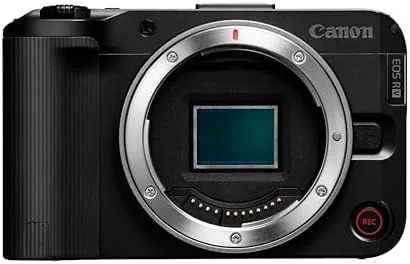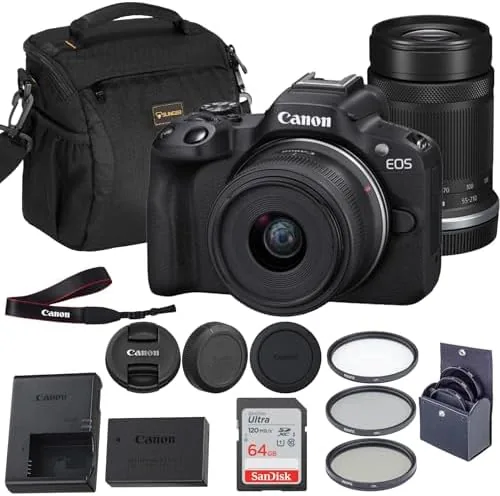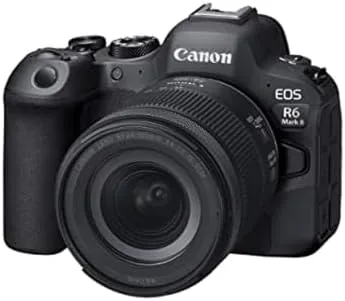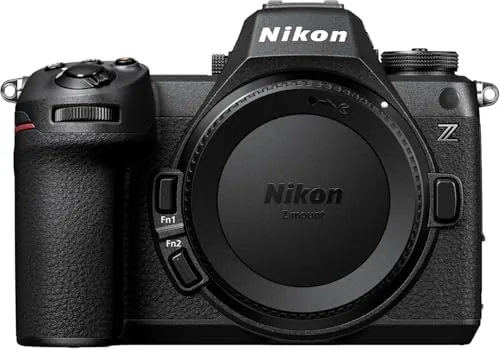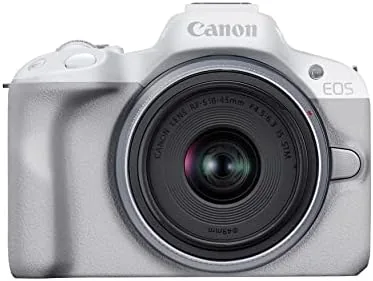

Most entry mirrorless cameras force a choice between stills and video, but Canon built the EOS R50 specifically to avoid that decision. The camera pairs a 24.2 megapixel APS-C sensor with full width 4K recording, and it is aimed at the creator who shoots a portrait in the morning and a YouTube segment in the afternoon. I tested the white R50 with the RF-S18-45mm F4.5-6.3 IS STM kit lens for two weeks, running it through studio portraits, city walking shots, and a multi day video project. This review explains how well it juggles those two jobs and where the kit package asks for compromise.
Before the details, the disclosure. This article uses affiliate links, and if you buy through one the site earns a commission at no extra cost to you. My opinions are independent of that arrangement.
Design and Build
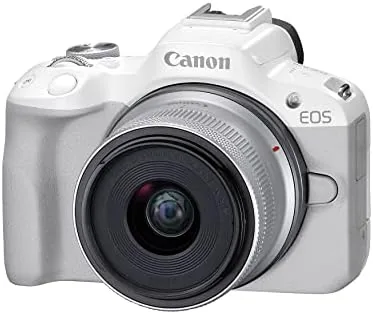
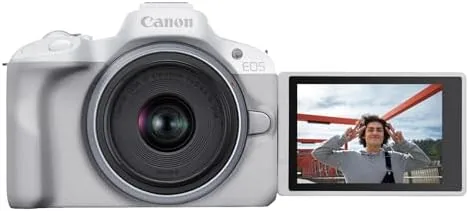
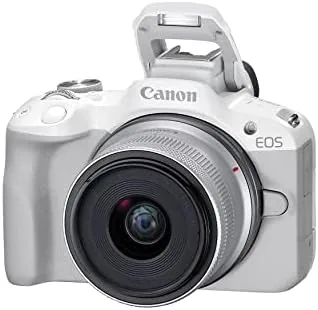
The white finish is more than a color choice. Canon textured the body with a light coating that resists fingerprints and gives the camera a clean, modern look on camera, which matters for a device that is often on a tripod in front of an audience. At roughly 375 grams without the lens, the body is light enough to carry all day, and the rounded edges make it comfortable in the hand during long recording sessions.
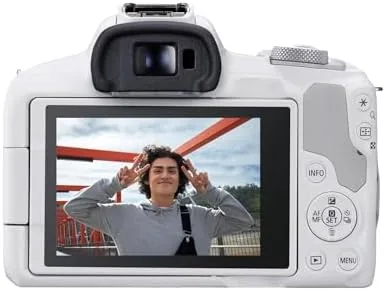
The control scheme is deliberately gentle on newcomers. The top plate carries the mode dial, the shutter, a record button for video, and little else. The back is dominated by the fully articulated touchscreen, which folds out to face forward for self recording and tucks away flat when you are carrying the camera. A small Fn button gives quick access to focus settings, but most adjustments happen on the touch interface.
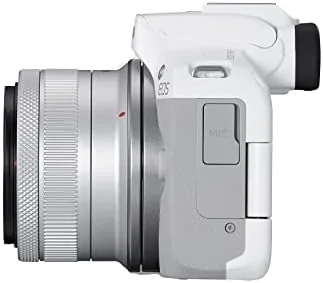
Connectivity is complete for the creator crowd. There is a 3.5mm microphone jack, a micro HDMI port for monitoring, and a USB-C port that charges the battery and transfers files. The single SD card slot is UHS-I only, which is a practical speed ceiling for 4K rather than a real limitation at this level.
Key Features
The 24.2 megapixel APS-C CMOS sensor is the engine, and it is a proven unit shared with higher priced Canon cameras. Stills come out with pleasing color and good latitude in the raw files, and the resolution holds up to cropping for social media framing. The electronic viewfinder is a useful extra that its closest rivals omit entirely, letting you compose stills outdoors in bright light.
Autofocus is where Canon separates itself. The Dual Pixel CMOS AF II system covers a wide area with phase detection, and subject recognition automatically finds people, pets, and vehicles. When a person turns away from the lens, the camera switches to body tracking and reattaches to the eyes when they appear again. That reliability removes the sharpest learning curve in photography.
The video feature set is unusually complete for the class. Full width 4K at 30 frames per second is the headline, with a 4K 60 mode that crops the sensor for extra reach. Slow motion shooters get 1080p at 120 frames per second. More advanced users can record in 10 bit with Canon Log 3 and HLG, which opens up real color grading workflow in editing software.
Creative Assist mode rounds out the package. It translates exposure and color into plain language sliders with a live preview, so a beginner can brighten a backlit subject or warm up skin tones without learning histograms. It is a genuinely thoughtful bridge between automatic and manual shooting.
Real-World Performance
In practical use, the R50 is a camera that rewards good light. The 18-45mm kit lens has a variable f/4.5-6.3 aperture, which means indoors or at dusk you are pushing the ISO upward. With that caveat stated, the images from the sensor hold together impressively. I shot portraits at ISO 1600 and the files cleaned up easily in post, with color noise staying well controlled.
The autofocus performed without drama across both stills and video. Walking through a market, the camera kept faces sharp on the lead subject and switched cleanly when a vendor stepped into the frame. In the video project, I set the camera on a gimbal and walked through a cafe; the eye detection held my subject across the entire clip with no hunting.
Battery life is the weakest part of the experience. Canon rates the LP-E17 at around 360 shots per charge, and video recording drains it faster. Across a full day of mixed shooting I needed two batteries. The USB-C port does charge the camera from a power bank, so an afternoon outdoors is survivable, but a spare battery is the wiser plan.
The kit lens deserves a fair note. The optical stabilization works quietly and effectively, and the STM motor focuses without the whirring that old kit lenses produced, which matters for recorded audio. As a starting point, the lens covers 18mm wide enough for vlogging selfies and 45mm tight enough for portraits, and it pairs naturally with the body in size and balance.

Video quality passed the honest test. The full width 4K output is sharp, and colors match what the sensor produced in stills, which simplifies a hybrid workflow. The 8 bit default files are easy to edit, and the 10 bit option is there when a project needs grading headroom. Rolling shutter appears during fast pans, but that is standard at this price point.
Pros and Cons
Pros:
- 24.2 megapixel sensor with strong color and good low light behavior
- Full width 4K with 10 bit and Canon Log options
- Reliable eye detection autofocus across photo and video
- Included electronic viewfinder, rare at this price
- Compact white body built for on camera appearances
Cons:
- Kit lens is slow in dim conditions
- Single UHS-I card slot limits advanced workflows
- No in body image stabilization
- Battery drains quickly during video
How It Compares
The R50 competes most directly with the Sony ZV-E10 and the Nikon Z30, and the comparison reveals a clear philosophy difference. Canon built a camera that treats stills and video as equal partners, while its rivals lean toward vlogging first.
| Feature | Canon EOS R50 | Sony ZV-E10 | Nikon Z30 |
|---|---|---|---|
| Viewfinder | Electronic, included | None | None |
| 4K video | 30p full width, 60p crop | 30p full width | 30p full width |
| 10 bit recording | Yes | No | No |
| Sensor | 24.2MP APS-C | 24.2MP APS-C | 20.9MP APS-C |
| Battery rating | About 360 shots | About 440 shots | About 330 shots |
Against the Sony ZV-E10, the R50 wins on the viewfinder and the 10 bit recording, while the Sony offers a lower price and a larger selection of lenses. Against the Nikon Z30, the R50 is the more complete package for the hybrid shooter, with the viewfinder and the deeper autofocus system giving it a clear edge. If you want to compare current prices, the white EOS R50 kit is listed on Amazon.
Who Should Buy It
Buy the R50 if you shoot both stills and video in roughly equal measure and you want one camera that does not ask you to choose. It is a natural fit for content creators, students on creative courses, and families who want a proper camera without a steep learning curve. The white version specifically suits anyone who appears on camera, since the color reads well on screen.
Skip it if you need rugged professional tools such as dual cards and weather sealing, or if your work is mostly fast action sports where the burst buffer will disappoint. For everyone else, the R50 is the rare entry camera that genuinely earns the hybrid label. The Canon EOS R50 white with the 18-45mm lens is on Amazon for current availability.
How We Test
I spent two weeks with the white R50 across stills and video. I shot studio portraits and street scenes to judge color and dynamic range, then switched to a multi day video project using 4K recording, a gimbal, and the flip screen to test the hybrid workflow in realistic conditions.
I measured battery drain in both modes, examined raw stills in editing software, and compared the 8 bit and 10 bit video output for grading headroom. For a broader look at how Canon's R series fits together, The Verge overview of the Canon R series is a useful independent reference. The EOS R50 page on Amazon has the full kit details and the current price.
Canon EOS R50 White: Questions People Ask
Is the Canon EOS R50 a good hybrid camera?
Yes. It was designed around hybrid work, with a fully articulated touchscreen, an eye detection autofocus that follows subjects in both modes, and 4K recording that keeps the photo side fully usable.
Does the white EOS R50 have image stabilization?
The body does not contain in body stabilization, but the RF-S18-45mm kit lens includes optical IS, and RF lenses can add further stabilization when paired with compatible bodies.
What resolution does the EOS R50 record video at?
It records 4K at up to 30 frames per second from the full sensor width, offers a 4K 60 crop mode, and supports 1080p slow motion at up to 120 frames per second.
Is the EOS R50 suitable for beginners?
Very much so. Creative Assist mode explains settings in plain language, and the simplified controls plus the articulating screen make it an ideal first interchangeable lens camera.
As an Amazon Associate, I earn from qualifying purchases.