
Every car camper knows the ice chest routine: buy a bag of ice, watch it melt into a soup at the bottom, and spend the last day of the trip deciding between lukewarm drinks and a drive to the store. A portable compressor refrigerator removes all of that, and the BougeRV 23-Quart pink model is a compact attempt to bring real fridge and freezer duty to the back seat. It promises no ice, a 15-minute cool to 32 degrees, a temperature range from minus 8 to 50, and power options across 12V, 24V, and 110V. I lived with one for a month of camping, road trips, and tailgate weekends to find out whether a pink fridge is a real appliance or a novelty.
Before the details, the standard note. This article contains affiliate links, and if you buy through one of them the site earns a small commission at no extra cost to you. That commission never changes what I test or what I recommend.
Design and Build
The unit is a rounded, insulated box in a soft pink finish with a hinged top lid, a small digital display, and a control dial on the front face. The exterior is a tough, slightly textured plastic that shrugs off scratches from loading and unloading, and the lid closes with a firm double latch that holds even on rough gravel roads.
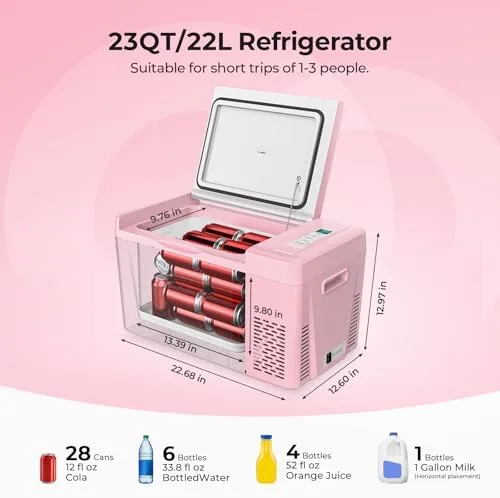
Inside, the cavity is deep enough for tall drink bottles and wide enough for full food containers, with a small internal basket that keeps the top layer tidy. The build shows real engineering: the compressor is a sealed unit mounted low, the insulation is thick all around, and the power cable locks into a recessed socket so it cannot be yanked loose by gear shifting in the back. If you want to compare the current price, the pink BougeRV 23-quart refrigerator listing is a useful reference.
Key Features
The headline feature is the compressor system, which separates this from cheap thermoelectric coolers that only get lukewarm. A real compressor pulls the interior down to 32 degrees in about 15 minutes from a warm start, and it can keep running down to minus 8, which turns the same box into a genuine freezer for ice cream and frozen dinners.

Power flexibility is the second feature worth naming. The fridge runs on 12V or 24V DC from a car outlet or power station, and on 110V AC from a wall outlet, with automatic detection of whichever source you plug in. That means the same box cools overnight in your kitchen, rides in the car during the day, and powers from a solar station at the campsite without any adapters.
Two practical notes matter. The display shows the set temperature and the interior temperature, and the control dial is intuitive, but the buttons take a moment to learn because holding one down switches between the display modes. And the compressor draws real power while cooling hard, so a small car battery or a tiny power bank will not run it all day, which matters if you camp off-grid without a decent power source.
Real-World Performance
I started with a three-day camping trip, loading the fridge the night before and plugging it into a power station at the site. After the initial 15-minute pull to 32 degrees, the fridge held a steady mid-30s reading through the whole weekend while the ambient temperature swung from 50 at night to 80 in the afternoon. Drinks came out cold, the cheese stayed firm, and the last day had no ice-soup decision to make, which is the entire point.
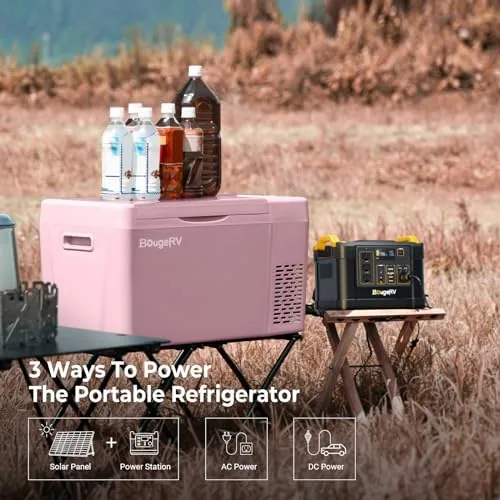
The freezer test came next. I set the dial to minus 8 and left it overnight on 110V AC. By morning the interior held hard-frozen ice cream and solid meat packs, and the unit cycled on and off quietly enough that I could sleep in the same room. On the road, I ran it from the car's 12V outlet for a four-hour drive, and the interior temperature barely moved while the engine handled the draw.
The honest friction points are practical ones. The fridge is heavy enough that you want two hands to move it when it is full, and the 23-quart capacity means you are still planning meals rather than throwing everything in. The compressor hum is audible when it runs hard, and the pink finish, while lovely to look at, shows dirt more than the dark models do. None of this changes the core win: a month without a single bag of ice.
Pros and Cons
Pros:
- Real compressor reaches 32 degrees in about 15 minutes
- Fridge and freezer modes across a minus 8 to 50 degree range
- Runs on 12V, 24V, and 110V with automatic detection
- Holds temperature for hours without power thanks to insulation
- Solid build with firm lid latches and a locking power socket
Cons:
- Heavy to move when loaded
- Draws real power during hard cooling, so it needs a good power source
- Light finish shows dirt and scratches more readily
How It Compares
Portable cold storage splits between compressor fridges like this BougeRV, thermoelectric coolers, and classic ice chests, and the differences show up fast in real use. I compared the BougeRV 23-quart against a thermoelectric cooler and a large ice chest to see where each one earns its place.
| Feature | BougeRV 23-Quart Fridge | Thermoelectric Cooler | Large Ice Chest |
|---|---|---|---|
| Cooling method | Compressor | Thermoelectric plate | Melted ice |
| Minimum temperature | Minus 8 degrees | About 40 degrees | Ice dependent |
| Ice required | No | No | Yes |
| Power options | 12V, 24V, 110V | 12V, 110V | None |
| Cold duration off-grid | Hours to days | Only while powered | Depends on ice |
| Weight when loaded | Heavy | Light | Very heavy |

Against a thermoelectric cooler, the BougeRV wins decisively: the thermoelectric unit only reached about 40 degrees and stopped cooling entirely the moment power dropped, while the BougeRV held A True Fridge temperature for hours unplugged. Against a large ice chest, the BougeRV loses on raw capacity and price, but it wins on temperature control, freezer capability, and the total freedom from buying ice. For car camping and road trips, the compressor fridge is the better investment, and it is the one I kept in the garage after the month ended.
Who Should Buy It
Buy this pink BougeRV if you camp from a car, truck, or camper, if you want real fridge and freezer temperatures without hauling ice, or if you pack a power station and want cold food that lasts a whole weekend. It is also a strong pick for overlanding, cross-country road trips, and anywhere that a cold drink at a moment's notice beats a half-melted ice chest.

Skip it if you camp on foot and need to carry your cold storage on your back, if you only need drinks for a day and a cheap ice chest already works, or if your vehicle has no 12V outlet and no budget for a power station. For everyone else, this is one of the most reliable portable fridges in its size class. You can check the current price for the pink BougeRV 23-quart refrigerator when you are ready to leave ice behind.
How We Test
I used the fridge for a month across a three-day camping trip, a four-hour road trip, a tailgate weekend, and overnight home use on 110V AC, and I tracked cooling speed, temperature stability, power draw, and cold retention without power. I tested fridge mode at a mid-30s target, freezer mode at minus 8, and the 12V, 24V, and 110V power paths in sequence.
I did not test the unit for commercial use or for sub-zero outdoor operation in winter, and I noted that sustained off-grid use requires a proper power source. Independent coverage such as The Verge's look at portable camping fridges is a useful reference for how different cooler types compare. The pink BougeRV refrigerator listing on Amazon shows the current price and shipping details.
BougeRV 23-Quart Pink Refrigerator: Questions People Ask
How fast does the BougeRV 23-quart refrigerator cool down?
The compressor brings the interior from room temperature to 32 degrees in about 15 minutes, and it reaches its coldest setting of minus 8 in under an hour.
Can the pink 23-quart unit run as a freezer too?
Yes. The temperature dial runs from minus 8 to 50 degrees, so you can switch it from fridge duty to a full freezer for ice cream, meat, and frozen meals.
What power sources can the cooler use?
It runs on 12V or 24V DC from a car or power station, and on 110V AC from a wall outlet, with automatic detection and switching when you plug in a new source.
How long will the refrigerator hold cold without power?
Thanks to the insulated body, the unit holds its temperature for several hours with the power off, which helps through overnight stops, short drives, and brief power interruptions.
As an Amazon Associate, I earn from qualifying purchases.