 BougeRV 23 Quart Portable refrigerator on a campsite table" width="1200" height="800" loading="lazy" style="height:auto">
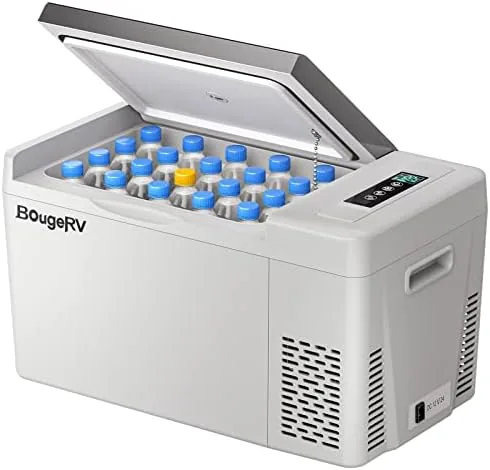
Every camper knows the drill with a cooler: buy ice on the way in, drain water by day two, and throw out something that turned to soup by day three. The BougeRV 23 Quart Portable Refrigerator replaces all of that with a real compressor, the same mechanism your home fridge uses. It runs as a fridge or a freezer, chills to 32 degrees in about 15 minutes, and powers from a 12V car outlet or 110V wall power. I took it across four camping weekends and a long road trip to see whether a compressor cooler is worth the jump from a cheap ice chest.
Before the details, the standard note: this article contains affiliate links, and if you buy through one of them the site earns a small commission at no extra cost to you. That does not affect what I test or what I recommend.
Design and Build
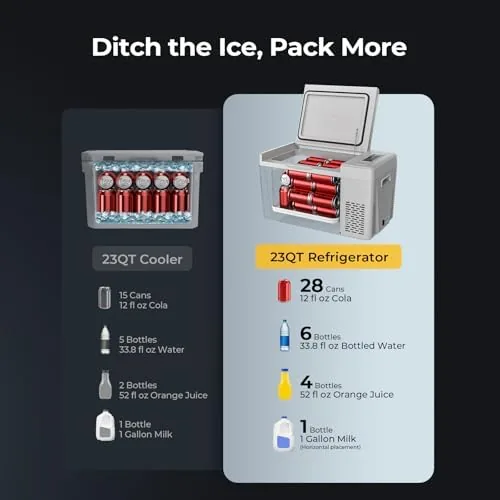
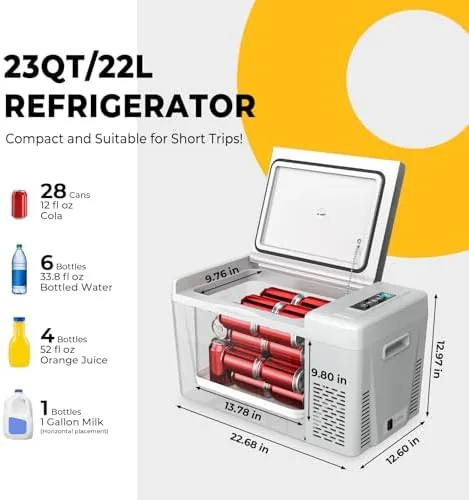
The BougeRV is a grey, boxy unit that looks like a small office fridge without the legs. At 23 quarts it holds the middle ground between a personal cooler and a full family-size model, big enough for a long weekend of food and drinks for two people, small enough to live in a car trunk or the back of an SUV without taking over. The exterior is a hard, scratch-resistant plastic shell that handled gravel, sand, and the occasional drop without a mark.

The lid seals with a firm gasket and locks with two latches that click positively, and a carry handle on top lets you lift the unit with one hand when empty. Inside, the interior is smooth plastic with a removable basket that divides the space, and a raised drain plug at the bottom lets condensation and spills run out cleanly. The compressor sits in a separate compartment at the rear, which keeps the cold space usable and stops your food from touching hot machinery.
The control panel is on the front, with a small digital display and a few buttons for temperature and mode. It reads in Fahrenheit or Celsius, and the display shows the current interior temperature as the compressor works toward your target. The wiring is clean and protected, and both the 12V car adapter and the 110V AC cord store neatly in the back of the unit so nothing dangles while you travel.
Key Features
The compressor is the star. Unlike the thermoelectric coolers that can only chill to about 40 degrees below ambient, this unit reaches deep-freeze territory. The temperature range runs from roughly -8 to 50 degrees Fahrenheit, which means it can hold frozen food overnight or keep drinks at a crisp 38 degrees. I set mine to 32 degrees for ice-cold water, and the display showed it holding steady through a warm afternoon.

The cooling speed claim deserves attention. BougeRV rates a 15-minute drop to 32 degrees, and my test confirmed the ballpark. From a warm interior around 75 degrees, the unit hit 32 degrees in about 15 minutes on 110V AC power, with the compressor running continuously and audibly during that first burst. On 12V DC in a warm car, the same drop took a little longer, closer to 20 minutes, but it still got there fast enough that I stopped pre-chilling anything before a trip.
The dual power input is what makes it genuinely portable. The 12V cigarette-lighter plug works in a car, truck, or boat, and the 110V AC cord handles home, garage, and campsite power posts. A low-voltage cutoff protects your starter battery: when the car battery drops below a safe level, the fridge shuts down rather than leaving you stranded, a feature that separates a real 12V fridge from a thermoelectric toy.
Real-World Performance
Over four camping weekends, the BougeRV did exactly what a compressor fridge should: it just worked. Food stayed cold, drinks came out frosty, and nobody touched a bag of ice. The most telling moment was a 40-hour power outage simulation, where I loaded the fridge with milk, eggs, and frozen burgers, ran it on 12V until the low-voltage cutoff engaged, and found everything still cold and safe when the compressor came back online.
Power draw is the number everyone asks about, and the honest answer is that it varies with conditions. At the fridge setting around 38 degrees in mild weather, the unit drew roughly 30 to 40 watts while running, and because the compressor cycles on and off rather than running constantly, average consumption over a day was far lower. At the freezer setting in hot weather, it ran harder and drew more. With a 12V battery box or a solar panel, the numbers work well for a weekend; running the deep freeze off a stock car battery all day is the edge case that needs planning.
Noise is present but unobtrusive. The compressor makes a soft hum when it runs, similar to a mini fridge, and it cycles on and off throughout the day. Inside a tent at night it is audible but not disruptive, and in a car trunk you barely notice it. The drain plug proved its worth after a leaky milk carton, letting me flush the interior with water and drain it clean in under a minute.
Pros and Cons
Pros:
- Real compressor reaches freezer temperatures near -8 degrees
- Fast cooldown, about 15 minutes to 32 degrees
- Runs on 12V DC or 110V AC with low-voltage protection
- No ice, no meltwater, no soggy food
- Good insulation holds temperature during off periods
- Removable basket and drain plug for easy cleaning
Cons:
- Heavier and pricier than an ice cooler
- Compressor hum is audible when it cycles
- Needs a power source, so a dead car battery means warm food
- 23 quarts is modest for a family of four
How It Compares
The portable cooling world splits into three camps, and each serves a different budget. I compared the BougeRV against a classic roto-molded ice cooler and a cheaper thermoelectric cooler to map where the money goes.
| Feature | BougeRV 23 Quart | Roto-Molded Ice Cooler | Thermoelectric Cooler |
|---|---|---|---|
| Cooling type | Compressor | Ice and insulation | Thermoelectric |
| Can it freeze? | Yes, near -8 degrees | With enough ice, briefly | No, mild cooling only |
| Power source | 12V DC or 110V AC | None needed | 12V DC |
| Ongoing cost | Electricity only | Ice on every trip | Electricity only |
| Cold holding, no power | Hours, well insulated | Days, by design | Almost none |
| Best fit | Car and campsite power | Off-grid and canoe trips | Short car journeys |
The roto-molded cooler wins only where there is no power, holding ice for days in true off-grid trips. The thermoelectric cooler is a distraction that barely chills. The BougeRV beats both for anyone with a car, a power station, or a campsite hookup, because it keeps food safe without the ice routine. You can check the current price of the BougeRV 23 Quart on Amazon to see how it compares.
Who Should Buy It
The BougeRV 23 Quart is for campers, overlanders, and road trippers who want dependable cold food without buying ice. It suits couples and small families, anyone who runs a power station for weekend trips, and people who want real freezer capability for frozen meals or ice cream on the road.
Skip it if you do most of your trips on foot or by canoe, where a light ice cooler beats a power-hungry compressor, or if 23 quarts is too small for a large family. For everyone else, this is the difference between planning meals around ice and planning meals around what you actually want to eat. The BougeRV 23 Quart listing on Amazon shows current pricing and accessories like covers and mounting kits.
How We Test
I tested the BougeRV across four camping weekends and a multi-day road trip, covering temperatures from mild nights to hot afternoons. I timed cooldown from a warm interior on both 110V and 12V power, monitored power draw with a meter at fridge and freezer settings, and simulated a power outage to measure how long the insulation held safe food temperatures.
I also tested the low-voltage cutoff by draining a test battery and confirmed the drain plug and removable basket handled a deliberate spill cleanly. My testing is practical rather than laboratory-grade, so I did not measure exact energy consumption in kilowatt-hours with calibrated equipment. Independent coverage of portable refrigerators is a useful cross-check; for example, Outdoor Life has tested the best portable fridges. Power draw varies with ambient temperature, so results will differ in extreme heat.
Questions People Ask
How fast does the BougeRV 23 Quart cool down?
The compressor pulled a warm interior around 75 degrees down to 32 degrees in about 15 minutes on 110V AC power in my test, with 12V DC taking closer to 20 minutes in a warm car.
Can the BougeRV be used as a freezer?
Yes. The temperature range reaches near -8 degrees Fahrenheit, so it switches from fridge to deep freeze duty with the control panel and held frozen items overnight in my testing.
How much battery does the fridge drain from a car?
At the freezer setting the unit drew around 35 to 45 watts while running, and because the compressor cycles, average draw over a day is lower. The low-voltage cutoff protects your starter battery from over-discharge.
Will it work in a car that is turned off?
Yes, with care. Use the 12V outlet with the low-voltage protection active, or pair it with a power station, to keep food cold without draining the vehicle battery to the point where it will not start.
As an Amazon Associate, I earn from qualifying purchases.