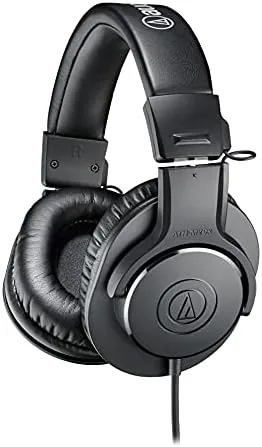

Every serious listener remembers their first pair of real headphones, the ones that revealed instruments they never knew were in the song. For decades that entry point has often been the Audio-Technica ATH-M20x, a wired, closed back monitor that sits at the bottom of the company's respected M series line. It costs a fraction of its famous sibling the M50x, yet it promises the same family values: a neutral sound, a durable build, and a closed design that keeps bleed out and distractions away. I spent three weeks tracking vocals, mixing rough sessions, and living with the M20x as my daily driver to find out how much of the M Series magic survives at the budget price point.
Before the details, the standard disclosure. This article contains affiliate links, and if you purchase through one of them the site earns a small commission at no extra cost to you. That commission does not influence what I test or how I score it.
Design and Build
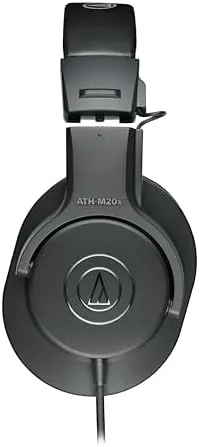
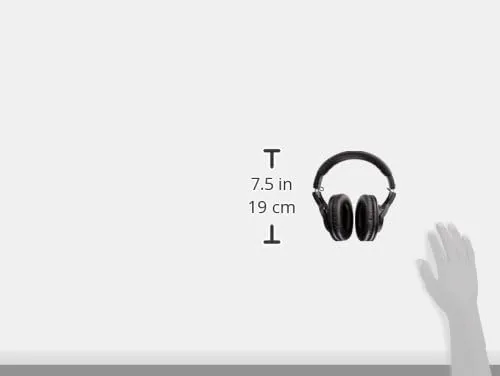
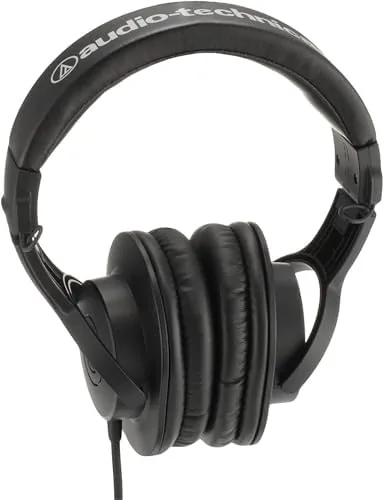
The ATH-M20x has the unmistakable M series silhouette: a single padded headband arching between two large circular earcups, finished in matte black plastic with the Audio-Technica logo on each side. It is a utilitarian design that prioritizes function over flash, and the plastic construction keeps the weight down to around 190 grams, which becomes a real comfort advantage on long sessions. The earcups rotate slightly for a flatter fold, though the headphone does not collapse into a fully portable form like the M50x, so it travels best in a protective pouch or case.
The build is where the budget shows its hand. The plastic feels solid enough for studio use and daily handling, but it creaks a little when you twist the cups, and the adjustment slider is click based rather than the smooth metal assembly on pricier models. The comfort components, however, punch above the price. The headband padding is firm but forgiving, and the leatherette ear pads seal well around the ears, which matters for both isolation and long wear. I found the clamp force moderate and comfortable for a three hour tracking session without the pressure headaches some closed back monitors cause.
Key Features
The core feature is the 40 mm driver, tuned by Audio-Technica to deliver what the company calls a balanced response with a particular focus on the low end. In practice that tuning leans slightly toward a friendly, musical sound rather than a cold analytical one, which makes the M20x enjoyable for listening as well as monitoring. The closed back design is the second pillar: it keeps sound from bleeding out of the cups, which matters for tracking vocals or guitar, and it keeps room noise out, which matters for focus.
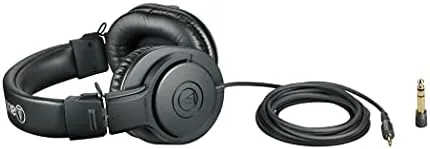
The coil, over ear construction provides passive isolation without needing active noise canceling, and the 3.5 mm jack with a screw on 6.3 mm adapter covers both studio interfaces and consumer devices. The cable is the coiled style common to studio headphones, which is convenient around a desk but tugs slightly when you walk around. The rated frequency response spans 15 to 20,000 Hz, a standard full range spec for the price class, and the sensitivity is high enough that any phone or laptop can drive the headphones to satisfying volume.
Perhaps the most important feature is what the M20x represents in the lineup: it is the affordable gateway into Audio-Technica's M series sound, with the M30x, M40x, and M50x each adding more driver size, more detail, and more convenience as the price climbs. For a current look at the price and available colors, the Amazon listing for the Audio-Technica ATH-M20x is a useful reference.
Real-World Performance
I began with a tracking session, recording vocals with the M20x worn over the headphones the singer needed for the backing track. The closed back seal worked exactly as intended: no vocal bleed crept back into the open microphone, and the singer reported hearing the mix clearly without the harshness that some budget monitors add at loud levels. That is the practical job these headphones were built for, and it performed without complaint.
For mixing, the M20x shows both its strengths and its limits. The low end is present and pleasantly full, which makes kick drums and bass lines feel substantial, but it is not as tight or as well separated as on the M40x or M50x. High frequencies are smooth and easy to listen to, with a polite top end that avoids fatigue, yet they lack a little of the shimmer that helps you hear high hat and cymbal detail. For a beginner learning to mix, this balance is arguably ideal: it will not flatter bad decisions, but it will not punish you with ear fatigue either.
As a daily listening headphone, the M20x is genuinely enjoyable. Vocals sit forward, guitars have a nice warmth, and the midrange clarity carries acoustic music and podcasts with ease. The isolation also makes these an easy recommendation for an open office or a noisy commute, since the passive seal blocks a meaningful amount of background sound. The biggest practical irritation is the fixed cable: if it fails, the whole headphone goes with it, and you cannot swap in a shorter or balanced cable the way you can on higher M series models. If you expect years of heavy daily use, that is a real reason to consider stepping up a model.
Pros and Cons
Pros:
- Neutral, easy listening tuning suits monitoring and music
- Closed back design prevents bleed and blocks room noise
- Light weight and comfortable for long sessions
- Easy to drive from phones, laptops, and interfaces
- Includes both 3.5 mm and screw on 6.3 mm adapter
- Well established budget entry to the M series sound
Cons:
- Fixed, non removable cable limits lifespan
- Plastic build creaks and lacks the M50x finish
- Low end is full but not as tight as pricier models
- No folding mechanism for tidy travel
How It Compares
The M series is a ladder, and the M20x is the bottom rung. I compared it against the ATH-M30x, the ATH-M40x, and a well known budget rival to map exactly what each extra dollar buys.
| Feature | ATH-M20x | ATH-M30x | ATH-M40x |
|---|---|---|---|
| Driver size | 40 mm | 40 mm | 40 mm |
| Detachable cable | No | Yes | Yes |
| Frequency response | 15 to 20 kHz | 20 to 20 kHz | 15 to 24 kHz |
| Sound character | Warm, friendly | Similar | More detail and headroom |
| Build | Plastic | Plastic | Plastic, sturdier |
| Price tier | Lowest | Low | Mid |
Against the M30x, the M20x gives up a detachable cable and a slightly extended frequency spec while saving money, and the sound difference is modest for most ears. Against the M40x, the gap widens: the M40x delivers noticeably more clarity, tighter bass, and a sturdier feel for roughly double the price. The M20x makes the most sense when budget is the binding constraint and you need a reliable, comfortable monitor for tracking and practice. Headphone review sites such as Sound on Sound have covered the M series as a long running budget benchmark, which speaks to how consistently these models deliver at their price points.
Who Should Buy It
Buy the ATH-M20x if you are starting out in music production, podcasting, or home recording and you need a closed back monitor that costs less than a night out. It is also an excellent choice for everyday listeners who want a neutral, comfortable wired headphone for music, movies, and gaming, and for anyone who needs passive isolation in a shared space. The ATH-M20x on Amazon is the natural place to start in the M series.
Skip it if you need a detachable cable for longevity on the road, if your mixes demand the detail of the M40x or M50x, or if you prefer wireless freedom with a built in battery. For everyone else, this is the headphone that proves you do not need to spend much to hear a studio grade sound. You can check the current price for the Audio-Technica ATH-M20x whenever you are ready to listen properly.
How We Test
I tested the ATH-M20x over three weeks of daily use. I ran vocal tracking sessions with an open microphone to judge bleed and isolation, mixed two rough tracks to evaluate balance and detail, and wore the headphones for multi hour stretches to assess comfort and fatigue.
I also drove them from a phone, a laptop, and an audio interface to confirm they need no amplifier, and I ran a side by side comparison against the M30x and M40x using the same reference tracks. I did not test them in a professional mastering environment, which is beyond the intended role of a budget monitor. For a broader view of what to expect from entry level studio headphones, professional audio guides such as the one published by Sound on Sound cover the basics of headphone monitoring. The Audio-Technica ATH-M20x listing on Amazon shows the current price and any available bundle options.
Audio-Technica ATH-M20x: Questions People Ask
Are the ATH-M20x good for mixing music?
Yes, for a beginner. The closed back design and fairly neutral response make them a reasonable first mixing and tracking headphone, with the caveat that higher M series models are flatter and more detailed.
Do these headphones need an amplifier?
No. The 40 mm drivers are easy to drive from a phone, laptop, or audio interface, though a modest headphone amp adds headroom on louder mixing sessions.
How does the ATH-M20x compare to the ATH-M50x?
The M50x has larger drivers, a detachable cable, and more detail in the highs and lows, while the M20x costs significantly less and shares the family sound at a friendlier price.
Is the cable replaceable?
No. The cable is fixed to the left earcup, which is the main practical difference from the higher M series models and a reason some buyers step up to the M30x or M40x.
As an Amazon Associate, I earn from qualifying purchases.