
Before the details, a disclosure note. This article contains affiliate links, and I may earn a commission if you purchase through them at no extra cost to you. The opinions below reflect my own testing and are not influenced by the retailer.
Design and Build
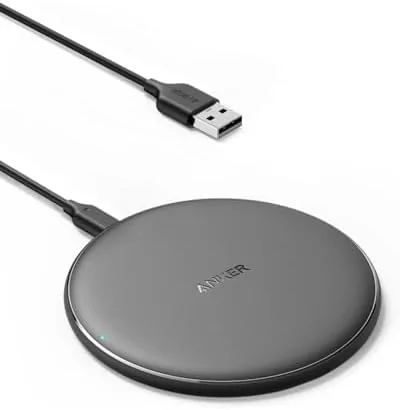
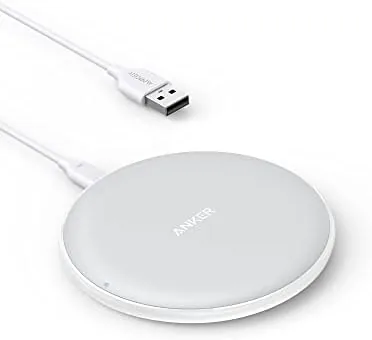
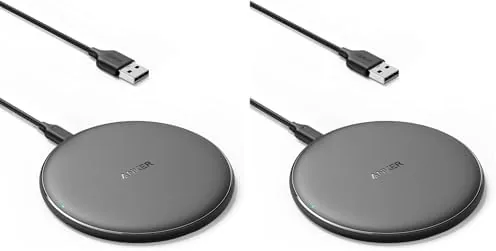
The Anker 313 is refreshingly simple in construction. It is a thin, flat disc with a smooth top surface and a soft touch ring around the edge that gives phones a little extra grip when the pad is bumped. The footprint is compact, roughly the size of a coaster, which makes it easy to tuck beside a bed, onto a desk, or into a travel bag. There are no moving parts, no fans, and nothing to align beyond setting the phone onto the pad, which is exactly what a nightstand charger should be.
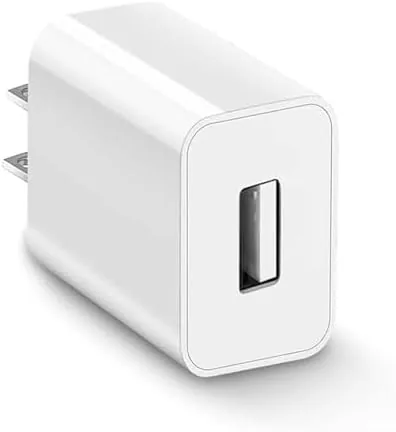
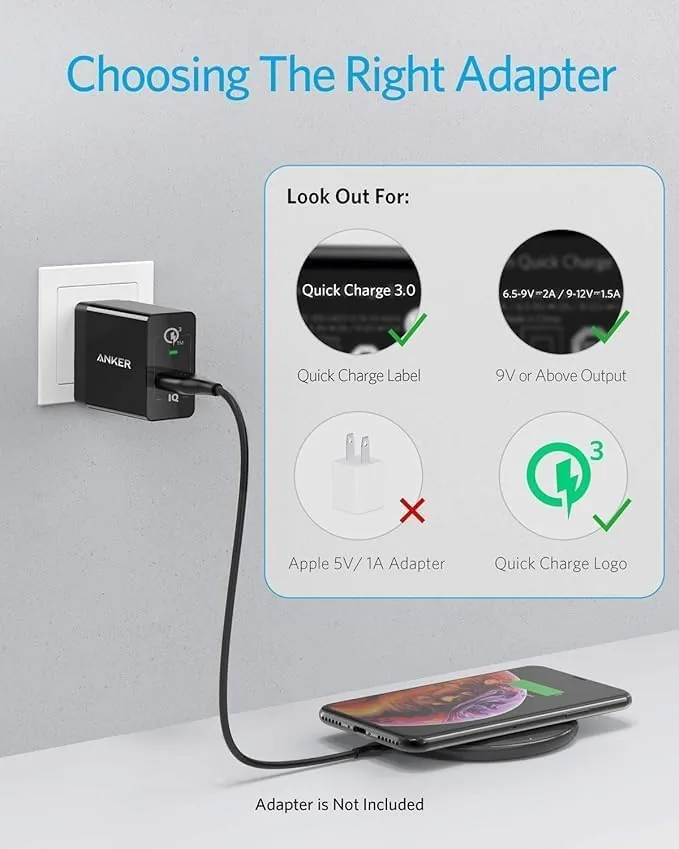
The pad accepts power through a single USB port on its edge, and Anker includes a cable in the box. The missing piece is the wall adapter. The product description states clearly that the AC adapter is not included, so you must supply your own USB power brick. This caught a lot of buyers off guard in the reviews, but it is not a flaw so much as a cost to plan for. Any decent 5V 2A adapter works, and a quick charge capable brick unlocks the higher speeds for compatible phones.
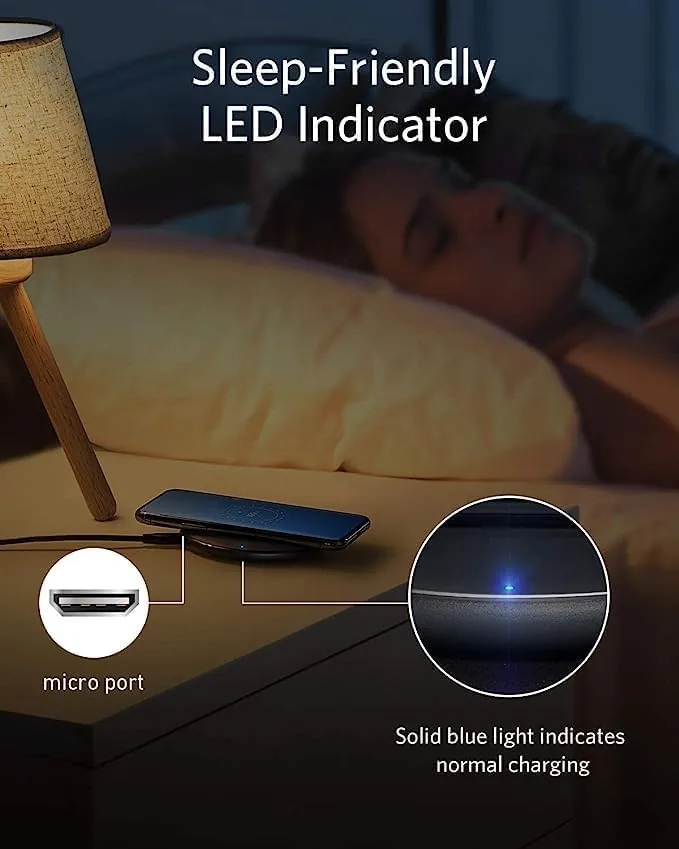
There is also no stand, no indicator light beyond a small status LED, and no cable management groove. The pad does exactly one thing, and it does it without fuss. For a product in this price bracket, that focus is a virtue rather than a shortcoming.
Key Features
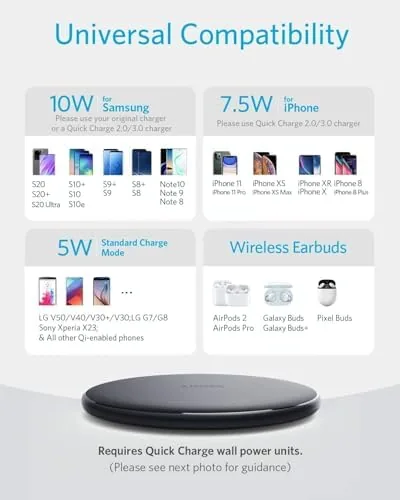
The headline number is 10W of fast charging for compatible Android phones. Samsung handsets that support fast wireless charging will pull the full 10W, which translates to a noticeably quicker top up than a standard 5W pad. Apple iPhones are limited by their own charging implementation to 7.5W, while AirPods cases and other small Qi devices sit at 5W. Those speeds are what the pad supports, and they match the Qi specification without any proprietary tricks.
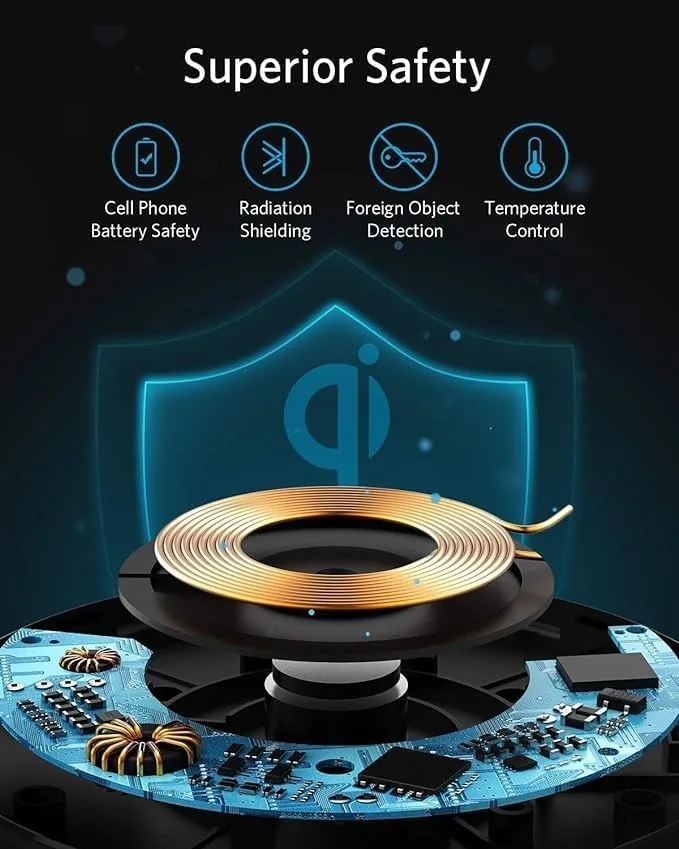
Qi certification matters here. The pad passed the Wireless Power Consortium's certification process, which means it has been tested for coil alignment, foreign object detection, and thermal safety. If you set a metal object like a coin or a key on the pad, it should refuse to charge it rather than heating it up. I tested this with a few metal items and the pad correctly ignored them, which is the behavior you want from any wireless charger.
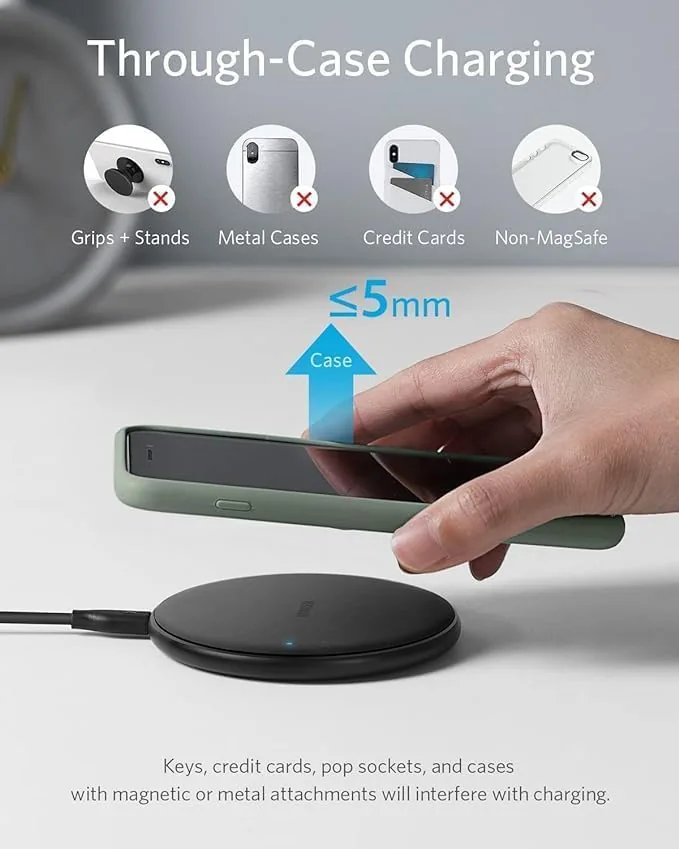
Heat management is another quiet feature. Anker builds temperature protection into the pad, and in my testing it stayed cool to the touch even after a full overnight charge. The pad also works with most phone cases under three millimeters thick, which covers the majority of everyday cases on the market, though metal cases or thick wallet cases will block the signal.
Real-World Performance
To judge the pad fairly I charged three devices across a week: a Samsung Galaxy with fast wireless charging, an iPhone, and a pair of AirPods in their case. The Samsung drew the full 10W and gained around fifteen percent per half hour from a low battery, which is respectable for a wireless pad and clearly faster than the old 5W baseline. The iPhone charged at its usual 7.5W pace, steady and unremarkable, which is all any third party pad can offer for Apple hardware. The AirPods case sat at the 5W rate and topped up overnight without issue.
Alignment was the main variable. Qi pads work best when the charging coil inside the phone lines up with the coil in the pad, and the Anker 313 gives no visual guide beyond the subtle center marking on its surface. A slightly offset phone still charges, but at reduced speed. If you are the kind of person who tosses a phone onto a pad without looking, expect the slower charge more often than not. This is true of every flat pad on the market, and it is not unique to the 313.
The pad also handled the nightstand test well. Phones topped up quietly overnight, no blinking lights, no fan noise, and no warmth left behind in the morning. As a desk charger it served a secondary role for keeping a phone topped up during the day, and it performed the job without complaint.
Pros and Cons
Pros:
- Qi certified with tested foreign object detection
- 10W fast charging for Samsung and compatible Android phones
- Stays cool during long overnight charges
- Compact, lightweight, and easy to pack
- Works through most thin phone cases
- Includes a cable in the box
Cons:
- AC adapter is sold separately and must be purchased
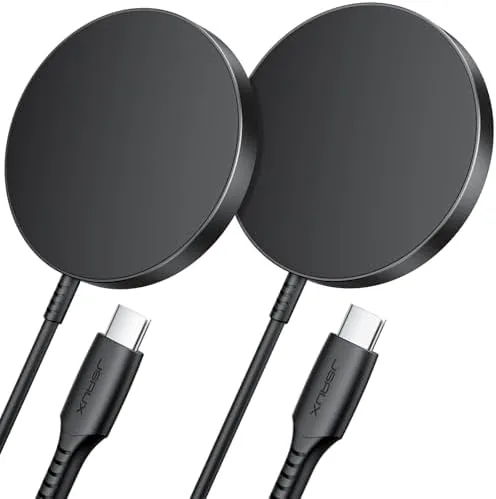
- Not MagSafe compatible, so no magnet to align iPhones
- Flat pad design requires careful coil alignment
- Only one device charges at a time
How It Compares
The Anker 313 competes against other budget pads, multi coil pads, and MagSafe style chargers. The table below compares the main options.
| Charger | Max speed | MagSafe | Adapter included | Price class |
|---|---|---|---|---|
| Anker 313 pad | 10W | No | No | Budget |
| Multi coil pad | 10W | No | Usually | Mid |
| MagSafe Charger | 15W | Yes | No | Premium |
| Basic 5W pad | 5W | No | Sometimes | Low |
For an Android user with a compatible Samsung phone, the 313 matches the speed of far more expensive multi coil pads. iPhone users see no benefit from MagSafe here, because the 313 does not include the magnets that snap an iPhone into perfect alignment. If you own a recent iPhone and want the convenience of magnetic snap on charging, a MagSafe charger is the better fit even though it costs more. For a plain, dependable pad that simply works, the 313 is hard to beat at its price.
Who Should Buy It
The Anker 313 is best for Android users who want a reliable, compact pad at a low price and who already own a suitable USB wall adapter. It is also a good pick for anyone running a secondary charger, one for the desk or the travel bag, where the missing adapter matters less because you can share a brick between devices.
It is a weaker fit for iPhone owners who expect magnetic alignment, since the 313 offers no magnets, and for anyone who does not already own a compatible adapter. If you are starting from nothing and need to buy the adapter anyway, factor that cost into the total before comparing against pads that ship with one.
How We Test
I used the Anker 313 as a daily driver for two weeks, charging a Samsung Galaxy, an iPhone, and an AirPods case on rotation. I tracked charge times from low battery thresholds, checked surface temperatures after overnight charges, and tested foreign object detection with metal items placed on the pad. I also verified coil alignment sensitivity by charging the same phone at slightly different positions and comparing the results. All three devices were charged with a consistent USB adapter so that speed differences came from the pad and the devices rather than the power source.
The pad was purchased at full price, and no manufacturer or retailer influenced the outcome. The verdict reflects two weeks of real use on my own nightstand and desk.
Questions People Ask
Does the Anker 313 come with a wall adapter?
No. The box includes the charging pad and a cable, but the AC adapter is sold separately, so you must supply a compatible USB power brick.
Is the Anker 313 compatible with MagSafe?
No. The pad uses standard Qi charging and does not include magnets, so it will not attach to the back of MagSafe iPhones.
What charging speeds does the Anker 313 support?
It delivers up to 10W for compatible Samsung and Android phones, 7.5W for iPhones, and 5W for AirPods and other small Qi devices.
Will the Anker 313 charge AirPods?
Yes, the pad charges AirPods and other Qi enabled earbuds, provided the case itself supports wireless charging.
If you want a simple pad that charges fast without a premium price, the Anker 313 earns its place on the nightstand. Check the current price of the Anker 313 on Amazon and remember to add an adapter to the cart. For a broader look at what the best wireless chargers offer across price points, TechRadar rounds up the best wireless chargers each year. If you prefer a magnetic option instead, the Anker charging range on Amazon includes MagSafe compatible models too.
As an Amazon Associate, I earn from qualifying purchases.