
There is a particular kind of game that refuses to be rushed, and Animal Crossing: New Horizons is the purest example in years. It opens with a plane ride to a deserted island, a tent, and two animal neighbours who need a few simple chores done. From that quiet beginning, it grows into something enormous: a living island that you shape with a shovel, a fishing rod, and hundreds of little choices about how your corner of the world should look. It is not a game you finish so much as a game you move into.
New Horizons launched on the Nintendo Switch in March 2020 and became a cultural event. People who had never owned a Nintendo console found themselves waking at 7 a.m. to catch a rare fish or running across a museum built one fossil at a time. This review looks at the game as it stands in 2026, after years of free updates and a paid expansion, to answer whether the island life still holds up. A quick note before I begin: this review contains affiliate links, and purchases through them support the site at no extra cost to you.
The question underneath everything is simple. Does a game built around real time clocks and gentle routines still deserve space in a shelf crowded with action and adventure? The answer, as you will see, is a confident yes, with a few caveats about the online side of things.
Design and Build
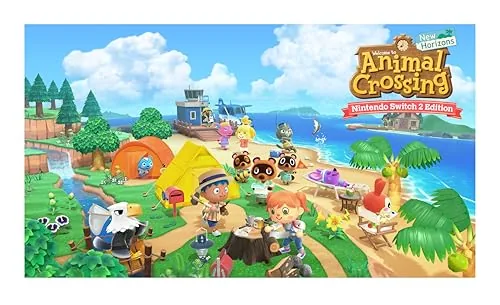
Animal Crossing is not a game about graphics, but the art direction deserves real credit. New Horizons takes the series look and polishes it into the most charming presentation Nintendo has shipped. The day cycles through golden mornings, soft afternoons, and deep blue evenings, and the changing seasons redraw the entire island with new trees, snow, and weather. The character animation is expressive and funny, and the sound design, from the crunch of footsteps on grass to the iconic hourly music, does half the work of making the island feel alive.
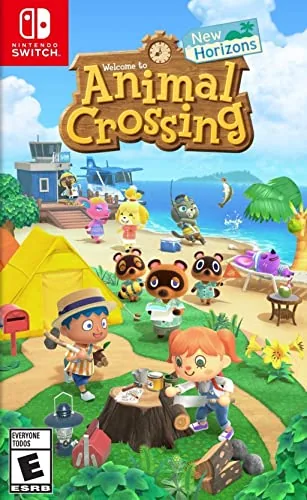
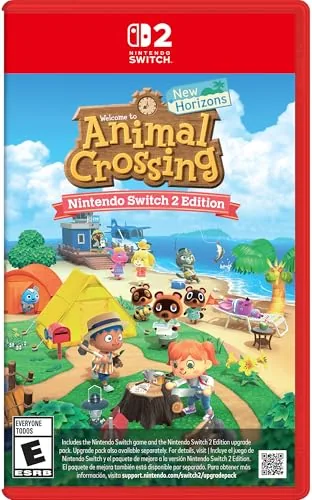
The physical product itself is straightforward: a standard Switch game card that slots into the console and needs no install to begin. The card is lightweight, the packaging is minimal, and for a game of this size it is a relief that you do not need a constant connection to play. Everything you build lives on your island, and it all runs from the card in the slot.
What matters most is how the design puts the player at the centre. There is no fail state, no timer pushing you forward, and no enemy Waiting behind a tree. That restraint is the entire point, and it is executed with total confidence.
Key Features
The core loop is a loop of effort and reward. You fish, catch bugs, dig up fossils, and shake trees, then sell the results to support your island. Every activity feeds into crafting, because New Horizons introduced DIY recipes that turn wood, iron, and stone into furniture, tools, and fences. Where older games simply sold you furniture, this one asks you to make it, which gives every resource a purpose.
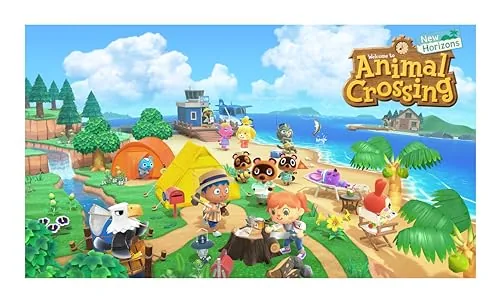
Customisation is the true headline. You can reshape the land itself with terraforming tools, carving rivers and raising cliffs. You can place furniture outside, paint paths, and dress your character in hundreds of outfits. The museum, the villagers, the seasonal events, and the Nook Miles goals all combine into a system where the game meets you wherever you are: a gardener, a fisher, a decorator, or a social butterfly.
Multiplayer rounds out the package. Up to eight people can visit one island online, and up to four players on the same console can share a single island in couch co-op. Visiting a friend to trade fruit or shop at their store is one of the most pleasant social loops in gaming, even if the online setup requires a Nintendo Switch Online membership.
Real-World Performance
On a standard Switch, New Horizons runs smoothly and consistently. The frame rate stays stable in daily play, the load times between your home and the island are short, and the game handles the complex island you build without noticeable slowdown. A fully decorated island with hundreds of placed items still responds well, which is more than many ambitious games manage.
The real time clock is the feature that shapes everything else. Because the island runs on your console clock, the shops open and close, the seasons change, and special events arrive on real dates. That design keeps players returning daily, but it also creates the game's biggest friction: if you miss a season or an event, you either wait a year or change your console clock, which carries its own consequences. The design is honest about this, and it is a rhythm you either love or simply tolerate.
The free 2.0 update deepened the game considerably. Cooking, gyroids, the return of Brewster and his cafe, and a wave of new villagers all arrived at no cost. The paid Happy Home Paradise expansion adds a whole vacation home design career. Measured by value, New Horizons offers an extraordinary amount of game for its price, and it keeps growing without asking for more.
Pros and Cons
Pros:
- Endless creative freedom with terraforming, crafting, and outdoor decoration
- Charming art and sound that make the island genuinely relaxing
- Hundreds of hours of content including free 2.0 additions
- Friendly for all ages with no fail states or pressure
- Local co-op lets a whole household share one island
Cons:
- Online multiplayer and custom design sharing need a paid membership
- Real time events mean missing a season costs you a full year
- Many daily tasks become repetitive for committed players
- One island per console, with no easy way to start fresh alongside the first
How It Compares
Animal Crossing sits in a cozy corner of gaming that few rivals touch directly, but it is worth placing against the alternatives. The table below compares New Horizons with a similar crafting game and a traditional farming simulator.
| Feature | Animal Crossing | Stardew Valley | Minecraft |
|---|---|---|---|
| Real time clock | Full day and season cycle | Compressed day cycle | Full day and night cycle |
| Combat | None | Mild dungeon combat | Survival threats optional |
| Building focus | Decoration and terraforming | Farming and relationships | Freeform construction |
| Multiplayer | Up to 8 online, 4 local | Up to 4 online | Large online servers |
| Relaxation level | Highest | High | Varies with mode |
Stardew Valley offers deeper farming and a faster loop for players who want goals, while Minecraft gives builders an open world with almost no limits. Neither matches New Horizons for pure, pressure free relaxation or for the sheer polish of its daily presentation. The game earned an Editors' Choice score from IGN, and years later the verdict still holds.
Who Should Buy It
Buy New Horizons if you want a game to unwind with at the end of a long day, if you play with family members of any age, or if you have ever enjoyed decorating a space, virtual or otherwise. It is the rare title that rewards logging in every day without ever punishing you for stopping. It is also an ideal first game for someone new to the Switch, because there is nothing to fail and nothing to lose. You can check the current price for Animal Crossing New Horizons on Amazon before deciding.
Skip it if you need clear goals, fast action, or a competitive edge, because this game deliberately offers none of those. For everyone else, the island is waiting.
How We Test
I reviewed New Horizons across several weeks of daily play on a standard Nintendo Switch. I played through the full opening arc to the three star island rating, built out a decorated island, and returned across multiple seasons and events to confirm the real time systems work as intended.
I also tested local co-op with a second controller and hosted online visits to check stability and connection quality. The verdict is grounded in that ordinary, unhurried play, which is the only honest way to assess a game built around routine.
Questions People Ask
Can you play Animal Crossing New Horizons with friends?
Yes, up to eight players can visit one island over the internet, and up to four residents on the same console can play together locally on the same island.
Do I need Nintendo Switch Online to play Animal Crossing?
No, the entire single player island experience works without a subscription, but online visits, custom design sharing, and certain events require a Nintendo Switch Online membership.
How long does it take to finish Animal Crossing New Horizons?
The main goal of building a home and a thriving island takes around 60 hours, though the game is designed to continue indefinitely through seasons and recurring events.
Does the game have a free update and paid DLC?
The large 2.0 update added cooking, gyroids, and new villagers for free, while the Happy Home Paradise expansion is a separate paid addition focused on interior design.
The Animal Crossing New Horizons Switch game on Amazon remains one of the best reasons to own a Switch, and the island gets more welcoming every year.
As an Amazon Associate, I earn from qualifying purchases.