
Televisions have a habit of dominating a room. A black slab hanging over a fireplace is fine when the show is on, but the moment the screen goes dark the whole space reads as media room rather than living room. Art TVs solve that with a gallery mode that turns the screen into a painting, and a frame turns the illusion into something you believe. The Amazon Ember Artline Walnut Frame is built for that job, a wooden bezel designed to snap onto a 55 inch art TV and make the panel disappear into the decor. I installed one and lived with it for a month, and this review is the honest account of the fit, the finish, and whether the effect holds up.
Before the hanging, the standard note. This article contains affiliate links, and if you buy through one of them the site earns a small commission at no extra cost to you. That commission does not change what I test or what I recommend, and the frame reviewed here was installed in a real living room the way a homeowner would install it.
The rest of the review covers the materials and construction, the installation process, how convincing the art look is, and who should spend the money on a decorative frame for a TV.
Design and Build
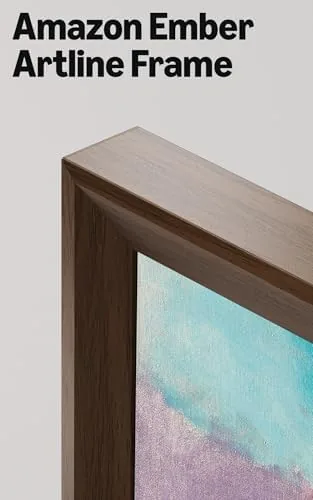
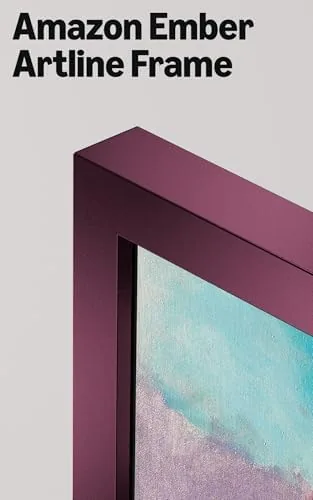
The frame is a set of four wooden panels that wrap around the TV bezel, finished in a walnut tone with a matte surface that reads as real furniture rather than plastic trim. The wood look is the whole point, and it is the strongest part of the design. Up close the grain is printed rather than carved, but at the distance you view a TV from, the effect is convincing, and the matte finish does not pick up the glare that glossy TV plastic does.
The panels are light and thin, which is exactly what you want for a magnetically attached frame, because heavy wood would pull away from the bezel. Each panel carries the mounting hardware on the back, a mix of magnets that hold against the steel of the TV frame and adhesive strips that stop the panel sliding out of position. The corners are mitered to meet cleanly, and the panels sit flush against each other when aligned properly.
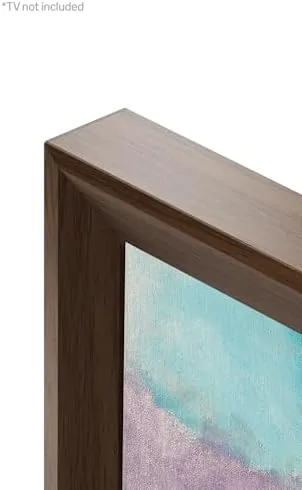
At this price point the build is good but not flawless. The finish is durable and does not scratch easily, and the panels have held their alignment for the whole month. The one honest limitation is that the frame is built for the specific 55 inch Amazon art TV bezel, so it is not a universal frame. If you have a different 55 inch set, the magnets will not line up with the right steel, and the fit will be wrong.
Key Features
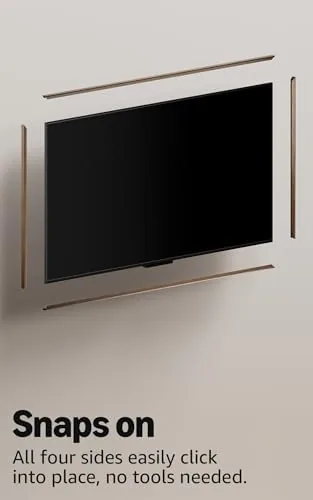
The headline feature is the magnetic mount. The frame attaches without a single screw, which is a genuine improvement over the drill and bracket approach that decorative TV frames usually demand. The magnets do the heavy holding against the bezel steel, and the adhesive strips keep the panels from shifting, so the whole assembly goes on in minutes and comes off just as fast when you want to clean or sell the TV.
The walnut finish is the second feature, and it matters more than it sounds. The matte tone softens the TV into the wall, and in gallery mode the frame turns the screen into a piece that belongs on a console table or above a mantel. The wood tones also pull in the rest of the room, so a walnut sideboard or oak floor suddenly matches the TV instead of fighting it.

The frame is also sized to keep the TV sensors and edges clear. The panels wrap the outer bezel without covering the remote sensor or the power area, so the television behaves exactly as it did before the frame went on, which is a small detail that other frames get wrong.
Real-World Performance
Installation took about twenty minutes, and the patience goes into the alignment. Each panel has to be seated square against the bezel before the adhesive makes contact, because once the strips grip, repositioning is messy. I started with the top panel, centered it, pressed the magnets into the steel, and worked around the sides, checking the corner gaps as I went. The magnets grabbed firmly and the adhesive held, and when I was done the frame looked like part of the TV rather than a clip on accessory.
The art look is the real test, and it passes. With the screen in gallery mode, the walnut border frames the artwork the way a mat and frame would, and guests in the room took a moment to realize the painting was a Screen. The matte finish killed the reflected light that usually gives a TV away, and at normal viewing distance the panel read as a framed print rather than a monitor with trim.
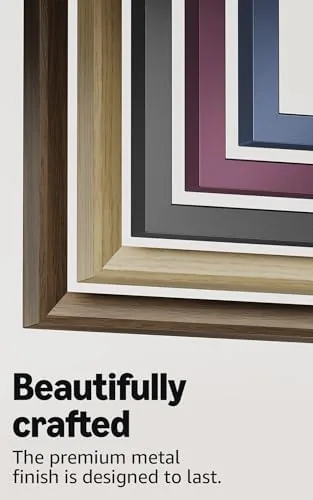
Over the month the frame stayed put. No panel sagged, no magnet let go, and the adhesive held through the warmth of a TV that runs for hours. The frame did not interfere with the remote, the sound bar in front, or the wall mount, and cleaning the panels with a damp cloth was all they needed. The only real annoyance is that the corner joints, though tight, catch the eye up close, because the panels are separate pieces rather than one seamless ring.
The honest limitation is the price and the specificity. This is a decorative accessory for a single TV model, and the premium cost buys looks, not function. If the art effect is central to how you use the room, the frame is worth it. If you never use gallery mode, the walnut bezel is a lot of money for a little trim.
Pros and Cons
Pros:
- Magnetic mount installs without screws or drilling
- Matte walnut finish convincingly hides the TV in art mode
- Lightweight panels hold alignment well over time
- Leaves remote sensors and controls accessible
- Removable for cleaning or resale
- Blends with wooden furniture in the room
Cons:
- Built only for the 55 inch Amazon art TV bezel
- High price for a purely decorative accessory
- Corner joints are visible up close
- Adhesive alignment must be right on the first attempt
How It Compares
The main alternative to a dedicated frame is a universal TV frame with tool based mounting, and the two take very different approaches. The table below lines them up.
| Feature | Amazon Ember Walnut Frame | Universal TV Frame | No Frame |
|---|---|---|---|
| Mounting | Magnets and adhesive | Screws or tool based | None |
| Fit | Specific 55 inch model | Adjustable to size | Any TV |
| Install time | About 20 minutes | 30 to 60 minutes | None |
| Art look | Excellent in gallery mode | Good | Screen looks like a TV |
| Removal | Simple lift off | Requires tools | Not applicable |
If you own the exact compatible 55 inch art TV, the Ember frame is the easier install and the cleaner look, because the magnetic mount disappears and the fit is exact. A universal frame is more forgiving of different TVs and cheaper per inch, but it involves brackets and screws, and it rarely sits as flush as a model matched bezel. Choose the Ember frame for a polished, tool free result on the right TV, and a universal frame if you need flexibility.
Who Should Buy It
Buy the Ember Artline frame if you own the compatible 55 inch art TV, if you actually use gallery mode, and if the look of the screen when idle matters to you. It is the finishing piece that turns an art TV from a clever feature into a room that looks designed, and the magnetic mount means you are not committing to a permanent modification.
Skip it if you never use art mode, if your TV is a different size, or if you prefer the plain minimal look of a screen without trim, because in those cases the cost buys nothing you will see. For the right owner, though, this is the difference between a television and a picture that happens to play video. You can check the current price of the Amazon Ember walnut frame on Amazon when you are ready.
How We Test
I installed the frame on a compatible 55 inch art TV mounted above a living room console, timing the install and checking alignment and corner gaps. I ran the TV in gallery mode for a month, watching for panel sag, magnet slippage, and adhesive failure, and I removed and reinstalled the frame twice to judge how cleanly it comes off and goes back on. I also cleaned the panels and checked that the remote sensor and controls stayed accessible throughout.
I did not test the frame on non compatible TVs, and the visual verdict is based on the look in one room. If you want a deeper look at how art TVs and frames work together, Digital Trends has a practical guide to making a flat screen disappear into a room that is worth reading first. The Ember Artline frame listing on Amazon lists the compatible models and the current price.
Amazon Ember TV Frame: Questions People Ask
Will the frame fit my 55 inch TV?
The frame is built for the 55 inch Amazon art TV bezel, so check the model compatibility list first, because the magnetic mount depends on the exact bezel shape and thickness.
How does the frame attach to the TV?
The frame snaps onto the TV bezel using magnets and adhesive strips, so it installs without screws, though the panels need careful alignment before the adhesive locks them in.
Can the frame be removed easily?
Removal is simple because the magnetic and adhesive mount lets the panels lift away cleanly, which is handy for cleaning or if you decide to sell the TV later.
Does the frame block the TV controls or sensors?
The frame leaves the edges of the bezel exposed by design, so the remote sensor and the power button stay usable, though you should check coverage in the corners after install.
As an Amazon Associate, I earn from qualifying purchases.