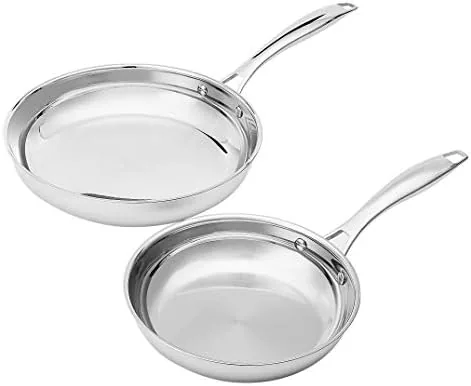

There is a moment in every home cook's life when nonstick coating gives out and the search begins for a pan that will outlive the next decade. Stainless steel is the usual answer, and the Amazon Basics stainless steel frying pan set is the entry point most people encounter first. It is a two piece set with 8 inch and 10 inch skillets, both induction compatible and oven safe, at a price that undercuts nearly every rival. I cooked on both pans for a month to find out whether the set is a genuine tool or just a cheap one.
Before the details, the standard note. This article contains affiliate links, and if you buy through one of them the site earns A Small commission at no extra cost to you. That commission does not change what I test or what I recommend, and the pans reviewed here were used exactly the way a buyer would use them.
Stainless steel demands different technique than nonstick. It needs proper preheating, it accepts food that is naturally inclined to stick, and it rewards cooks who learn it. The rest of this review covers the construction, the heat behavior, the sticky learning curve, and whether this budget set measures up to cookware that costs three times as much.
Design and Build
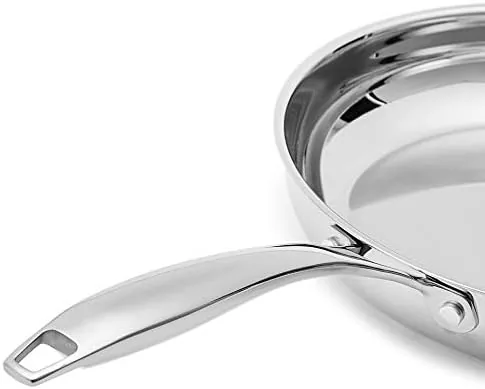
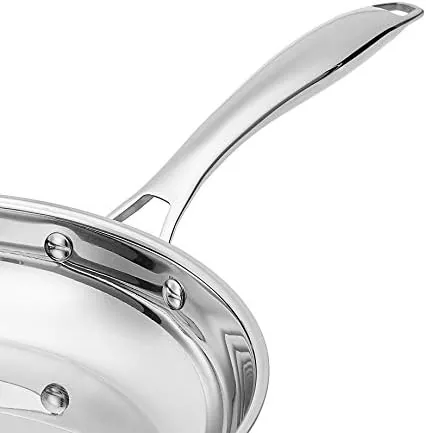
The set is a study in straightforward construction. Both skillets are made from stainless steel with an aluminum core, which is the standard recipe for even heat distribution, and the walls are flared outward to give good panning space for tossing food. The handles are riveted stainless steel with a comfortable grip, and they stay cool on the stovetop far better than you would expect from a budget pan.
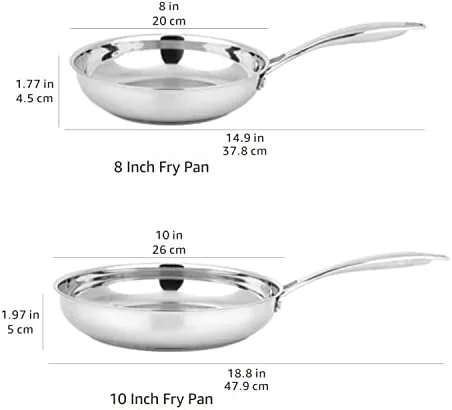
The 8 inch pan handles eggs, a single portion, and small side dishes, while the 10 inch pan covers the main courses, and the two cover a surprising range of cooking. Both pans feel solid and heavier than their price suggests, which is a good sign for heat retention. The cookware is also oven safe up to 500 degrees Fahrenheit, handles included, so either skillet can finish a dish under the broiler or move from stovetop to oven without a transfer.
Key Features
The headline feature is induction compatibility. Stainless steel is magnetic, so both pans sit flat on induction cooktops and heat directly, while still working perfectly on gas, electric, and ceramic ranges. That makes the set a safe bet regardless of the stove you own, now or in a future move, and it removes the guesswork from cookware shopping.
The aluminum core is the other feature that matters. A solid stainless steel pan heats unevenly and scorches in spots, while the aluminum layer spreads heat across the base, which is what allows even browning without hot spots. The flared rims make pouring and tossing easier, and the stainless interior means there is no coating to scratch, peel, or degrade, so the pans are safe with metal utensils and will look the same in ten years as they do today.
Real-World Performance
The first week on these pans is a lesson, not a complaint. Stainless steel does not behave like nonstick, and my first fried egg confirmed it, bonding to the surface until the pan and I understood each other. The trick is preheating: heat the pan dry until water dances across the surface in beads, then add oil, and food releases cleanly. Once I learned that rhythm, both skillets cooked Beautifully, and the technique applies to every stainless pan you will ever own.
Searing is where these pans shine. A steak hit the 10 inch pan and developed a deep brown crust that released from the surface without tearing, and the pan's heat retention held temperature steady through the sear. Vegetables tossed in the 8 inch pan picked up real caramelization instead of steaming, and sauces deglazed easily, lifting the browned bits off the bottom to build flavor. For one pan dinners and weeknight cooking, the pair covered everything I threw at them.
The limits are honest ones. The aluminum core does its job, but high heat across the whole base can still produce mild hot spots near the outer edge, so gentle food needs care. The pans are not dishwasher friendly if you want to keep them bright, because hard water and detergent leave a film on stainless. And stainless requires more oil or butter than nonstick, so the cooking style is a change for anyone raised on coated pans.
Maintenance was easier than stainless steel reputations suggest. After each cooking session I let the pans cool, then washed them with warm soapy water, and most of the residue came off with a soft sponge. The stubborn brown marks from hard searing lifted with a paste of baking soda, which is cheaper and gentler than any abrasive cleaner. Because there is no coating, I never worried about scratching the surface with a metal spatula or stacking the pans in a drawer, and a quick wipe with a little oil kept them looking presentable. That low maintenance is the real payoff of stainless steel, and it is the reason these pans will still be cooking dinner a decade from now.
Pros and Cons
Pros:
- Induction compatible and oven safe to 500 degrees
- Aluminum core spreads heat for even cooking
- Two sizes cover most everyday cooking
- No coating to scratch or degrade over time
- Very low price for the set
Cons:
- Stainless steel sticks without proper preheating
- Mild hot spots at the outer edge on high heat
- Needs hand washing to stay bright
How It Compares
The natural comparison is against a premium stainless steel skillet, since the construction principle is the same but the price gap is large. The table below lines up the two.
| Feature | Amazon Basics Set | Premium Skillet |
|---|---|---|
| Pieces | 8 inch and 10 inch | Single 10 inch |
| Construction | Stainless with aluminum core | Stainless with copper or aluminum core |
| Heat distribution | Even, minor hot spots | Very even |
| Oven safe | 500 degrees | 500 to 600 degrees |
| Price | Budget | Premium |
A premium pan heats slightly more evenly and may hold temperature a touch longer, which matters for finicky cooking. But the Amazon Basics set covers two sizes for less than a single premium skillet, and in everyday use the difference is subtle rather than dramatic. For most cooks, especially those new to stainless, this set is the smarter starting point.
Who Should Buy It
Buy this set if you are moving to stainless for the first time, if you cook on induction and need compatible pans, or if you want a durable pair of skillets that will outlast any nonstick coating. It is also a natural fit for a new kitchen, a dorm room, or an RV, where the price and the durability both matter.
Skip it if you want a single heirloom skillet with the absolute best heat control, because a premium pan will serve that goal better, or if you are unwilling to adjust to the stainless steel technique. For the price of a single takeout meal, the set gives you two lifetime skillets. You can check the current price of the Amazon Basics frying pan set on Amazon when you are ready.
How We Test
I used both skillets daily for a month on gas and induction burners, cooking eggs, seared meat, sautéed vegetables, pan sauces, and one pan dinners. I tested the oven safety by finishing a dish under the broiler, tested induction performance on a modern cooktop, and evaluated the learning curve from a cold start with no prior stainless technique.
I did not run laboratory heat mapping, and my observations come from real cooking rather than instruments. For a deeper education in cooking on stainless steel, Serious Eats's guide to stainless steel cooking is an excellent read. The frying pan set listing on Amazon shows the current price and the other sizes available in the line.
Amazon Basics Stainless Steel Frying Pan Set: Questions People Ask
Do these pans work on induction cooktops?
Yes, both skillets are magnetic stainless steel and heat evenly on induction, gas, and electric cooktops alike, so they are safe for any stove you are likely to own.
Are the pans oven safe?
Yes, the stainless steel bodies and handles withstand oven temperatures up to 500 degrees Fahrenheit, so they finish dishes under a broiler or move to the oven for roasting.
Why does food stick to stainless steel pans?
Stainless steel needs the right preheat, so let the pan heat until water beads and dances across the surface, then add oil, and protein will release cleanly instead of sticking.
How do I clean these stainless steel skillets?
Warm soapy water handles most messes, and a paste of baking soda lifts any brown residue that builds up after hard searing, so a quick scrub keeps the surfaces bright.
As an Amazon Associate, I earn from qualifying purchases.