 Amazon Basics Bread Maker on a kitchen counter with a fresh loaf" width="1200" height="800" loading="lazy" style="height:auto">
Bread makers divide the world into two camps. There are the people who bought one, used it three times, and parked it on a high shelf, and there are the people who wake up to a warm loaf every morning without thinking about it. The gap between those camps is usually the machine, not the baker. A good bread maker earns its counter space by handling the timing, the kneading, and the baking without drama, so you are left with nothing but the smell and the payoff. The Amazon Basics 2-pound programmable machine promises that experience for a price that undercuts every premium brand, with fourteen settings, three crust colors, and a dedicated gluten-free program. I baked with it for a month to find out where the money goes and where the corners get cut.
Before the loaves, the standard disclosure. This article contains affiliate links, and if you buy through one of them the site earns a small commission at no extra cost to you. That commission never changes what I test or what I recommend.
Design and Build
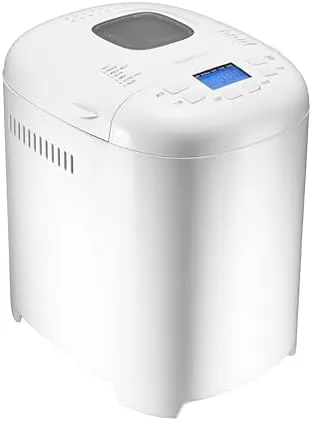
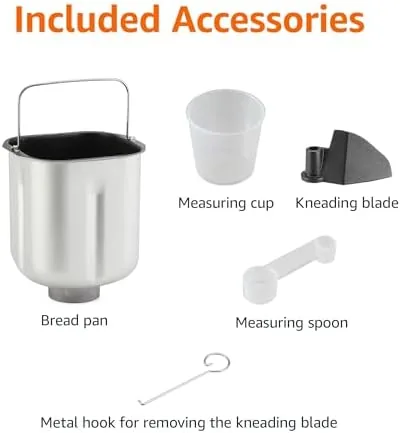
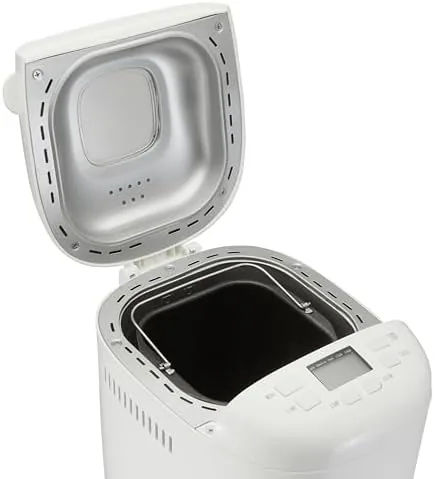
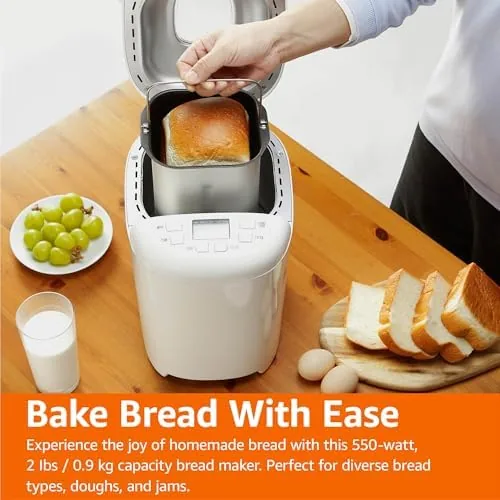
The machine is a rectangle with a purpose. The white body is simple and clean, with an LCD display up top and a control panel laid out in a logical line of buttons. It is not a design statement, but it is not trying to be, and the white finish fits a bright kitchen without shouting. The bread pan is a non-stick loaf pan with a handle that clips into the base, and a kneading paddle sits in the bottom center, the standard arrangement that any bread machine owner will recognize instantly.
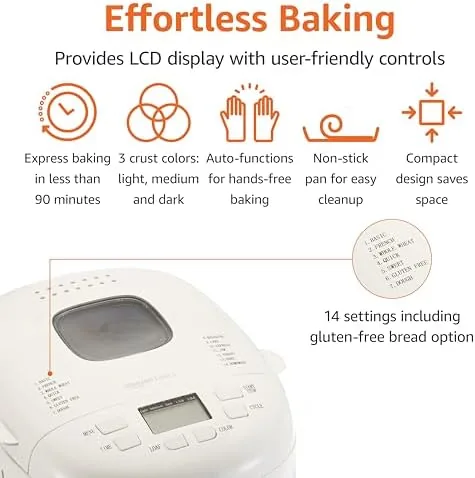
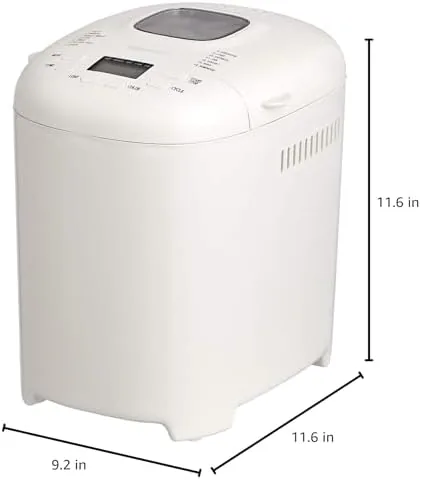
Build quality is solid for the price bracket. The lid latches with a firm seal, the pan is heavy enough to feel durable, and the non-stick coating releases loaves cleanly when it is time to shake them out. The unit has a viewing window in the lid, which matters more than it sounds, because watching the rise is half the pleasure of owning one. The footprint is typical for a 2-pound machine, roughly the size of a microwave cut in half, and it earns a permanent spot on the counter rather than a life in a cabinet.
Key Features
The fourteen programs are the headline, and they cover the sensible spread of a modern bread maker. There are basic white and whole wheat settings, French and sweet settings, a dough-only program, a jam setting, and a gluten-free program that adjusts the entire knead-and-rise cycle for flour blends that cannot tolerate a standard schedule. ExpressBake sits at the other end of the spectrum, racing a loaf to completion in about an hour for the mornings when you forgot to plan ahead.
The three crust color options are the quiet differentiator. The light, medium, and dark settings control the length of the final bake, and the difference is real, from a pale, soft shell to a deep, browned crust that shatters slightly when you cut it. There is also a timer for delayed starts, so you can load the machine at night and wake up to fresh bread. If you want to compare the current price against other machines in this class, the Amazon listing for the Amazon Basics bread maker is a useful reference.
Real-World Performance
I baked a month of loaves across the main settings, starting with the basic white loaf that most owners will make first. The machine kneaded, rose, and baked without intervention, and the resulting loaf was tall, even, and genuinely good, with the soft texture of a bakery loaf rather than the dense brick that cheap machines produce. The dark crust setting delivered the exact deep-brown top I wanted, and the loaf released from the pan with a single shake, a test the non-stick coating passed every time.
The program coverage held up in practice. The whole wheat setting managed a heavier flour blend without burning the crust, the dough program turned out a soft, workable pizza dough that baked well in the oven, and the gluten-free setting handled a commercial gluten-free mix with a texture far better than the brick I expected. ExpressBake worked exactly as advertised, producing a finished loaf in about an hour, and while the fast crumb was denser than the full cycle, it was still a respectable loaf for a school morning.
The honest complaints are the standard ones for this price class. The machine is loud during the knead cycle, which is fine in a kitchen but noticeable in an open-plan home. The 2-pound pan also bakes short, squat loaves for a family that is used to bakery boules, so do not expect towering artisan shapes from a basic setting. And the timer, while functional, uses a straightforward interface that takes one session to learn.
Pros and Cons
Pros:
- Fourteen programs cover bread, dough, jam, and gluten-free
- Three crust color settings deliver visible, real differences
- ExpressBake finishes a loaf in about an hour
- Non-stick pan releases loaves cleanly
- Timed start for fresh bread in the morning
Cons:
- Knead cycle is loud in an open-plan home
- 2-pound pan makes short, squat loaves
- Interface takes a session or two to learn
How It Compares
Bread makers cluster around price and capacity, and the Amazon Basics machine lands squarely in the entry tier. I compared it against a premium 2-pound machine and a budget no-frills model to see where the middle ground really sits.
| Feature | Amazon Basics | Premium 2-Pound Maker | Budget No-Frills Maker |
|---|---|---|---|
| Programs | 14 settings | 15 to 20 settings | 6 to 10 settings |
| Crust colors | Three, light to dark | Three or more | Single or none |
| Gluten-free | Yes, dedicated | Yes | Often missing |
| ExpressBake | Yes, about one hour | Yes | Rarely |
| Display | LCD | LCD with more feedback | LED or dials |
| Price | Low | High | Lowest |
Against a premium machine, the Amazon Basics loses on extra programs, baking consistency at the edges, and a quieter operation, but it wins decisively on price, and the gap in everyday white bread is smaller than the gap in cost. Against a budget no-frills maker, it wins on program coverage, crust color, and the gluten-free setting, which are exactly the features that keep a machine in use rather than on a shelf. For a first bread maker or a practical family upgrade, the Amazon Basics unit is the value pick, and it is the one that stayed on my counter after the month ended.
Who Should Buy It
Buy this bread maker if you want fresh bread without the bakery price, if you bake a mix of standard loaves and gluten-free options, or if you want the convenience of a timer that delivers a warm loaf at breakfast. It is a natural fit for a family that eats bread daily and wants an uncomplicated machine that does not cost as much as a week of groceries.
Skip it if you want tall artisan boules, if you cannot tolerate the noise of a knead cycle in a small apartment, or if you expect the premium finishes of a luxury brand. For everyone else, this is one of the best value upgrades a kitchen can get. You can check the current price for the Amazon Basics bread maker on Amazon when you are ready to bake.
How We Test
I baked with the Amazon Basics machine every week for a month, covering the basic white, whole wheat, French, dough, gluten-free, and ExpressBake programs, and I tested all three crust colors on the same recipe to isolate the difference. I tracked loaf height and crumb texture, the reliability of the non-stick release, and how the machine behaved across a full program from dry ingredients to finished loaf.
I compared it against a premium machine and a budget model to place the results in context, and I was honest about the noise and the loaf shape. The test reflects home use by an average baker, not commercial baking or recipe development. For a broader look at bread maker performance and tips, Wirecutter guidance on bread machines is a helpful reference. The Amazon Basics bread maker listing on Amazon shows the current price and shipping details.
Amazon Basics Bread Maker: Questions People Ask
How long does a basic loaf take in the Amazon Basics bread maker?
A standard white loaf runs about three hours on the basic setting, while ExpressBake finishes a loaf in roughly an hour at the cost of a denser crumb.
Does the bread maker work for gluten-free recipes?
Yes, the machine has a dedicated gluten-free setting that adapts the knead and rise cycle, though gluten-free loaves tend to be denser and shorter than wheat loaves.
What does the three crust color setting change?
The setting controls how long the final bake runs, so light produces a pale soft crust and dark produces a deeper, more browned and crisper crust.
Can the bread maker mix dough without baking it?
Yes, the dough setting kneads and rises the dough and stops before baking, so you can shape and bake it in a conventional oven yourself.
As an Amazon Associate, I earn from qualifying purchases.