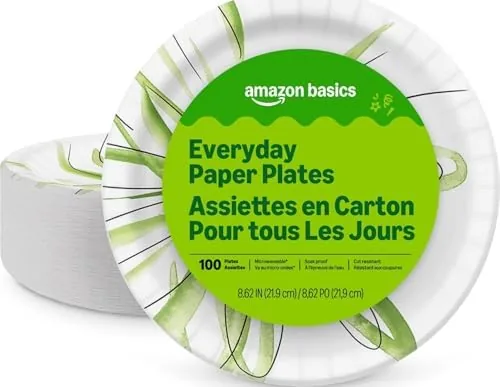

A paper plate is only as good as its last soaked edge. Everyone has watched a flimsy disposable plate bend, leak, or soften into a mess halfway through dinner, and that memory is exactly why the Amazon Basics Everyday Disposable Paper Plates exist. They are 8.62 inches across, come 100 to a pack, and carry three specific promises: microwave safe, cut resistant, and soak proof. I spent two weeks putting a full stack through everyday dinners, cookout leftovers, microwave reheating, and the occasional heavy saucy meal, and this is the honest record of how they held up.
Before the details, the standard note. This article contains affiliate links, and if you buy through one of them the site earns a small commission at no extra cost to you. That commission never changes what I test or what I recommend.
Design and Build
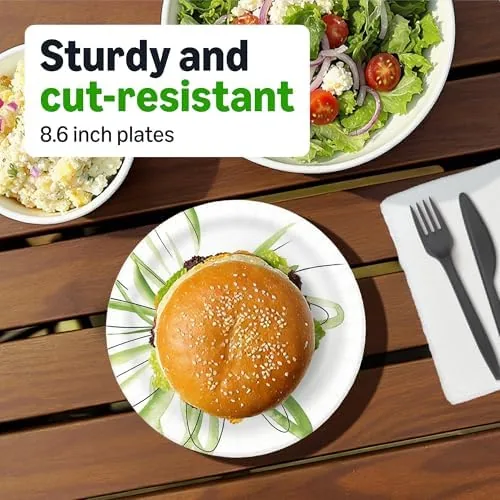
Each plate measures 8.62 inches across, which sits in the practical middle range between a small salad plate and an oversized serving platter. That size handles a standard dinner portion of protein, a side, and a few vegetables without feeling crowded, and it still leaves room for the plate to sit on a lap or a tray without overhanging.
The construction is a pressed paper base with a smooth coated surface. The coating is what does the heavy lifting: it sheds moisture instead of absorbing it, which is why greasy food does not turn the plate translucent and why saucy dishes do not soak through to the surface below. The rim has a slight rolled edge that adds stiffness and gives the plate a bit of structure against the flex that cheap disposables suffer.
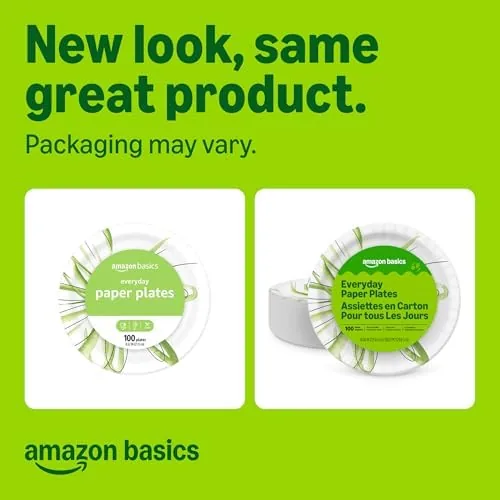
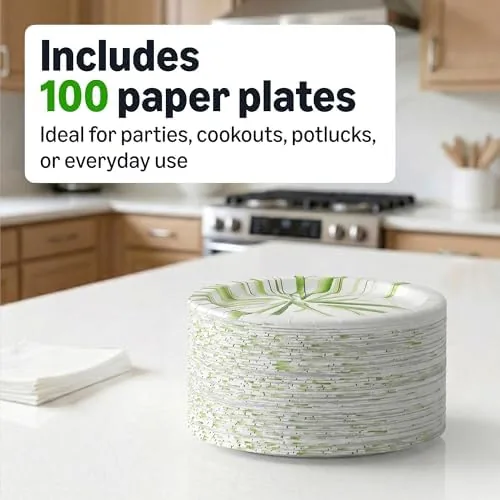
The packaging is the other practical detail. A 100 count pack arrives as stacked plates in a flat box, which makes storage easy in a pantry or cabinet. The listing notes that packaging may vary, so the box style can differ between shipments, but the plate itself is consistent across the packs I opened. The plain white finish is intentionally neutral, which suits everyday family meals, casual gatherings, and party platters alike.
Key Features
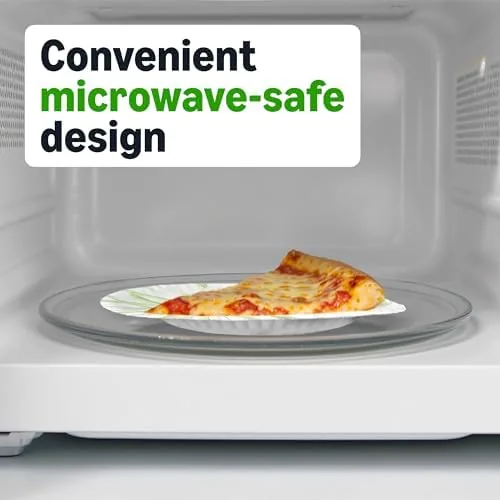
The microwave safety claim is the first feature worth testing. The plates survive a full reheating cycle without softening, warping, or leaking, which makes them genuinely useful for reheating leftovers straight from the fridge. A plate that can hold a saucy pasta dish for a two minute reheat without turning into a limp mess earns real utility in a busy kitchen.
The cut resistance claim is the second. The coated surface resists punctures from a table knife, so cutting a burger, a slice of pizza, or a piece of chicken directly on the plate does not tear through. That matters for casual dining where people eat without a cutting board, and it separates these plates from thin disposables that slice open at the first touch of a serrated edge.
The soak proof claim rounds out the set. Grease and thin sauces bead on the surface rather than bleeding through, which keeps countertops and laps dry even with messy meals. Taken together, the three claims describe a plate designed for real food rather than a decorative item that happens to be disposable. For a current look at the price and pack options, the Amazon listing for the Amazon Basics everyday paper plates is a useful reference.
Real-World Performance
My first test was the honest one: a plate of spaghetti in a tomato and meat sauce, left to sit for the full length of a dinner conversation. By the end the sauce had pooled in the center, but the underside of the plate was dry and the coated surface held its shape. There was no translucent bleed-through and no soft spot where the sauce had sat, which is more than I can say for several cheaper plates I have used.
Microwave reheating came next. I reheated a leftover plate of rice and curry for two minutes on high. The plate came out warm but intact, with no warping along the rim and no moisture weeping onto the turntable. I repeated the test with a heavier stew and a greasier fried rice, and the plate held through all of them without complaint.
The cut test was straightforward. I used a table knife to cut a burger in half directly on the plate, then pressed down on a slice of pizza. The knife left light surface marks but never broke through, and the plate stayed structurally sound. Even a serrated knife, which tears at the surface more aggressively, only scuffed the coating rather than cutting through it.
My messier tests also passed. Barbecue ribs with a thick glaze, a bowl of chili, and a plate of fried chicken all left the surface stained but dry underneath. The one honest limitation is stiffness under heavy loads. A very full plate that is lifted with one hand and tilted will flex noticeably, and the plates are not built to hold truly oversized servings without the center sagging. For a normal dinner portion they are steady, but they are not a substitute for a hard plate under extreme conditions.
Pros and Cons
Pros:
- Soak proof coating keeps sauces and grease from bleeding through
- Microwave safe without softening or warping on reheat
- Cut resistant surface survives table knife use
- 8.62 inch size fits a standard dinner portion comfortably
- 100 count pack offers a low cost per plate
- Neutral finish suits both everyday meals and gatherings
Cons:
- Center flexes when a very full plate is lifted one handed
- Not sized for oversized or family style servings
- Packaging can vary between orders
- No printed designs for decorative occasions
How It Compares
Disposable plates split into uncoated thin paper, coated paper, and molded fiber or plastic options, and each serves a different crowd. I compared these plates against an uncoated budget plate and a molded fiber plate to see where the Amazon Basics version lands.
| Feature | Amazon Basics Paper Plate | Budget Uncoated Plate | Molded Fiber Plate |
|---|---|---|---|
| Soak resistance | High, coated surface | Low, absorbs quickly | High, pressed fiber |
| Microwave safe | Yes, holds shape | Yes, but softens | Usually yes |
| Cut resistance | High, resists knife | Low, tears easily | Medium, can crack |
| Cost per plate | Low in 100 pack | Very low | Higher |
| Stiffness | Good for dinner portions | Weak, flexes | Excellent |
| Best use | Everyday meals and events | Light snacks only | Heavy formal service |
Against an uncoated budget plate, the Amazon Basics version wins on every practical measure. The coated surface resists moisture that turns cheap plates into soggy messes, the extra stiffness holds a real portion, and the cut resistance means dinner does not end with a torn plate. The budget plate still wins on price for someone who only needs a surface for dry snacks.
Against a molded fiber plate, the Amazon Basics version wins on cost and microwave reliability. Molded fiber plates feel more premium and resist heat beautifully, but they cost more per plate and some crack under a knife. The Amazon Basics plate holds its own for a fraction of the price. For everyday meals, cookouts, and family dinners, this is the most practical balance of the three.
Who Should Buy It
Buy these plates if you serve regular family dinners, host casual gatherings, reheat leftovers often, or want a disposable plate that can actually handle a knife and a sauce without a backup. The 100 count pack makes them a sensible buy for busy households that eat at home most nights.
Skip them if you need a premium molded plate for formal service, want decorative designs for parties, or only feed people dry finger foods where the cheapest plate will do. For everyone else, this is an affordable and genuinely reliable everyday option. You can check the current price for the Amazon Basics paper plates on Amazon when you are ready to stock up.
How We Test
I tested a full pack over two weeks across five scenarios: a saucy pasta dinner left to sit, microwave reheating of curry and stew, direct cutting with a table knife and a serrated knife, and greasy meals including ribs, chili, and fried chicken. I checked the underside after each meal for moisture bleed, watched for warping after every reheat, and noted stiffness when lifting loaded plates one handed.
I did not test these plates with boiling liquid poured directly in, in an oven, or under a hot grill, all of which are outside the design envelope for a paper plate. For broader perspective on disposable tableware, independent guides such as Consumer Reports' look at paper plates explain the material and strength trade offs that matter in practice. The Amazon Basics paper plates listing on Amazon shows the current price and pack options.
Amazon Basics Everyday Paper Plates: Questions People Ask
Are these paper plates safe to put in the microwave?
Yes. The plates are microwave safe and handle reheating a full plate of food without softening, warping, or leaking during a standard heating cycle.
Can you cut food directly on these plates with a knife?
The surface resists cuts and punctures from a table knife, so cutting a burger or a slice of pizza on the plate does not tear through the paper or split the plate.
How many plates are in one pack?
Each pack contains 100 plates measuring 8.62 inches across, a practical size for everyday dinners, cookouts, and casual gatherings, with a low cost per plate.
Do these plates leak when holding greasy or saucy food?
The soak proof construction keeps grease and thin sauces on top of the plate, so messy dishes such as pasta, barbecue, and chili do not soak through to the surface below.
As an Amazon Associate, I earn from qualifying purchases.