 Cast Iron Skillet" width="1200" height="800" loading="lazy" style="height:auto">
Cast iron is wonderful to cook with and strangely fragile to clean. Use the wrong scrubber and you strip the seasoning that took months to build. Leave the food alone and the next meal starts with a sticky residue. The 8 by 6 inch stainless steel chainmail scrubber is built to solve exactly that problem, using interlocking steel links to scrape away stuck food while leaving the seasoning intact. I have used this scrubber on skillets, griddles, and a grill for several weeks, and this review covers what it does well and where it falls short.
Before the details, the standard note. This article contains affiliate links, and if you buy through one of them the site earns a small commission at no extra cost to you. That commission does not change what I test or what I recommend, and this scrubber was used exactly the way a home cook would use it.
Chainmail cleaning is a clever idea that has to prove itself in the sink, because a metal scrubber feels like a mistake until you see what it does to seasoning. The rest of this review walks through the build, how it performs on real messes, and whether it deserves a place in your kitchen.
Design and Build
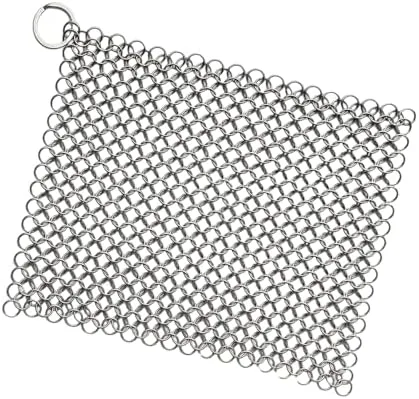
The scrubber is a rectangle of interwoven stainless steel links, roughly 8 inches by 6 inches, with a texture that sits somewhere between a dishcloth and armor. The links are small and tightly woven, which gives the mesh enough stiffness to scrape while still bending around the curve of a skillet. The whole thing has a satisfying weight, and it feels far more durable than any sponge or scrubbing pad it replaces.
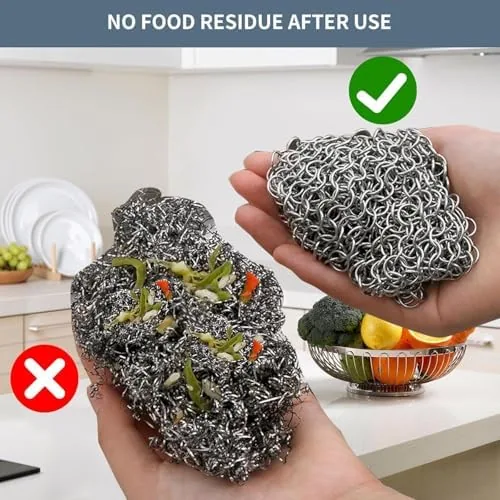
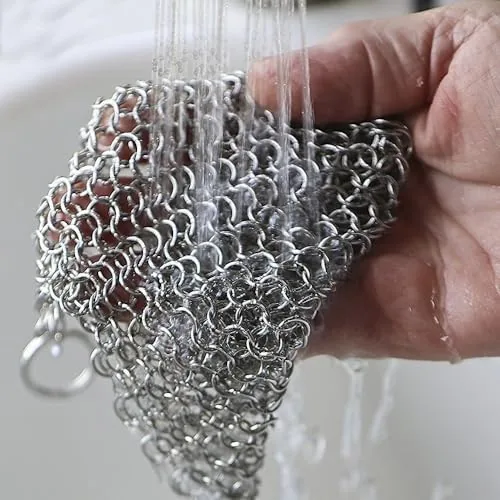
The stainless steel construction is the core of the design. Because the links are metal, the scrubber does not absorb grease, does not harbor bacteria like a sponge, and does not shred into fibers that end up in your food. When it is done, a rinse under hot water flushes most of the debris out of the mesh, and the scrubber dries quickly instead of staying soggy on the counter.
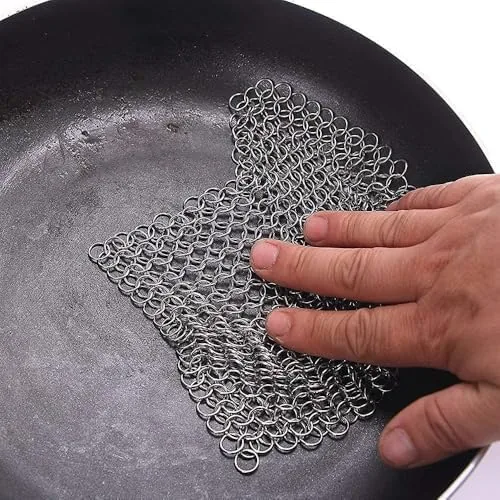
One small detail is the finishing. The links are smooth enough to handle without discomfort, and there are no sharp edges waiting to catch a knuckle. The scrubber holds its shape through heavy scrubbing, and it does not stretch out or come apart the way a looser mesh might.
Key Features
The headline feature is the ability to remove stuck food from cast iron without stripping seasoning. The steel links slide over the polymerized oil layer, scraping off burnt bits while leaving the smooth cooking surface intact. That is the whole argument for chainmail over steel wool or abrasive pads, and it is the reason serious cast iron cooks reach for one.
Versatility is the second feature. The scrubber works on pre-seasoned pans, bare cast iron skillets, griddles, Dutch ovens, and barbecue grill grates, which covers most of the metal cookware in an active kitchen. It also handles stainless steel pots and pans, which means one scrubber replaces a drawer full of specialty pads.
Finally, there is the durability and hygiene angle. A metal scrubber does not wear out after a few weeks, it does not smell after a few days, and it does not need replacing when it looks grimy. With reasonable care it lasts through months of daily cooking, which makes the upfront price easier to justify.
Real-World Performance
Testing started with the classic cast iron nightmare: eggs fried and left to set. After the pan cooled, a chainmail scrubbing motion under hot water lifted the baked on egg with a few passes, and the seasoning underneath was untouched. That single result is the reason this scrubber earns its place.
Next came the griddle. A full breakfast of pancakes, sausage, and hash browns leaves a crusty layer that usually requires soaking or a scraper. The chainmail worked through the residue with steady elbow grease, and the flat surface came back to a clean, slick condition ready for the next round of cooking. It was not effortless, but it was far easier than the scouring pads it replaced.
The grill test was the harshest. Charred sauce and burned bits on steel grill grates can defeat a sponge entirely, and the chainmail made short work of the worst patches. With the grate warm but not hot, the mesh scraped off the carbonized residue and left the metal clean enough to oil for the next cook.
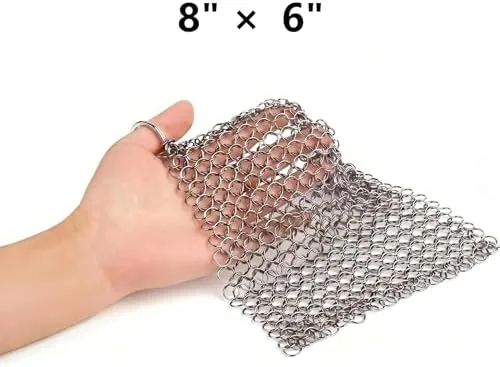
One honest limitation showed up in the corners. Tight spots, like the ridge where a pan handle meets the body, are harder to reach because the mesh is stiff and does not poke into narrow crevices the way a brush bristle does. For those spots I used a small nylon brush to finish the job.
Another consideration is the moisture. Because the scrubber is metal, it needs to dry after rinsing or it can leave faint rust marks on a counter. The scrubber itself is stainless and resists rust well, but I learned to give it a shake and let it air dry rather than leave it wet against the sink edge.
There is also a small satisfaction in the way the tool wears in. The mesh loosens slightly with use and wraps around curved surfaces even more easily, while the steel itself shows no signs of degrading. A cheap sponge is gone by the time a chainmail scrubber starts to feel comfortable, and that longevity is part of the value, because the price of one scrubber covers months of replacements.
Pros and Cons
Pros:
- Removes stuck food without stripping cast iron seasoning
- Stainless steel does not absorb grease or harbor bacteria
- Works on skillets, griddles, Dutch ovens, and grill grates
- Durable construction outlasts sponges and scouring pads
- Easy to rinse clean and quick to dry
- Smooth links are comfortable to grip
Cons:
- Stiff mesh cannot reach tight corners and crevices
- Needs to dry after use to avoid stray rust marks
- Hard links are not safe for nonstick coatings
How It Compares
The chainmail scrubber sits between abrasive scouring pads and soft sponges, and each has a role. The table below lines up the options.
| Feature | Chainmail Scrubber | Steel Wool Pad | Nylon Scourer |
|---|---|---|---|
| Strips seasoning | No, safe for cast iron | Yes, damaging | No, gentle |
| Removes burnt food | Excellent | Excellent | Moderate |
| Harbors bacteria | No | No | Can, if wet |
| Lifespan | Months | Weeks | Weeks |
| Good for | Cast iron, steel, grills | Heavy duty, bare metal | Everyday dishes |
For cast iron and grill owners, the chainmail is the clear winner because it cleans without sacrificing the surface you worked to build. Steel wool is stronger but destructive to seasoning, and nylon scourers are too gentle for the worst burnt messes. The scrubber is a specialty tool, but it is the right one for its job.
Who Should Buy
Buy the 8 by 6 inch chainmail scrubber if you cook on cast iron, carbon steel, or a griddle, or if you keep a grill and want a cleaning tool that handles charred grates without chemicals. It is also a smart buy for anyone tired of replacing sponges and pads that wear out in weeks.
Skip it if your kitchen is all nonstick, because the metal links will scratch those coatings, or if you prefer a nylon brush for the crevices that chainmail cannot reach. For cast iron loyalists and grill cooks, this is one of the better kitchen purchases you can make. You can check the current price of the cast iron chainmail scrubber on Amazon when you are ready.
How We Test
I used the chainmail scrubber as my primary cast iron cleaning tool for several weeks, testing it on fried egg residue, a full breakfast griddle, charred grill grates, and a heavily used Dutch oven. I cleaned under hot running water and observed how the seasoning held up after repeated scrubbing.
I did not test the scrubber on nonstick pans, since the hard links would damage those coatings, and I did not compare it against a chemical grill cleaner. For a broader look at cast iron care, Wirecutter has a practical guide to cleaning cast iron that is well worth reading. The cast iron chainmail scrubber listing on Amazon shows the current price and sizing options.
Cast Iron Chainmail Scrubber: Questions People Ask
Will a chainmail scrubber damage cast iron seasoning?
No, the stainless steel links glide over the seasoning layer and remove stuck food without gouging it, which is exactly what makes chainmail safer than steel wool or abrasive pads.
How do I clean the chainmail scrubber after use?
Rinse it under hot water and give it a squeeze and a shake, then hang it to dry, and most stuck debris falls out of the mesh with minimal effort.
Can the scrubber be used on nonstick pans?
Chainmail is designed for cast iron and steel, so keep it away from nonstick coatings, where the hard links will scratch the surface.
Does the scrubber rust or hold onto food particles?
The stainless steel construction resists rust, and while small bits of food can lodge in the links, rinsing and shaking clears them quickly.
As an Amazon Associate, I earn from qualifying purchases.