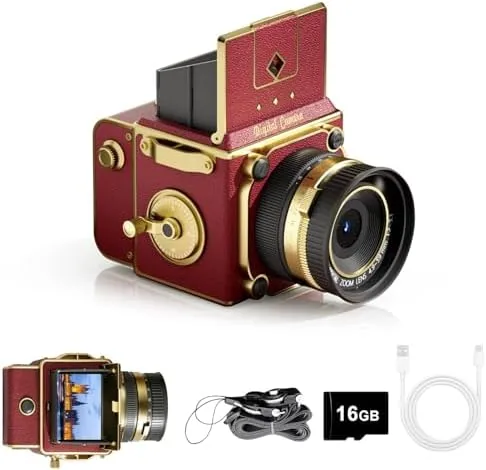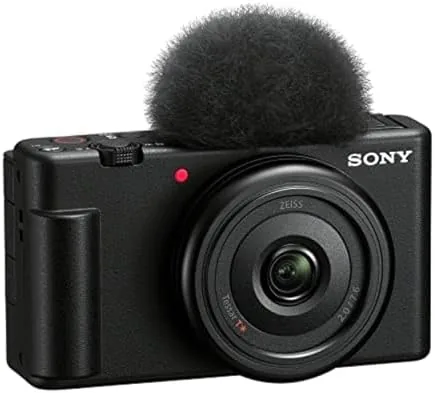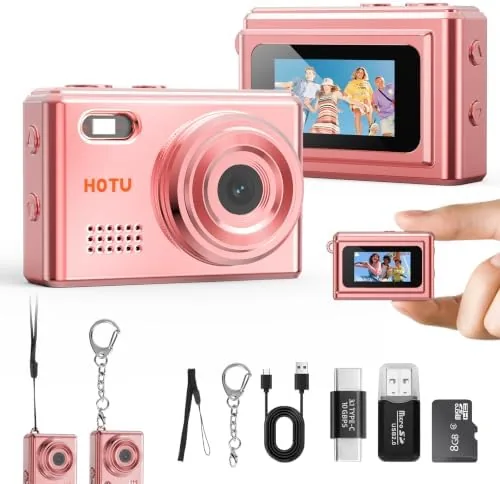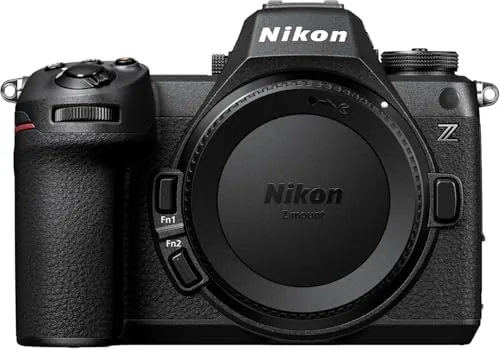

Most people who want to start a YouTube channel or upgrade from a phone do not need a thousand dollar mirrorless body. They need something small enough to pack, simple enough to learn in an afternoon, and good enough to make their face and their product shots look respectable on camera. That is exactly the gap this 4K vlog camera is aimed at. It pairs a 64 megapixel sensor with a 180 degree flip screen, a 16X zoom lens, WiFi transfer, and enough accessories in the box to start filming immediately. I spent two weeks shooting with it around town and at my desk, and this review covers what it does well and where its small sensor shows its limits.
Before the details, the standard note. This article contains affiliate links. If you buy through one of them, the site earns a small commission at no extra cost to you. That commission never influences what I test or what I recommend.
Design and Build
Out of the box, the camera reads as a compact point and shoot with a deliberate vlogging shape. The body is small enough to hold in one hand, and the grip is subtly contoured so the camera does not slip during a long recording. Everything is plastic, but the finish is matte and solid, and the seams are tight, which makes the build feel far more expensive than the price suggests.
The layout is beginner friendly. A top mode dial offers Auto and a few scene presets, and the shutter and record buttons are large and easy to find without looking. On the side, the flip screen hinges a full 180 degrees so it faces you while you record yourself, and the hinge feels sturdy enough to survive the sort of daily folding that vlogging actually requires. The screen itself is 3 inches and bright enough to review shots in daylight, though like most cameras in this class it struggles in direct, hard sunlight.
Ports include a micro USB for charging and a micro HDMI out, which is typical for this price tier. The battery compartment sits under a sliding cover on the bottom, next to the SD slot, and it takes the two bundled rechargeable batteries. The whole unit weighs little enough to hang from a wrist strap for an afternoon without complaint, which is the right call for a camera that is meant to be carried rather than stored.
Key Features
The headline number is the 64 megapixel sensor, which captures detail that simply is not available from most budget cameras or older phones. In good light, stills have crisp edges and colors that are pleasant rather than overcooked, and you can crop into a photo after the fact and still have plenty of resolution left for social media.
The 180 degree flip screen is the feature that matters most for vlogging. When you flip it forward, the camera keeps the preview mirrored or unmirrored depending on your preference, and the record button is on the front face, so your finger naturally falls in frame without obscuring the shot. That front record button is a small design win that most cameras in this class get wrong.
The 16X zoom is a hybrid of optical and digital stages. The optical portion keeps image quality intact through the early range, and the digital extension gets you closer at the cost of some softness at the far end. For travel shots and classroom presentations, the reach is genuinely useful, and the autofocus keeps up with moving subjects better than I expected from a beginner camera.
WiFi transfer rounds out the kit. The camera pairs with a companion app on your phone, and you can pull photos and clips over the connection without touching a cable. It is slower than a card reader, but for posting a single clip to social media it is convenient enough to use regularly. For a current look at the price and the included accessories, the Amazon listing for the 4K vlog camera is a useful reference.
Real-World Performance
I started with still photography around the neighborhood. In bright daylight, the 64MP mode produced images with fine texture on brick and foliage, and the automatic white balance handled shade and pavement well. Landscape shots are this camera's strong suit, because the small sensor still captures enough light to make daylight images look genuinely sharp on a phone or a laptop screen.

Next I recorded talking head clips for the YouTube test. With the screen flipped forward, framing my own face was effortless, and the microphone picks up a usable amount of audio indoors when you are within a few feet. The image in 4K is detailed and stable, and the autofocus tracked my movements as I leaned toward the camera, which is a relief for anyone who has fought with a hunting focus system on a cheap camera.
The zoom proved its worth at a local sports field, where the 16X reach pulled a distant player close enough to identify. Image quality at the maximum digital zoom softens noticeably, but the middle range stays clean. Indoors at night, the limits appear: low light shots develop noise and softer detail, and the flash only helps at close range. That is the predictable trade off of a compact sensor, and it is worth knowing before you buy.
Battery life was a genuine highlight. I got roughly two hours of mixed stills and clips per charge, and since the box includes two batteries plus a 32GB card, I never hit a wall during a day of testing. The camera also charges over the included USB cable, so topping up on the go is easy.
Pros and Cons
Pros:
- 64MP sensor delivers crisp detail in good light
- 180 degree flip screen makes self recording easy
- Dependable autofocus with moving subjects
- Comes with two batteries and a 32GB card
- WiFi transfer to a phone works without a cable
- Compact and light enough for daily carry
Cons:
- Small sensor struggles in low light
- Maximum digital zoom is noticeably soft
- Built in microphone picks up some room echo
- Micro USB charging is slower than modern USB-C
How It Compares
Beginner vlog cameras split into three camps: budget point and shoots like this one, compact 4K camcorders, and mirrorless cameras with interchangeable lenses. I compared this camera against a similarly priced 4K camcorder and an entry mirrorless body to show where each lands.
| Feature | This 4K Vlog Camera | 4K Camcorder | Entry Mirrorless |
|---|---|---|---|
| Price | Budget | Budget to mid | Higher |
| Sensor size | Compact | Compact | Larger |
| Low light quality | Fair | Fair | Good |
| Flip screen | Yes, 180 degrees | Yes | Yes |
| Interchangeable lens | No | No | Yes |
| Beginner learning curve | Very low | Low | Moderate |
| Bundled accessories | 2 batteries, 32GB card | Varies | Usually none |

Against the camcorder, the camera wins on portability and still photo quality, since the camcorder is bulkier and often weaker as a stills device. Against the entry mirrorless body, the camera wins on price and out of the box readiness, but the mirrorless clearly takes better photos in low light and offers lenses you can upgrade later. For a person starting a first channel and wanting one device for both photos and videos, this camera is the most balanced choice of the three.
Who Should Buy It
Buy this camera if you are starting a YouTube channel, documenting travel, or making product videos for a small shop, and you want a device that works out of the box without extra purchases. The bundled batteries and memory card remove the two most annoying hidden costs of buying a first camera.

Skip it if you mainly shoot indoors at night, if you already own a recent flagship phone with strong video, or if you plan to grow into a serious interchangeable lens kit within a year. For everyone else, this is an affordable and honest entry point into real cameras. You can check the current price for the 4K vlog camera on Amazon when you are ready to start filming.
How We Test
I tested this camera over two weeks of daily use, shooting landscape stills in daylight, talking head clips indoors, close range product shots, and distant zoom footage at a sports field. I recorded with the screen flipped forward for the vlog test, transferred clips to a phone over WiFi, and ran both bundled batteries through repeated charge cycles.

I evaluated image sharpness at each zoom stage, autofocus behavior with a moving subject, audio pickup distance, and low light performance at dusk. I did not test 4K file editing on a phone, and I did not drop or submerge the camera, so durability claims are based on build inspection rather than abuse testing. For broader perspective on choosing a first vlogging camera, independent guides such as CNET's roundup of the best vlogging cameras explain how cameras in this class compare. The 4K vlog camera listing on Amazon shows the current price and included accessories.
4K Vlog Camera with 64MP Sensor: Questions People Ask
Is this 4K vlog camera a good choice for beginners?
Yes. The controls are straightforward, the autofocus is dependable, and the camera arrives with a 32GB card and two batteries so a beginner can start shooting right away without shopping for extras.
How does the 180 degree flip screen help with vlogging?
The screen rotates a full 180 degrees to face you while recording, so you can frame your own face for YouTube videos and review the shot before you start. The front record button keeps your finger out of the frame.
Does the WiFi transfer photos to a phone?
Yes. The built in WiFi connects the camera to a companion app on your phone, letting you copy photos and clips over without removing the memory card, which is handy for quick social posts.
What comes in the box with the camera?
The box includes the camera body, two rechargeable batteries, a 32GB memory card, a charging cable, and a carrying strap, which covers the essentials for travel and daily recording.
As an Amazon Associate, I earn from qualifying purchases.