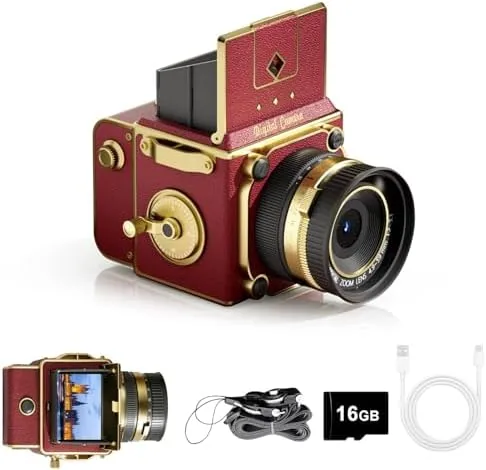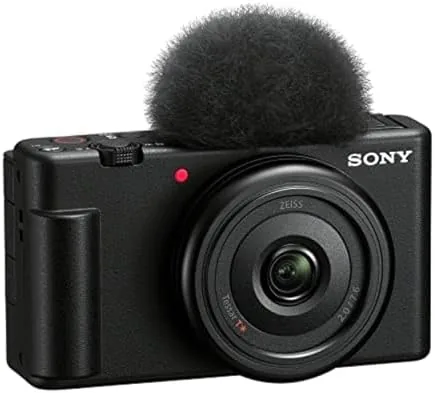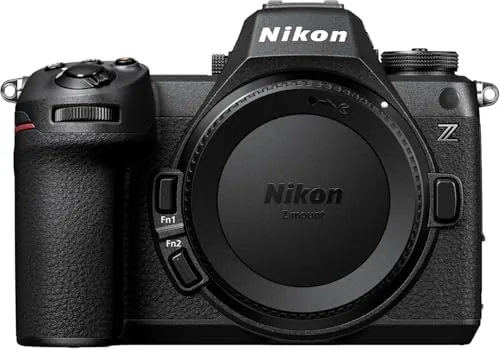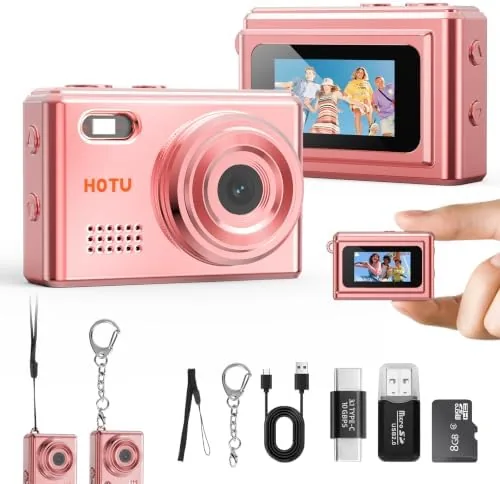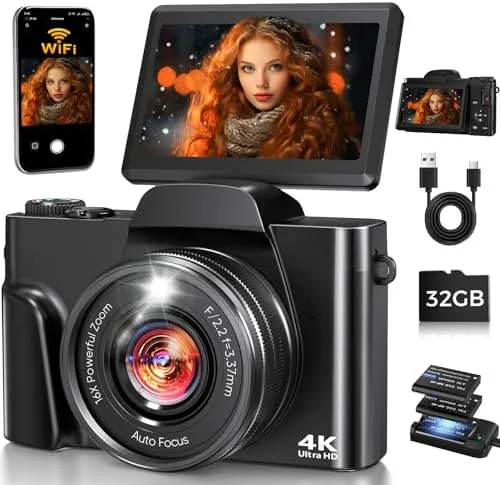

There is a well-worn path from phone to camera, and most people arrive at the junction with the same question: what do I buy before I know anything about exposure, aperture, or ISO? The 4K digital camera in this listing is aimed squarely at that traveler. It offers a 64MP sensor for stills, 16X zoom, a 180-degree flip screen, WiFi transfer, and anti-shake stabilization, all wrapped in a compact body that ships with a 32GB memory card and two batteries. I carried it for two weeks of vlogs, city walks, and portrait sessions to find out whether a beginner camera can feel like a real step up from a phone. In most ways it can.
This review contains affiliate links. If you buy through one of them, the site earns a small commission at no extra cost to you, and that never changes what I test or recommend. With that note out of the way, here is the full record of my time with this camera.
Design and Build
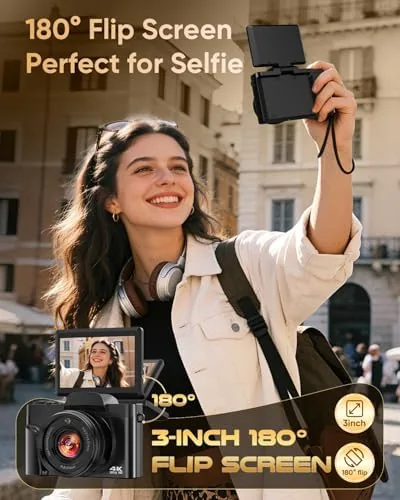
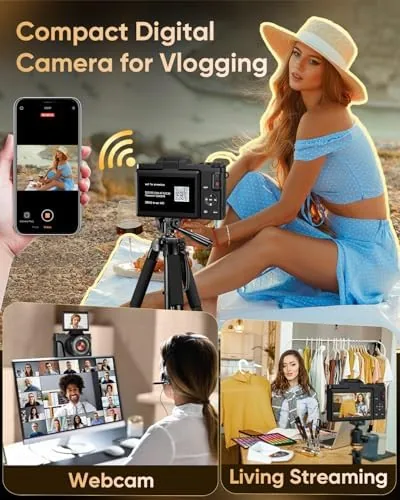
The camera is small enough to hold comfortably in one hand, and it is designed around the selfie shooter from the ground up. The 180-degree flip screen rotates up and around to face forward, which turns the camera into a vlogging tool rather than just a stills camera. The screen is bright enough to frame yourself in daylight, and the touch response is snappy enough for tapping focus and reviewing shots. The body is a matte black plastic with a textured grip on the right side, and the layout keeps the essentials within reach: shutter, mode dial, zoom rocker, and a dedicated record button.
Physical controls are simple by design. The mode dial covers photo, video, and scene modes, and the menus are flat and logical, which matters when the buyer may have never owned a dedicated camera. The battery and SD card live under a single door on the base, and swapping either is easy on the go. At roughly the size of a compact point-and-shoot from a decade ago, it slides into a jacket pocket or a small bag without complaint. The build will not survive being dropped down stairs, but it feels sturdy enough for daily use and travel.
Key Features
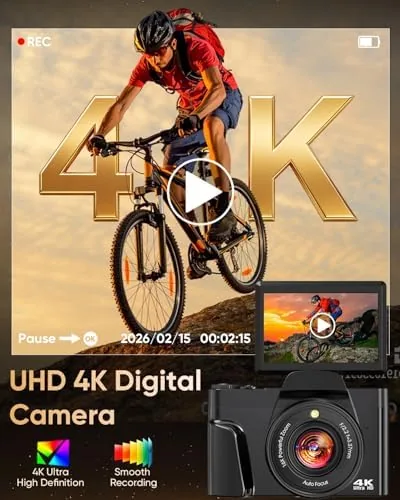
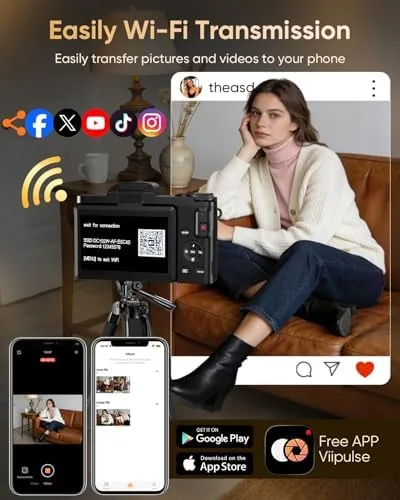
The headline numbers are the 64MP stills and 4K video, and both deliver more than the phone they are replacing for a beginner. The 16X zoom extends from a wide lens for selfie framing up to a long telephoto reach that brings distant subjects close, and the zoom rocker is smooth enough for controlled pulls during video. The 180-degree flip screen is the feature that defines the camera for vloggers, since you can see yourself and confirm focus while recording. WiFi transfer moves finished shots to a phone through the companion app, which removes the cable from your routine entirely.
Anti-shake stabilization rounds out the package for handheld use. It does not replace a gimbal, but it noticeably calms the shake of walking shots and selfie-style vlogs, which is exactly where beginner footage usually falls apart. The bundle covers the practical gaps that trip up first-time buyers: a 32GB memory card and a second battery arrive in the box, so you can record on day one without shopping for accessories. If you want to compare the current price, the Amazon listing for the 4K vlogging camera is a useful reference.
Real-World Performance
I started with vlogs, because that is what this camera is built for. Flipping the screen forward, setting the record button, and talking to the lens felt natural within minutes. The autofocus tracked my face in good light and held focus when I leaned closer to show a detail, and the footage looked clean and detailed on a phone screen. Walking shots with the anti-shake engaged came out steady enough to use, which is the single biggest relief for someone moving from a phone that wobbles at every step.
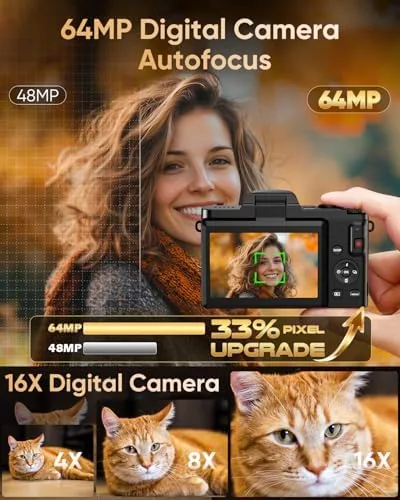
Stills showed the strength of the 64MP sensor in good light. A city walk at midday produced sharp, detailed shots of buildings and street scenes, and the 16X zoom brought a distant clock tower close enough to read the dial. Colors were lively straight out of the camera, which suits social media sharing without editing. The macro mode handled close-ups of food and small objects surprisingly well, with clean detail that phones often blur into mush. For a beginner who mostly shoots in daylight, the image quality is a clear step up.
The honest limits show up when the light drops. Indoors under warm household bulbs, the sensor needs to work harder, and low-light shots get soft and noisy compared to a modern phone's computational photography. The autofocus also slows in dim conditions. None of that is surprising at this price, and the camera more than earns its keep for its intended user. Battery life supported a full day of mixed vlogging and shooting with the spare battery in reserve, and WiFi transfer pulled a folder of photos to my phone in under a minute. The two-battery bundle turned out to be the difference between a full day out and a forced recharge.
Pros and Cons
Pros:
- 180-degree flip screen built for selfie vlogs and framing
- Sharp 64MP stills and clean 4K video in good light
- Anti-shake noticeably steadies handheld footage
- WiFi transfer to a phone without cables
- Bundled 32GB card and two batteries start you recording today
Cons:
- Low-light video and stills get soft and noisy
- Autofocus slows in dim conditions
- Small sensor limits creative flexibility for advanced users
How It Compares
To frame the value, I compared this camera against a smartphone camera and a higher-end mirrorless camera of the type beginners often consider.
| Feature | 4K Vlogging Camera | Smartphone Camera | Entry Mirrorless |
|---|---|---|---|
| Stills resolution | 64MP | Varies by model | 20-26MP |
| Video | 4K | 4K | 4K and up |
| Optical zoom | 16X | Limited | Lens dependent |
| Flip screen | 180 degrees | Selfie mode | Varies |
| Sensor size | Small | Small | Large |
| Learning curve | Very low | None | Moderate |
Against a smartphone, the camera wins on real optical zoom and the flip screen for selfie video, and it frees your phone for calls while you shoot. Against an entry mirrorless, it loses on sensor quality and low light, but it wins on price, simplicity, and the all-in-one bundle. For its intended audience, the balance is strongly in its favor.
Who Should Buy It
Buy this camera if you are starting a YouTube channel, want a dedicated vlogging tool that does not cost a month of rent, or travel and want a compact camera with real zoom. It is the right first camera for a student, a hobbyist, or anyone who wants to learn framing and exposure without being buried in menus. The included card and batteries remove every excuse for not starting to shoot.
Skip it if you already shoot with a mirrorless or DSLR and want an upgrade, or if low-light performance is your priority. For everyone else, this is one of the friendliest on-ramps to serious content creation. You can check the current price for the 4K vlogging camera on Amazon when you are ready to start recording.
How We Test
I used the camera for two weeks across three contexts: selfie vlogs, city travel stills, and indoor portraits. I recorded walking shots with and without the stabilization to measure the effect, used the full zoom range, transferred files over WiFi, and tested the autofocus in bright and dim light. I also ran a full battery-drain day to confirm the two-battery bundle covers a day of mixed shooting.
I did not test the camera in a studio or under professional lighting, and I did not use it in extreme weather. Independent guidance such as the PCMag roundup of the best vlogging cameras is a useful reference for how beginner cameras compare with higher-end options. The 4K vlogging camera listing on Amazon shows the current price and shipping details.
4K Vlogging Camera: Questions People Ask
Is this 4K camera good for beginners?
Yes. The flip screen, autofocus, and simple controls are designed for first-time users, and the included 32GB card and two batteries mean you can start recording right away.
How do I transfer photos to my phone with WiFi?
The companion app connects over the camera WiFi to download photos and clips to your phone, which makes sharing to social media quick after a shoot.
Does the anti-shake really help handheld video?
The stabilization reduces the worst of handheld shake for walking and selfie-style vlogs, though a tripod or gimbal still gives smoother results for fast movement.
Can I use this camera as a webcam for streaming?
The camera can output its feed over USB for many setups, which makes it a practical option for livestreaming or video calls when a webcam is not available.
As an Amazon Associate, I earn from qualifying purchases.