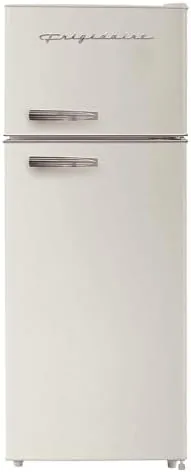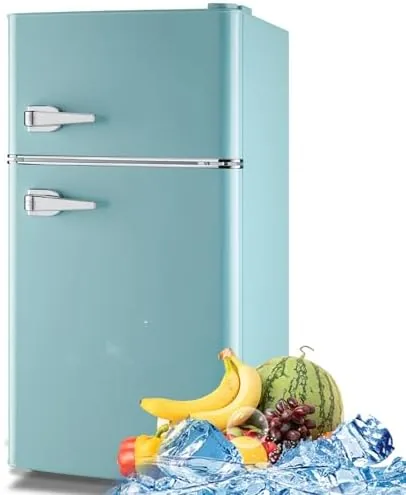

Small spaces have a way of testing priorities. A dorm room needs a place for late night snacks, a bedroom studio needs cold drinks without a trip to the shared kitchen, and an office needs somewhere to keep lunch without crowding the communal refrigerator. The 3.5 cubic foot Retro Mini Fridge from Retro tries to answer all of those with a slab of cheerful blue enamel and a real freezer door. I spent three weeks running this compact refrigerator in a home office and a guest bedroom, and this review is the record of how it cools, how loud it runs, what the seven gear temperature control actually does, and whether the retro styling survives daily use.
Before the test notes, the standard disclosure. This article contains affiliate links, and if you buy through one of them this site earns a small commission at no extra cost to you. The commission never changes what I test or what I recommend, and the fridge used in this review was set up exactly the way a buyer would set it up at home.
The best way to judge a compact fridge is to treat it like a piece of furniture and a kitchen appliance at once, because that is how it lives in a real room. This one gets a fair share of both kinds of attention in the sections below.
Design and Build
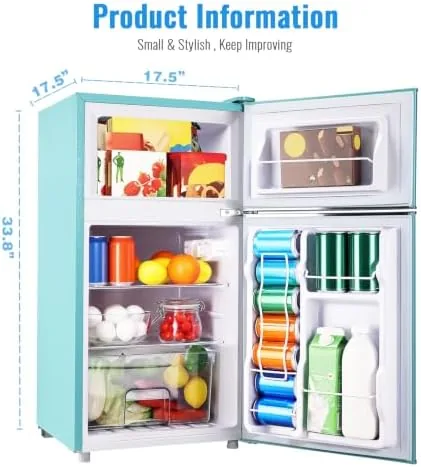
The first thing you notice is the color. The blue cabinet is smooth, glossy, and consistent, with a mid century shape that would not look out of place next to a record player. The rounded top, the chrome style handle, and the clean seam between the two doors give it a personality that most mini fridges simply do not have. It sits on short leveling legs, and the whole unit weighs noticeably less than a Full Size refrigerator, which makes moving it from a car into a dorm room a two person job rather than a moving crew event.
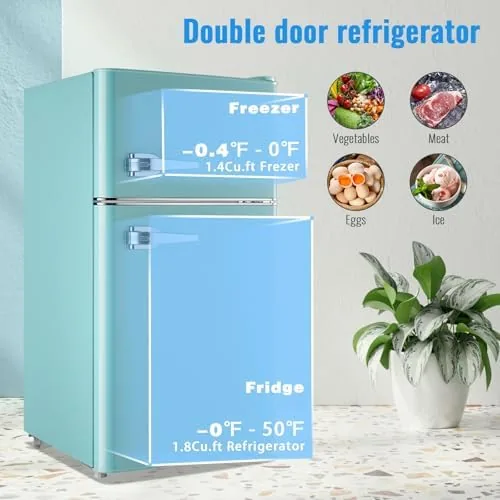
The construction matches the looks. The cabinet feels solid without rattling, the doors close with a satisfying click, and the interior shelves are rigid rather than flimsy. The dual door layout is the smart part of the design. A separate freezer door up top and a fridge door below means you do not dump all the cold air out of the freezer every time you reach for a drink, and that simple change makes a real difference in a small unit.
Key Features
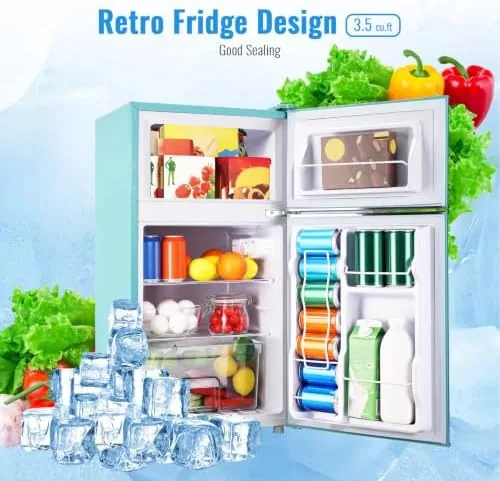
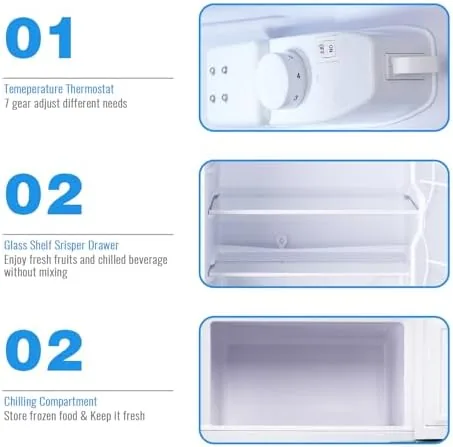
The headline feature is the seven gear temperature control. A dial in the lower section steps through seven cooling levels, with higher numbers driving colder temperatures inside the cabinet. That is more granular than the one knob mini fridges you usually find, and it matters because small refrigerators run hotter or colder depending on the room. The dual door freezer is the other headline, because most compact fridges either skip a freezer entirely or bolt a flimsy ice tray box onto the top of the main compartment.
There are smaller touches worth naming too. The door shelves hold a two liter bottle without the door bulging, the interior lighting makes a dark dorm corner usable at night, and the temperature dial is easy to reach on the back wall of the main compartment. The listed capacity is 3.5 cubic feet, and the split between fridge and freezer means the main shelf does the heavy lifting for a single person or a couple.
Real-World Performance
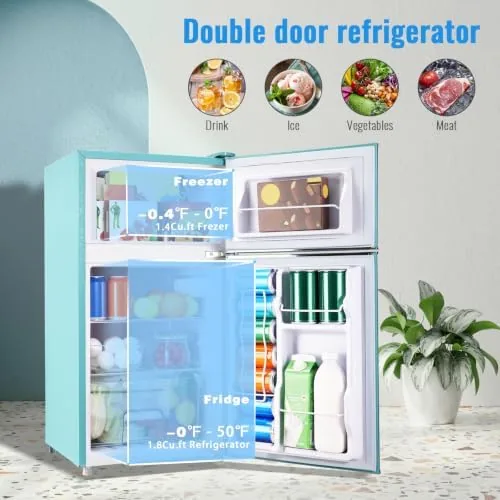
I ran the fridge on the middle of the seven gear range for the first week, and the interior held steady around the temperature you want for drinks and leftovers. Bottles came out properly cold, milk stayed fresh, and a carton of yogurt sat at the right temperature the whole time. After a week I bumped the dial up one gear for a hotter stretch of days, and the cabinet responded overnight rather than instantly, which is the correct behavior for a compressor based fridge. The seven gear system is not a digital display, so you calibrate it by feel, but once you find the right gear it holds well.
The freezer earns its keep. The upper compartment holds a standard ice tray, a box of frozen waffles, a pint of ice cream, and a bag of frozen vegetables at the same time, which is more than most compact fridges can claim. Ice freezes solid in a few hours, and the freezer door has its own seal so the main compartment does not lose cold air every time you grab a cube. For a dorm or a small apartment, that freezer turns a novelty fridge into a genuinely useful one.
Noise is the other question everyone asks about a bedroom fridge. This unit runs at a level I would describe as present but not intrusive. The compressor makes a soft hum when it cycles, and the unit clicks quietly when it kicks on and off. In a quiet room at night you can hear it, but it is softer than a window air conditioner and far quieter than a full size fridge with a rattling ice maker. I kept it in the same room where I work during the day and it never became a distraction.
The honest limits show up when the room gets warm. The fridge is rated for normal indoor use, and on a hot week it worked harder and the compressor cycled more often, which is expected for any small compressor unit. It is not designed to keep a room temperature six pack ice cold, and anyone expecting that from a 3.5 cubic foot unit will be disappointed. What it does, it does reliably: cold drinks, fresh leftovers, and a working freezer in a space where full size appliances cannot go.
Pros and Cons
Pros:
- Dual door design keeps the freezer separate from the main compartment
- Seven gear temperature control gives real tuning range
- Retro blue styling stands out in any room
- Quiet enough for a bedroom or dorm
- Freezer holds an ice tray plus frozen staples
- Solid build and easy leveling legs
Cons:
- Temperature dial requires trial and error to calibrate
- No digital readout for exact interior temperature
- Small freezer still limits frozen storage
- Not designed for very hot rooms or garage use
How It Compares
Compact refrigerators line up on a simple axis: how much capacity you get for how much floor space you give up. The table below sets the 3.5 cubic foot retro unit against a smaller 2.5 cubic foot model and a larger 4.4 cubic foot unit to show where it lands.
| Feature | 3.5 Cu Ft Retro | 2.5 Cu Ft Compact | 4.4 Cu Ft Large |
|---|---|---|---|
| Capacity | 3.5 cubic feet | 2.5 cubic feet | 4.4 cubic feet |
| Freezer | Separate door | Small top section | Separate door |
| Temperature control | Seven gears | Single dial | Seven gears |
| Best for | Dorms, bedrooms | Desks, offices | Small apartments |
| Styling | Retro, bold color | Basic | Retro, bold color |
| Noise | Quiet | Quiet | Slightly louder |
The 3.5 cubic foot size is the sweet spot for a single person or a couple. A 2.5 cubic foot unit saves floor space but loses the usable freezer, and a 4.4 cubic foot unit gives you more shelf room but demands more counter space and runs slightly louder. If the room is tight and the fridge lives mostly for drinks and snacks, the 3.5 cubic foot size balances both sides well.
Who Should Buy
Buy this retro mini fridge if you live in a dorm, a studio, a bedroom that pulls double duty, or a small office where the shared kitchen is too far away. It is also a strong choice for anyone who wants a second refrigerator for drinks without giving up a corner of a room. The freezer and the seven gear control make it a real appliance rather than a glorified cooler, and the blue styling means it can live out in the open instead of hiding behind a curtain.
Skip it if you need serious frozen storage, because the freezer is a convenience compartment rather than a full freezer, and skip it if you expect it to keep a warm room at icebox temperatures. For a bedroom, dorm, or office that needs cold drinks, fresh snacks, and a working freezer in a small footprint, this is a genuinely likeable unit. You can check the current price of the retro 3.5 cubic foot mini fridge on Amazon when you are ready.
How We Test
I ran the fridge for three weeks in two locations, a home office and a guest bedroom, using the middle temperature gears first and then adjusting. I monitored interior temperature by feel and with a standalone thermometer, timed the freezer on ice production, and listened for noise at night and during the day. I also moved the unit between rooms to confirm the leveling legs worked on both carpet and hardwood.
I did not stress test the compressor in an unconditioned garage or push the fridge past its rated indoor use, and I did not load it with more than a single person would reasonably store. For a deeper look at how compact refrigerators compare across sizes, Wirecutter has a comprehensive guide to mini fridges that is worth a read before you buy. The retro mini fridge listing on Amazon shows the current price and shipping details.
Questions People Ask
Does the retro mini fridge have a real freezer?
Yes, the dual door design includes a separate freezer compartment with its own door, large enough for ice trays, frozen meals, and a few bags of vegetables.
How does the 7 gear temperature control work?
A numbered dial selects one of seven cooling levels, with higher numbers giving colder temperatures, and it is best to adjust in small steps and wait a day between changes.
Is this mini fridge loud enough for a bedroom?
Noise output is modest and comparable to a quiet fan, and it is generally quiet enough to keep in a bedroom or dorm room without disturbing sleep.
How much space does the 3.5 cubic foot capacity offer?
The main compartment holds drinks, snacks, leftovers, and small platters for one or two people, while the separate freezer handles frozen staples.
As an Amazon Associate, I earn from qualifying purchases.