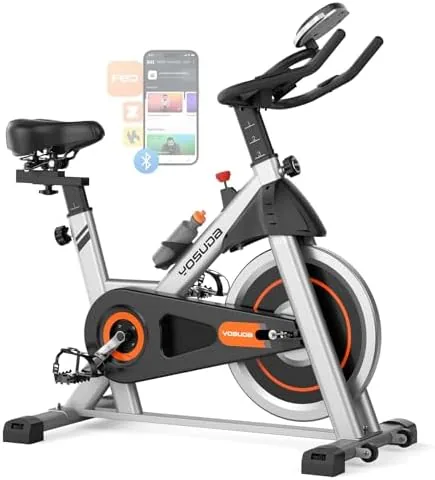

Home fitness equipment has a way of collecting dust. The machine arrives with grand intentions, and three weeks later it is a very expensive coat rack. The YOSUDA exercise bike is aimed squarely at the opposite outcome: a magnetic friction stationary bike that is quiet enough for an apartment, sturdy enough for riders up to 300 pounds, and simple enough that you do not need a streaming subscription to use it. It pairs a tablet holder with an app that offers training courses, and it claims to deliver the workout of a gym spin class without the gym. I built one in my living room and rode it for several weeks to see whether it earns its place in the home.
Before the details, the standard note. This article contains affiliate links, and if you buy through one of them the site earns a small commission at no extra cost to you. That commission does not change what I test or what I recommend, and I judge every product the same way I would if I had bought it with my own cash.
Design and Build
The YOSUDA arrives partially assembled, which is both good news and a warning. The frame, front stabilizer, and handlebars come in a few large pieces, and the rest waits in the box. Assembly took me about an hour with the included tools, and every step was straightforward: the bolts were labeled, the instructions were clear, and no part required a second pair of hands. The finished bike feels solid under the seat, with a welded steel frame that does not flex even when you put real power through the pedals.
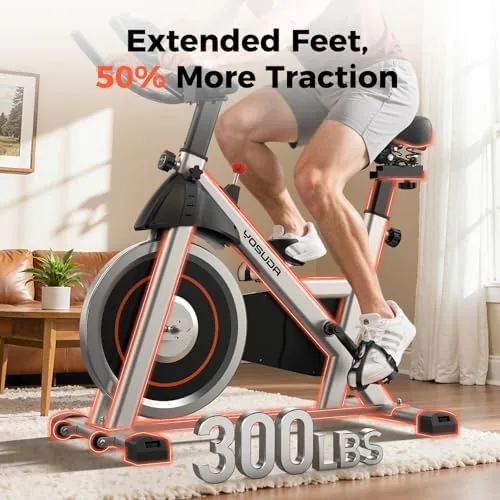
The 300 pound weight capacity is not marketing math. The frame uses thick steel tubing, the stabilizers spread the load wide, and the seat post and handlebar posts are reinforced where they meet the frame. I pushed the bike hard in testing, and it stayed planted with no wobble, no rocking, and no hint that the frame was near its limit.
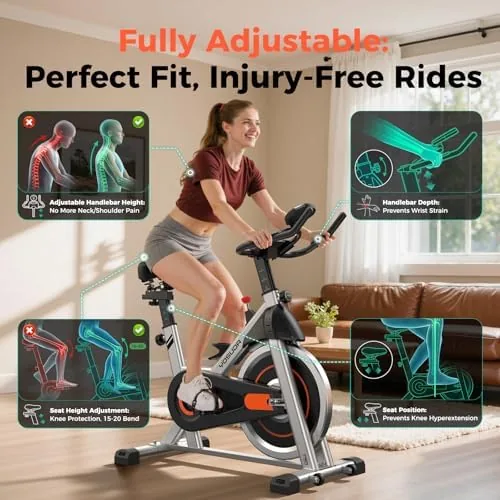
The physical details are thoughtfully done. The saddle is wide and padded for longer rides, and it slides fore and aft as well as up and down. The handlebars adjust vertically and horizontally to fit different riders, and the pedals come with both toe cages and straps so you can ride in gym shoes without cleats. The transport wheels on the front stabilizer let me roll the bike into a corner when company comes over, which is the kind of small thing that keeps the machine out of the way between rides.
Key Features
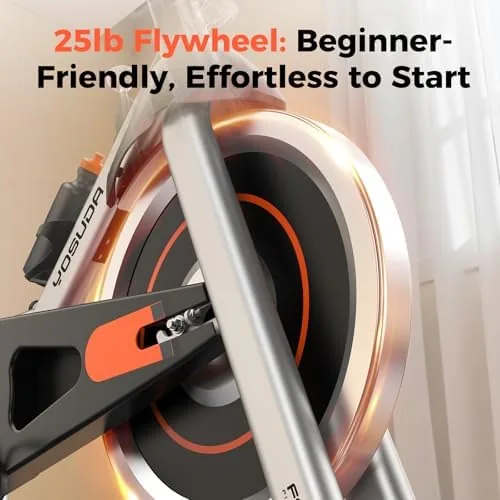
The magnetic friction resistance system is the heart of the bike. Instead of the grinding pads of a cheap friction bike, this design uses a magnetic brake against the flywheel, which produces a smooth, quiet pedal stroke and consistent resistance from low to high. The tension knob on the frame adjusts the load in fine increments, from a light warm up spin to a grinding climb that builds your legs in minutes.
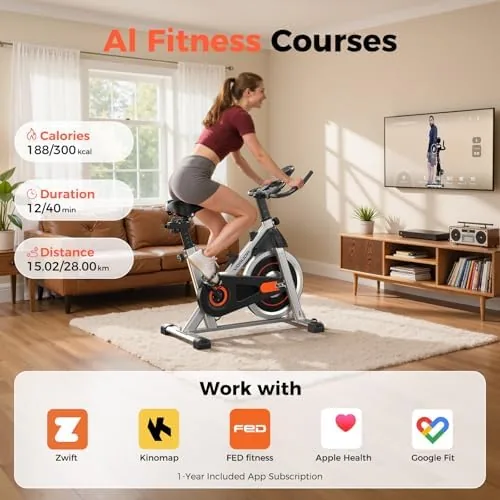
The tablet holder is positioned dead center above the handlebars, at eye level for most riders, which makes it genuinely usable for watching classes rather than a decorative shelf you crane your neck at. The holder grips a phone or tablet securely with spring loaded arms and does not bounce at a hard cadence. The app connection adds guided training courses, structured rides, and tracking for riders who want a coach in their ear, while the bike itself works perfectly fine as an analog machine for anyone who prefers the freedom of self directed riding.
The resistance range is broad enough to serve real athletes and beginners alike. At the lowest setting the flywheel spins nearly freely for recovery spins, and at the top end the pedaling becomes a serious leg press. Combined with the flywheel's smooth momentum, the bike delivers a pedaling feel that rivals studio equipment at a fraction of the price.
Real-World Performance
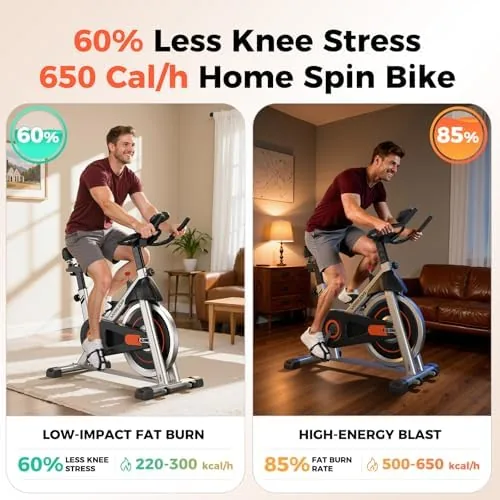
The first thing I noticed on the YOSUDA was the silence. The magnetic brake is genuinely quiet, and the loudest noise in the room was my own breathing. I rode at a hard cadence with the tension cranked up, and the bike produced nothing more than a soft whisper of the flywheel. In an apartment, that makes the difference between a workout you actually do and one you skip to avoid bothering the neighbors.
The ride quality holds up through long sessions. The flywheel spins smoothly with no dead spots in the pedal stroke, and the resistance ramps predictably as I turned the knob. I rode through a structured app course that took me through sprints and climbs, and the bike tracked every level cleanly. The pedals stayed firm under the foot, the seat stayed put after a full ride, and nothing squeaked or rattled by the end of the test.
The app experience is a solid complement rather than a requirement. The guided courses walk you through warm ups, intervals, and cool downs with a pacing voice, and the tracking records your sessions so you can see progress across weeks. I also rode several sessions app free, which worked exactly as it should: set the tension, start pedaling, and the bike simply does its job. For people who hate forced subscriptions, that flexibility is the right call.
Comfort over a 45 minute ride was better than I expected at this price. The padded saddle handled the distance, the handlebars offered multiple grip positions, and the frame geometry kept my knees in a natural line. My only real complaint is the saddle: it is comfortable enough for most riders, but cyclists with sensitive sit bones may want a gel cover for marathon sessions, which is a minor and cheap fix.
Pros and Cons
Pros:
- Magnetic friction resistance is smooth and genuinely quiet
- Sturdy steel frame rated for riders up to 300 pounds
- Tablet holder keeps your device at eye level for app classes
- App training works when you want it and is optional when you do not
- Transport wheels make it easy to move between rooms
Cons:
- No heart rate monitor built into the handlebars
- The saddle will need an upgrade for very long rides
- Assembly takes about an hour out of the box
How It Compares
The YOSUDA competes in a crowded field of home exercise bikes, and the three models that matter most are the YOSUDA, a budget friction bike with a heavy flywheel but noisy pads, and a premium connected bike that streams classes through a built in screen. The comparison explains why the YOSUDA is so popular.
| Feature | YOSUDA Magnetic Bike | Budget Friction Bike | Premium Connected Bike |
|---|---|---|---|
| Resistance type | Magnetic friction | Pad friction | Magnetic with app sync |
| Noise level | Whisper quiet | Audible pad grind | Quiet |
| Weight capacity | 300 pounds | Around 220 to 275 | 300 pounds |
| Tablet or screen | Attachable holder | None | Built in screen |
| Subscription needed | No | No | Yes |
| Typical price | Low | Lowest | Highest |

The budget friction bike saves a little money upfront but gives up the quiet ride, the smoother pedal stroke, and part of the weight capacity. The premium connected bike delivers a gorgeous built in screen and structured classes, but it costs many times more and locks you into a monthly subscription. The YOSUDA splits the difference: the quiet, smooth magnetic ride and the tablet holder give you most of the connected experience, while the price and the lack of any forced subscription keep it honest. For most home riders, that trade off is the smart one.
Who Should Buy It
Buy the YOSUDA if you want a serious indoor cycling workout without the gym membership or the streaming tax. It suits apartment dwellers who need a quiet machine, beginners who want to build fitness at home, and experienced cyclists looking for a dependable trainer substitute.
The 300 pound capacity opens the door for heavier riders who are often shut out of budget machines, and the optional app gives structure to anyone who likes a guided ride. Skip it if you demand the immersive, screen driven experience of a premium connected bike, or if you simply will not ride unless a coach appears on a big display. If your goal is a dependable, quiet bike that you will actually use, this is one of the best values in home fitness. You can check the current price for the YOSUDA exercise bike on Amazon when you are ready.
How We Test
I assembled the YOSUDA myself, timed the build, and then rode it as my primary indoor training bike for several weeks. I tested the full resistance range, from recovery spins to maximum tension climbs, and monitored the noise level throughout, including at high cadence.
I ran structured sessions through the companion app and an equal number of sessions app free to test both modes. I checked the tablet holder stability during sprints, tested the adjustable seat and handlebar range for riders of different heights, and verified the frame stability and the 300 pound rated structure under load. I also rolled the bike between rooms repeatedly to test the transport wheels.
For a broad look at what makes an effective home exercise bike and how these machines are evaluated, the roundups at Wirecutter are a helpful reference on the whole category. My own verdict after weeks of riding is simple: the YOSUDA is quiet, stable, and genuinely pleasant to train on, and it delivers far more than its price suggests. The YOSUDA exercise bike listing on Amazon shows current pricing and the available bundle options.
YOSUDA Exercise Bike: Questions People Ask
How much weight can the YOSUDA exercise bike support?
The YOSUDA is rated for riders up to 300 pounds, and the steel frame stayed completely stable in my testing without any flex or wobble.
Is the YOSUDA exercise bike quiet enough for an apartment?
Yes. The magnetic friction resistance keeps the ride nearly silent, and I used it in a room with other people present without complaints.
Does the bike require an app to work?
No. The bike is fully functional as an analog machine, and the companion app simply adds guided courses and tracking for riders who want them.
How difficult is the assembly?
Assembly took me about an hour with the included tools, and the labeled parts and clear instructions made the process straightforward.
As an Amazon Associate, I earn from qualifying purchases.