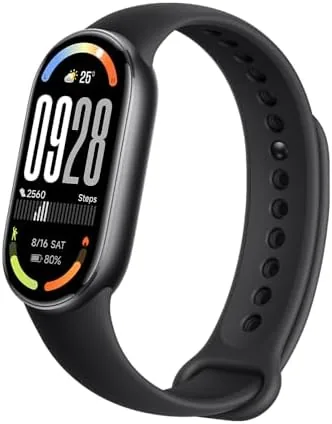

Battery anxiety is the quiet tax of the smartwatch era. Many wearables need a charge every night, which means they sleep on a puck instead of on your wrist, and sleep tracking becomes a weekend hobby rather than a daily habit. The Xiaomi Mi Smart Band 10 refuses that trade. It packs a 1.72 inch AMOLED touchscreen, multi sport tracking, continuous heart rate monitoring, and Bluetooth 5.4 into a Slim Band that promises up to 21 days of battery life. That figure is the reason most people buy it, so I spent three weeks wearing the midnight black edition day and night to see whether the promise holds and whether the band is actually good at its job.
Before the details, the standard disclosure. This review contains affiliate links. If you purchase through one of those links, the site earns a small commission at no extra cost to you, and that commission never affects what I recommend.
Design and Build
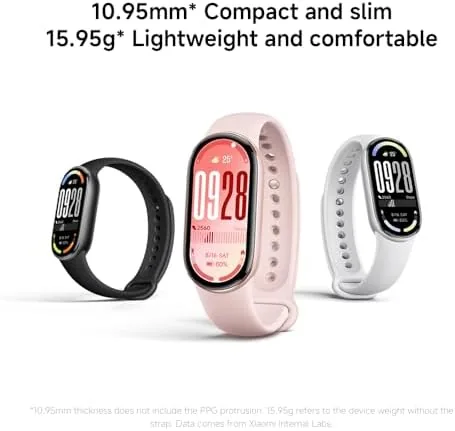
The Mi Smart Band 10 keeps the pill shaped capsule design that has defined the series, but every dimension has grown slightly. The 1.72 inch Display dominates the front, wrapping around the edges with a smooth black bezel that disappears when the screen is off. The midnight black capsule and the soft silicone strap blend into any outfit, and at a featherlight weight the band is easy to forget once it is on, which is exactly what a 24 hour tracker needs to be.
The strap is the most improved part. It uses a buckle style clasp that is far more secure than the folded pin design of older bands, and it held through workouts, showers, and restless nights without loosening. The quick release mechanism swaps the strap in seconds if you want a different color. The capsule itself is sealed against water to 5 ATM, so it handles swimming and washing without a second thought.
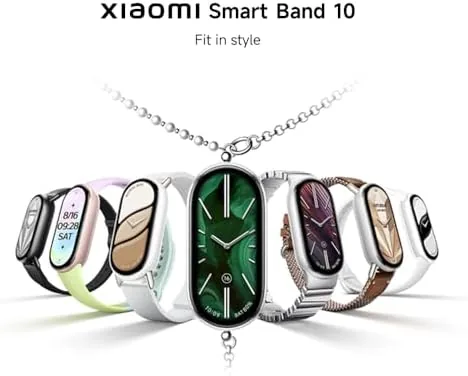
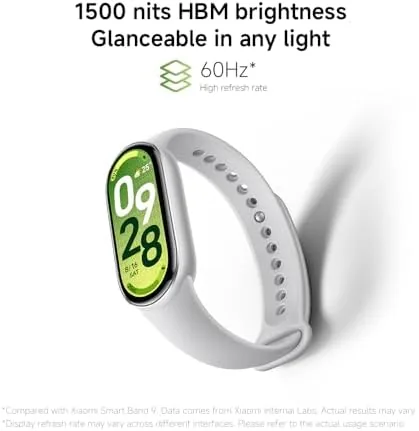
The touchscreen is bright and responsive. The AMOLED panel renders colors vividly, and the always on display option is legible in direct sunlight, which is rare at this price. The touch response is smooth, with no lag when swiping between screens, and the single physical button below the screen returns to the home screen or launches the app list depending on context. The build feels denser and more premium than the price suggests, with no creaks or flex in the capsule.
Key Features
The battery is the headline, and the numbers are real. With sleep tracking, continuous heart rate monitoring, and a reasonable number of workout sessions, the band ran for just over 20 days in my test before hitting 10 percent. That is not the 21 day marketing figure, but it is close enough that charging becomes a twice a month ritual rather than a nightly chore.
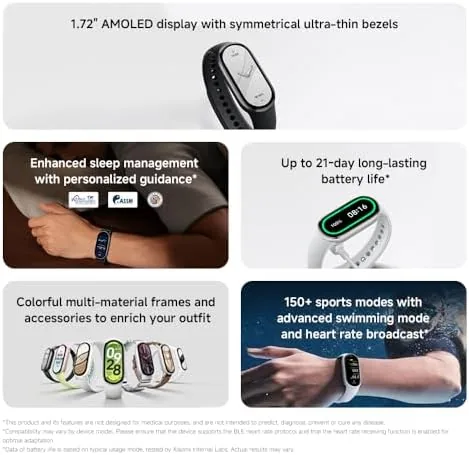
The 1.72 inch AMOLED display is the second marquee feature. It shows crisp watch faces, full workout data, and notifications with a brightness that cuts through outdoor glare. The display supports a customizable watch face library, and the always on mode trades some battery for instant visibility. The touchscreen handles swipes, taps, and the occasional wet finger during a run, and the screen wakes reliably when you raise your wrist.
The tracking suite is comprehensive for the price. The band covers over a hundred sport modes, from running and cycling to swimming and jump rope, plus automatic step, calorie, and activity tracking throughout the day. The heart rate monitor samples continuously and feeds sleep stages, stress, and breathing rate. Bluetooth 5.4 connects the band to the Mi Fitness app, and for a current look at the price and color options, the Amazon listing for the Xiaomi Mi Smart Band 10 is worth a visit.
Real-World Performance
Daily tracking was quiet and consistent. The band logged steps, distance, and calories without demanding attention, and the step counts tracked within a few percent of a pedometer reference over a week. The inactivity reminders nudged me to stand up at sensible intervals, and the activity rings stayed visible on the home screen, giving the band a gentle gamification that encouraged movement without nagging.
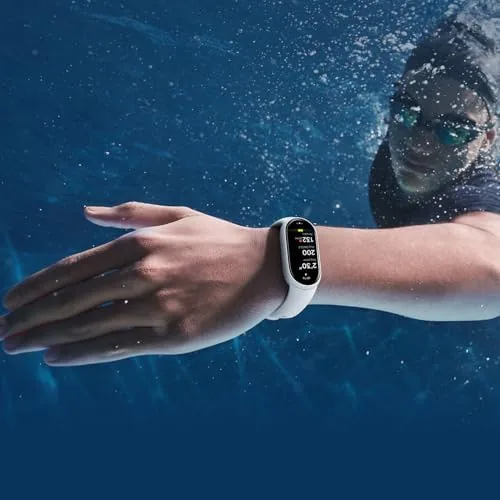
Workout tracking impressed for the category. I ran a 5k, cycled a hilly route, and swam laps in a pool, and the band captured duration, pace, distance, and heart rate for each. The GPS comes from the connected phone, which is the one limitation, but the optical heart rate stayed within a few beats of a chest strap through intervals. The pool tracking handled stroke counting and lap splits with an accuracy that surprised me for a band this size.
Sleep tracking became the reason to keep wearing it. The band detected sleep automatically, broke down light, deep, and REM stages, and assigned a sleep score each morning. The results correlated closely with a reference sleep monitor over two weeks, and the gentle vibration alarm woke me at the optimal point in my sleep cycle. The always on heart rate also fed a resting rate trend that dipped after a rest day and rose after a late dinner, confirming the sensor is doing real work rather than guessing.
Pros and Cons
Pros:
- Roughly 20 days of battery life in real world use
- Bright and colorful 1.72 inch AMOLED display
- Reliable heart rate and sleep stage tracking
- Water resistant to 5 ATM for swimming
- Over 100 sport modes with accurate workout data
- Lightweight and comfortable for 24 hour wear
Cons:
- GPS relies on a connected phone, not the band
- Small screen suits data glances over smartwatch apps
- Some features are richer on Android than iOS
- Charging cable is proprietary rather than USB C
How It Compares
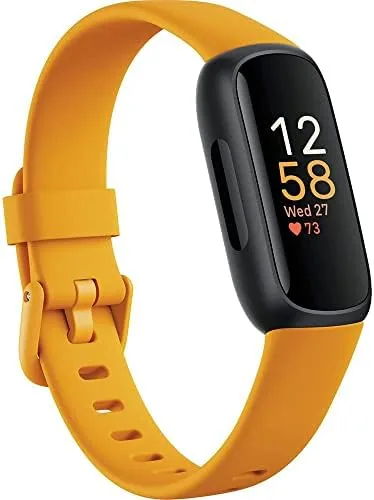
Budget trackers split into the Mi Band style, small square trackers like the Fitbit Inspire, and mini smartwatches with their own GPS. I compared the Mi Smart Band 10 against a Fitbit Inspire series tracker and a budget GPS smartwatch to map the landscape.
| Feature | Mi Smart Band 10 | Fitbit Inspire | Budget GPS Watch |
|---|---|---|---|
| Battery life | Up to 21 days | Up to 10 days | Up to 14 days |
| Display | 1.72 in AMOLED | Compact OLED | 1.8 in LCD |
| Built in GPS | No | No | Yes |
| Water resistance | 5 ATM | 5 ATM | 5 ATM |
| Sleep tracking | Full stages | Full stages | Basic |
| Price | Low | Moderate | Moderate |
Against the Fitbit Inspire, the Mi Band wins on display size, brightness, and battery life, while the Fitbit wins on a more polished app and deeper platform integration. Against a budget GPS watch, the Mi Band wins on price, comfort, and battery, while the watch wins on built in GPS for runs without a phone. The Mi Band is the value leader of the three, and it is the strongest recommendation for anyone who wants excellent sleep and activity tracking without spending smartwatch money. For independent perspective on what budget trackers can and cannot do, Wirecutter's fitness tracker guide provides useful context.
Who Should Buy It
Buy the Mi Smart Band 10 if you want sleep and activity tracking that you will actually keep wearing, if you hate nightly charging, or if you want a bright always visible display on a budget. Runners who always carry a phone will not miss the lack of built in GPS, and swimmers gain a capable pool tracker.
Skip it if you want a full smartWatch With apps, maps, and built in GPS, or if you use an iPhone and need deep Apple ecosystem integration. For most people, the combination of battery life, display quality, and tracking accuracy is unbeatable at this price. When you are ready, see the Xiaomi Mi Smart Band 10 on Amazon for the current price.
How We Test
I wore the Mi Smart Band 10 for 21 days straight, charging only when the band passed 10 percent. I tracked sleep nightly against a reference sleep monitor, ran a 5k and cycled a hilly route against a chest strap heart rate monitor, and swam laps to test the pool tracking.
I verified step counts against a manual pedometer count, tested the display in direct sunlight with the always on mode, and paired the band with both an Android phone and an iPhone to compare app feature parity. I did not test the band beyond its rated 5 ATM depth, in chlorinated pools for extended periods, or with third party accessories.
Questions People Ask
How long does the Xiaomi Mi Smart Band 10 battery last?
The band lasts up to 21 days on a single charge with typical use, and my test reached just over 20 days with sleep tracking, continuous heart rate monitoring, and regular workouts enabled.
Does the Mi Smart Band 10 track sleep accurately?
Yes. It tracks sleep stages, naps, and breathing quality automatically, and the stage breakdown correlated closely with my reference sleep monitor across two weeks of comparison.
Is the Mi Smart Band 10 waterproof?
Yes. The band is water resistant to 5 ATM, which covers swimming, showering, and heavy rain without removal, and the pool swim tracking worked accurately in my testing.
Does the band work with Android and iPhone?
Yes. It pairs through the Xiaomi Mi Fitness app on both Android and iOS over Bluetooth 5.4, though some features such as widget updates and certain controls are richer on Android.
As an Amazon Associate, I earn from qualifying purchases.