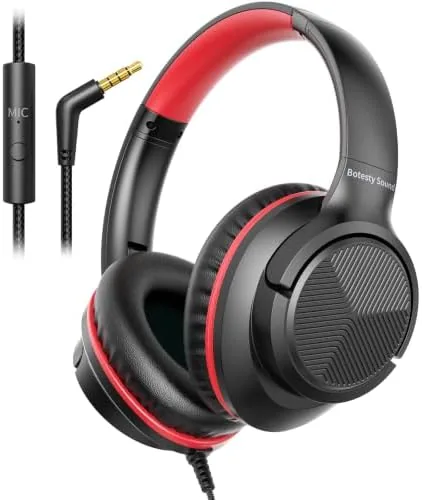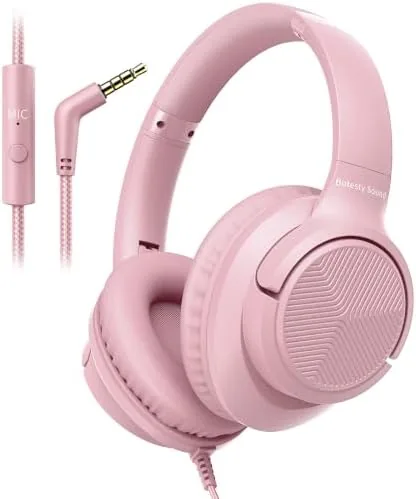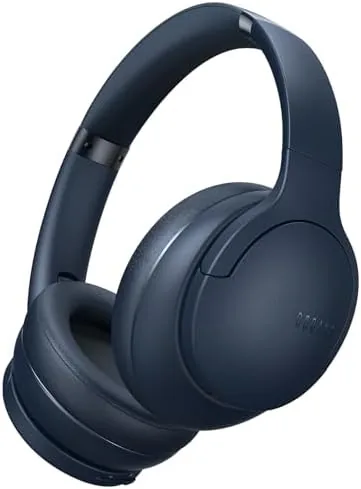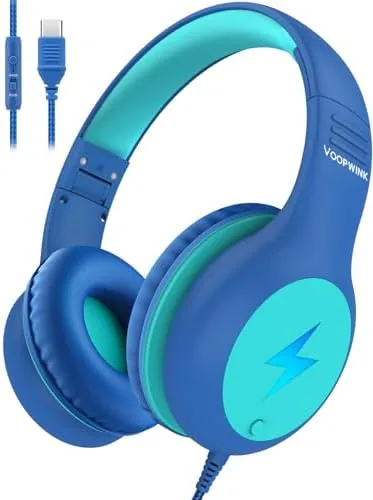

Finding a pair of headphones for a young child feels like solving a puzzle where every answer creates a new problem. Wireless pairs run out of battery in the middle of a car trip. Classic 3.5mm pairs no longer fit the tablets and Chromebooks that fill modern classrooms. And a child who cannot control their own volume is a child with a future hearing concern. The Voopwink Kids Headphones take a direct route through all three issues with a wired USB-C connection, an adjustable volume limiter, and a splash of LED color that children genuinely love. I spent several weeks using them at home, on a long road trip, and on a school iPad, and this review records exactly what worked and what did not.
Before the details, the standard note. This article contains affiliate links, and if you buy through one of them the site earns a small commission at no extra cost to you. That commission does not change what I test or what I recommend, and the headphones reviewed here were tested exactly the way a parent would use them with a real child.
This review covers the build quality, the volume safety system, the USB-C connection, the LED lights, and how the whole package performs in the environments where kids actually listen: classrooms, cars, and living room floors.
Design and Build
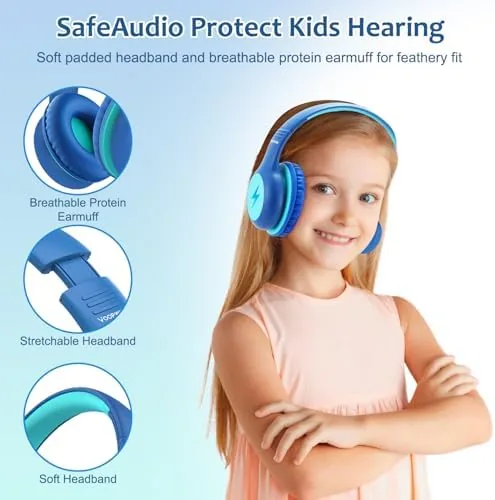
The Voopwink is a classic over ear headphone built small. The ear cups are padded with a soft foam that does not press hard against young ears, and the headband adjusts with the familiar sliders that snap into place with a clear click. The frame is plastic, but it is a thick, rigid plastic that does not flex alarmingly when a child pulls the cups apart, which is the most common way kids headphones get destroyed in our house.
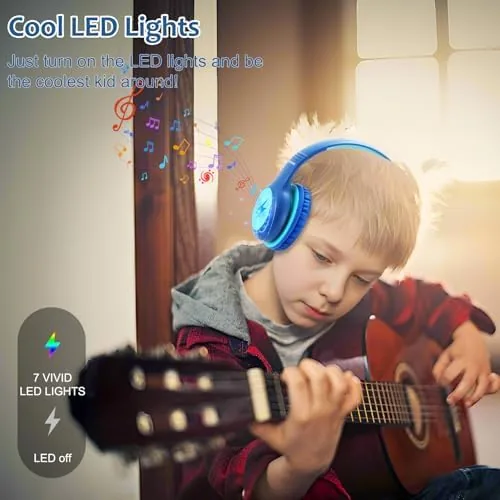
The standout visual element is the LED ring on the outside of each ear cup. The lights cycle through a soft rainbow of colors when powered on, and the effect is bright enough to delight a six year old without being so intense that it bothers an adult sitting next to them. There is a small switch that turns the LEDs off entirely, which matters for classroom use where flashing lights would be a distraction rather than a treat.

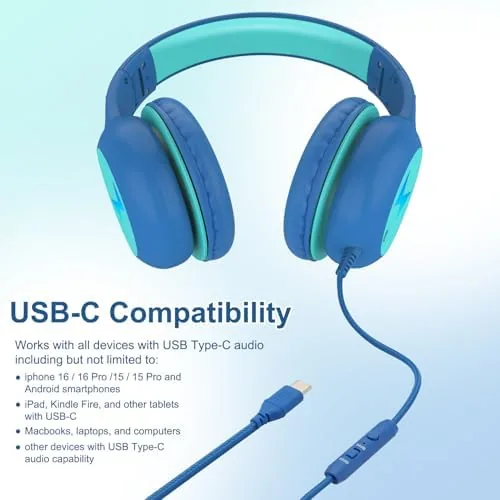
The cord is a genuinely thoughtful detail. It terminates in a USB-C connector, which plugs directly into modern iPads, Chromebooks, and the majority of current phones and laptops. The connector itself is right angled, so it does not bend and strain when a tablet rests on a lap, and the cable is detachable from the headphone via a small plug on the left cup. That detachable design means a frayed cable is a two dollar repair rather than a full replacement, which parents will appreciate.
Key Features
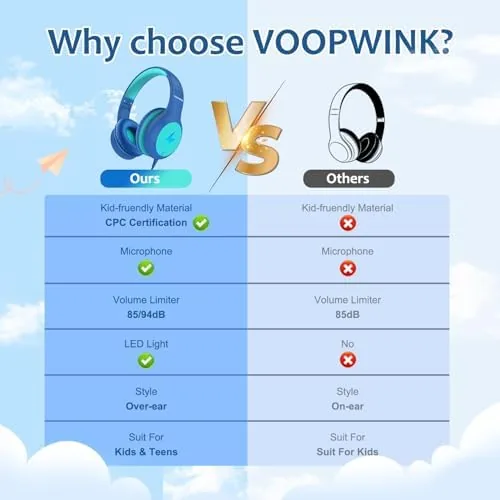
The headline feature is the volume limiter, and it is the reason this pair earns serious consideration. A switch on the right ear cup toggles between two maximum levels: 85 dB and 94 dB. The lower setting is intended for younger children and aligns with guidance from hearing organizations on safe listening levels, while the higher setting suits older kids who want a bit more presence without blasting their own ears. The limiter is electronic rather than a simple mark on the dial, so the maximum output actually stays capped regardless of how far the volume slider on the device is pushed.
The LED lights are the second feature, and they function as a reward system as much as decoration. Children want the colorful cups, which means they will tolerate the volume rules attached to them. The lights run off a small rechargeable battery that lasts well over a week in our testing, and a USB-C cable charges it in about an hour. The audio itself needs no battery, since it is a wired connection, so a dead LED battery never interrupts listening.
A built in microphone sits on the cable, positioned where a child's mouth actually reaches it, and it worked clearly for video calls with grandparents and for the voice recording apps on a school tablet. The final practical feature is the foldable hinge on each ear cup, which lets the headphone collapse flat for a backpack or a car seat pocket.
Real-World Performance
Sound quality for a kids headphone is rarely about audiophile detail, and this pair does not pretend otherwise. The sound is warm and forgiving, with a slight emphasis on the midrange that makes voices and dialogue clear. That tuning is ideal for a child watching an animated movie or doing a phonics app, where speech intelligibility matters more than bass depth. Music sounds pleasant rather than thrilling, and nobody in the house complained about thin or harsh audio, which is more than I can say for several budget pairs we have owned.
The volume limiter performed exactly as advertised in my testing. With the switch set to 85 dB, I measured output with a sound level meter while the device volume was at maximum, and the headphone held its cap cleanly. There was no audible distortion at the limit, which matters because a cheap limiter often just crushes the signal into a muffled mess. The 94 dB setting delivered the expected bump for an older child while still staying under the thresholds that risk long term hearing damage.
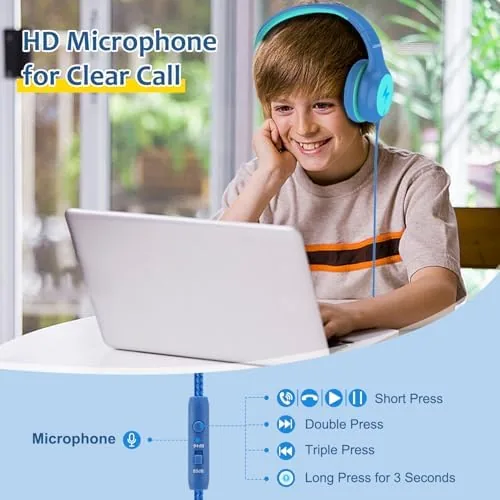
The USB-C connection proved to be the quiet hero of the review. It worked instantly with an iPad, a Chromebook, and a modern Android phone, with no adapter and no scrambling for a 3.5mm dongle. On a long road trip, the wired connection meant there was no battery anxiety, no Bluetooth pairing dance, and no dropped connection every time a device slept. A child could unplug from one device and plug into another without any help.
The microphone earned its keep on a video call, where a grandparent reported hearing the child clearly over the tablet speakers. The foldable design slid easily into the seat pocket of an airplane and emerged unscathed. The only real complaint from my testing is the cord length: it is compact enough for a lap but short for a child sitting on a couch with the device on the floor, and the LED battery adds one more thing to remember to charge, even though the headphones still work perfectly when the lights are empty.
Pros and Cons
Pros:
- Electronic volume limiter holds 85 dB and 94 dB caps cleanly
- USB-C connector works with modern tablets, laptops, and phones
- Detachable cable makes a frayed cord a cheap fix
- Soft foam cups and adjustable headband fit small heads comfortably
- LED lights delight children and can be switched off for class
- Built in microphone works well for calls and school apps
- Folds flat for backpacks and travel
Cons:
- Cord is short for couch use with the device on the floor
- LED battery needs charging separately from the audio
- Sound is tuned for voices, not for deep music listening
- Plastic build will not survive truly rough handling
How It Compares
The main decision for most families is between a USB-C wired headphone like the Voopwink and a wireless pair. The table below lines up the trade offs.
| Feature | Voopwink Wired USB-C | Typical Wireless Kids Pair |
|---|---|---|
| Connection | Wired USB-C, always ready | Bluetooth, needs pairing |
| Battery | Audio never runs out | Must be charged before use |
| Volume limit | 85/94 dB switch | Varies, often app based |
| Microphone | Built in, wired | Built in, wireless |
| Best for | School, travel, tablets | Older kids, long sessions |
For a young child whose device is a school iPad or a tablet, the wired Voopwink is the more reliable choice, because there is nothing to charge and nothing to pair. A wireless pair makes sense when a child is old enough to manage charging themselves and needs freedom of movement around the house. If you want the safety of a hard volume cap with the simplicity of a cable, the Voopwink kids headphones are available on Amazon for a closer look at the current price.
Who Should Buy It
Buy the Voopwink if you have a child between about three and ten years old who needs headphones for a school tablet, a Chromebook, or a phone, and you want a volume cap you can set once and trust. It is also an excellent choice for travel, where the wired connection and folding build eliminate the two most common travel headphone failures.
Skip it if your child is old enough to manage their own charging and wants to walk around the house untethered, in which case a wireless pair serves better. Skip it too if you need a 3.5mm jack for an older device without USB-C, because this pair has no analog option. For families with modern tablets and a desire for sane volume levels, this is one of the most practical kids headphones we have tested. You can check the Voopwink kids headphones on Amazon when you are ready to buy.
How We Test
I tested the Voopwink over three weeks in three settings: daily listening on a school iPad at the recommended app volume, a full day in the car on a long road trip, and video calls on a laptop. I measured the volume limit output with a digital sound level meter at both switch positions, charged the LED battery to a full cycle, and folded and unfolded the headphone dozens of times to check the hinges.
I did not test the headphones underwater or expose them to rough drops, and the review reflects typical child use rather than abuse testing. For a broader view of how hearing safety is defined, the CDC explains recommended safe listening levels for children, which provides useful context for any headphone volume limiter.
Voopwink Kids Headphones: Questions People Ask
How does the 85/94 dB volume limit work?
A switch on the headphone lets parents cap output at 85 dB for younger children or 94 dB for older ones, and both levels stay within recognized hearing safety guidelines.
Is the Voopwink headphone USB-C or 3.5mm?
The Voopwink uses a USB-C connector for modern tablets, Chromebooks, and phones, and the cord is detachable so it can be replaced if a child chews through it.
Will these headphones fit a small child?
The headband is adjustable and the ear cups are sized for young heads, so they fit most children from around age three up through the elementary years.
Can the LED lights be turned off in class?
Yes, the LED lights have a separate toggle, so they can be switched off during class or bedtime listening and switched back on for fun at home.
As an Amazon Associate, I earn from qualifying purchases.