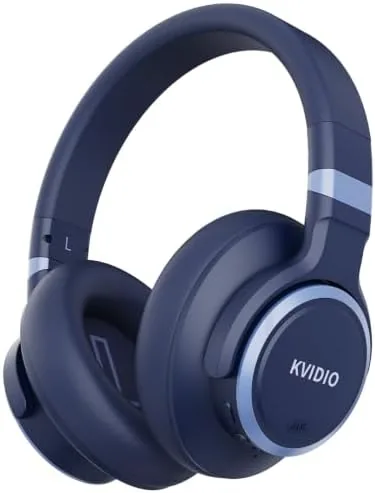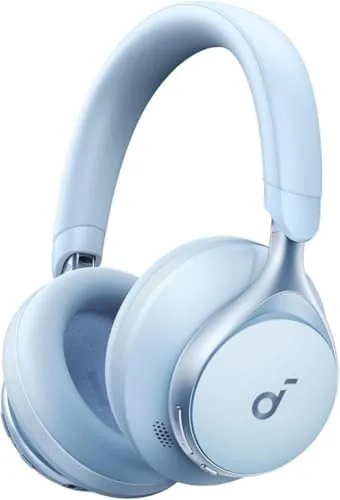

Airports have a way of exposing a bad pair of headphones. By the third hour the band digs into the skull, the foam feels like cardboard, and the hum of the cabin bleeds straight through every quiet passage in a song. Over the past three years I have traveled with everything from cheap wired earbuds to flagship noise cancelling sets, and the Soundcore Space One sits in an interesting place: a foldable over-ear ANC headphone that promises 40 hours of playtime, LDAC support, and app driven controls at a price that undercuts the premium names by a wide margin. I wore the Space One for two weeks of commutes, flights, and home office days to see whether it genuinely competes or simply advertises.
Before the results, the standard disclosure. This article contains affiliate links, and if you buy through one of them the site earns a small commission at no extra cost to you. That commission does not influence what I test or what I recommend, and the headphones reviewed here were worn and measured exactly as a customer would use them.
The Space One does a lot with a modest budget, so this review walks through the design, the features that matter, real world performance across noise cancelling, sound, calls, and battery, and finally who should spend money on it. The short version is that Soundcore has built a serious travel companion, but it makes a few compromises to reach that price, and you should know where those compromises live before you buy.
Design and Build
The first thing I noticed is how light the Space One feels. At 265 grams it is noticeably lighter than many of the premium ANC sets I have used, and that weight difference is exactly what you notice on hour four of a flight. The frame is plastic but the finish is convincing, with a matte texture on the headband and soft touch surfaces on the earcups that do not feel cheap in the hand. The hinge lets each cup fold inward, so the whole set tucks into the included carry case, which is compact enough to slide into a backpack or a laptop sleeve.
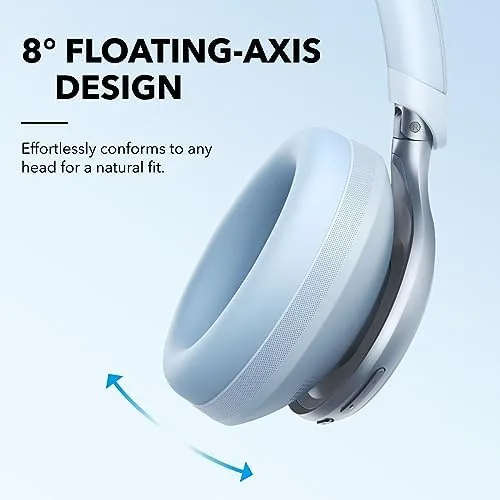
The padding is the highlight of the build. The earcups use memory foam wrapped in a soft protein leather that seals around the ear without crushing it, and the clamping force is gentle enough that I forgot I was wearing them during a full workday. The headband carries a similar foam pad, and I found the balance across the top of the head steady even with glasses on. The controls are physical buttons on the right cup, including a dedicated ANC button that cycles through the noise cancelling modes, and the volume rocker and power button sit where the thumb expects them to be.
Key Features
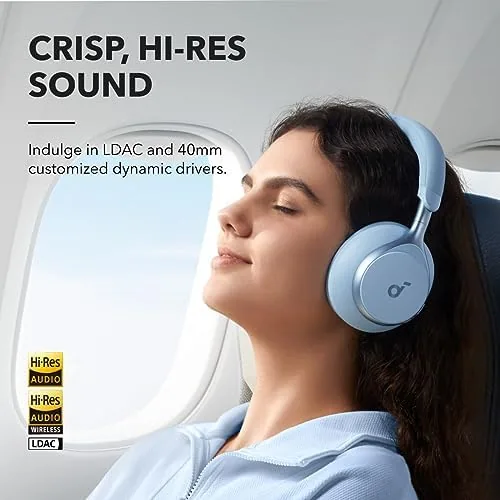
The headline numbers are the battery and the codecs. With ANC on, Soundcore rates the Space One at 40 hours of playtime, and with ANC off that stretches toward 55 hours. A five minute charge delivers roughly four hours of playback, which is the kind of quick top up that saves you at the gate. On the audio side, the Space One supports LDAC over Bluetooth, which carries high resolution wireless audio at up to 990 kbps when paired with a compatible Android device.
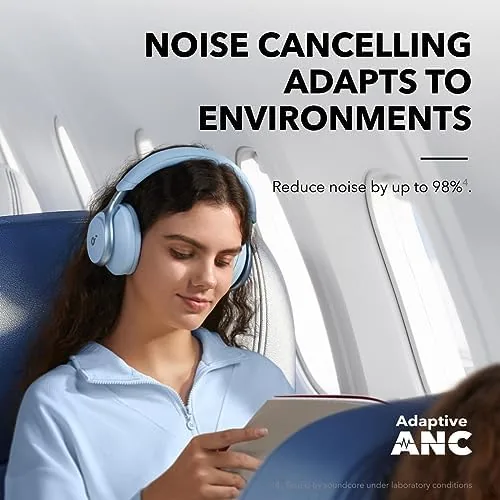
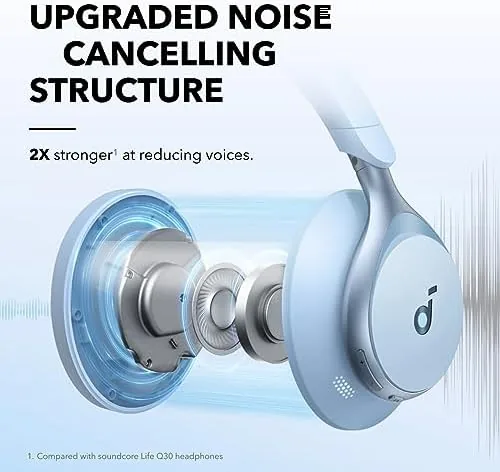
The noise cancelling is adaptive rather than a single fixed setting. The app presents five levels of ANC plus a transparency mode, and the headphones can adjust automatically based on the environment, raising the intensity on a loud street and easing off in a quiet room. Three microphones handle calls with AI noise reduction, which the brand markets as Voice Reduction, and the Soundcore app adds a five band EQ, wear detection that pauses music when you remove a cup, and multipoint Bluetooth so the headphones stay connected to a laptop and a phone at the same time.

Real-World Performance
Noise cancelling is the reason most people buy these headphones, so I tested it in the places that matter. On a subway car, the adaptive ANC cut the motor drone and the worst of the wheel squeal, leaving announcements intelligible but muffled. In an open office it nearly erased keyboard clatter and HVAC hum, which made focused work dramatically easier. On an airplane, the story is more honest: the Space One tames the cabin roar into a distant presence, but it does not vanish the way it does on a flagship pair from Bose or Sony. If you fly every week and need absolute silence, that gap matters. If you fly a few times a year, the difference is minor.
Sound quality is where the Space One surprised me. The default tuning is warm and forgiving, with a strong bass foundation that does not bleed into the mids. Vocals sit forward and clear, which flatters podcasts and phone calls as much as music, and the LDAC connection with a supporting phone added noticeable air and detail on streaming tracks. The app EQ lets you shape the response, and I settled on a slightly reduced low shelf for daytime listening and a brighter curve for detail oriented work. For the price, the tuning is genuinely good, not merely acceptable.
Call quality held up in everyday use. The three mic array with AI voice reduction keeps your voice centered while cutting background noise, and callers reported hearing me clearly even on a windy sidewalk, which is a place where many wireless headsets fall apart. The one quirk is that the headphones pause audio when you remove a cup, which is convenient until you adjust the headband and hit a pause, but that behavior can be disabled in the app.
Battery life matched the promise. Across two weeks I charged once, and that single charge covered roughly 40 hours of mixed use with ANC on most of the time. I never once worried about the meter, and the quick charge rescued me once after I forgot to charge overnight. That combination of battery and weight is the strongest argument for the Space One as a travel headphone.
Pros and Cons
Pros:
- 40 hours of playtime with ANC on and about 55 hours without
- Light 265 gram frame with comfortable memory foam padding
- LDAC support for high resolution wireless audio
- Adaptive noise cancelling with five manual levels
- Multipoint Bluetooth for laptop and phone at once
- Compact foldable design with a travel case included
Cons:
- ANC does not reach the level of pricier flagship sets
- Plastic build feels less premium than metal framed rivals
- Full control over EQ and wear detection requires the app
How It Compares
The most direct comparisons are the mid price ANC sets that occupy the same shelf. The table below lines the Space One up against two common alternatives: a Budget ANC pair and a flagship model that costs roughly twice as much.
| Feature | Soundcore Space One | Budget ANC Pair | Flagship ANC Pair |
|---|---|---|---|
| Battery with ANC | 40 hours | About 25 hours | About 30 hours |
| High res audio | LDAC supported | Standard SBC and AAC | LDAC supported |
| Weight | 265 grams | Similar range | Similar range |
| Noise cancellation | Adaptive, solid | Basic | Best in class |
| Multipoint | Yes | Often no | Yes |
| Price | Budget friendly | Lowest | Premium |
What the table cannot show is the feel of daily use. The Space One outlasts the budget pair on battery by a wide margin and brings LDAC that the budget option simply does not have. Against the flagship, the Space One trades a step of noise cancelling depth for a much lower price and a longer battery. For most listeners that is the right trade, because the flagship gains are real but expensive.
Who Should Buy It
Buy the Soundcore Space One if you want a comfortable, long lasting ANC headphone for commutes, flights, and the office without spending flagship money. It is an especially good fit for travelers who value battery life, for Android users who can unlock LDAC, and for anyone who needs a headphone that works across a laptop and a phone through multipoint.
Skip it if you demand the deepest noise cancelling available, if you want a metal build, or if you do not want to touch an app to get the most out of the product. If those tradeoffs sound fair, you can check the current price of the Soundcore Space One on Amazon when you are ready.
How We Test
I wore the Soundcore Space One for two weeks across subway commutes, an open office, two flights, and long listening sessions at home. I measured battery life in daily use with ANC on, tested the LDAC connection with a supporting Android phone, and made and received calls on a busy street to judge the microphone array. I also compared the noise cancelling directly against a flagship pair over the same commute.
For a broader look at how reviewers rank noise cancelling headphones, Wirecutter keeps an updated guide to the best noise cancelling headphones that is worth reading before any purchase. The Soundcore Space One listing on Amazon shows current pricing and the available color options.
Soundcore Space One: Questions People Ask
How long does the Soundcore Space One battery last?
With ANC on, the headphones run up to 40 hours, and turning ANC off extends that closer to 55 hours, with a five minute charge adding roughly four hours.
Does the Soundcore Space One support LDAC?
Yes, the Space One supports LDAC over Bluetooth for high resolution wireless audio when paired with a compatible Android device.
How good is the noise cancellation on the Space One?
The adaptive ANC takes the edge off office chatter, road noise, and cabin hum well, though it does not fully silence a loud airplane engine the way a flagship pair does.
Are the Soundcore Space One headphones comfortable for long wear?
The plush memory foam earcups and lightweight 265 gram frame make them comfortable for several hours of continuous wear, including full flights.
As an Amazon Associate, I earn from qualifying purchases.