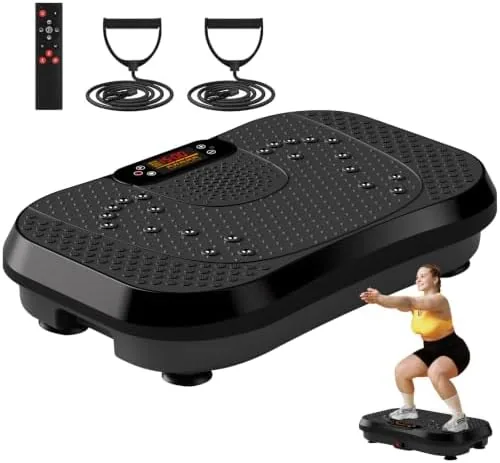

Vibration plates have moved from gym curiosity to home staple, and it is easy to see why. A flat platform that shakes you gently while you stand on it sounds like a toy, but the consistent vibration activates muscles that normally do little during static standing, and it doubles as a recovery tool for people who sit at a desk all day. The SoftGym takes the formula and scales it up, with a 450 pound capacity platform, 120 speed settings, and a pair of resistance bands that turn the plate into a full body trainer.
I spent a month with the SoftGym in my living room, using it for morning activation sessions, post workout recovery, and band based strength work. I stood, stretched, squatted, and rowed on it, and this review is the record of the build, the noise, and whether the 120 speeds are actually useful or just a marketing number.
Before the details, the standard note. This article contains affiliate links, and if you buy through one of them the site earns a small commission at no extra cost to you. That commission does not change what I test or recommend, and the machine reviewed here is a standard retail unit used exactly as the manual describes.
What follows covers the design, the vibration system, the speed range, and the real world training and recovery value of the SoftGym, with a comparison against the basic vibration plates it competes with.
Design and Build
The SoftGym is a substantial machine. The platform is a wide, textured deck with a low profile, and the frame underneath is welded steel that does not flex or wobble when you step on it. The whole unit weighs enough to feel planted, which is exactly what you want from a machine that shakes, because a light platform would rattle across the floor instead of vibrating in place.
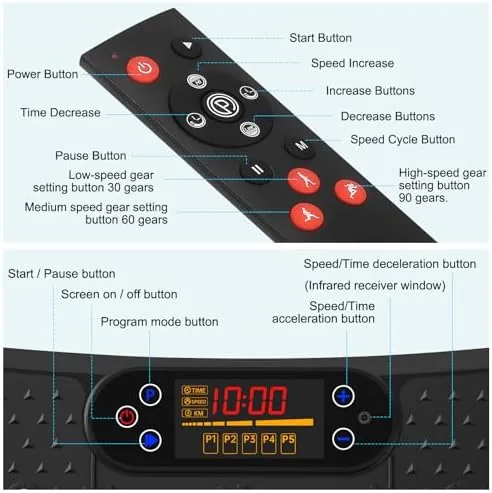
The controls sit on a small console at the front of the platform with a digital display, a speed dial, and a timer. The display shows the current speed and the session time, and the dial sweeps through the 120 settings smoothly rather than stepping in awkward jumps. A remote control repeats the main functions, which matters when you are mid squat and your hands are nowhere near the console.
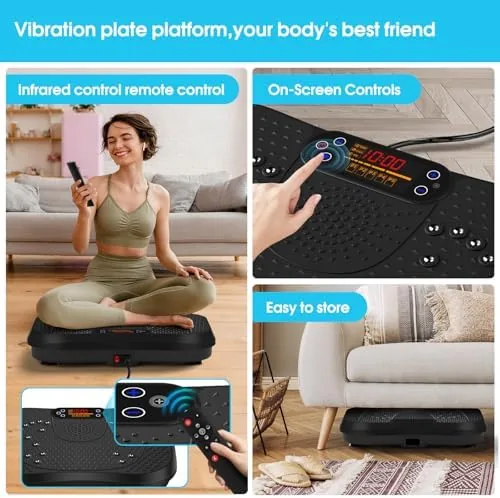
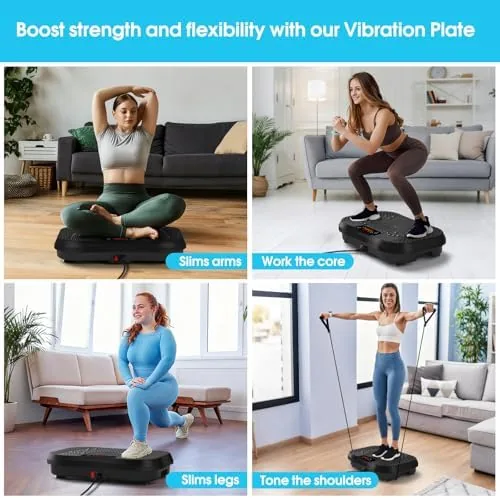
The resistance bands clip into anchors at the sides of the platform. They are sturdy elastic straps with comfortable handles, and they pull from a solid mount, so a full force row or curl does not drag the plate across the room. The build quality throughout is better than the price suggests, and the whole unit has the feel of a commercial grade machine rather than a folding impulse buy.
Key Features
The 120 speed settings are the headline, and they are more than a marketing number. Low speeds produce a fine, gentle vibration that suits recovery stretching and lymphatic work, while the upper range delivers a deep shake that activates the legs and core during squats and standing holds. The range in between gives you fine control to find the intensity that does not feel like too much.
The resistance bands are the feature that changes the machine's job. Without them, a vibration plate is a standing and stretching tool. With them, it becomes a full body trainer, because you can row, curl, press, and stretch against the bands while the vibration works your legs and core at the same time. That combination is what separates the SoftGym from a basic single speed plate.
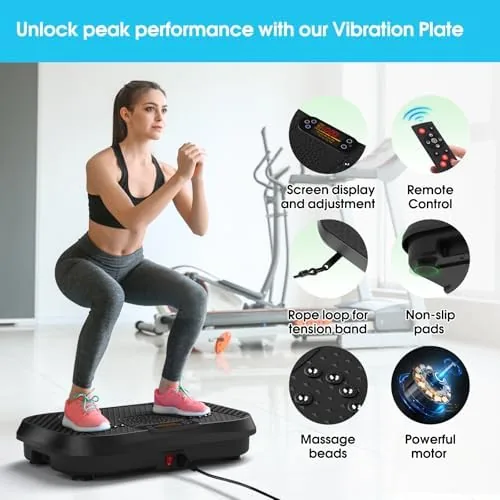
The quiet motor is the detail that keeps the machine usable in a home. Vibration machines are prone to drone, but the SoftGym runs with a low hum that stays constant across the speed range, and the platform does not rattle or thump. The timer lets you set a session length, and the machine powers down when the time is up, so you can step away and let the session finish.
Real-World Performance
For recovery and lymphatic work, the SoftGym is genuinely pleasant. On the low speeds the vibration is fine and rhythmic, and a ten minute session with your feet planted and your hands relaxed leaves your legs feeling looser and your calves less tight. I used it most mornings before stretching, and the combination of a minute of gentle vibration and then a static stretch was noticeably better than stretching cold.
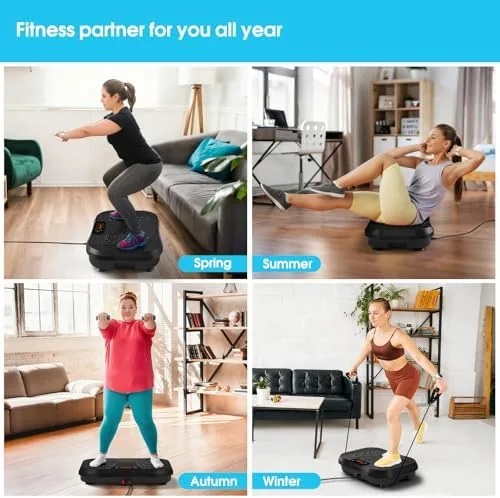
For muscle activation, the higher speeds earn their keep. A standing hold with slightly bent knees on the upper range fires the calves, quads, and core in a way that a normal stance does not, and a few minutes on the plate before a strength session had my legs switched on before the first squat. The activation is real, but it is subtle, so it suits supporting a routine rather than replacing one.
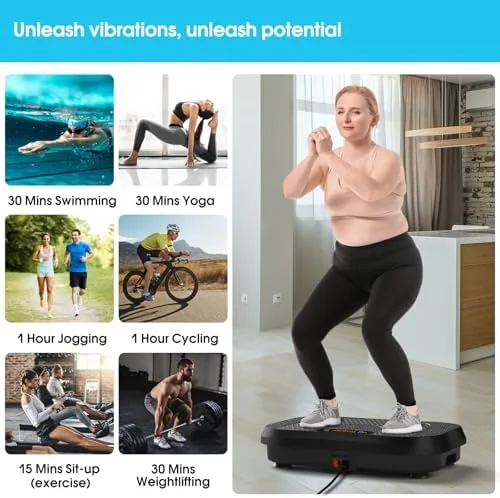
The resistance band workouts were the biggest surprise. A set of rows, curls, and presses with the bands while the plate vibrated underneath turned a simple cable routine into a full body session, and the vibration added an instability element that the bands alone cannot provide. The anchors held firm through full force pulls, and the handles were comfortable for longer sets.
The honest limits are the claims and the patience required. The lymphatic drainage benefit is real for many users as a gentle circulation aid, but it is not a medical treatment, and anyone with a health condition should check with a doctor before standing on a shaking platform. The machine also rewards consistency, so a five minute session most days does more than a single twenty minute marathon, and the low to mid speeds are where the daily habit lives.
Pros and Cons
Pros:
- Wide speed range with fine control across 120 settings
- Quiet motor that stays calm across the whole range
- Heavy duty steel frame with a solid 450 pound capacity
- Resistance bands turn the plate into a full body trainer
- Remote control and timer for hands free sessions
- Low profile platform that is easy to step on and off
Cons:
- Lymphatic and recovery benefits reward daily consistency
- No incline adjustment, so workouts stay standing based
- Heavier than folding plates, so it needs a set corner
How It Compares
The SoftGym sits above the basic single speed plates and below the commercial power plates, and the table below lines up the three.
| Feature | SoftGym Plate | Basic Vibration Plate | Commercial Power Plate |
|---|---|---|---|
| Speed settings | 120 | 1 to 5 | Programmed presets |
| Weight capacity | 450 pounds | 220 to 300 pounds | 350 to 500 pounds |
| Resistance bands | Included | Usually none | Optional |
| Noise | Quiet | Varies | Louder, commercial |
| Price | Mid range | Budget | Premium |
The basic plate is cheaper and fine for gentle daily vibration, but it lacks the speed range and the bands that make the SoftGym a training tool. The commercial power plate adds program presets and studio grade output at several times the price. For a home user who wants one machine that does recovery, activation, and band work, the SoftGym is the balanced choice.
Who Should Buy
Buy the SoftGym if you want a single home machine for daily recovery, gentle activation, and band based strength work, and you have a corner where the plate can live. It suits desk workers who need circulation and loosening after long sits, older adults who want a low impact movement aid, and home gym owners who want to add a full body option without adding four machines.
Skip it if you want high intensity cardio or serious strength training, because the plate supports those habits but does not replace a treadmill or a rack. For the recovery and activation niche, this is one of the better built plates at its price. You can check the current price of the SoftGym vibration plate on Amazon when you are ready.
How We Test
I used the SoftGym daily for a month. I tested the full range of 120 speeds in five speed steps, ran recovery sessions on the low settings, and used the upper range for activation before strength work. I attached the resistance bands and ran rows, curls, presses, and stretches against them, and I timed the motor noise at each end of the range.
I did not test the plate under a load anywhere near the 450 pound limit, and I kept sessions within the manual's recommended time limits. For a solid overview of how vibration plates work and who benefits, Healthline has a practical explainer on vibration plates that is worth reading. The SoftGym listing on Amazon shows the current price and the full specifications.
SoftGym Vibration Plate: Questions People Ask
Is a vibration plate good for lymphatic drainage?
Many users find the rapid vibration helpful for encouraging lymph movement and gentle circulation, and it is a popular home use, though it should not replace medical treatment for any diagnosed condition.
How loud is the SoftGym vibration plate during use?
The motor runs quietly enough for a living room, with a low hum that stays constant across speeds, and the platform does not rattle, so it will not disturb others in the home.
What can I do with the included resistance bands?
The bands anchor to the platform and let you combine upper body rows, bicep curls, and stretches with the vibration, turning a standing platform into a full body training tool.
Will the 450 pound capacity hold up for regular use?
Yes, the welded steel frame and the broad platform take heavy daily use without flex or wobble, and the capacity covers the vast majority of home users comfortably.
As an Amazon Associate, I earn from qualifying purchases.