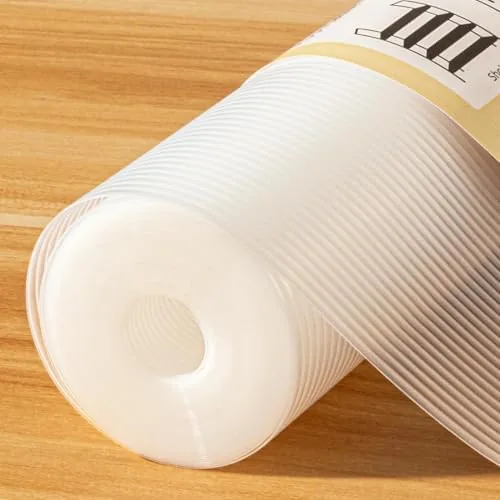

There is a version of shelf liner shopping that everyone knows: you buy a roll of sticky contact paper, you cut it badly, you align it crookedly, and you spend twenty minutes peeling bubbles out of it before giving up. The 12 inch by 20 foot non-adhesive shelf liner under review exists to remove that entire ritual. It does not stick, it lies down and stays, and it is oil-proof and waterproof enough to live in a kitchen cabinet or a refrigerator. I lined three cabinets, two drawers, and a fridge shelf with a single roll, and this is the honest report.
A quick disclosure before the details. This article contains affiliate links, and if you buy through one of them the site earns a small commission at no cost to you. That commission does not change what I test or what I recommend.
Design and Build
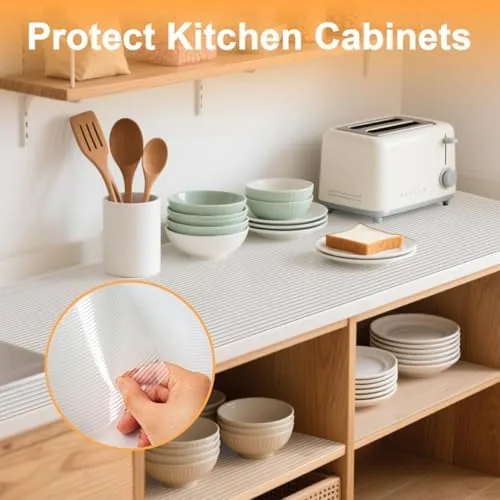
The roll is 12 inches wide and 20 feet long, which works out to roughly 20 square feet of coverage, and it is a surprisingly substantial amount of material for the price. The liner has a cushioned, slightly padded feel rather than the thin film you get with cheap contact paper, and the top surface is a smooth, wipeable sheet with a subtle texture.
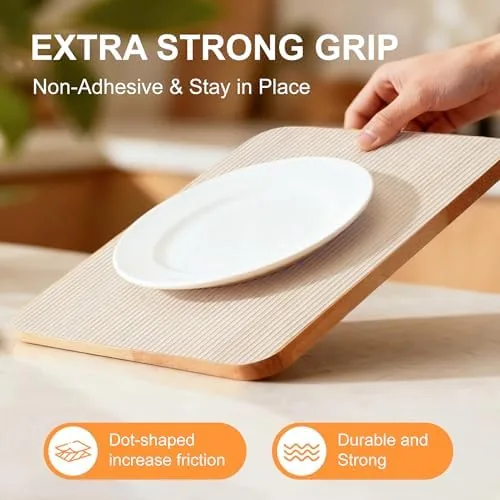
The backing is where the design earns its keep. Instead of adhesive, the liner uses a non-slip textured backing that grips the shelf through friction. It sounds like it might slide around, and it does not, because the textured underside holds the liner in place against most cabinet surfaces while the weight of dishes and jars anchors it further.
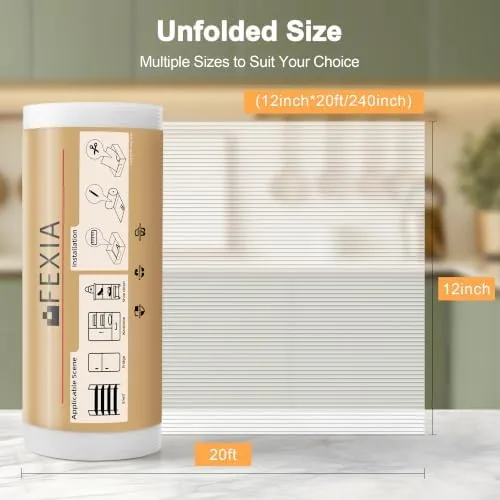
Build quality is better than the price category usually delivers. The material is thick enough that it does not tear when you cut it, it does not curl at the cut edges, and it holds its shape after being folded or rolled. The one detail to note is that the top surface is not fully rigid, so heavy items leave a temporary impression, but the material rebounds once the weight is lifted.
Key Features
The non-adhesive design is the feature that changes everything. Because the liner does not stick, you can lift it, reposition it, and wash it without destroying it. Sticky contact paper is a one-shot deal, and the moment you misalign it, you are peeling up a ruined strip. This liner forgives the exact mistakes that make people hate liner projects.
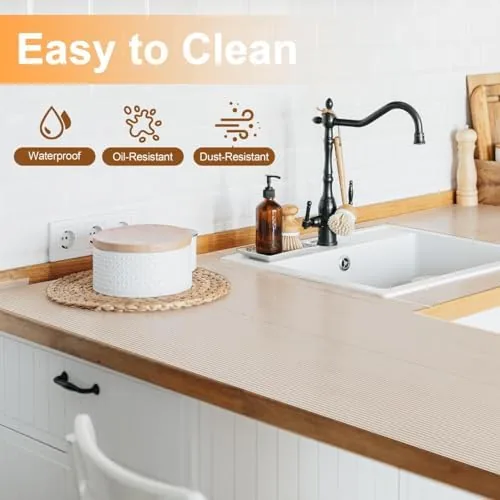
The oil-proof and waterproof surface is the practical heart of the product for kitchen use. Spills, oil splashes, and leaking bottles wipe up with a damp cloth instead of soaking into the cabinet wood. In the refrigerator, where condensation and drips are a fact of life, the same surface protects the Shelf and cleans up in seconds.
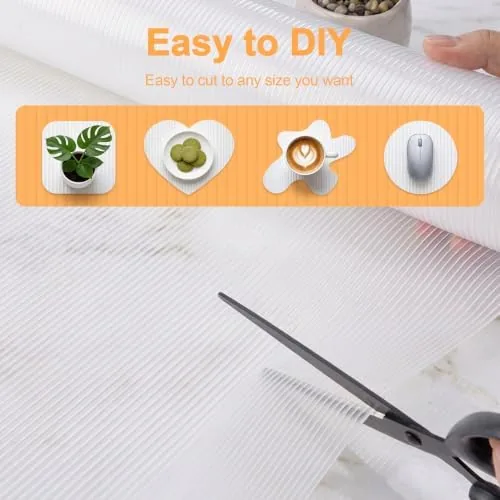
Ease of cutting is the feature that makes the whole roll usable. You can cut it with scissors, a craft knife, or a blade, and it cuts cleanly in straight lines and curves alike. Because the backing does not stick to itself or the shelf, you can lay out a piece, mark it, trim it, and place it in one smooth motion. Cutting around a sink pipe or a shelf corner is no longer a project, it is a five minute job.
Washability closes the loop. When a shelf gets grimy, you pull the liner out, rinse it in the sink with soap and water, dry it, and lay it back down. That reuse cycle is what separates this from adhesive liner, which is disposable after one grimy season. For a look at the current price and the full roll length, the shelf liner listing on Amazon is the place to check.
Real-World Performance
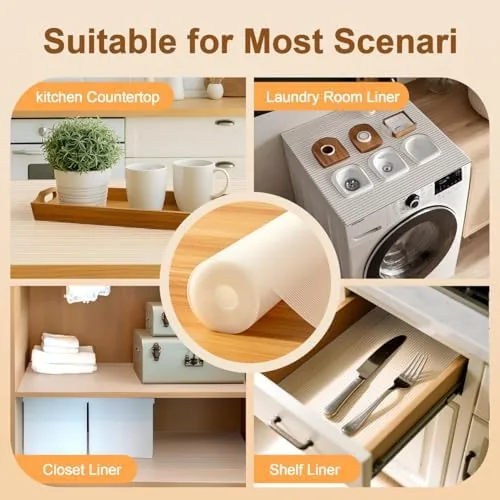
My first project was the spice cabinet, the classic shelf liner test because it has an awkward size, an awkward interior, and heavy jars that reveal every flaw. I cut a piece for each shelf, and the process took minutes. The liner lay flat immediately with no bubbles, because there is no adhesive to trap air, and the spice jars sat without sliding when I opened and closed the door.
The drawer project was next. I lined a silverware Drawer and a utility drawer, and the non-slip backing proved its worth in exactly the scenario where it matters most: the drawer slides open and closed all day, and the liner did not shift a millimeter. Items stayed put, the drawer did not develop bare spots, and the material showed no signs of creeping over two weeks of use.
The refrigerator was the honest test of the waterproof claim. I lined one shelf under a stack of leftovers, and a leaking container dripped directly onto the liner. The liquid beaded on the surface, I wiped it up with a cloth, and the liner showed no staining, no swelling, and no odor. A solid shelf would have absorbed that same drip and held the smell for weeks.
The one caveat I found is minor and predictable: on very glossy or freshly oiled cabinet surfaces, the non-slip backing has less to grip, and the liner can slide when you drag a heavy item across it. In my painted cabinet interiors, the grip was solid, but I would recommend a quick wipe of the shelf before installing in a brand new cabinet.
Pros and Cons
Pros:
- Non-adhesive design is forgiving and reusable
- Oil-proof and waterproof surface wipes clean
- Cuts cleanly with scissors or a craft knife
- Non-slip backing holds in drawers and on shelves
- Washable, so one roll lasts through many cleanings
- Long 20 foot roll covers multiple cabinets
Cons:
- Can slide on very glossy or freshly oiled surfaces
- 12 inch width is fixed, wide shelves need two strips
- Heavy items leave temporary impressions in the padding
- Not a rigid board, dishes can press through if the shelf gaps
How It Compares
Shelf protection generally comes in three forms: adhesive contact paper, rubber shelf mats, and cushioned non-adhesive liner like this one. I compared the three across the jobs a liner has to do.
| Feature | Non-Adhesive Liner | Adhesive Contact Paper | Rubber Shelf Mat |
|---|---|---|---|
| Installation | Lay down, no bubbles | Peel and align, tricky | Lay down |
| Reusable | Yes, washable | No | Yes |
| Waterproof | Yes | Varies | Varies |
| Cushioning | Light padding | Thin film | Depends on thickness |
| Cut to fit | Easy, clean edges | Easy but fiddly | Harder, thicker |
| Holds in drawers | Yes, non-slip back | Yes, adhesive | Usually yes |
Adhesive contact paper wins on permanence, which is only an advantage if you never want to change the liner and never need to clean the shelf. Rubber mats offer more cushioning and grip, but they are thicker, harder to cut, and usually sold in small squares rather than long rolls. The non-adhesive liner sits in the practical middle: it installs faster than either, it washes clean, and it survives being moved. For more on choosing and installing kitchen shelf liners, Better Homes and Gardens' kitchen organization guides at bhg.com/kitchen/storage are a helpful authority on the category.
Who Should Buy It
Buy this liner if you have multiple cabinets and drawers to cover in one go, if you hate fighting with adhesive contact paper, or if you want a liner you can wash and reuse instead of replace. The 20 foot roll makes it an efficient way to refresh a whole kitchen in an afternoon.
Skip it if you want a liner that never moves no matter what, if your shelves are wider than 12 inches and you refuse to seam two strips, or if you need heavy rubber cushioning for delicate glassware. For the standard kitchen, this is the easiest liner to live with. You can check the current price for the shelf liner on Amazon when you are ready to order.
How We Test
I tested the liner over two weeks across three real installations: a spice cabinet with heavy jars, two kitchen drawers with daily sliding motion, and one refrigerator shelf under leaking containers. I cut pieces around a sink pipe and a shelf corner to test edge quality, and I washed a grimy section in the sink to confirm the liner survives reuse.
I tested the waterproof claim with a deliberate leak, the non-slip backing with heavy sliding jars, and the cutting with both scissors and a craft knife. I did not test the liner on unfinished wood or on a surface with heavy oil residue, where adhesion may be weaker, and I did not test it as a heat-resistant surface. The shelf liner listing on Amazon shows the current price and full roll dimensions.
Shelf Liner for Kitchen: Questions People Ask
Is the shelf liner adhesive or does it just sit in place?
It is non-adhesive. You lay it on the shelf and the textured backing grips the surface, which makes it easy to lift, reposition, and wash whenever you need to clean the shelf.
Will the liner stay put under heavy dishes and jars?
Yes. The non-slip backing holds well in everyday use, and heavier containers actually help anchor the liner to the shelf, so it does not slide when you reach for a jar.
Can I cut it to fit oddly shaped drawers?
Yes. You can trim it with scissors or a craft knife to any shape, and the material cuts cleanly without curling or fraying at the edges, including around pipes and shelf corners.
Is it safe to use in the refrigerator?
Yes. The waterproof and oil-proof surface is fine for fridge shelves, and it wipes down quickly when a jar leaks or drips, without staining or holding onto odors.
As an Amazon Associate, I earn from qualifying purchases.