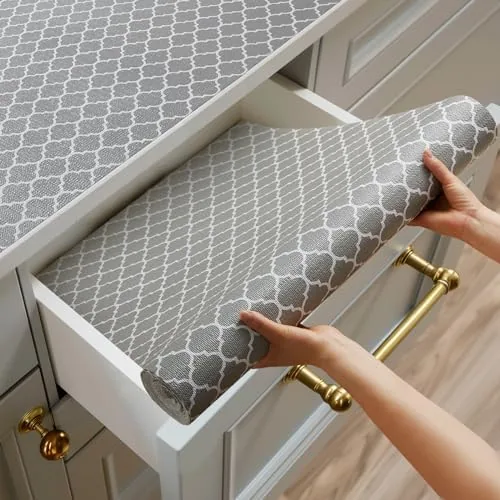

Cabinet shelves have a way of becoming chaos zones. Jars slide forward when you close the door, drawers rattle when you pull them open, and the surface under it all eventually shows the wear of a thousand dishes sliding across it. A Shelf Liner solves those problems quietly, and the non-adhesive gray liner I tested this month is designed to do it without leaving sticky residue behind. I installed it in kitchen cabinets, pantry shelves, and bathroom drawers, and this review records how it grips, how it cleans, and how it holds up to real life.
Before the details, the standard note. This article contains affiliate links, and if you buy through one of them the site earns a small commission at no extra cost to you. That commission does not change what I test or what I recommend, and the liner reviewed here was installed exactly the way a homeowner would install it.
This roll is 12 inches wide and 10 feet long, a size that covers a standard kitchen cabinet or a couple of drawers with material to spare. The rest of this review looks at the material, the grip, the waterproof surface, the cutting and installation, and how the liner performs under daily use.
Design and Build
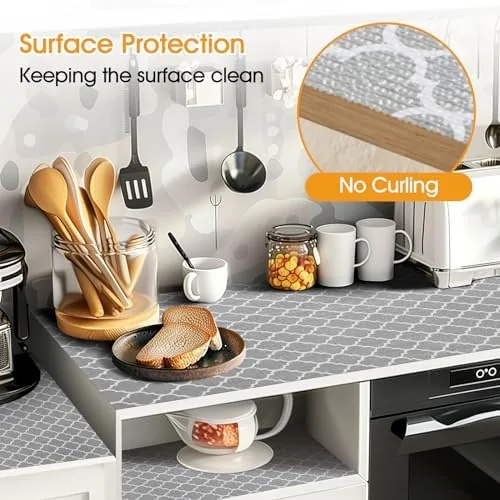
The liner is a thickened foam backed material with a soft, slightly textured surface on top. The gray color is neutral and hides dirt better than white, and the material has a cushioning feel that is easier on dishes than hard shelf surfaces. The roll unrolls flat without curling at the edges, which is a small detail that makes a big difference during installation, because a liner that curls is a liner you will fight the whole way down.
The construction is noticeably thicker than cheap shelf paper. You can feel the density when you hold it, and the underside has the grippy texture that keeps it in place without adhesive. There is a rubbery quality to the backing that grips both wood and painted shelf surfaces, and the top surface has enough texture that plates and jars do not skate across it.
Key Features
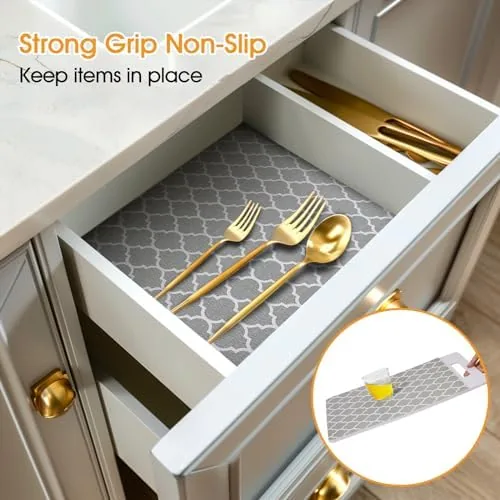
The headline feature is the non-adhesive grip. The liner holds itself in place through friction alone, so there is no glue, no peeling, and no sticky residue when you decide to move it. That makes it ideal for renters, for people who reorganize their cabinets often, and for anyone who has spent an afternoon scraping old adhesive off a shelf.
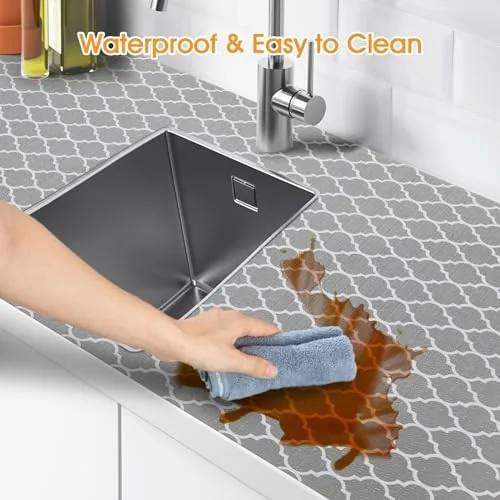
The waterproof surface is the second feature that earns attention. The top layer resists water and most spills, so a wet jar or a dripping dish does not soak through and damage the shelf underneath. A damp cloth wipes the surface clean, and the material does not stain easily, which keeps the liner looking presentable long after installation.
The thickening is the third practical feature. The extra density provides a small amount of cushion under dishes, and it also means the liner lies flat and stays flat once it is in place. It does not bunch up under weight, which is the failure mode of thin shelf paper that you have probably experienced in a kitchen drawer.
Real-World Performance
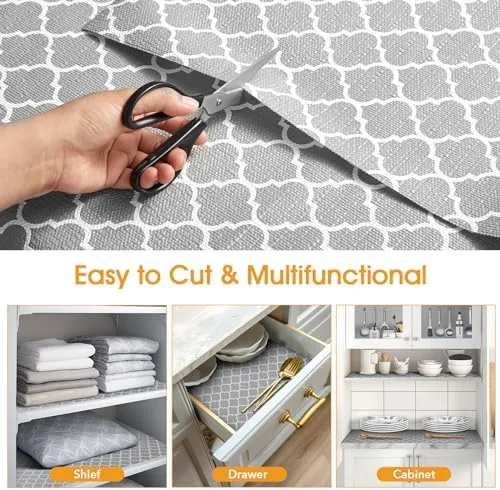
The first installation took minutes. I measured the shelf, cut the liner with a sharp utility knife against a straight edge, and laid it in place. The liner sat flat immediately, gripped the shelf with no sliding, and needed no tape or clips to hold its position. The 12 inch width covered the standard shelf depth without seams, and the material trimmed cleanly without fraying at the cut line.
The grip held up under real use. I loaded a cabinet with stacked dinner plates and a row of glass jars, and when I opened and closed the door, nothing moved. The jars stayed where I placed them, the plate stack did not creep forward, and the liner itself stayed put even when I dragged a heavy cast iron pan across it to test the surface. The friction is strong without being sticky, so you can slide items when you want to, but they hold position when you do not.
The waterproofing proved itself with the inevitable kitchen spill. A jar of sauce leaked in the cabinet, and the liquid beaded on the liner surface instead of soaking in. I wiped it with a damp cloth, and the surface came clean with no stain and no lingering odor. The same material in the bathroom drawer handled the damp from a towel and a cleaning bottle without any warping or discoloration.
Durability is where the liner either earns or loses its keep. After two weeks of daily use, including heavy dishes and occasional water exposure, the surface showed no tears, no flattening of the cushion, and no wear marks where items slid. The edges stayed intact, and the grip did not fade with repeated lifts and replacements. It is holding up far better than the thin shelf paper it replaced, which was peeling and curling within a month of installation.
The limits are worth noting. The gray color shows light dust and crumbs more readily than a patterned liner, so it needs the occasional wipe to look its best. And while the non-adhesive grip is excellent on smooth surfaces, heavily textured shelves or shelves with a porous surface may not hold the liner as firmly, since the grip relies on friction with the surface beneath.
Pros and Cons
Pros:
- Stays put with no adhesive and no residue
- Waterproof surface resists spills and stains
- Thickened material cushions dishes and lies flat
- Cut to size easily with clean edges
- Neutral gray hides dirt and fits any kitchen
- Removable and reusable for reorganization
Cons:
- Gray tone shows dust and crumbs between cleanings
- Grip depends on a smooth surface beneath
- No adhesive means corners can lift on very soft foam
How It Compares
The main choice in shelf liners is between non-adhesive rolls and adhesive shelf paper, and the differences matter more than you might expect. The table below lines up the two options.
| Feature | Non-Adhesive Liner | Adhesive Shelf Paper |
|---|---|---|
| Installation | Cut and lay in place | Peel, position, smooth |
| Removal | Lift off, no residue | Peel, scrape residue |
| Grip | Friction based | Strong, permanent |
| Reusable | Yes | No |
| Waterproof | Yes | Depends on product |
| Best for | Renters and drawers | Fixed shelves, decor |
If you rent, reorganize often, or line drawers that you open constantly, the non-adhesive liner is the better choice, because it does the job without committing you to a permanent change. If you want a decorative finish on a shelf that will never move, adhesive paper gives you more pattern options. For daily function and flexibility, this roll wins.
Who Should Buy It
Buy this shelf and drawer liner if you want to protect your cabinets without dealing with adhesive, or if you are setting up a rental kitchen and want something you can take with you. It is also a natural fit for drawers that hold dishes, for pantry shelves stacked with jars, and for bathroom cabinets where damp is a daily reality.
Skip it if you are looking for a decorative patterned finish, since this liner is functional gray rather than ornamental, or if your shelves have a heavily textured surface where friction alone will not hold. For most cabinets and drawers, this is the quiet upgrade that keeps everything in its place. You can check the current price of the gray shelf and drawer liner on Amazon when you are ready.
How We Test
I installed the liner in a kitchen cabinet, a pantry shelf, and a bathroom drawer, using a sharp utility knife and a straight edge to cut it to size. I loaded each installation with dishes, jars, and cookware, and I opened and closed the cabinets repeatedly to test whether items shifted. I spilled water and sauce on the surface to test the waterproofing, and I wiped the liner clean to confirm it did not stain.
I left the liner in place for two weeks and inspected it weekly for curling, tears, and loss of grip, and I lifted and replaced it once to test the removable claim. For a broader look at kitchen organization and shelf liner options, The Spruce has a practical guide to lining shelves and drawers that is worth reading. The gray shelf and drawer liner listing on Amazon shows the current price and roll size.
Shelf and Drawer Liner: Questions People Ask
Does this shelf liner stay in place without adhesive?
Yes, the grippy backing holds firmly against the shelf surface, so plates and jars do not slide and the liner itself stays put during everyday use.
Is the liner waterproof and easy to clean?
The thickened material resists water and most spills, and a damp cloth wipes it clean without leaving stains or weakening the grip.
How do I cut the liner to fit my shelf?
Lay it flat, press a ruler along the cutting line, and slice with a sharp utility knife, since the liner cuts cleanly without fraying at the edges.
What size does the roll come in?
The roll measures 12 inches wide by 10 feet long, which covers a typical kitchen cabinet or a set of drawers with a little to spare.
As an Amazon Associate, I earn from qualifying purchases.