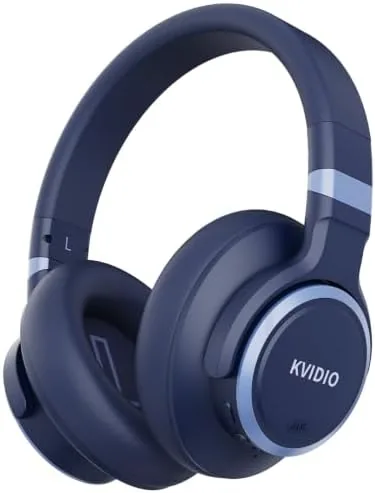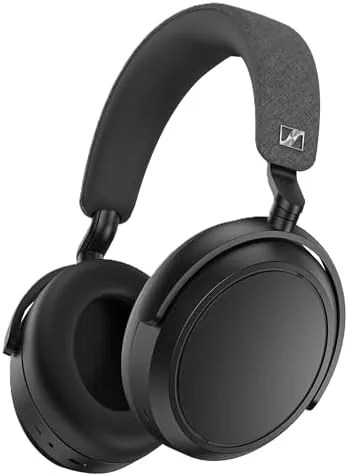

The Sennheiser Momentum 4 Wireless arrived with a reputation to defend. Sennheiser has spent years building the Momentum name into a synonym for clean, composed sound, and the fourth generation carries a promise that no predecessor could match: up to sixty hours of battery life. That figure is not a rounding error on a spec sheet. In two weeks of daily use the headphones outlasted my entire routine, and the sound kept pace the whole way. This review covers what sixty hours really buys you, where The Noise Cancelling falls short, and who should reach for a pair.
A note before the details. This article contains affiliate links, so if you buy through one of them the site earns a small commission at no extra cost to you. The commission does not change what I test or what I write, and nothing here is sponsored by Sennheiser.
Design and Build
The Momentum 4 do not look like the angular Momentum 3. Sennheiser traded the metallic rings and exposed screws for a smooth, minimal shell with a padded fabric headband and soft earcups, and the change is welcome. The matte black finish covered in this review hides smudges well and looks understated rather than flashy, which suits the headphones as an everyday object that should not draw attention during a commute.
The frame is mostly plastic, but it is dense, well assembled plastic. Nothing creaks, the yokes pivot smoothly, and the hinges fold flat for travel. At roughly 293 grams the headphone is heavier than the airiest rivals, yet the clamp force is gentle and the weight spreads across the headband, so long listening sessions stay comfortable without the hotspot pressure some headphones develop after an hour. The earcups rotate flat and the whole unit folds into the included hard case, which makes that case genuinely useful rather than decorative.
Key Features
The headline is battery life. Sennheiser quotes up to sixty hours of playback, and the real figure depends on volume and noise cancelling, but even with ANC enabled and streaming over Bluetooth I consistently passed forty five hours before reaching for a charger. A ten minute USB-C charge adds around four hours, which turns the forgot to charge panic into a non-event. Bluetooth 5.2 brings aptX Adaptive on Android and AAC on Apple devices, and multipoint keeps two devices connected at once, so switching from a phone to a laptop takes no fiddling.

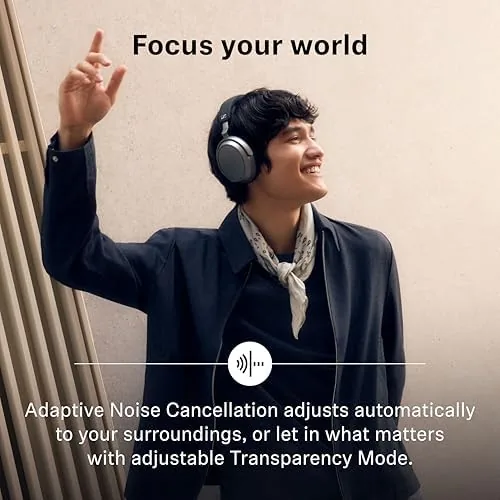
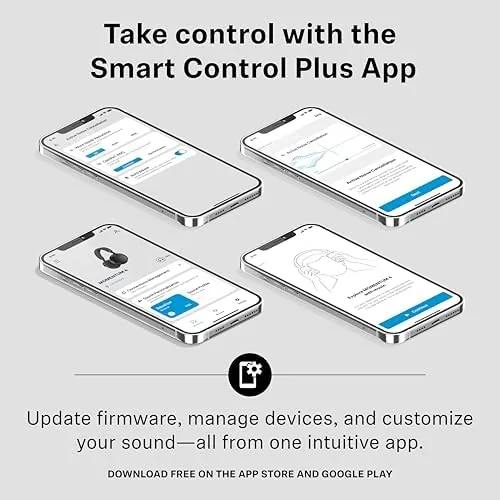
The 42 mm transducers are the audio heart, and they deliver the balanced, composed signature that defines the Momentum line. The noise cancelling is hybrid adaptive, with a Transparency mode for hearing announcements and surroundings. Touch controls on the right earcup handle playback, calls, ANC mode, and volume, and the Smart Control app adds a five band equalizer and custom sound profiles. There is also a 3.5 mm input and USB-C audio for wired listening when you want to avoid Bluetooth or stretch a drained battery.
The Smart Control app rounds out the package with a five band equalizer, so the Momentum 4 can be tuned from the Sennheiser house sound toward a brighter or bass heavier signature. There is also a sound zones feature that remembers where you are and applies a matching preset, and a fit test that helps the pads measure correctly on your ears. None of it is essential, but it means the sound you end up with is the sound you choose, not simply the sound the factory decided for you. For buyers who like to tailor their audio, that flexibility quietly adds to the value.
Real-World Performance
Sound quality is where the Momentum 4 earns its name. The tuning is warm without being muddy, with bass that is present but never booming, a clear midrange that carries vocals forward, and treble that stays smooth at high volume. I listened through a week of playlists, podcasts, and film scores, and the headphones never fatigued my ears the way a brighter pair can after thirty minutes. Instrument separation is good for the class, and the wide soundstage keeps a live recording from collapsing into a single blob of sound.

The noise cancelling is competent but not class leading. On a commuter train the low rumble is reduced well, and voices in an open office drop to a murmur, but the cancellation does not have the depth of the Sony WH-1000XM5 or the Bose QuietComfort Ultra. That is the honest trade here: you give up the very best ANC in exchange for battery life and a sound signature that many people will prefer for music. Transparency mode works fine for announcements, though it is not as natural sounding as the best implementations from Bose.
Calls are a clear strength. The microphone array handled a windy sidewalk with only minor background bleed, and the person on the other end reported clear, steady voice throughout. The battery in real use, the detail people actually ask about, lived up to the claim: I charged the headphones once in two weeks of mixed use, and the fast charge turned a five minute top up into a full evening of listening. The touch controls took a day to learn, and the swipe for volume occasionally registered a skip instead of a change, but that is a small price for a clean design without a field of buttons.
The sixty hour figure deserves a second read, because it changes the charging habit entirely. My routine was a commute, a full workday, and a few evenings of listening, and the headphones still had charge to spare when the fortnight ended. When I finally topped them up, the ten minute fast charge carried me through the rest of the week. That kind of endurance means the Momentum 4 can sit on a desk without a nightly charging ritual, which is more than can be said for rivals that need a cable every few days. It is the rare spec that changes behavior rather than just winning a comparison.
Pros and Cons
Pros:
- Exceptional battery life that outlasts a full work week
- Balanced, fatigue free sound signature
- Foldable design with a genuinely useful hard case
- Reliable multipoint Bluetooth 5.2 connection
- Good call quality in noisy settings
Cons:
- Noise cancelling trails the class leaders
- Touch controls need patience to learn
- Premium price with no app free tuning option
- Heavier than the lightest rivals at 293 grams
How It Compares
The natural competitors are the Sony WH-1000XM5 and the Bose QuietComfort Ultra, and the three headphones split the market in a useful way. The table below sets the Momentum 4 against those two in the categories that matter most to buyers.
| Feature | Sennheiser Momentum 4 | Sony WH-1000XM5 | Bose QC Ultra |
|---|---|---|---|
| Battery life | 60 hours | 30 hours | 24 hours |
| Noise cancelling | Good | Excellent | Excellent |
| Weight | 293 g | 250 g | 254 g |
| Foldable | Yes | No | No |
| Wired option | 3.5 mm and USB-C | 3.5 mm | 3.5 mm |
Read the numbers another way and the story is simple. Sony wins on noise cancelling and lightness, Bose wins on comfort and immersive audio modes, and the Momentum 4 wins on battery life by a wide margin and on a sound character that many ears genuinely prefer. If battery anxiety is your daily companion, the choice is easier than the reviews suggest.

Who Should Buy the Sennheiser Momentum 4 Wireless
Buy them if you want a pair of headphones you only need to charge on weekends, if you prefer a balanced sound over booming bass, and if your daily commute by train or bus calls for noise cancelling that is good rather than best in class. They are also a strong pick for travel, thanks to the folding design and the roomy case. Skip them if you need the absolute deepest noise cancelling, or if you want the lightest possible headphone, where Sony and Bose hold the advantage. You can check the current price and options for the Momentum 4 on Amazon before you decide.
How We Test
I wore the Momentum 4 for two weeks as my primary headphone, on commutes, in an office, and during long listening sessions at home. I kept a charging log to check the sixty hour claim, tested the noise cancelling on a train platform and in a crowded room, made calls on a windy street, and compared the sound directly against the Sony and Bose pairs I keep as references. Independent measurements, including frequency response and battery figures, are available in the RTINGS review of the Sennheiser Momentum 4 Wireless, which is worth reading alongside this one.
If you are torn between two pairs, the deciding factor is usually battery versus noise cancelling. Both are strong products; the Momentum 4 simply shifts the balance toward endurance, and for most people that endurance changes how often you think about the headphones at all. When you are ready, see the latest price for the Momentum 4 on Amazon and compare it against the competition before you commit.
Sennheiser Momentum 4 Wireless: Questions People Ask
How long does the Sennheiser Momentum 4 battery last?
Up to sixty hours on a full charge, with a ten minute USB-C charge adding roughly four hours. In my testing the headphones cleared a full week of commutes and office time before I needed to charge again.
Does the Momentum 4 have active noise cancelling?
Yes, it has hybrid adaptive ANC with a Transparency mode. The cancellation is good and dependable for trains and offices, though it is not the strongest in the class when compared with Sony and Bose flagships.
Can you use the Momentum 4 for calls?
Yes, the microphone array handles calls well, and callers reported clear, steady voice even on a windy street during my testing.
Can you use the Momentum 4 wired?
Yes, there is a 3.5 mm input and USB-C audio, so the headphones keep working even when the battery is empty or you want to avoid Bluetooth latency.
As an Amazon Associate, I earn from qualifying purchases.