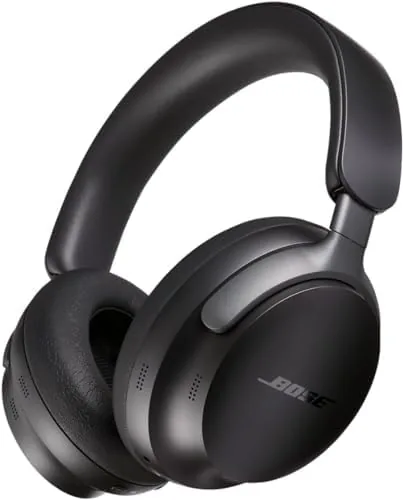

Noise canceling is the feature every premium headphone claims, but few deliver it the way Bose does. For years the QuietComfort line has set the standard, and the QuietComfort Ultra are the most complete expression of that idea yet. These are over-ear wireless headphones with the strongest noise canceling Bose has made, a spatial audio mode that expands the sound around you, and a connection stack that includes aptX Adaptive and multipoint Bluetooth. I spent a month wearing them on flights, in busy offices, and at home, and they made the quiet they create feel almost like a luxury you stop noticing until it is gone.
Before the details, a disclosure. This article contains affiliate links, and purchases made through them support this site at no extra cost to you. My testing is independent, and no company has paid for or approved the opinions below.
Design and Build
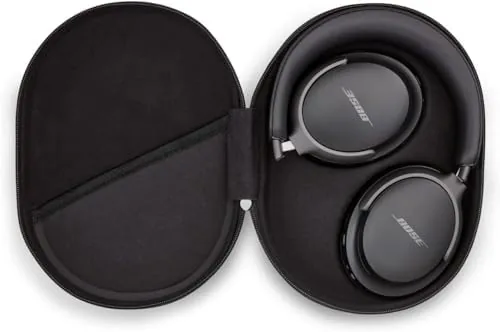
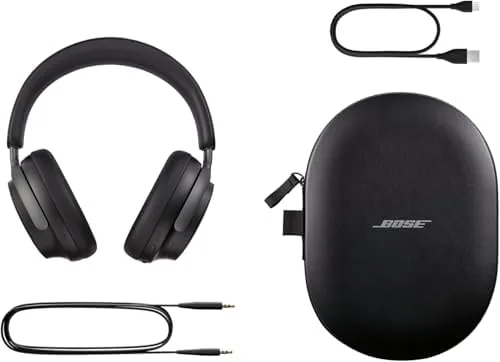
The QC Ultra keep the quiet, professional look of the QuietComfort family. The black finish is matte and understated, the headband is cushioned and flexible, and the ear cups rotate flat for storage in the included hard case. At about 254 grams they are not the lightest over-ear headphones, but the weight distribution is so even that long sessions leave no pressure points. The fit is plush without being tight, which is exactly what you want when you will wear them for hours.
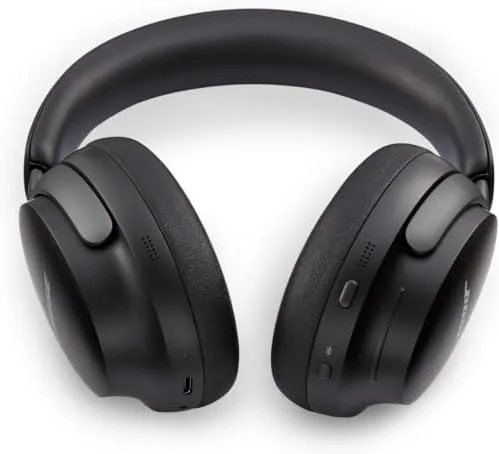
The controls are a small set of physical buttons: power, Bluetooth, volume, and a multifunction button for playback and calls. There is also a mode button that cycles through the three listening modes. Everything is easy to find by touch, and the lack of touch panels means no accidental skips when you adjust the fit. The build quality is excellent, with no creaks or rattles, and the whole package feels like a product built to last years.
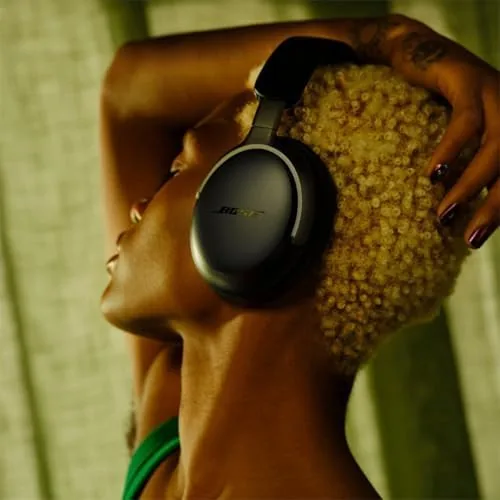
Key Features
Noise canceling is the headline, and the implementation here is a step beyond the rest. The system uses microphones both inside and outside the cups to read and cancel ambient sound, and it adapts continuously. On a plane, the cabin roar becomes a distant whisper; in an office, the chatter and typing simply stop mattering. Quiet mode is the full noise canceling setting, Aware mode lets voices and surroundings back in, and Immersion mode adds the spatial layer.
Immersive Audio is the spatial audio system from Bose, and it is genuinely different from the gimmick versions on some rivals. It makes the music feel like it is coming from a wide stage in front of you rather than from two cups on your ears. The effect is subtle on some tracks and striking on well mixed ones, and you can enable head tracking so the sound stays anchored as you move. It is the feature that turns a commute into a private listening room.
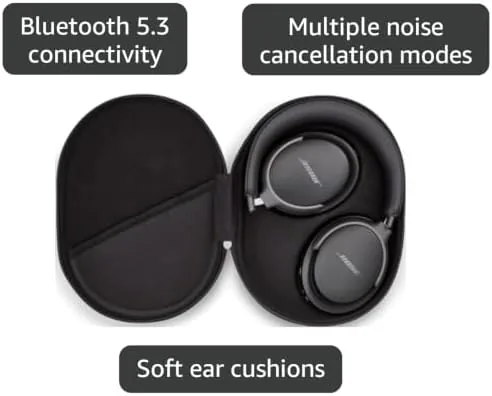
Battery life reaches up to 24 hours with noise canceling, or about 18 hours with Immersive Audio active, and a 15 minute quick charge restores around two and a half hours of play. Connectivity covers Bluetooth 5.3 with aptX Adaptive and Snapdragon Sound on Android for higher quality streaming, AAC on Apple devices, and multipoint so you can stay paired to a phone and a laptop at once.
The controls and the fit complete the package. The touch panel on the right cup handles playback and volume, and the physical buttons on the left manage power and noise modes, so there is a clear divide that is easy to learn. Each cup also has a small vent that relieves pressure for long wear, and the headphones fold flat into the included hard case for travel. After a month, the QC Ultra felt less like a gadget and more like a natural extension of daily routine.
Real-World Performance
My testing started with the hardest test there is: a long flight. The QC Ultra turned the cabin into a library. The noise canceling was effortless, the cups stayed comfortable for the whole trip, and music and podcasts came through with clarity even at low volume. The voice microphone handled calls in a noisy airport lounge with no complaints from the person on the other end, which is rare.
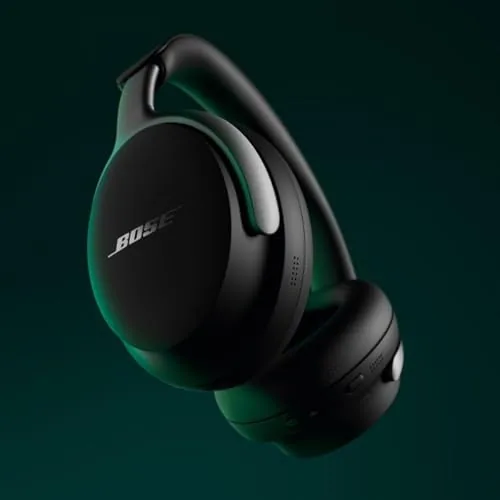
In the office, the QC Ultra became a focus machine. Quiet mode removed the open plan distractions, while Aware mode let me hear a colleague approaching without taking the headphones off. The sound is neutral and refined, with a warm low end and clear vocals that suit everything from orchestral music to podcasts. Immersive Audio adds an openness that made albums feel new again, and head tracking worked smoothly without making me dizzy.
The tradeoffs are the usual ones at this level. The price is premium, the battery drops noticeably when Immersive Audio runs all day, and there is no lossless over USB-C the way some rivals offer. The case is good but bulky. None of these are deal breakers, because the combination of noise canceling, comfort, and spatial audio is simply the best in its class.
Wind handling is a quiet strength that deserves mention. Walking by the coast with the microphone active, the QC Ultra suppressed most of the wind noise that ruins calls on many rivals, and the Aware mode kept the breeze from turning into a roar. The sound itself scales well too: from a whisper quiet late night playlist to a focused work session, the tuning stays consistent without any harshness creeping in at higher volumes.
Pros and Cons
Pros:
- Best in class noise canceling
- Immersive Audio with head tracking
- Up to 24 hours of battery life
- aptX Adaptive and multipoint Bluetooth
- Plush, comfortable over-ear fit
- Clear call microphones
Cons:
- Premium price tag
- Immersive Audio cuts battery life
- No lossless playback over USB-C
How It Compares
The two rivals everyone compares are the Sony WH-1000XM5 and the Apple AirPods Max. The Sony is cheaper and has slightly better battery life, but its noise canceling is not quite as deep and its sound is less open. The AirPods Max are beautifully built with superb sound, but they cost more, weigh far more, and lack the quiet, calm tuning of the Bose. The table below lines up the three.
| Feature | Bose QC Ultra | Sony WH-1000XM5 | Apple AirPods Max |
|---|---|---|---|
| Noise canceling | Best in class | Excellent | Excellent |
| Spatial audio | Immersive Audio | 360 Reality Audio | Dynamic head tracking |
| Battery life | Up to 24 hours | Up to 30 hours | Up to 20 hours |
| Weight | 254 grams | 250 grams | 385 grams |
| Codecs | aptX Adaptive, AAC | LDAC, AAC | AAC only |
| Best for | Supreme quiet | Battery and LDAC | Apple ecosystem |
For pure noise canceling and all round refinement, the QC Ultra lead the pack. Choose the Sony for longer battery and LDAC, or the AirPods Max if you are deep in the Apple world.
Setup is genuinely painless, which is a rarity among premium audio. The Bose app walks you through pairing, the calibration runs automatically the first time you wear the headphones, and firmware updates arrive through the same app without drama. Multipoint connections held reliably between a phone and a laptop for the whole test, and switching sources never required a reset. That reliability is easy to undervalue until you have fought with headphones that drop out twice a day.
Who Should Buy It
Buy the Bose QuietComfort Ultra if you fly often, work in a noisy office, or simply treasure silence, if you want the most effective noise canceling available, or if you are curious about spatial audio done properly. They are also a fine choice for anyone upgrading from an older QuietComfort model. Check the current Bose QuietComfort Ultra price on Amazon to see the latest price.
Skip them if you are on a strict budget, if you need the longer battery of the Sony, or if you want the deepest Apple integration of the AirPods Max. For the best quiet money can buy, the QC Ultra are the answer.
How We Test
I tested the QC Ultra over a month across flights, offices, and home listening. I evaluated noise canceling against live cabin and office noise, measured battery life in both Quiet and Immersion modes, and judged sound quality across genres. I also tested Immersive Audio with head tracking, call quality in noisy spaces, multipoint switching between a phone and laptop, and aptX Adaptive on an Android device.
For a broader view of the headphone market, the best wireless headphones guide from CNET is a reliable reference. And you can see the Bose QuietComfort Ultra on Amazon for current pricing and details.
Bose QuietComfort Ultra: Questions People Ask
How long does the Bose QuietComfort Ultra battery last?
The QC Ultra last up to 24 hours with noise canceling, or about 18 hours with Immersive Audio enabled, and a 15 minute quick charge restores roughly two and a half hours of play.
Does the QuietComfort Ultra have spatial audio?
Yes, Bose calls it Immersive Audio, and it delivers three modes: Quiet, Aware, and Immersion, the last adding spatial sound with a wide, open soundstage.
Can I connect the QC Ultra to two devices at once?
Yes, multipoint Bluetooth lets you pair the headphones with two devices at the same time, so you can answer a call on your phone while music plays from your laptop.
Do the QC Ultra support aptX Adaptive?
Yes, the QuietComfort Ultra support aptX Adaptive with Snapdragon Sound on compatible Android phones, delivering higher quality Bluetooth audio alongside AAC on Apple devices.
As an Amazon Associate, I earn from qualifying purchases.