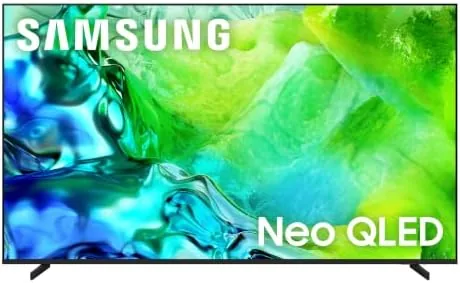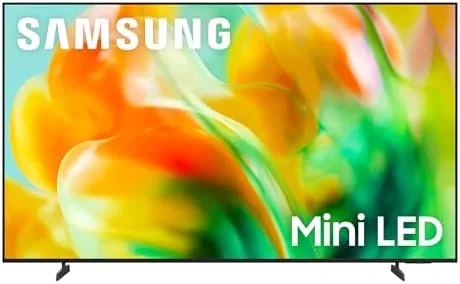

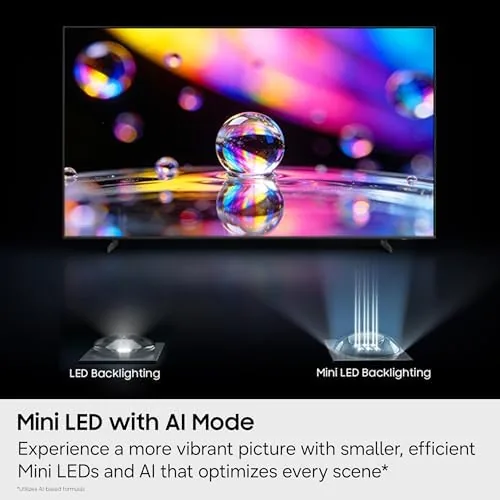
Mini LED is the technology that finally made large televisions attractive to people who do not want to manage the burn-in risk of OLED. It takes thousands of small light emitting diodes, groups them into dimming zones, and turns the backlight into a controllable instrument instead of a single slab of light. Samsung built its M80H Series around that idea, then wrapped it in the company 2026 feature set: Vision AI, AI Mode, Pure Spectrum Color, Auto HDR Remastering, and a Motion Xcelerator panel that reaches 144Hz. That is an impressive list for a television That Does not sit in the flagship Neo QLED lineup.
The 65-inch M80H reviewed here is aimed at the buyer who wants a genuinely good picture, smart platform polish, and gaming capability without paying premium-OLED money. I mounted it, calibrated it, watched movies, played games, and lived with it for two weeks. This review records what the marketing sheet does not tell you.
A quick note on disclosure before the details. This article contains affiliate links, and if you buy through one of them the site earns a small commission at no extra cost to you. That commission does not influence what I test, what I praise, or what I criticize. The television in this review was installed the way you would install it, and every opinion below is my own after real use.
Mini LED matters most in dark scenes, where the zone dimming controls the difference between a black that stays black and a gray glow. That is the first thing I checked, and the rest of this review explains why it is the right starting point.
Design and Build
The M80H looks like a premium television before it is even switched on. The bezel is thin and uniform around the entire panel, and the set is light enough that two people can mount it without drama. The rear panel is clean plastic with a subtle texture, and the stand is a simple pedestal design that holds the television steady without sprawling across the media console.
Build quality is what I expect from Samsung at this level. The panel is rigid, the seams are tight, and nothing rattles when you adjust the angle. The stand gives a small amount of tilt adjustment but no swivel, which is typical at this price point and worth noting if you mount it near a corner.
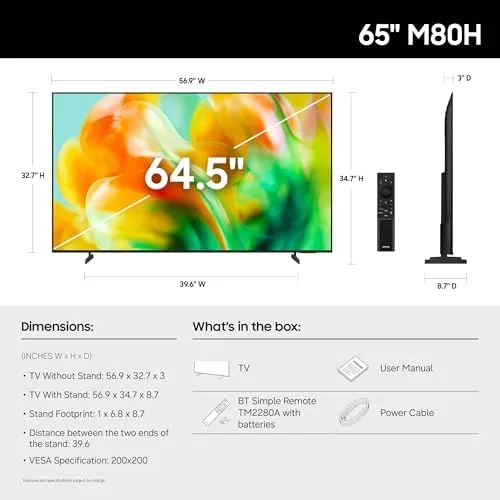
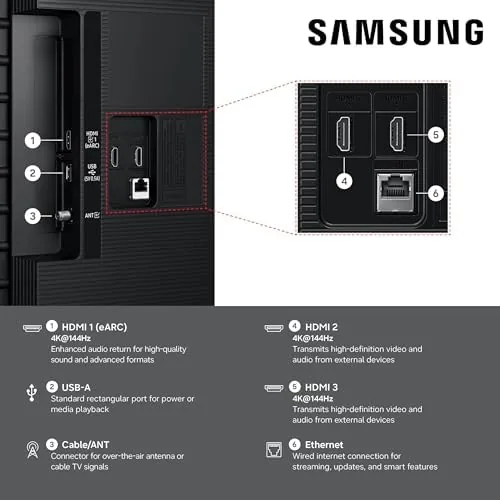
The cable management is genuinely good. The inputs sit on the back edge facing outward, and a removable cover hides the bulk of the wiring. Ports include three HDMI inputs, two USB ports, an Ethernet jack, and a digital optical output. The included remote is the compact Samsung control unit with dedicated streaming buttons and voice input, and it pairs with the television in under a minute.
Key Features
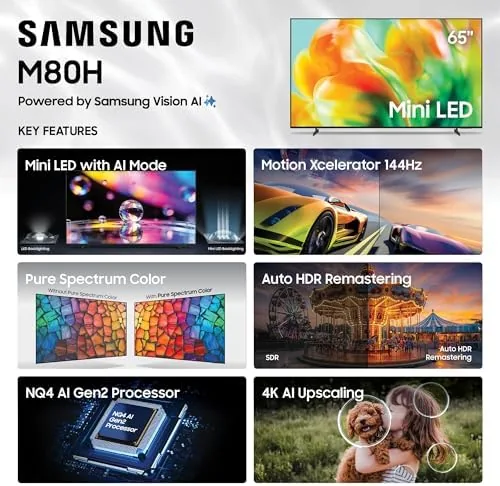
The defining feature is the Mini LED backlight with multiple local dimming zones. Unlike a standard LED television that lights the whole screen evenly, the M80H can darken zones independently, which raises contrast in movies and keeps highlights bright in HDR. Samsung calls the light control layer in this series by its marketing name, but the practical effect is a Picture that punches well above its price.
Vision AI is the processing brain. It analyzes what is on screen and adjusts the picture automatically, detecting the scene type and tuning brightness, color, and sharpness to match. The AI Mode on this model applies those adjustments continuously, so you can leave the television on auto and trust it to handle a bright sports broadcast and a dark thriller in the same evening.
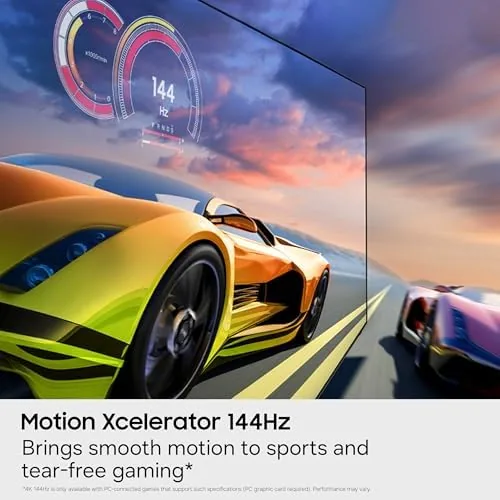
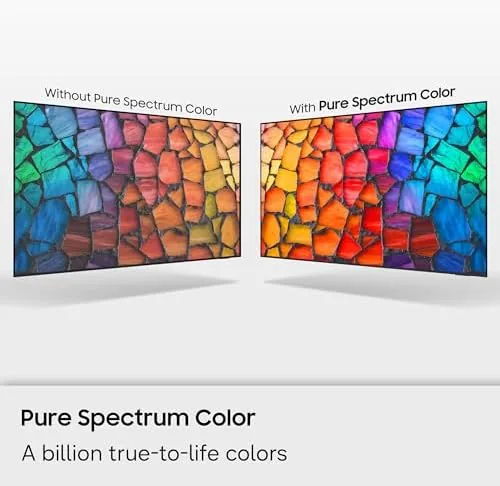
Motion Xcelerator 144Hz is the gaming story. The panel accepts high refresh rate signals from a compatible PC or console, which means fast motion stays smooth and frame pacing improves during gameplay. Pure Spectrum Color expands the color gamut beyond a standard panel, and Auto HDR Remastering applies tone mapping to standard dynamic range content so older shows and streams gain some of the depth HDR was supposed to add. Alexa is built in, so the television joins a smart home without an extra speaker, and the 2026 Tizen platform is quick and responsive.
Real-World Performance
Picture quality is where the M80H earns its place. In a dim room, the Mini LED backlight produced deep blacks in a night scene with no visible halo around the moon, which is the test that separates decent local dimming from bad local dimming. Shadow detail stayed visible in the dark corners of the frame, and the scene never slipped into the gray mush that plagues budget sets.
HDR performance is the strongest part of the television. Bright highlights, such as car headlights in a rain-slicked city or sparks in an action scene, genuinely popped against the dark background. Pure Spectrum Color added saturation without pushing skin tones toward orange, and the color balance stayed natural through a range of content from documentary nature footage to animated films.
Motion handling held up in real use. Fast panning shots in a sports broadcast stayed clean with the Motion Xcelerator engaged, and I found the default setting acceptable rather than overprocessed. The 144Hz mode made a visible difference when I connected a laptop and scrolled or played a lightweight title, and game mode cut input lag enough that the television never felt like a bottleneck.
Gaming is genuinely a strength here. The low input lag, the high refresh support, and the 4K resolution make this a credible gaming display rather than a television that merely tolerates a console. I did notice slight bloom on bright text against a black background at certain viewing angles, which is the classic Mini LED trade-off, but it faded once the picture had moving content.
The honest weaknesses appeared in sound and in the peak brightness ceiling. The built-in speakers are fine for daytime television and news, but action movies and music pushed them toward distortion, and the bass is thin. The panel also cannot match the raw brightness of Samsung high-end Neo QLED sets in a sunlit room, so reflections still matter if you mount it across from a window.
Pros and Cons
Pros:
- Strong Mini LED contrast with effective local dimming
- Impressive HDR highlights and natural color
- 144Hz high refresh support for gaming
- Vision AI adjustments that actually help
- Alexa built in with a responsive smart platform
- Clean design with good cable management
Cons:
- Built-in speakers are thin and distort under load
- Peak brightness trails flagship Neo QLED sets
- Slight bloom on bright elements in dark scenes
- Stand does not swivel
How It Compares
The M80H sits between a standard edge-lit LED and Samsung high-end Neo QLED lineup. The table below lines it up against a typical 65-inch edge-lit LED and the step-up Neo QLED option so you can see where the money goes.
| Feature | M80H Mini LED | Edge-Lit LED | Flagship Neo QLED |
|---|---|---|---|
| Backlight | Mini LED with local dimming | Edge-lit, uniform | Mini LED, more zones |
| Refresh Rate | 144Hz motion handling | 60Hz typical | Up to 165Hz |
| HDR Brightness | Strong for the class | Modest | Very high |
| Voice Assistant | Alexa built in | Varies | Alexa built in |
| Price Position | Mid range | Budget | Premium |
The gap between the M80H and a budget edge-lit LED is enormous, because local dimming changes dark scene quality completely. The gap to a flagship Neo QLED is real but smaller, and it only matters if you watch a lot of very bright HDR content in a very bright room.
Who Should Buy It
Buy the Samsung M80H if you watch movies and stream in a room where you can control the light, if you game on a current generation console or a PC, and if you want the reassurance of a well known brand with a mature smart platform. It is also a strong pick for someone upgrading from a television that is more than five years old, because the jump in contrast and color is immediate.
Skip it if you need maximum brightness in a bright, sunlit living room, if you plan to rely on the built-in speakers for serious movie audio, or if your budget stretches to an OLED that will give you perfect blacks. The M80H is not a compromise-free television, but it is a very good one for the money. You can check the current price of the Samsung M80H on Amazon when you are ready to decide.
How We Test
I mounted the M80H on a wall in a room with controlled window light, then spent two weeks with mixed content: 4K streams, cable broadcasts, sports, and connected devices. I watched the same dark night scenes across multiple sources to judge black level consistency, ran the built in test patterns for color and motion, and played games over several sessions to measure the real feel of input lag and the 144Hz mode.
I tested the Vision AI in both automatic and manual modes so I could tell what the processing adds versus what it hides. For a deeper technical breakdown of how Mini LED televisions are measured, RTings publishes detailed Mini LED testing methodology that is well worth reading. The Samsung M80H listing on Amazon has the full specification sheet and current pricing if you want to confirm the numbers before buying.
Questions People Ask
Is the Samsung M80H Mini LED TV worth the money?
For a bright room with mixed viewing, yes, because the Mini LED panel, Vision AI processing, and 144Hz motion justify the premium over a standard LED, though you should budget for a soundbar.
Does the M80H support 144Hz for gaming?
Yes, Motion Xcelerator 144Hz accepts high refresh signals from a PC, and game mode keeps input lag low for console play as well.
What is Samsung Vision AI on the M80H?
It is the processing system that upscales lower resolution content, balances brightness in real time, and tunes the picture automatically through the AI Mode on this model.
Do I need a soundbar with the Samsung M80H?
For news and sitcoms, no, but for action films and loud movie nights yes, because the built-in speakers are thin on low end.
As an Amazon Associate, I earn from qualifying purchases.