
Every home has a corner that no vacuum ever seems to touch, and my hallway has been that pocket for years. This Roborock Saros 20 review is the record of three weeks spent with the Saros 20 as the only vacuum in a two-floor home shared with a long-haired dog and a toddler, and the honest conclusion is that it cleared the bar I expected it to miss. The promise behind a flagship robot vacuum is always ambitious; the execution is the part that actually matters.
Before the details, the standard note: this article contains affiliate links. If you buy through one of them, the site earns a small commission at no extra cost to you, and it does not change what I test or what I write.
Design and Build
The Saros 20 is genuinely thin. At 3.14 inches from floor to lid, it slides under a sofa and the footboard of a bed without asking for a running start, which is a real advantage for anyone with low furniture. Most robot vacuums hover near four inches and simply give up on the gaps beneath furniture; this one does not, and that single difference changes what the machine can reach in an ordinary house.
Build quality feels like a proper flagship product. The lid clicks shut cleanly, the brush cover snaps in without wiggling, and the body does not flex where I grab it, which is important because you handle the robot regularly to empty it or move it between rooms. There is no top-mounted lidar turret on this model; navigation moved to a front sensor array plus a camera, so the whole machine sits flatter than the older Saros generation, and I find the result easier on the eye.
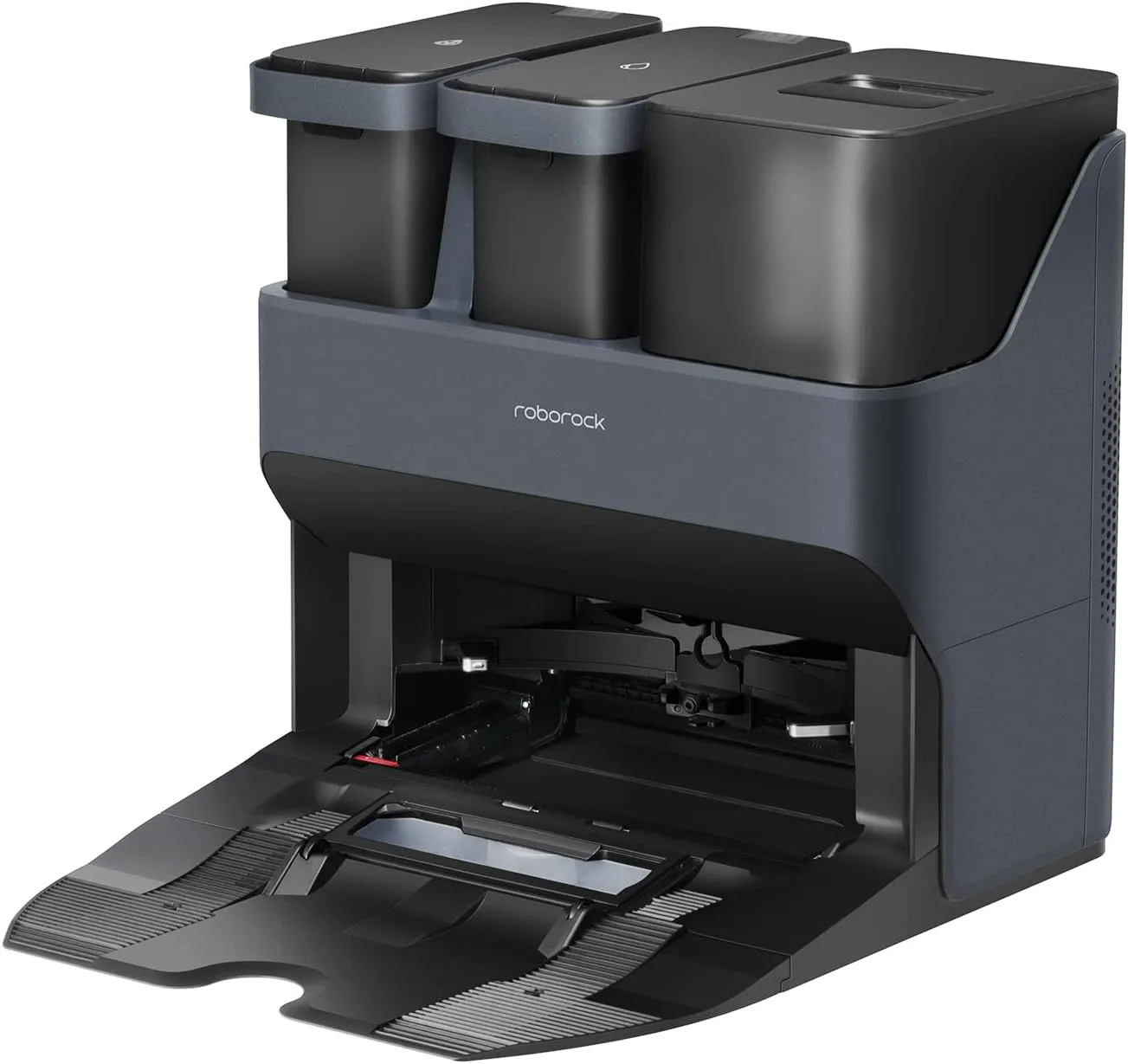
Then there is the dock, and it deserves a warning before you commit. The RockDock is heavy, it is wide, and it needs a real spot on your wall; this is not a machine you tuck into a closet at the end of the day. If your home does not have room for a base station that takes up close to a square foot of floor, factor that in before you buy, because it caught me off guard during setup.
Key Features
The headline number is 36,000 Pa of suction, which is plenty and pulls grit out of carpet pile that my last several vacuums left behind. Suction on its own, however, is not the story. What separates the Saros 20 is the way a few separate systems work as one rather than a single impressive figure, and that coordination is worth examining.
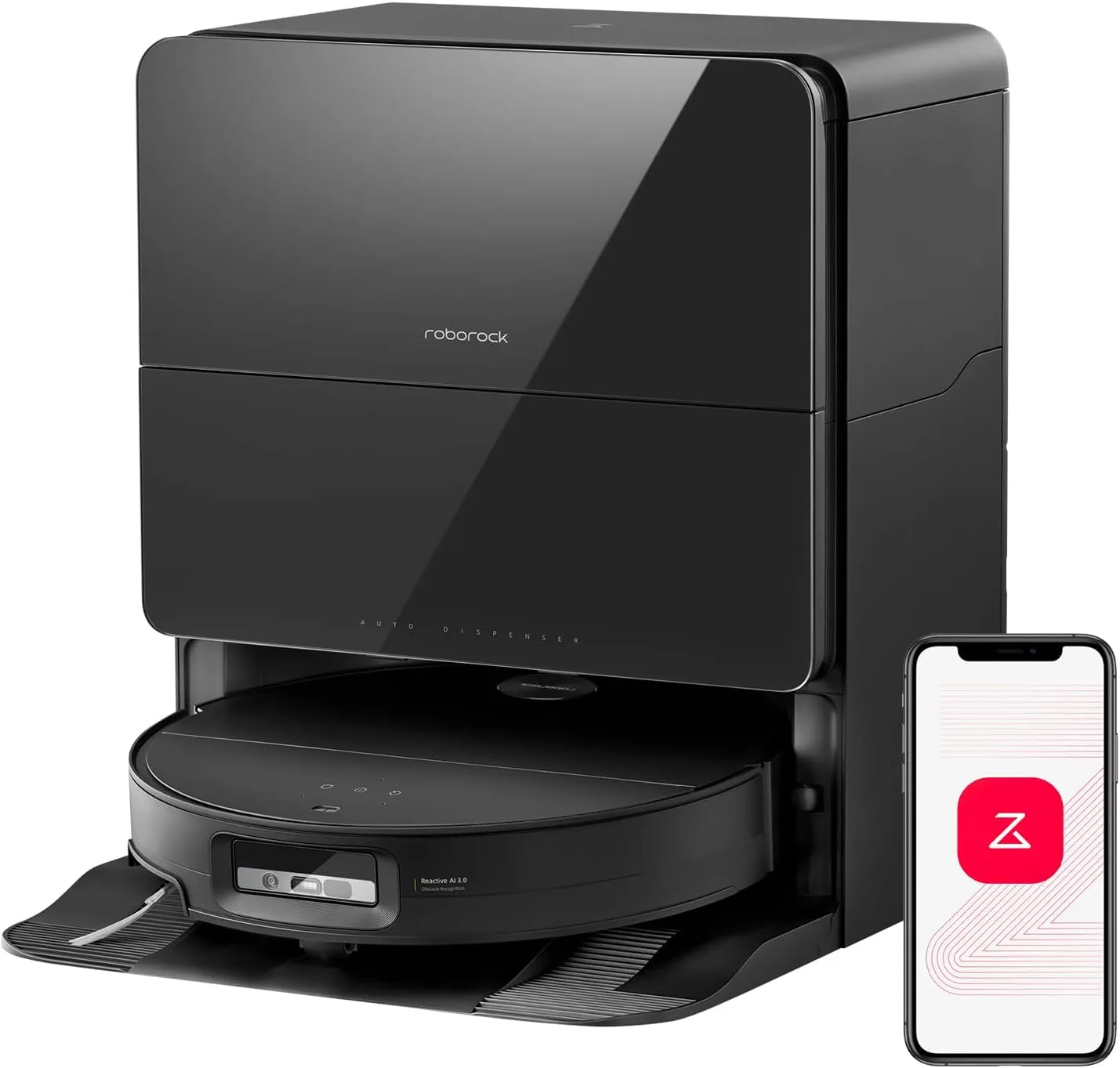
The FlexiArm is the party trick. A small arm extends a brush and a mopping pad to the side, so the robot can ride a straight line along a wall while the arm dips into the corner beside it. I watched it follow the living room baseboard, and it reached the corner behind the television, which was the first time that patch of floor had been clean since we moved in. That is not an exaggeration; it is close to the whole point of the product.
There is also the AdaptiLift chassis, which raises the body by about 20 millimeters to climb thresholds and thicker carpet edges without stalling. My hallway steps down into the bedroom, a step that has defeated earlier machines by making them catch; the Saros 20 just lifts and carries on, a detail you only notice once you stop rescuing it.
The dock washes the mop pads in hot water, dries them with hot air, and empties the bin for weeks at a time. The washing is genuine: it uses a one-piece tray and scrubs the pads rather than merely rinsing them, and hot-water washing is one feature I would miss the most.
Real-World Performance
Here is where I put the spec sheet aside and describe what it was like to live with, because performance is the real test. The mapping is fast: the robot builds a full map of the home in about four minutes, and it got the layout right the first time, with no phantom rooms and no furniture where none existed. That is far more accurate than the last machine I tested.
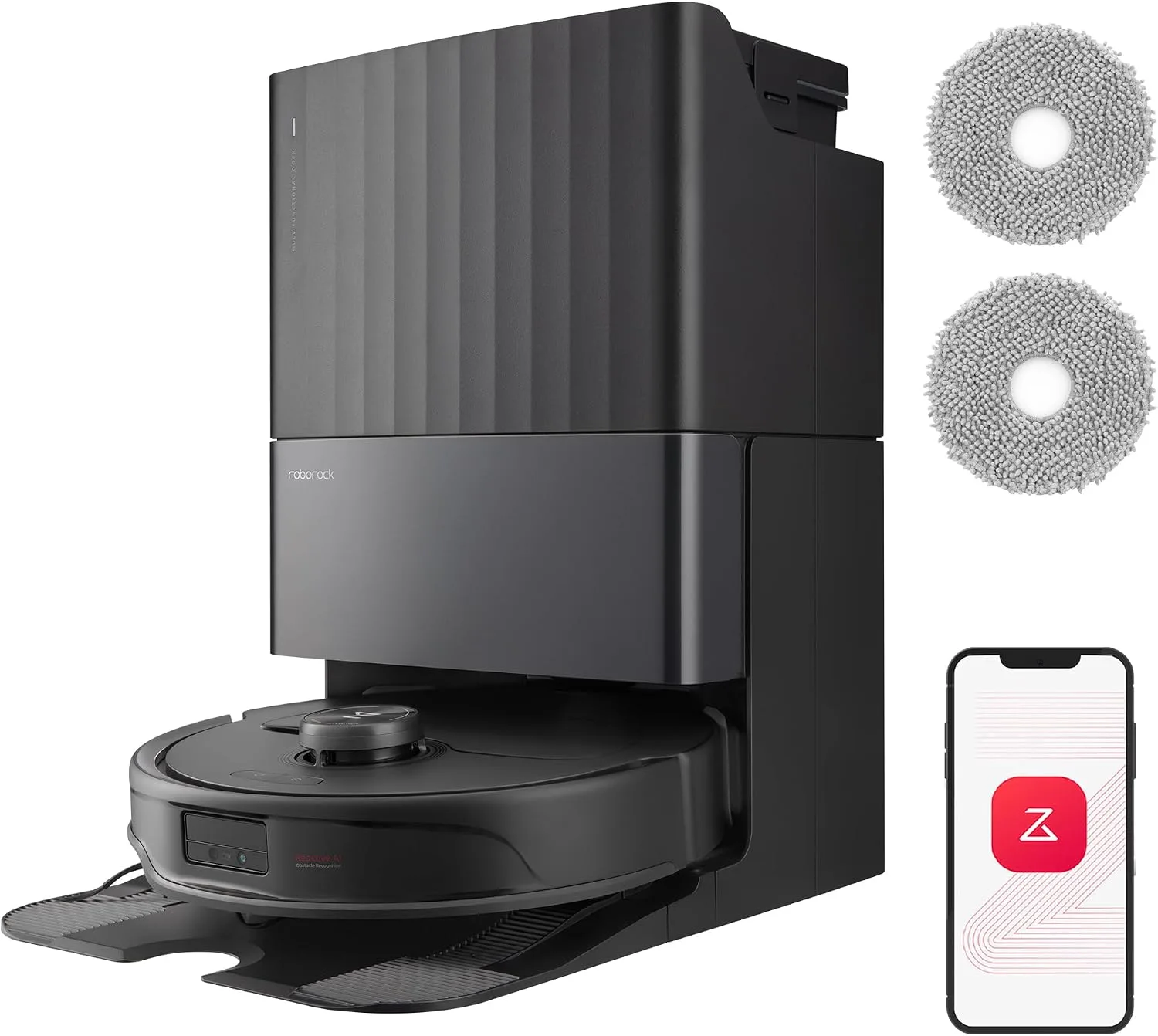
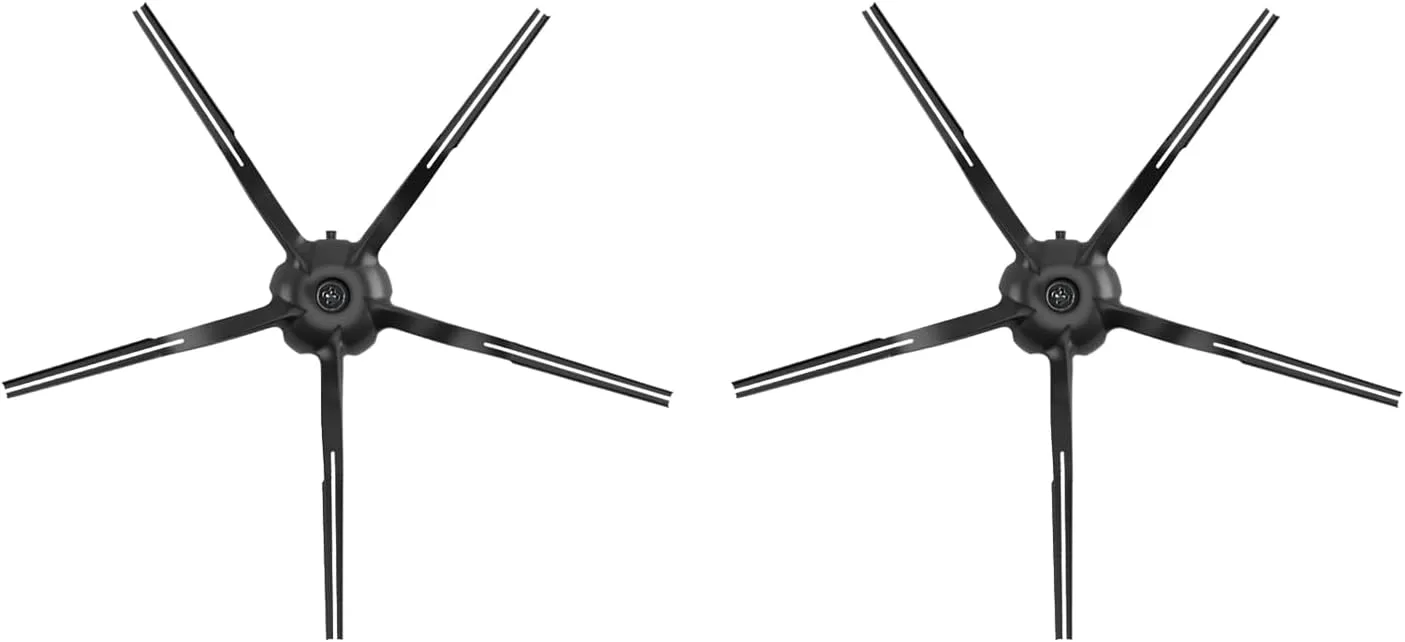
We have a golden retriever mix that sheds in a way that defies logic, which is the worst kind of test for any robot. The DuoDivide brush, with the split in the middle, picked up her fur without wrapping a single strand around the roller. I checked, and that is the test that matters at home; it passed on every run, a first for me after years of untangling rollers.
An honest note about the app: it has a lot of modes, arguably too many for a normal user. I set it to automatic and it works, but each time I open the app there is another cleaning mode I never asked for, and that part of the experience feels overbuilt. The auto-empty sound also startles me; it cuts in with a quick whoosh, and if you are not expecting it, you will jump.
Battery life lands around 180 minutes in my runs, which covers the whole main floor plus a repeat of the bedroom. The robot docks before it loses charge, recharges, and finishes what it started; over three weeks, it never once got stuck, which may be more notable than the suction itself.
Pros and Cons
Pros:
- FlexiArm reach really cleans edges and corners instead of skipping them
- 36,000 Pa suction handles carpet and embedded dirt well
- DuoDivide brush stays free of pet hair tangles
- AdaptiLift crosses thresholds and carpet edges without stopping
- The dock washes mop pads in hot water and auto-empties for weeks
Cons:
- High price rules it out for many households
- Large, heavy dock needs real floor space
- The app has too many cleaning modes
- The built-in camera gives some people pause
How It Compares
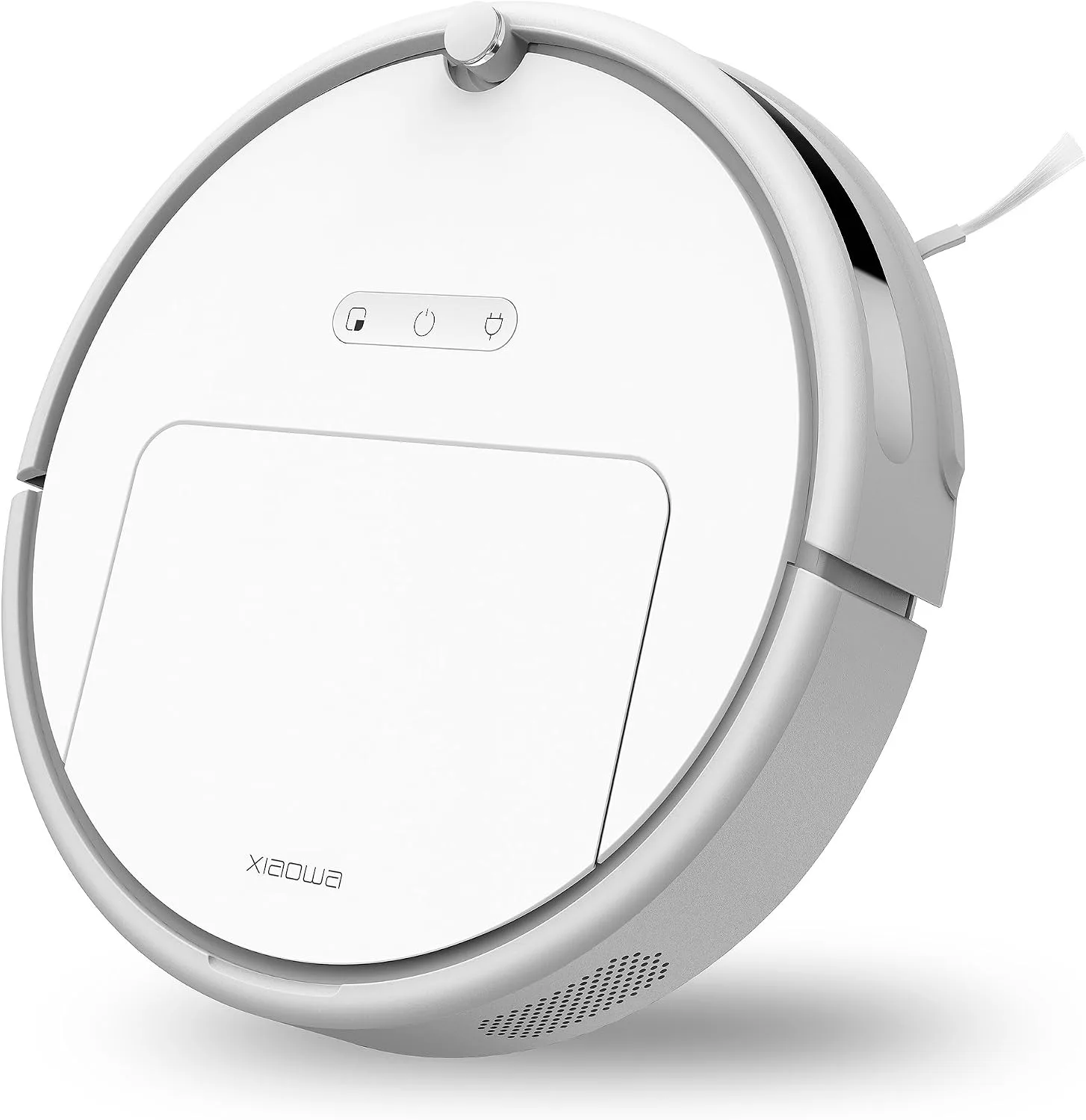
The closest comparison is the Saros 10R, the previous model, which costs about the same and delivers less: weaker suction, no FlexiArm edge reach, and a mop dock that washes the pads less thoroughly. If you already own the 10R, the jump to the 20 is not worth the money; if you are choosing between the two with no machine, the 20 is plainly the better spend at the same price.
| Feature | Roborock Saros 20 | Saros 10R |
|---|---|---|
| Suction | 36,000 Pa | Lower |
| Edge reach | FlexiArm mop and brush | None |
| Chassis lift | AdaptiLift, about 20mm | Less |
| Mop dock wash | Hot water, 212°F | Colder wash |
Against rivals like the Dreame X60, the Saros 20 leaves less behind on hard floors, and its edge reach is the real differentiator. The trade-off is the price, which sits above the mid-tier pack, and it is fair to wonder whether most people need this much robot; if you have pets and awkward thresholds, the answer is probably yes.
Who Should Buy the Roborock Saros 20
Buy it if your house has a pet that sheds, a step or a threshold between rooms, and at least one piece of low furniture you have been ignoring. That is basically my situation, and it is the exact use this machine was built for. After three weeks, it is the first robot vacuum I have kept rather than returned, and that is a stronger endorsement than any number.
Skip it if you live in a small apartment, or if the idea of a camera roaming your home makes you uneasy, or if the price sounds like too much for floors. I will be careful to say that: if your floors are all hard and mostly clean, a far cheaper robot vacuum will do the job. You can check the Roborock Saros 20 price and options on Amazon when you are ready.
How We Test
I ran the Saros 20 for three weeks as the only vacuum in a two-floor home shared with a long-haired dog, carpet, and hard floors. I judged it on edge cleaning, pet-hair tangles, mapping accuracy, and how little it needed from me each week.
I compared it side by side with the previous Saros 10R and a rival Dreame model, so the verdict reflects time with the product rather than a spec sheet. I did not stress-test very deep-pile rug cleaning because my home does not have that kind of carpet, so treat that part of the verdict with some care. Independent testing elsewhere, such as PCWorld's Saros 20 review, is a useful second opinion.
If you are building a smart home around it, my TP-Link Tapo P125M smart plug and Kasa smart bulb reviews can help round out the setup. When you are ready to decide, the Roborock Saros 20 listing on Amazon has the current options.
Roborock Saros 20: Questions People Ask
Does the Saros 20 work on both carpet and hard floors?
Yes. It lifts its mop pads over carpet, boosts suction in automatic mode, and crosses thresholds with the AdaptiLift chassis. In my home it handled the rug, the laminate hallway, and a step between rooms without me switching modes by hand.
Is the Saros 20's camera a privacy problem?
The camera is there for obstacle recognition and pet monitoring, and it is fair to call that a concern. You can turn off the camera and pet-check features in the app if you would rather the machine does not roam your home, which is how I ran mine for most of the test.
How often do you empty the Saros 20's dock?
The dock self-empties into a bag rated for up to about 65 days of dust. I emptied mine after roughly two weeks and it needed to go again, so treat that number as a best case for dusty homes.
Can it handle pet hair without tangling?
That was my biggest worry, and the DuoDivide split brush handled it well. My dog's fur never wrapped around the roller in three weeks, which I could not say about any earlier robot I have owned.
As an Amazon Associate, I earn from qualifying purchases.