
There is a reason walking pads keep showing up in home offices and living rooms. They answer the question of how to move more without rearranging a whole schedule, a treadmill that lives under the desk and turns sitting hours into standing, walking hours. The 2026 version of this portable walking pad adds handles and an incline to the formula, both of which address the two biggest complaints people have with bare walking pads: balance at speed and monotony on a flat deck. I spent a month with this pad in a home office and in front of the television, and this review is the honest record of those sessions.
Before the details, the standard note. This article contains affiliate links, and if you buy through one of them the site earns a small commission at no extra cost to you. That commission does not change what I test or what I recommend, and the walking pad reviewed here was used the way an owner would use it.
The value of a walking pad is measured in steps that did not need a gym membership, and the 2026 model is designed to make those steps easier. The rest of this review covers the design, the features, and the daily reality of the machine.
Design and Build
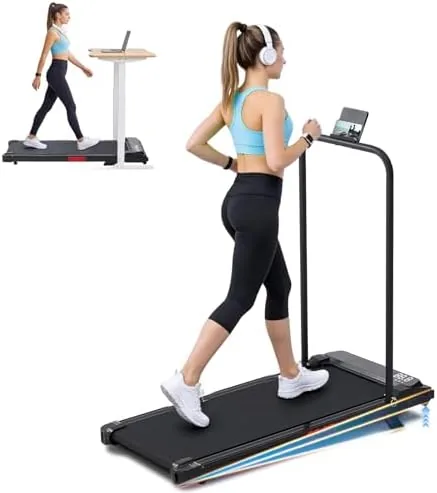
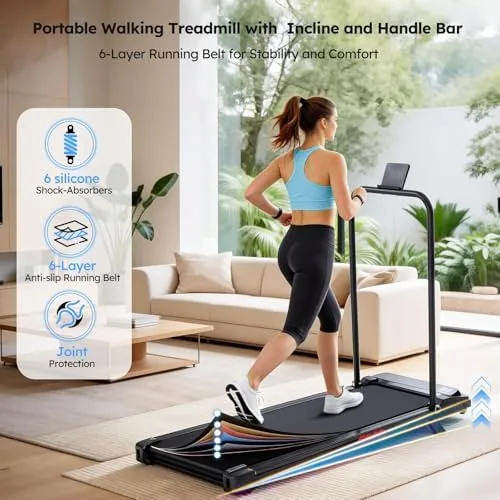
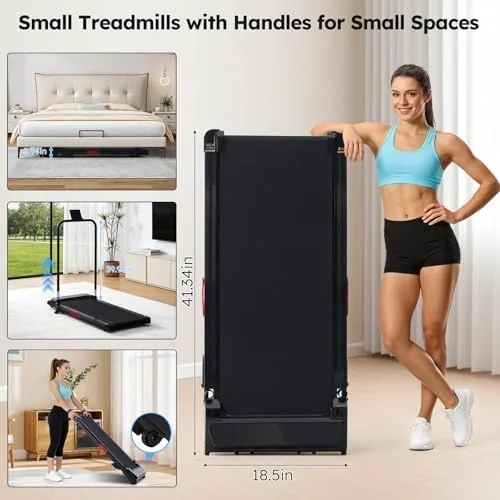
The pad is a low profile treadmill with a short belt, a foldable handle bar at the front, and a frame rated for 350 pounds. The construction is solid for a portable machine, with a deck that does not flex under a full weight step and a belt that tracks straight without constant adjustment. The handles fold flat for storage and lock up firmly for walking, and the whole unit moves on small wheels built into the frame.
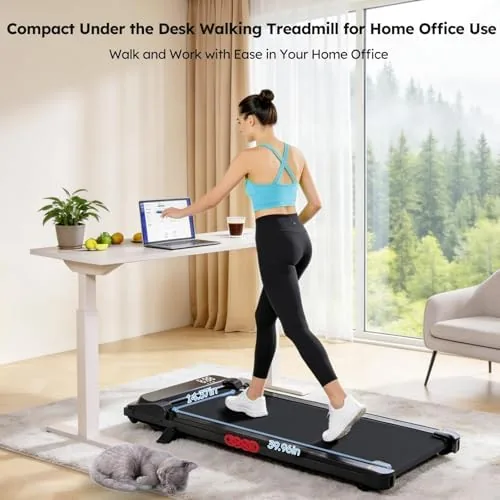
At under desk height, the pad slides neatly beneath a standing desk frame, and the carry handles at each end make lifting it into a closet a two second job. The finish is a clean, neutral gray that does not look out of place next to furniture, and the control panel is simple enough that a first time user is walking within a minute of unpacking it. Nothing about the design shouts gym equipment, which is exactly what home exercise gear should do.
Key Features
The headline feature is the incline. A manual adjustment raises the front of the deck to add a light climbing angle, which changes the muscle work from a flat stroll to a session that engages the legs and glutes more deeply without any change in speed. It is not a steep hill, but it provides the variety that keeps daily walking from turning into a boring routine, and it is a rare feature on pads in this price range.
The handle bar is the other key addition. On a flat pad, balance at higher speeds can feel exposed, and the handles give a place for a hand during faster sessions or for a moment of support when stepping on and off. The handles fold down completely, so the pad keeps its slim profile under a desk when it is not in walking use.
The motor and speed range round out the package. The drive moves the belt from a gentle 0.6MPH, slow enough to type comfortably, up to 7.6MPH, which is a brisk jog for most people. The 350 pound capacity is generous for the category and means the machine is a realistic option for a wider range of households than most pads.
Real-World Performance
I used the pad in two roles over the month: under a standing desk during work hours and in the living room for dedicated sessions in the evening. The desk role was the strongest. At 1 to 2MPH, the motor ran quietly enough that I forgot the machine was on, and I could type, read, and take calls without the pad interfering. Over a work week, the steps accumulated silently, which is the entire point of the product.
The evening sessions were where the incline earned its place. Walking on the raised deck at a moderate pace felt noticeably different from the flat setting, with the calves and glutes doing more of the work, and the handle bar made it easy to hold a steady pace for a full session. The belt ran smooth across the speed range, and the motor kept up without strain even when I jumped the pace quickly.
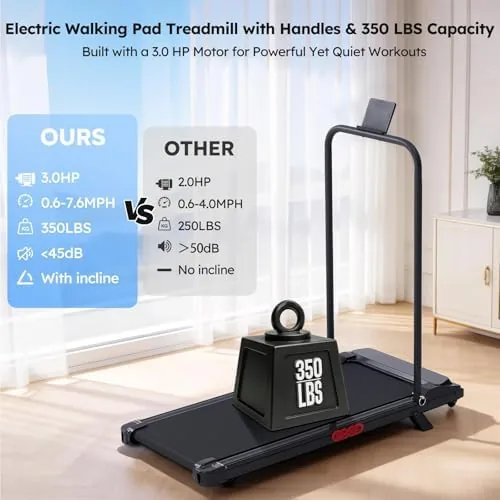
Stability held up through the whole range. I took the pad up to 7.6MPH to test its top end, and the frame stayed planted with no wobble and no belt slip, which is reassuring given the 350 pound rating. The machine feels engineered for a daily load rather than the occasional try it once session, and that solidity translates into a product you stop thinking about.
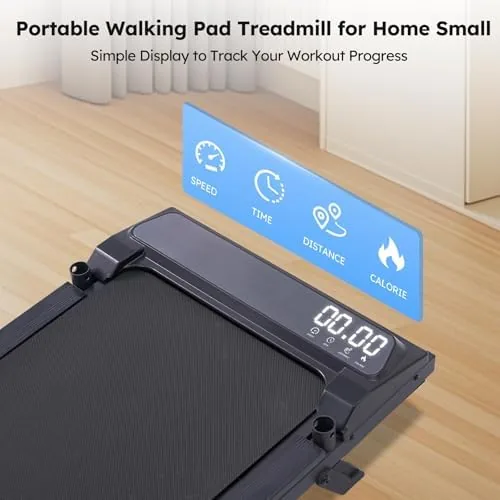
The honest limits are the limits of a walking pad. The belt is short, so this is a walking and light jogging surface rather than a running treadmill, and the incline requires a manual adjustment rather than a motorized button. The display is basic, showing speed and time without heart rate or app integration. For the daily step mission and light home exercise, none of those held back the results.
One detail earned respect over the month. The pad folded flat, rolled under the desk, and moved between rooms without any fuss, and after a month of daily use the belt showed no visible wear and the mechanism stayed tight. For a machine that is supposed to slip into a busy home rather than dominate it, that ease of living is the real specification.
Pros and Cons
Pros:
- Incline adds variety and works the legs harder
- Handle bar gives support and balance confidence
- Quiet motor suits desk use and video calls
- 350 pound capacity covers a wide range of users
- Folds flat with wheels for easy moving and storage
- 0.6 to 7.6MPH range covers typing walks to jogs
Cons:
- Short belt limits it to walking and light jogging
- Incline adjusts manually instead of by button
- Basic display without heart rate tracking
How It Compares
The 2026 pad sits between a basic walking pad and a full treadmill, and the comparison against a full sized home treadmill is the one most buyers weigh. The table below lines up the two.
| Feature | Portable Walking Pad | Full Home Treadmill |
|---|---|---|
| Size and storage | Folds flat, fits under a desk | Large, fixed in place |
| Intended use | Walking and light jogging | Running and interval training |
| Belt length | Short, compact deck | Long running deck |
| Price | Budget friendly | Several times the cost |
| Best for | Daily steps and low impact work | Serious runners |
If the goal is daily steps, desk walking, and low impact exercise, the walking pad is the smarter buy, because it stores out of sight and costs a fraction of a treadmill. If running is the priority, a full treadmill is the honest answer, and the pad is not pretending otherwise.
Who Should Buy It
Buy this walking pad if you work at a desk and want to add thousands of quiet steps to the day, if you want a low impact way to stay active indoors, or if you need a machine that stores out of sight. It is also a strong fit for users who have been turned away by the low weight limits on cheaper pads.
Skip it if your plan is real running or heavy interval work, because the short deck is built for walking. For daily steps and light home exercise, this is a capable and honest machine. You can check the current price of the portable walking pad treadmill on Amazon when you are ready.
How We Test
I used the pad for a month in a home office and a living room, testing every speed setting, the incline at multiple levels, the noise during calls and typing, and the stability at the full 7.6MPH. I also moved the pad between rooms and folded it repeatedly to confirm the storage mechanism held up.
I did not run long distances on the short deck, because that is not its purpose. For a broader look at whether a walking pad fits your routine, CNBC Select has a practical guide to under desk treadmills that is worth reading. The portable walking pad listing on Amazon shows the current price and the full spec sheet.
Portable Walking Pad Treadmill: Questions People Ask
Is this walking pad easy to move around the house?
Yes, the frame has wheels and carry handles, so the pad glides between a desk, the living room, and a closet without much effort.
Does the incline setting require any tools?
No, the incline adjusts manually by moving the deck support, which takes a few seconds and no tools between flat and raised settings.
What is the quietest way to use the walking pad at work?
Keep the speed near the low end around 0.6 to 2MPH, which keeps the motor nearly silent while still adding thousands of steps to the day.
Can the pad support a 350 pound user comfortably?
Yes, the frame is rated for 350 pounds and the deck stays firm and stable even near the top of that range.
As an Amazon Associate, I earn from qualifying purchases.