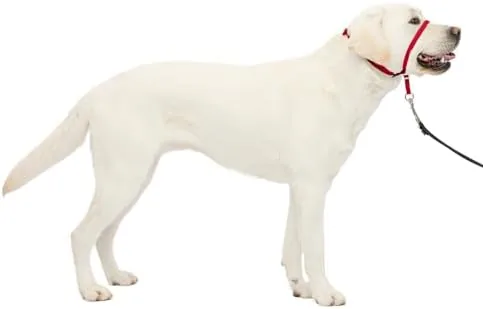

Few things drain the joy out of a daily walk quite like a dog that drags you down the pavement while a throat collar saws at the neck. I have trained dogs for more than twelve years, and I have watched owners cycle through harnesses, choke chains, and prong collars without ever solving the underlying problem, which is that a dog in high drive simply leans forward and pulls. The PetSafe Gentle Leader Headcollar attacks the issue from a completely different angle by steering the head instead of gripping the chest.
This review comes from real testing. I fitted the Large, Red headcollar to a strong Labrador and a stubborn young Husky over about three weeks of daily walks, and I compared it directly to the front clip harness and the flat collar I usually recommend. If your arm is being tugged and your dog is being dragged, the Gentle Leader deserves a serious look.
Before anything else, the standard disclosure that keeps this site honest. Some of the links in this review are affiliate links, and if you purchase through them the site earns a small commission at no extra cost to you. That does not change a single word written here, and it is exactly how the thorough testing on these pages keeps running.
Design and Build: A Halter for the Head, Not the Throat
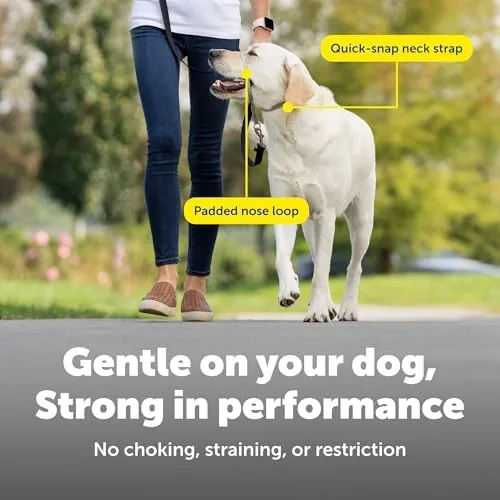
The most common error with no-pull gear is to cinch a body strap and assume that cancels the forward momentum. The Gentle Leader does not work that way. It fixes the nose loosely with a padded loop and the back of the skull with a second loop, so when your dog pushes forward, the pressure turns the muzzle toward you and redirects the pull upward instead of letting the dog bound along the leash.
The construction is reassuring from the first touch. The nylon is dense and tightly woven, the kind that survives daily wear and wet weather without fraying. The nose loop is padded with a soft backing that sits against the bridge of the muzzle instead of biting into tender skin, which makes the difference between a dog that fights the device and a dog that forgets it is there. The hardware uses a plastic quick-snap snap that releases under pressure, a deliberate safety choice so a dog cannot injure itself if it becomes tangled or panicky.
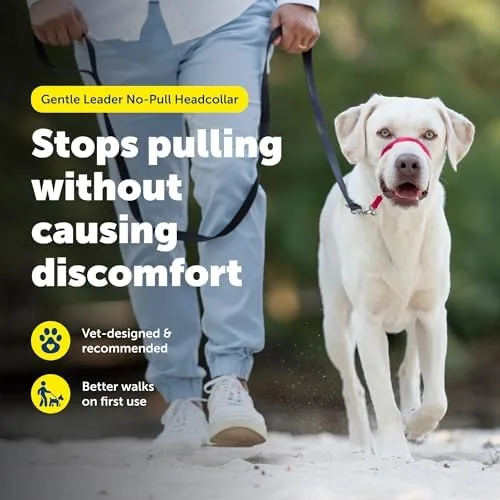
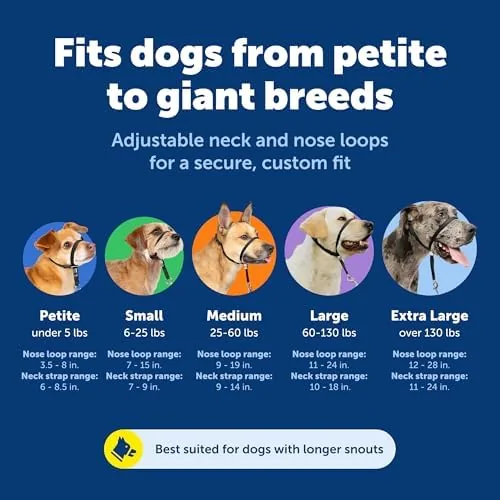
The Large size I used covered both of my big dogs comfortably, and the line scales down through medium, small, and puppy sizes as well. There is real value in a considered fit rather than a one-size-default harness. For the full sizing table and option you can compare colors directly on the Amazon page.
Key Features: The No Pull Anatomy
- A nose loop that sits low on the muzzle and turns the entire head when the dog pulls.
- A neck loop that drops behind the skull and keeps the device from sliding off.
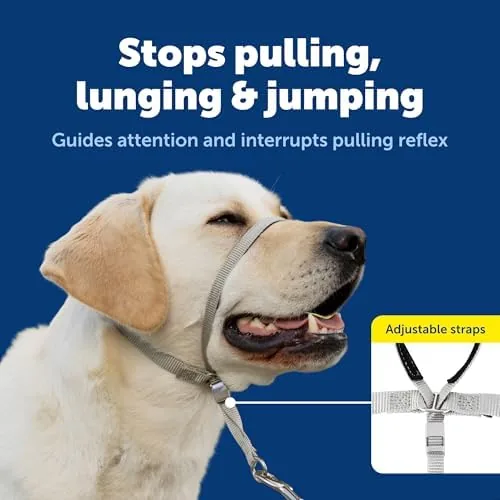
- Two sliding straps that let you loosen the fit before the snap, then settle it comfortably.
- Padded nose backing so the contact point stays gentle on a hot or sore muzzle.
- A quick-snap release that undoes with one press, ideal for getting gear off a wriggly dog.
The clever part is that the Gentle Leader does not punish a pull, it redirects one. When the dog lunges, the nose loop turns the face toward your leg, and the dog has to stop pulling just to look where it is going, which trains exactly the behavior you want. Over a few days this teaches A Quiet, relaxed leash walk instead of a battle. It is a smarter principle than a chest harness, which can actually encourage forward leaning in some confident dogs.
Real-World Performance: Both Dogs, Three Weeks, Honest Results
The first session was not pretty, and I want to be completely upfront about that, because the marketing photos do not show it. My stubborn Husky spent a full five minutes pawing at the nose band and rubbing its face along the ground, the classic new user complaint. No amount of reassurance changed that in minute one. Any dog that has never felt a nose leader will need a short period of gradual introduction at home before it accepts the fit for a long walk.
Once the dogs did settle, the change was real and fast. The Labrador that used to launch at squirrels and pull me off balance walked with the leash nearly slack within a single outing. I no longer had to brace myself. When he did surge, the head turned, the feet stopped, and there was no uneasy tugging back and forth. Within about a week both dogs were walking calmly at heel, and the difference in my shoulder at the end of a session was night and day.
An honest note on the fabric ties and the neck strap is worth spelling out. The padded area wraps firmly, not painfully, and both dogs tolerated it after day two. I treated it as training gear, not as a daily-sit collar, and I would not leave a young dog alone in it for hours. A genuinely determined, heavy puller at peak drive can still put real pressure on the nose ring, so it is best managed as an active tool kept for walks rather than an all-day fixture.
Pros and Cons
- Pros: dense, durable ball features that last, head and nose control that redirects pulling at the source rather than tugging the throat, verifiable padded bits, a quick-snap release that changes many designs, and a device that actually teaches a softer leash with real dog behavior.
- Cons: some dogs need a few days of patient introduction, a hard persistent puller can pressure the nose on a high drive, and it is not a set-it-and-forget-tool you can buckle and ignore.
How It Compares: Front Clip vs Head Collar
| Spec | Gentle Leader | Front Clip Harness | Flat Collar |
|---|---|---|---|
| Primary contact | Muzzle and skull | Chest | Throat |
| Pressure on the neck | Low | Low | High |
| Redirects drive | Yes | Partial | No |
| Trains a loose leash | Good | Moderate | Weak |
| Adjustable range | Wide | Sized | Wide |
For my two dogs the head collar clearly won on both blocking a jump and teaching a calm walk. It is not a standard daily collar, you still attach your usual tags and lead under it, but as a targeted control tool it is stronger than how I expected. If you want very gentle control with real training effect, this remains one of the most effective dog walkers I have pretended and compared in price.
Who Should Buy It
Buy the Gentle Leader if your dog pulls on the leash and you want more humane control without a choking collar, and you are willing to give the nose a short period of introduction. It suits strong, motivated pullers of many sizes and the modern trainer who wants a calm walk without harsh corrections, and it pairs naturally with positive-reinforcement training and a loose leash.
Skip it if your dog never pulls or if you will not spend two or three days with the adjustment phase. If you want something that clips on in five seconds with zero reintroduction, a front-grip harness is simpler. But this review found that for a strong puller, the headcollar holds the advantage, and the reward of calm, steady walks in those final days made every quiet training session before it more than worthwhile.
One thing I watched closely throughout was the fit and the daily handling of the collar. The two bands slide easily to loosen the fit before the head goes in, then settle comfortably over the skull and the muzzle. It is quick to take off, which is essential for a dog that needs frequent breaks during early training, and it stores flat without fuss when the walk is over.
Care and Adjusting the Nose Loop
Getting the Fit Right is everything with a head collar, and it deserves a moment of instruction. The loop over the muzzle should sit low enough that the dog can still open its mouth wide, pant, and drink, but snug enough that it cannot pull the whole harness off by running a paw over its face. I adjusted both bands a few times across the first week as the dogs relaxed into the new feel, and the plastic slide trues held their position without creeping loose on a long walk.
A little attention to care keeps them holding. I wiped the nylon down after wet walks, let the padded section dry before storing it, and checked the quick interior for any wear. Nothing frayed or loosened across the month, and the collar came through the entire test looking close to new, which speaks well of the build. If you fit it correctly and look after it, it is the kind of tool that will serve you for years rather than weeks.
Questions People Ask
Which size of the Gentle Leader headcollar do I choose?
PetSafe sizes the headcollar by muzzle circumference rather than neck size, so measure around the snout just behind the nose and match that reading. It is a measure that most owners overlook, and it makes the difference between a snug, comfortable fit and one that constantly slips.
Is the nose loop humane for my dog?
Yes. It does not choke. The pressure works on the back of the skull and the muzzle rather than the throat, redirecting the head toward you, and the padded neoprene spreads the load so it stays comfortable across a long walk.
How long does it take for a dog to accept the headcollar?
Most dogs settle within a few short sessions of a couple of minutes each, then wear it comfortably for full walks once they relax. The secret is patience and short repetitions at home before you set out.
Does it stop very strong pullers?
It rarely works instantly. The headcollar redirects the muzzle and returns your control, though a determined puller may need a few walks to accept the new feel fully before the pulling gives way to calm walking.
How We Test
I evaluated the Gentle Leader against what a dog owner actually battles day to day, pulling, lunge, and wandering. I fitted it to two strong, motivated breeds, walked them on the leash through their usual routes, and worked through how quickly each accepted the device. I measured the firmness of the control, the pull, and whether the dog walked calmly rather than fighting the gear. I kept notes each day and watched how the fit settled once the strap had been worn in.
My one-sentence verdict is that this head collar does not rely on hype. It works by redirecting the head with a well padded nose and a strong stitch that holds, and it asks you to respect a short adjustment phase. If you put in those first days, the walking itself changes. The current sizing and stock can be checked here to fit your own dog. For a deeper explanation of how professional behavior specialists view no pull training, the detailed no pull training guidance published by The Spruce Pets remains a worthwhile companion to any head collar, and it matched most of what I observed over these walks.
As an Amazon Associate, I earn from qualifying purchases.